

Whether you plan to paint a chair, table, or any wooden piece, the basic process is the same.

This table started as a thrift-store find (we built the top and paired it with a purchased base) and, along with a set of chairs that had once been a golden blond wood tone, was transformed with a coat of white paint.
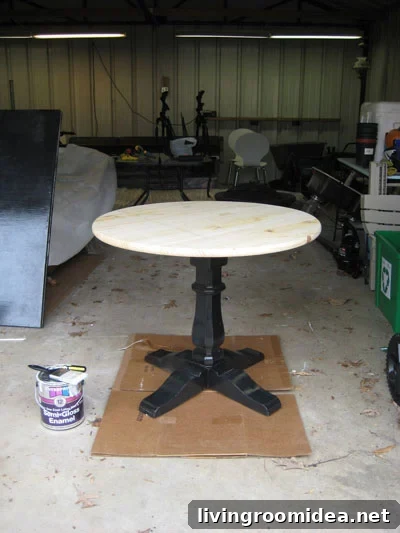
A fresh coat of white paint refreshed the pieces and made them look like a higher-end set in just a few hours.

Here’s a clear, step-by-step guide to help you get the same kind of professional-looking result.
Step 1 — Evaluate the surface. Determine whether the piece has a glossy, sealed surface (varnish or lacquer) or a matte, porous finish (unfinished wood or flat paint). Glossy surfaces should be scuff-sanded lightly with 100-grit sandpaper to give the new finish something to bite into. If the surface is already dry or chalky, you can often skip sanding and move straight to priming.
Step 2 — Prime the piece. Use a stain-blocking primer so paint adheres evenly and stains won’t bleed through. An oil-based primer is traditional and reliable, but low-VOC primers like Zinsser Smart Prime also perform well and are less odorous. Apply an even coat with a small foam roller or a quality brush. Primer doesn’t have to look perfectly smooth—just make sure the whole surface is covered and not excessively thick or gloppy. Allow it to dry fully before painting.
Step 3 — Paint in thin, even coats. Use a fresh small foam roller or a brush to apply two or more thin coats of latex paint. Semi-gloss is a great choice for furniture because it’s durable and easy to wipe clean. A common misconception is that you can’t use latex over an oil-based primer—what really causes trouble is applying latex over old oil-based paint, which can lead to bubbling. Brushes tend to be the most bubble-free method, though they can leave brush marks if paint is applied too thickly. Small foam rollers are a good option for beginners because they reduce brush strokes and drips. Whatever tool you choose, apply paint in very thin layers—think the thickness of an eggshell or sheet of paper—and let each coat dry completely before adding the next. Three or four thin coats will look much more professional than one or two heavy coats.
Step 4 — Optional protective topcoat. For extra durability and a wipeable surface, consider applying two thin coats of a water-based polycrylic finish. This adds protection and a glossy sheen if desired. Two reliable products we’ve used are Minwax Water-Based Polycrylic in Clear Gloss and Safecoat Acrylacq, a low-VOC option. Apply the poly thinly, let the first coat dry completely, then apply the second. Avoid going back over semi-wet paint or poly—drag marks can occur if you do. Work steadily from one side to the other and allow full drying between coats.
- Minwax Water-Based Polycrylic Protective Finish in Clear Gloss
- Safecoat Acrylacq (low-VOC, non-toxic option)
We applied a protective poly finish to this table and lightly to the chairs so they would be easy to clean, especially since they’re used near food. Thin coats and patient drying are the keys to a smooth, long-lasting finish.
Step 5 — Allow proper curing time. Even after paint feels dry to the touch, it needs time to fully cure. Wait at least 72 hours before placing objects on the surface, and if possible wait five days for the safest result. Humidity, the thickness of your primer/paint/poly, and room temperature affect curing time. Rushing this step can lead to dents, divots, or surface marks, so give the piece time to harden before heavy use.
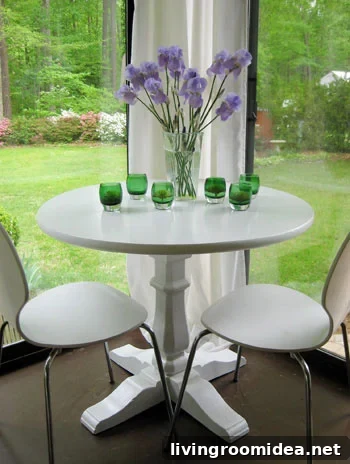
It may sound like a lot, but take it one step at a time and you’ll find painting furniture is an approachable weekend project. From a glossy black side table to a bright red chair, a fresh coat of paint can completely change a piece and bring new life to your space.
Note: If your furniture is not solid wood or veneered—such as laminate, melamine, or other synthetic surfaces—consult a paint professional at your local hardware store for product recommendations. Often the trick is to scuff the surface to reduce gloss, then use a suitable primer and paint designed for those materials. Enamel or oil-based products may be recommended depending on the item.
Psst — If you’re looking for a cabinet painting tutorial, check other guides for cabinet-specific tips.
Pssst — For painting a brick fireplace, look for a fireplace-specific painting guide.
Pssssst — Want to paint wood paneling? Search for a dedicated wood paneling tutorial for the best approach.