
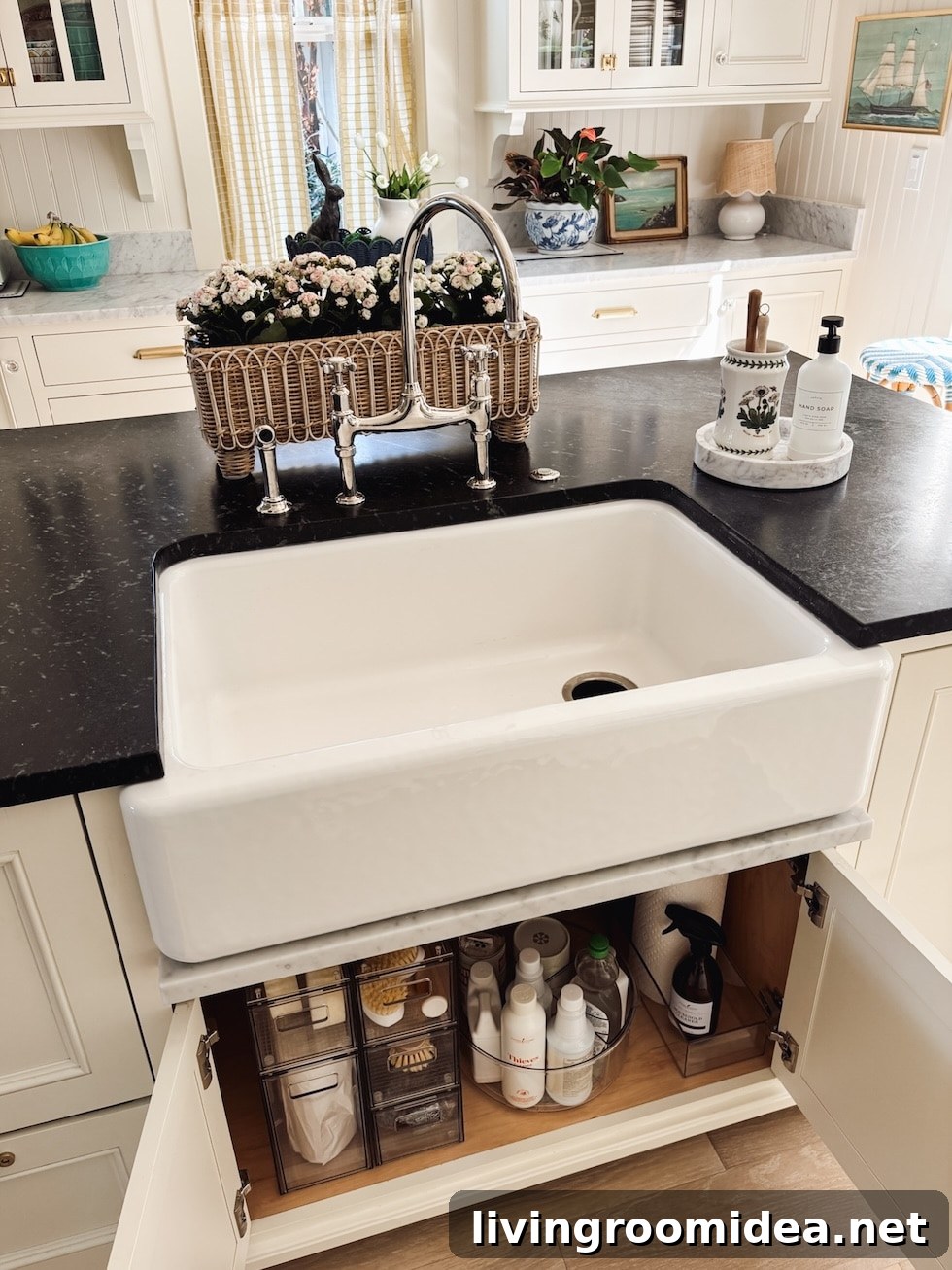
Today I’m sharing six practical tips for organizing under the sink so everything has a proper place and is easy to find.
For a long time, tackling the space under the sink was on my “a place for everything and everything in its place” list. I’m glad I finally addressed it and created a system that’s both functional and simple to maintain.
Empty the cabinet and declutter.
Start by removing everything from the cabinet. Discard trash and anything you don’t use. Think about what truly belongs under the sink and what is just taking up space. When you pare down to what you use regularly, relocate items that don’t belong there to a more suitable spot.
Decide what needs a home.
Make a quick inventory of items you want to keep under the sink. Common things include a roll of trash bags, dish brushes, sponges, steel wool, magic erasers, dishwasher detergent, and cleaning supplies. Grouping these items upfront helps you choose the right organizers and avoid overfilling the cabinet.
Measure the space and select organizers.
Measure the cabinet’s height, depth, and width, and note any pipe or obstacle locations before buying containers. Clear organizers work particularly well under sinks because they make items visible and are easy to clean. Choose a flexible system that allows you to experiment with configurations once it arrives.
Arrange organizers to maximize space.
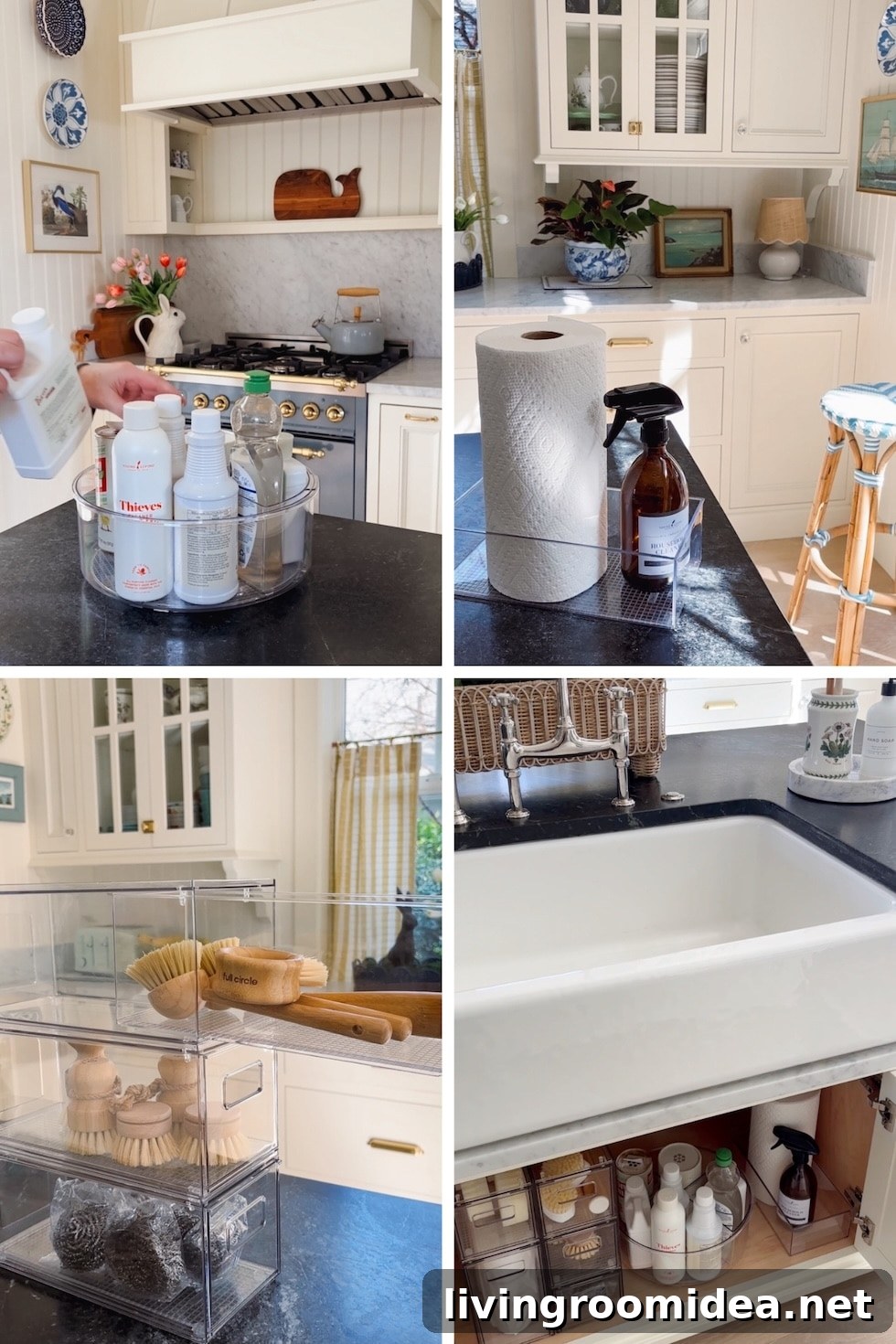
Place containers in the cabinet to make the most of the available space. I positioned containers across the front of the cabinet, leaving an open area behind for overflow or infrequently used items. Stacking shorter drawers or pairing short and tall units helps utilize both height and width.
To accommodate taller items like spray bottles and a roll of paper towels, leave a side area clear and use a tray-style container that can be removed and taken to the counter when needed. A Lazy Susan or turntable with removable sections is handy for keeping small items accessible and organized.
I used several narrow short drawers and one taller drawer to fit our supplies, plus a tray for bottles.
Group like items together.
Organizing is easiest when like items are grouped. Assign each container a purpose—sponges in one, brushes in another, cleansers in a third. If you find you still have too many items to fit comfortably, consider relocating backups to a garage or pantry, or reducing duplicates.
Keep it simple: a place for everything.
An organized cabinet only stays that way if the system is simple and easy to maintain. Clear containers create visible, dedicated spots for each type of item, which helps everyone in the household return things to their proper place.
You may also want to streamline the number of products you keep under the sink. For example, using one versatile, toxin-free all-purpose cleaner and a scrub means fewer bottles and less clutter. A clear system also makes it easy to see when supplies are running low.
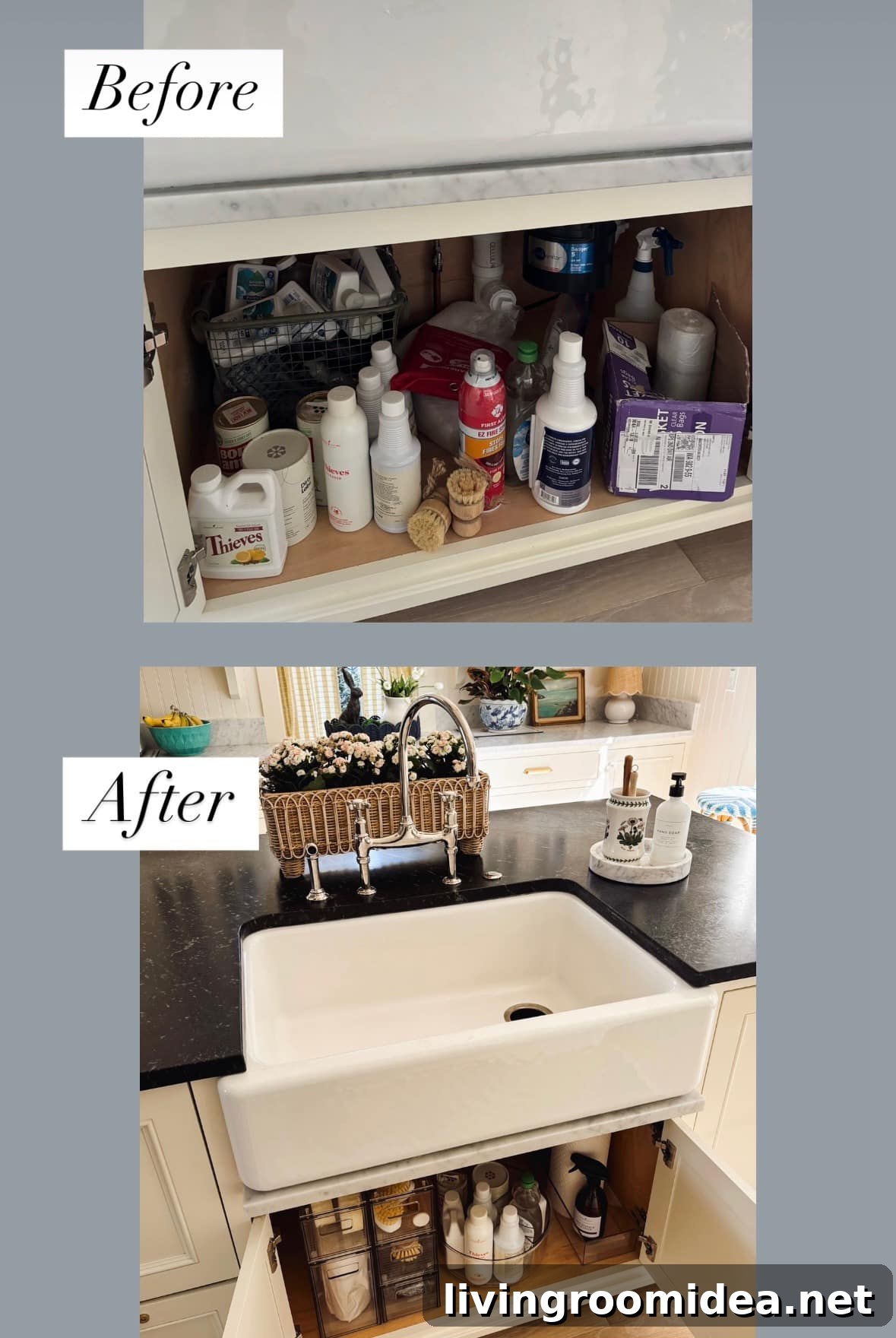
Ta da! A place for everything and everything in its place. Organizing can be fun and rewarding once you begin. After finishing this cabinet I continued by organizing the fridge and setting up a cart for dog supplies, which made maintaining order throughout the home even easier.
A tidy, well-planned under-sink area saves time and reduces frustration—once you set up clear zones and keep them simple, the system will work for you for a long time.
Recommended reads on home organizing
Make Room for What You Love
Simply Home (organizing and decorating)