

I’ve had a lot of readers ask for an update on how we’re doing with the elusive work/life balance we publicly committed to this year. We never intended to work nights, weekends, and even on vacation, but with both our jobs tied to the internet and laptops always within reach, it’s been a struggle.

We thought it would be a good topic while we’re making progress on the front porch (update coming soon). The scallops are coming down and the columns are getting boxed in, so it’s a good mix of hands-on work and reflection.

The first step for us was admitting the problem. It’s tougher to “turn off” when both jobs revolve around a 24/7 internet and our laptops are nearby. Making a public commitment helped—there’s nothing like announcing a goal to motivate you. We wrote about our intentions on our resolutions post and discussed them in interviews, which made us accountable.
After working on balance consistently for about four months, we’ve seen real improvement. We’re still not perfect—we continue to work several weekends each month—but a few changes have helped us get more done in less time and enjoy non-work hours more fully.
- Write a specific daily to-do list and circle your top five priorities. Prioritizing prevents the temptation to knock out easy, low-value tasks just to feel productive. Focusing on the five most important items makes the day more efficient and prevents stalling with trivial tasks.
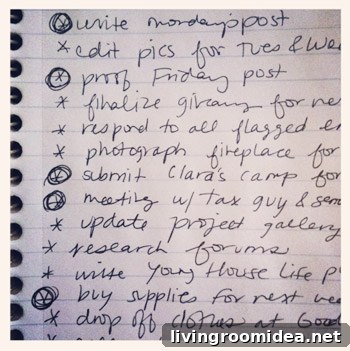
- Be satisfied when you finish those top five items. With childcare switches and interruptions, it can take us all day to finish our top five. Once they’re done, we resist adding more and trying to work into the night. It feels strange at first to step away from the laptop, but it’s healthy and restorative.
- Cut down on inbox clutter. We each get about 200 emails a day. I spent ten minutes unsubscribing from recurring junk and now mornings feel less chaotic with far fewer messages. We also use canned responses to handle routine inquiries quickly.

- Reduce output slightly—seven posts a week instead of eight. One less post a week doesn’t seem like much at first, but it adds up to 52 fewer posts a year. That change has freed up an evening or a Saturday for family time without sacrificing the site’s quality.

- Be realistic about capacity. We’re two dedicated people, not a team of ten. Projects can always be bigger and posts could have more photos, but doing our best and pressing publish is healthier than endless tweaking—especially when we publish around 30 posts a month.
We also asked friends and family for their best tips on working smarter, not harder. They offered a variety of practical strategies that have helped us refine our approach.
Emily, senior booking agent and mother of three: She relies on a support network and carpooling, and teaches older kids to do tasks like laundry and lunch prep so the household runs more smoothly.

Cat, mother of two: Put things away as you find them and give everything a designated place. She uses short timed bursts to tidy up and pays bills immediately so issues are caught quickly.
Roo, mother of three and blogger: Uses canned responses and helpful Gmail tools to speed up email handling, plus the send-and-archive feature to keep the inbox tidy.

Noah, artist and new father: Aims for inbox zero to prevent email from becoming a task list. He responds quickly to short messages, covers notifications during focused work, unsubscribes from lists, and separates work and personal email.
Katie, blogger and mother of two: Batches similar tasks (like editing photos or spray painting multiple items), uploads photos for several posts at once, and schedules writing and comment time around kids’ sleep or play times. She also plans quick meals like shredded chicken to save time.

Kristin, freelance copywriter: Treats her calendar as her boss. She schedules workouts, lunch, and focused work and never works on Saturdays. Having blocks in the calendar helps her see the day and avoid overbooking herself.

Megan, senior marketing director: Emphasizes building systems and processes the first time you do something, then refining them periodically. Let technology handle repetitive tasks where possible.
Dan, chemist: Suggests multitasking small or low-focus activities—like doing pushups during commercials—to avoid wasted minutes.

Dusty, full-time manager and blogger: Do what you love when possible, and outsource tasks you hate so you can spend time more productively.
Heather, advertising art supervisor: Be prepared, hire the right people, make plans and lists, and think ahead to cut inefficiencies.

Nicole, blogger and mother of two: Uses canned email responses, saves drafts with post ideas, and keeps a private board of potential topics to jumpstart writing when time is limited.

Lisa, operations director: Keeps to-do lists, reminders, and calendars on her phone and relies on menu planning to save time.
Diana, trial attorney: Identifies goals, maps realistic tasks, and focuses on one task at a time rather than multitasking for better results.
It’s interesting how different approaches work for different people—my brother swears by multitasking while my mother prefers one task at a time. We’ve borrowed bits of advice from many sources and adapted them to our life. Now we want to hear from you: how do you work smarter, not harder?
Update – We often get questions about blogging professionally (how we started, grew our audience, and monetized the site), so we’ve shared details about how we started a blog, increased traffic, and turned it into a full-time job.