
House & Home
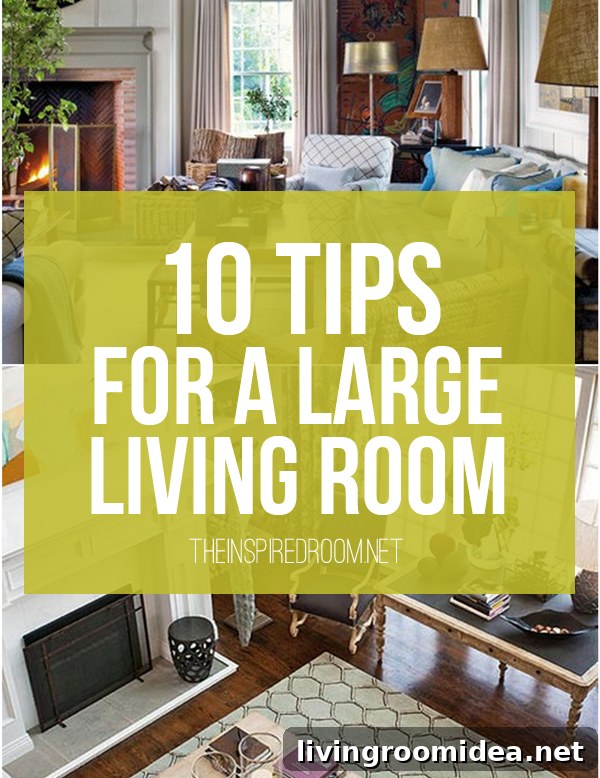
After sharing tips for styling a small living room, I heard from readers asking for strategies tailored to larger living rooms. While smaller rooms require smart space-saving solutions, bigger living areas bring a different challenge: they can feel impersonal, awkward to furnish, or difficult to make functional for daily life despite being great for entertaining.
How do you make the most of a large living room? Even if your space isn’t enormous, awkward shapes, high ceilings, or open connections to other rooms can make furnishing tricky. The ideas below apply to a range of room sizes and layouts, and they’ll help you create intentional, layered, and comfortable large living spaces.
Today I’m sharing 11 practical tips for styling a larger living room.
Sarah Richardson
1. Designate zones.
Large rooms can do much more than host a single seating group. Identify distinct functional areas—such as one or more conversation zones, a media corner, a reading nook, a writing desk, a game table, or a dining area—to make the space feel purposeful and well used.
2. Divide the space visually.
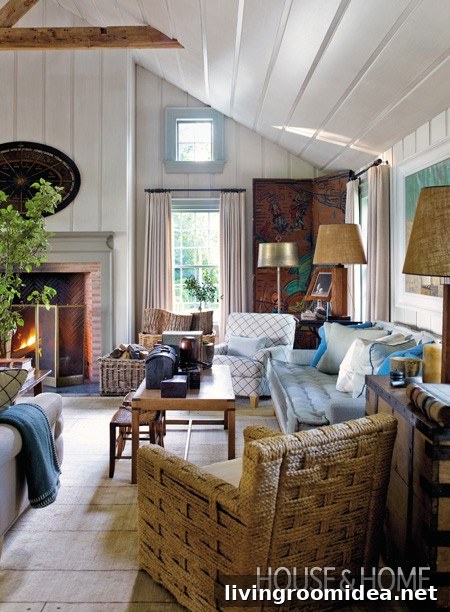
Use architectural elements like ceiling beams, half walls, or pillars to separate areas visually. For flexible solutions, rely on area rugs, curtains, wallpaper, and strategic furniture placement. A sofa with its back to an adjacent area, a screen, large lamps, indoor plants, or a bench can define and soften boundaries without permanent changes.
3. Anchor the room.
Large rooms benefit from a few substantial anchor pieces—a sectional, a large sofa, a substantial coffee table, built-in bookcases, or a piano. These anchors ground the space and allow smaller accent pieces to support the overall design without feeling scattered.
Traditional Home
4. Scale matters.
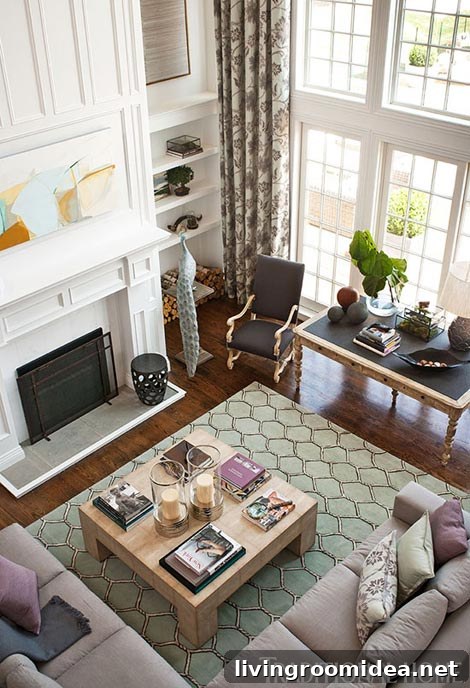
Tall ceilings and wide spaces call for appropriately scaled furniture. If everything is too low, the room will look imbalanced. Choose taller bookcases, higher-backed sofas and chairs, or taller accessories to match the room’s proportions and create a cohesive feel.
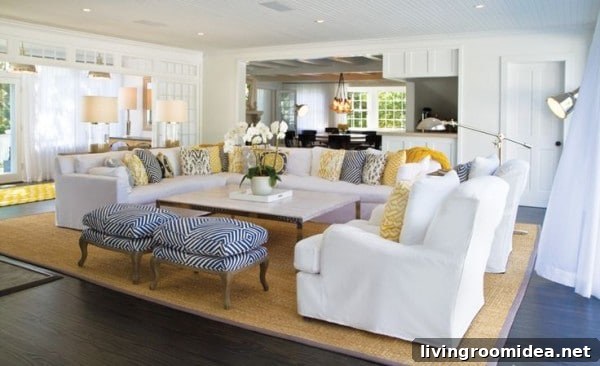
Chango & Co (NYC design firm)
5. Creative lighting.
Good lighting transforms a room’s mood. Large rooms often have more windows, which helps during the day, but at night you’ll need layered lighting to avoid dark corners. Combine two or three larger lamps with a few slim floor or wall lamps, and consider glass-based lamps to reduce visual clutter. Adding a floor outlet near a seating cluster can make lamp placement easier.
Related Posts:
Light Up a Dark Corner with a Wall Sconce (No Wiring Necessary!)
Beautiful & Affordable Amazon Lighting
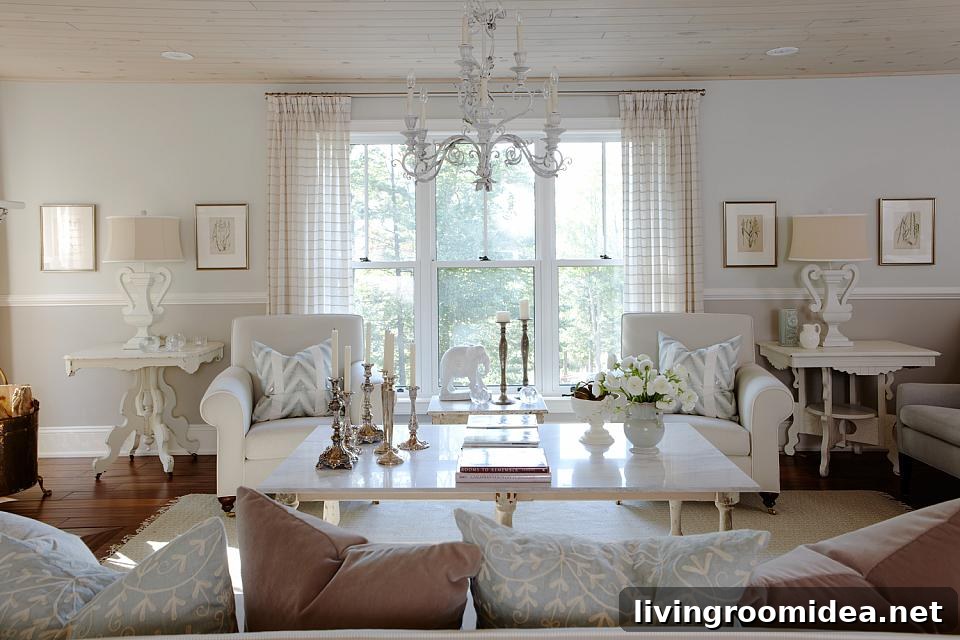
Sarah Richardson
6. Use color.
Color and pattern break up large expanses and help scale tall walls. Consider wainscoting with contrasting paint above and below the molding, or paint the ceiling a shade or two darker than the walls to visually lower it and make the room feel cozier. Always test paint colors in your own space before committing—lighting and finishes change how colors read.
PAINT COLOR TIP:
Test paint samples directly on your walls to see how they look at different times of day. Peel-and-stick samples offer a clean, movable way to try colors without cans.
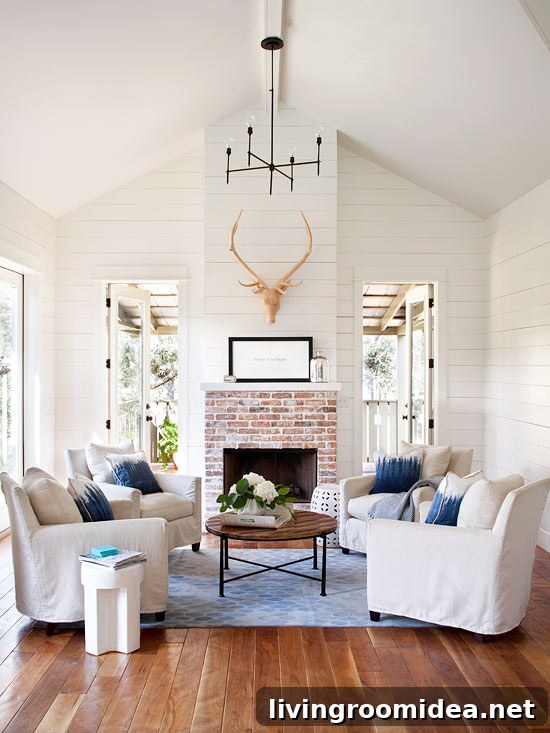
Seating area for large, small or awkward room via BHG
7. Double up.
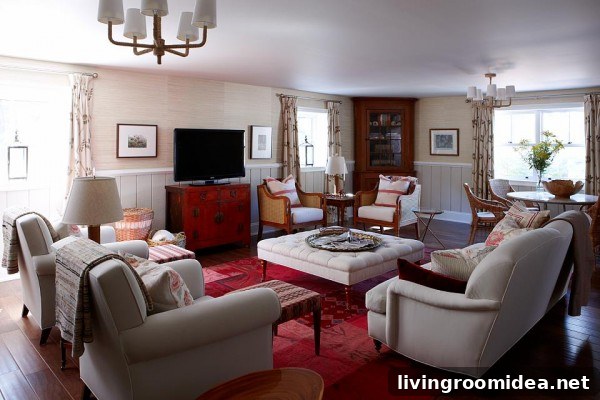
If a single coffee table feels too small, pair two matching ottomans or use a coffee table with extra ottomans tucked beside it. You can also define separate seating zones with two area rugs instead of one oversized rug. Grouping multiple chairs around a round ottoman or table creates more intimacy than just two seats, and repeating pairs (lamps, stools, chairs) increases visual impact.
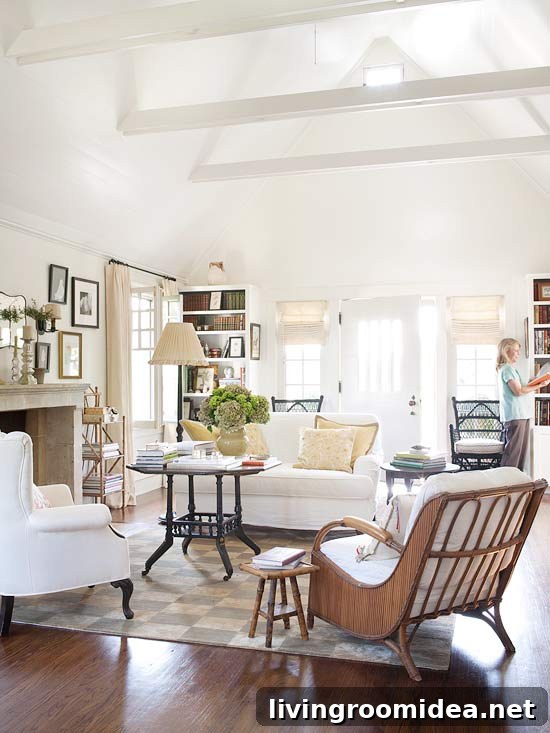
BHG
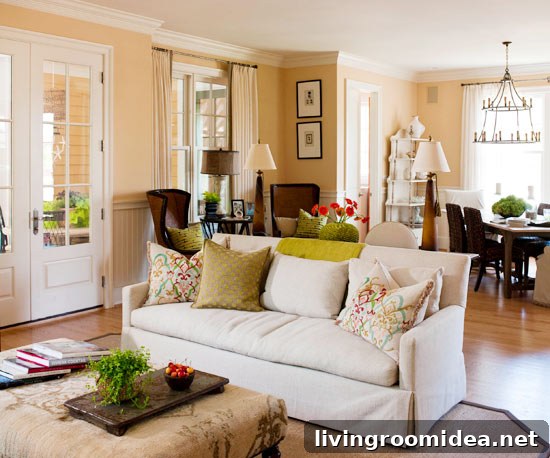
8. Avoid too much wall ‘hugging.’
Pushing all furniture against the walls can leave the center feeling empty and make conversation awkward. Pull seating away from walls to create intimate conversation areas focused on a fireplace, coffee table, or media console. Use wall space for art, bookcases, or additional seating groups instead of forcing everything to the perimeter.
BHG
9. Bold is best.
Artwork and accessories should be larger and more impactful in big rooms. Group larger pieces together to create focal points instead of scattering many small frames that get lost in the space.
10. Layers cozy up the space.
If your room feels cold or echoes, add layers: area rugs (even layered rugs), curtains, baskets, upholstered furniture, and soft accessories that absorb sound and add texture. These elements make a large room feel inviting and lived-in.
11. Use repetition.
Repeating colors, fabrics, or patterns across pillows, chairs, or accents ties a big space together and creates visual cohesion so the room reads as a unified whole rather than a collection of mismatched pieces.
Let’s talk about your living or family room! Living rooms can be tricky—high ceilings, odd connections to other spaces, and unusual traffic patterns all present challenges. These tips can help, whether your space is large, awkward, or somewhere in between.
Do you struggle with living room styling or furniture arrangement?
More helpful decorating posts:
One Essential Decor Element You Probably Need More of In Your Home
How to Decorate When Your Front Door Opens Into Your Living Room
How to Decorate: The Secret Ingredient Every Room Needs