
How to successfully mix and match different hardware finishes is a question I get asked often. It can feel confusing—one or two poor choices can make a room look cluttered—but with a few clear decisions you can create a cohesive, collected look.
We spent a long time deciding on finishes for our kitchen remodel. Starting from scratch felt overwhelming: should we pick gold, brass, nickel, black, or a mix? What about appliances and which finishes should pair together?
At first we were also choosing cabinet colors. Once we committed to a simple black-and-white palette for cabinets and most hardware, the remaining decisions became much easier. Making one big choice early helps guide the smaller ones.
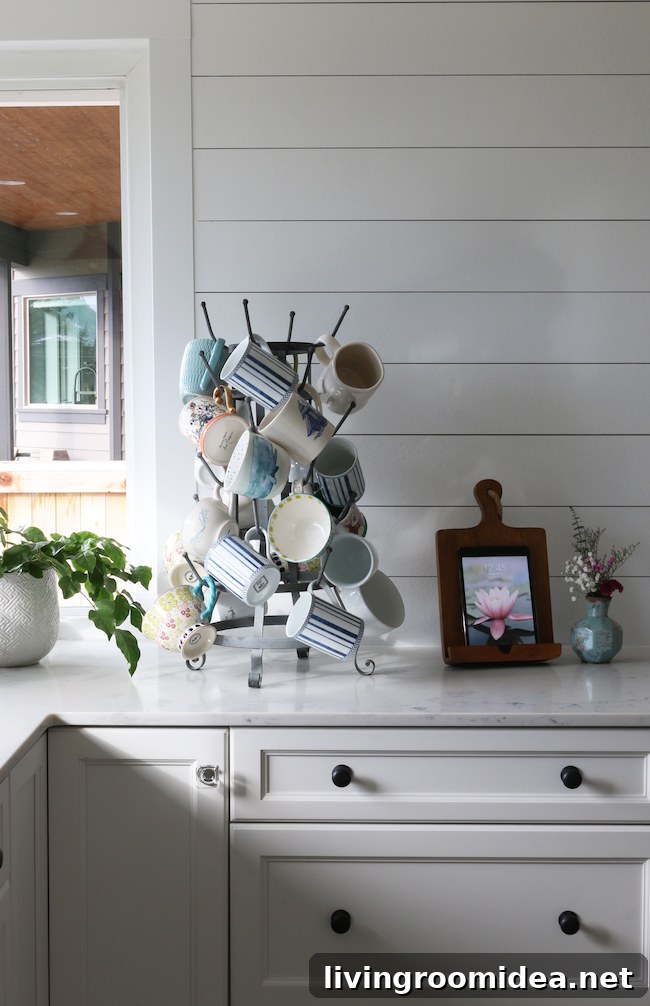
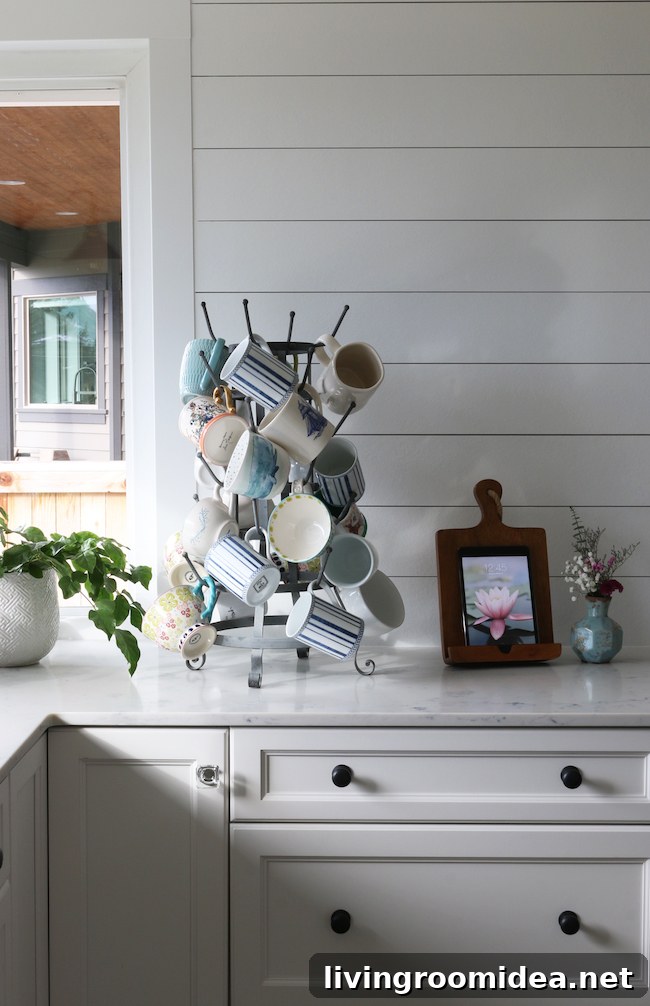 Mug Tree / Cookbook & Tablet Stand
I like mixing finishes because it gives a room character and a timeless, layered feel. In a small kitchen, however, you have fewer opportunities to experiment, so the mix needs to be thoughtful. Too many different materials can look random or unfinished.
We wanted warmth and a collected appearance without making the space feel chaotic. A simplified palette of finishes and colors felt right for the scale and mood of our kitchen.
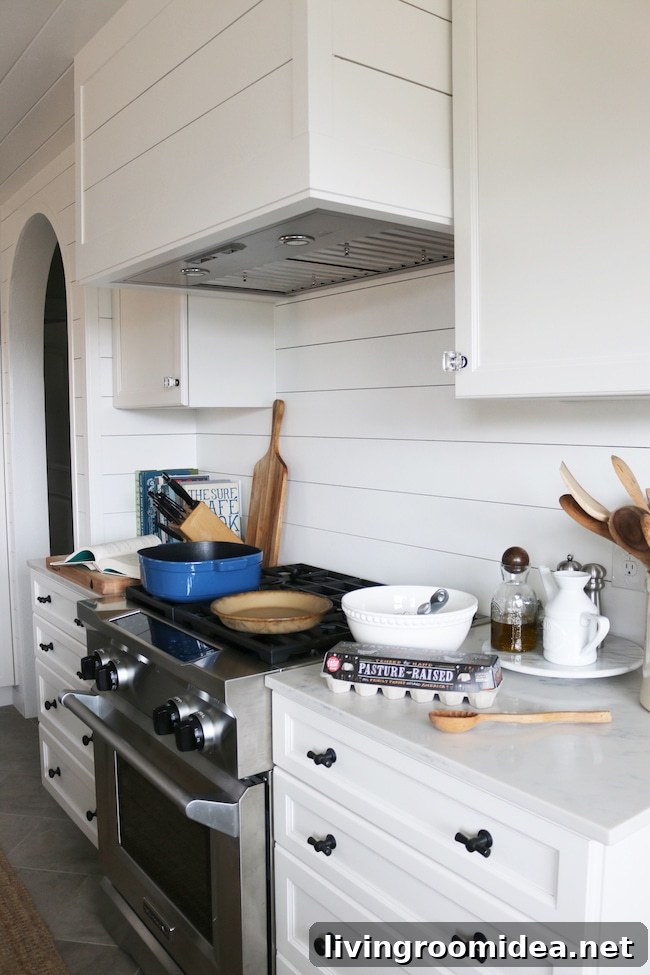
Choosing classic white cabinets with black hardware simplified the overall design. We knew our appliances would be stainless, but limited that finish to the range and fridge and chose to panel the dishwasher and hood for a cleaner look.
That restraint allowed us to introduce a subtle and unexpected mix of other finishes without overwhelming the room.
Our approach was simple: we made a few visual rules and stuck to them. Those self-imposed rules created balance and continuity while still allowing variety.
Rules we followed
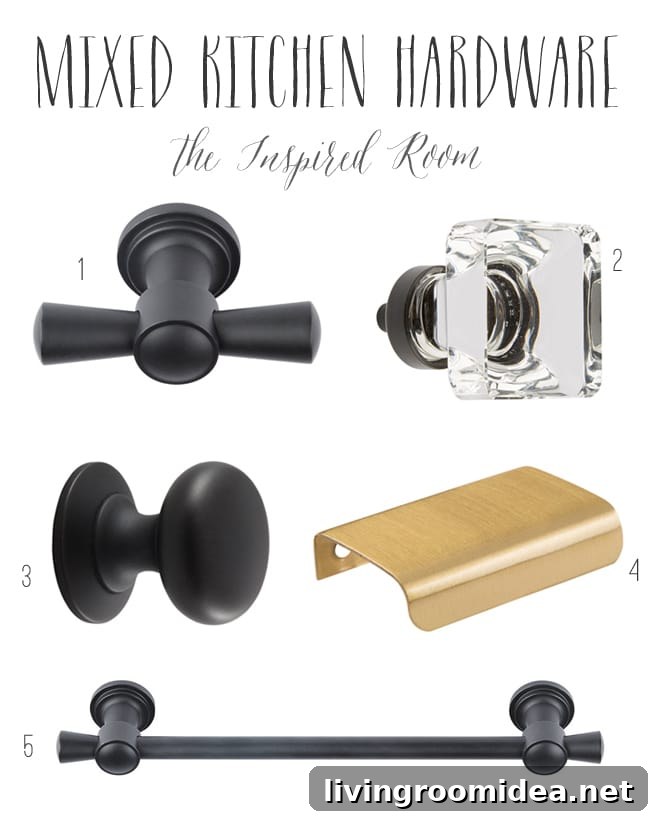
When using black hardware, we committed to the exact same finish across all black pieces (same finish name, same source). Consistency in the black pieces made the variety read as intentional rather than haphazard.
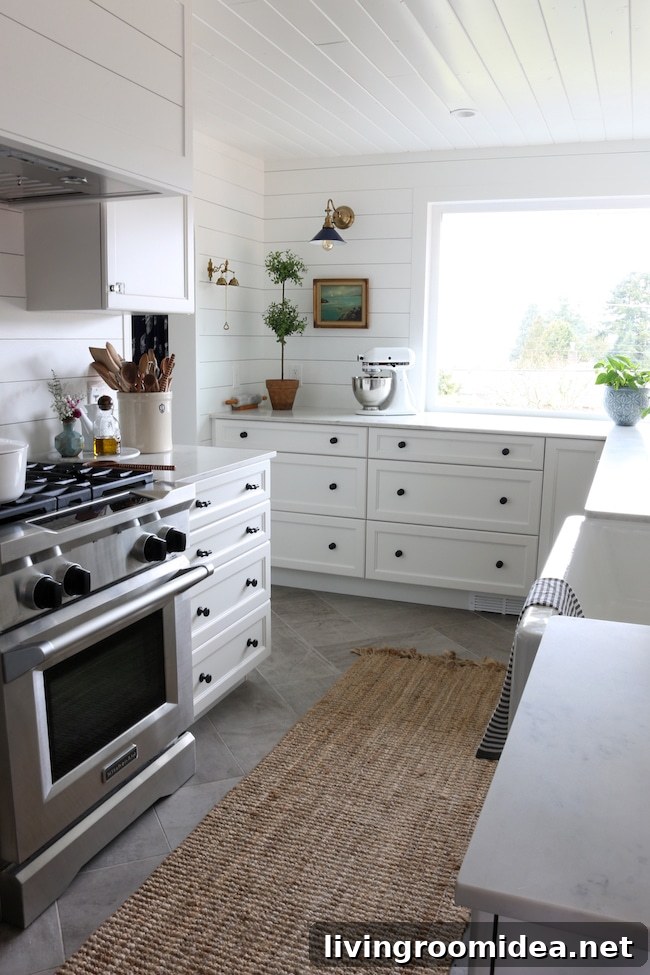 Range and Range Hood
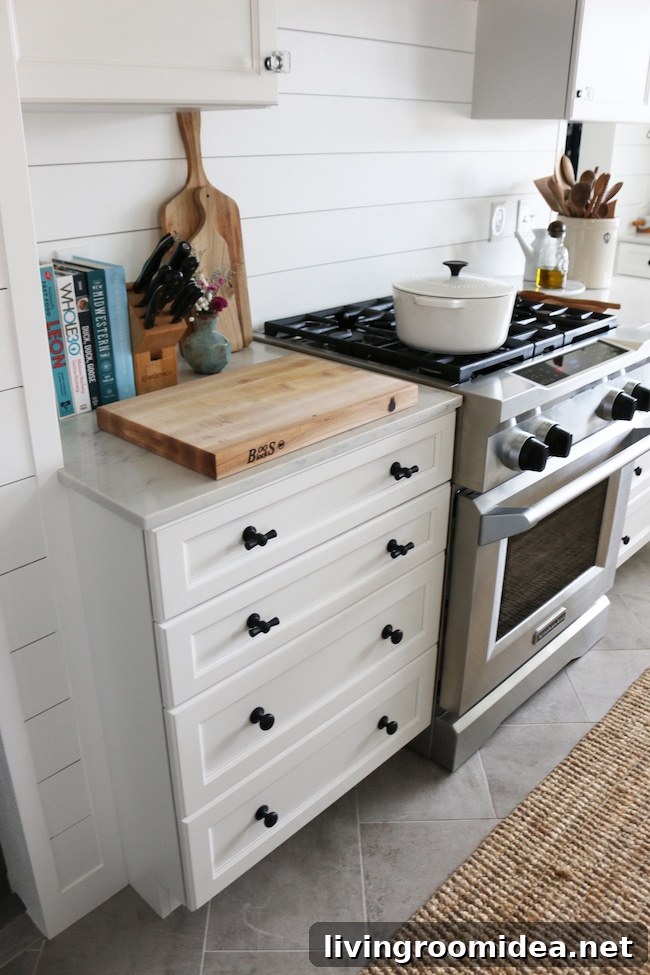
All drawer fronts use two matching black knobs each, keeping a repeated pattern across the kitchen.
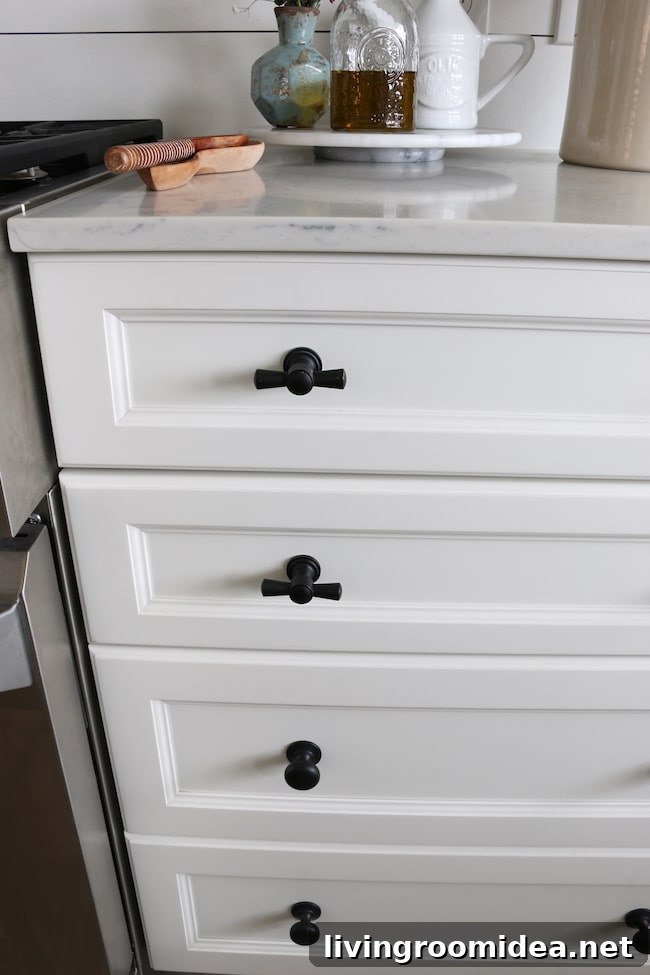
There are two exceptions for added interest: the narrow top drawers in the sets of four on either side of the stove use a different shape—nautical-style pulls instead of round knobs. Because the stove itself has round knobs, swapping the top drawer hardware adds a whimsical contrast while maintaining symmetry by repeating the same change on both sides.
We kept two pulls per drawer where possible for continuity and repeated the unique mix on both sides of the stove to preserve visual balance.
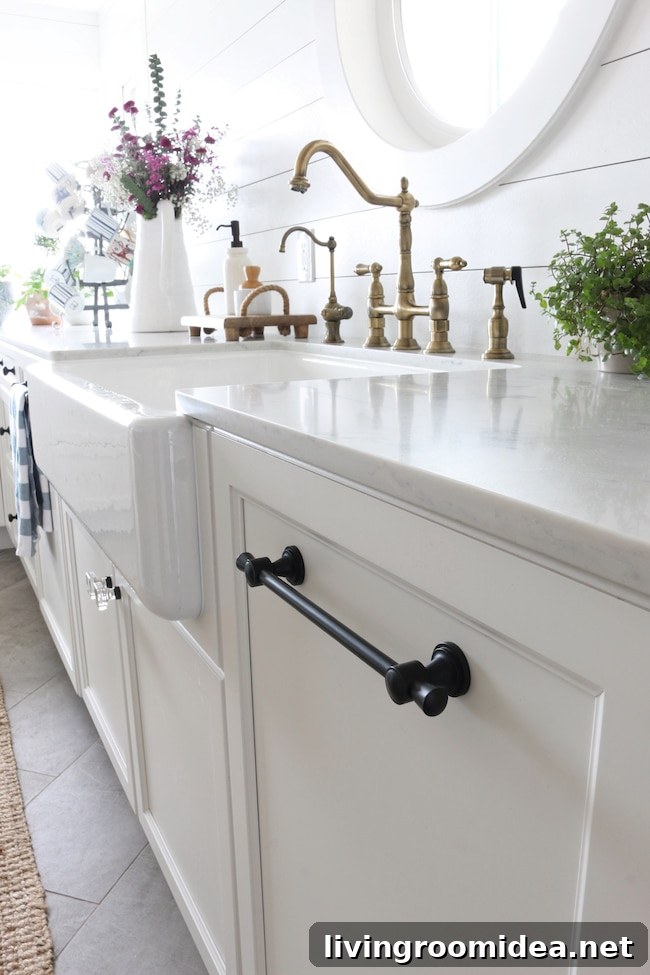
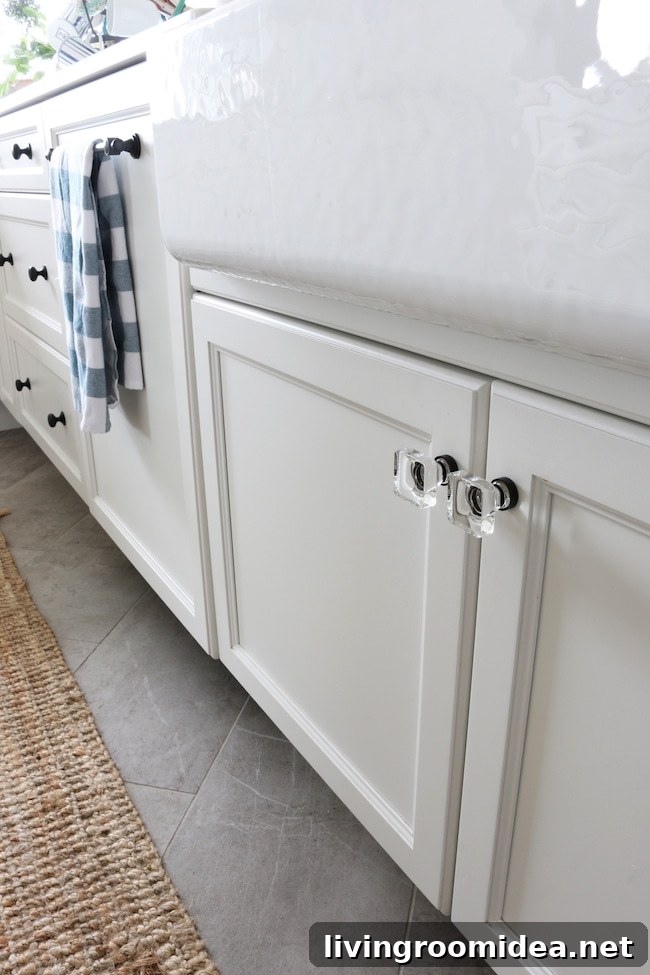
The cabinet fronts beside the sink—the dishwasher panel and the trash cabinet—received long bar-style black pulls. Long bars are practical for pulling and convenient for hanging towels, so they made sense at the sink and reinforced symmetry on either side of that focal point.
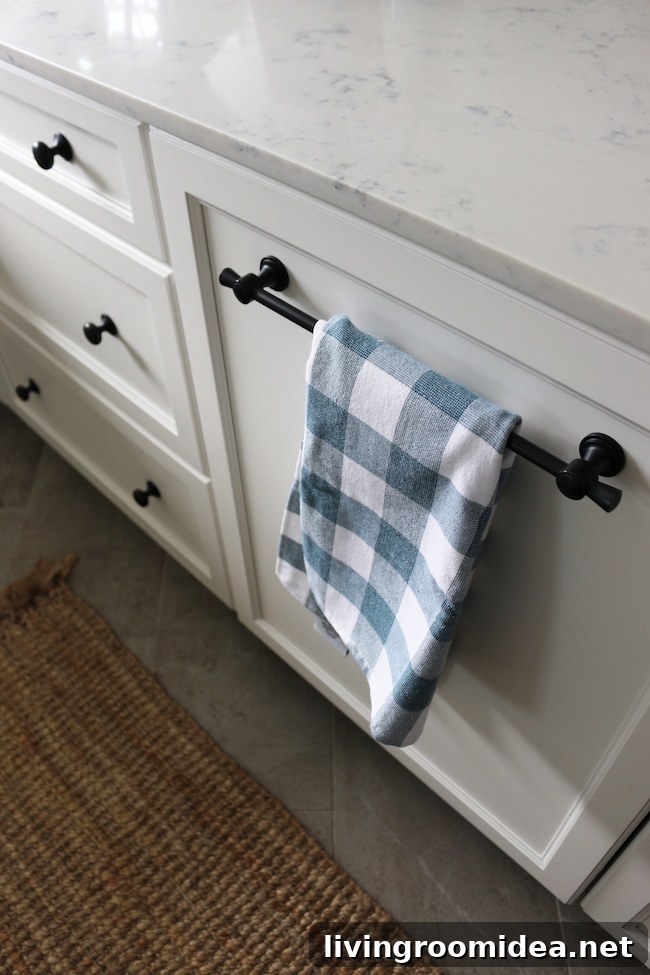 Panel-Ready Dishwasher
Symmetry is a helpful tool to visually simplify a space. Even when mixing finishes, repeating shapes and placements keeps the overall look coherent.
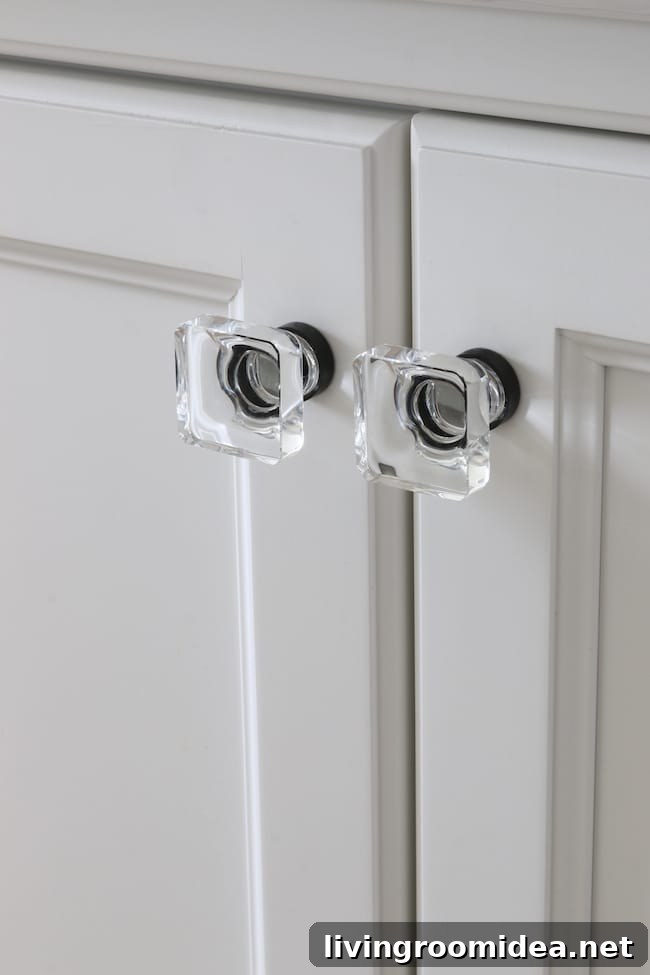
Another rule: every cabinet door received a square glass knob mounted on the same black backing finish. The clear square glass contrasts with the round black knobs and adds a touch of shine without overpowering the design.
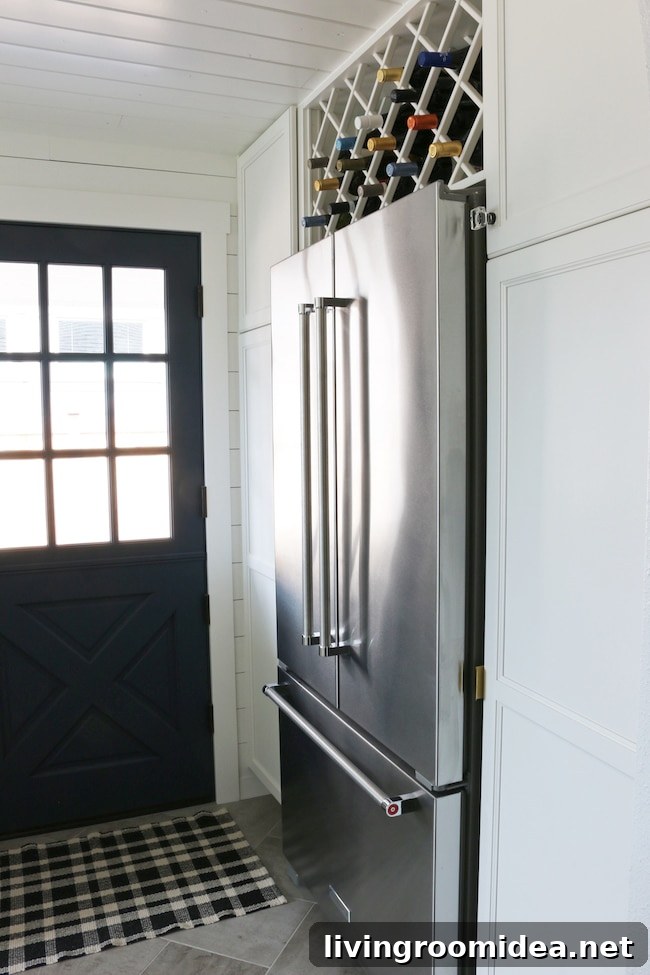 KitchenAid Refrigerator
Design rules can and should be broken thoughtfully. For the tall pantry doors we skipped the glass-knob rule and chose slim brass handles instead. The brass was subtle, complemented other brass accents in the room, and avoided competing with the stainless refrigerator pulls. A slim profile kept the pantry hardware from feeling too heavy.
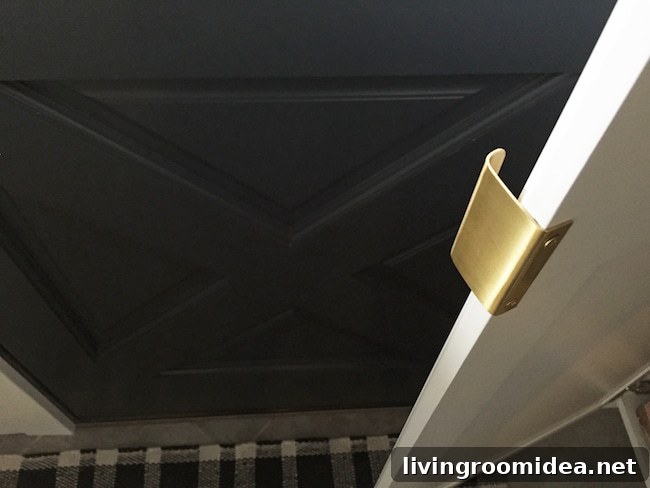 How the brass handles look when the cabinet is open
We also used black hardware on the navy Dutch door to maintain simplicity and continuity across sightlines.
After selecting cabinet hardware, we made two last finish decisions: the faucet and the three sconces.
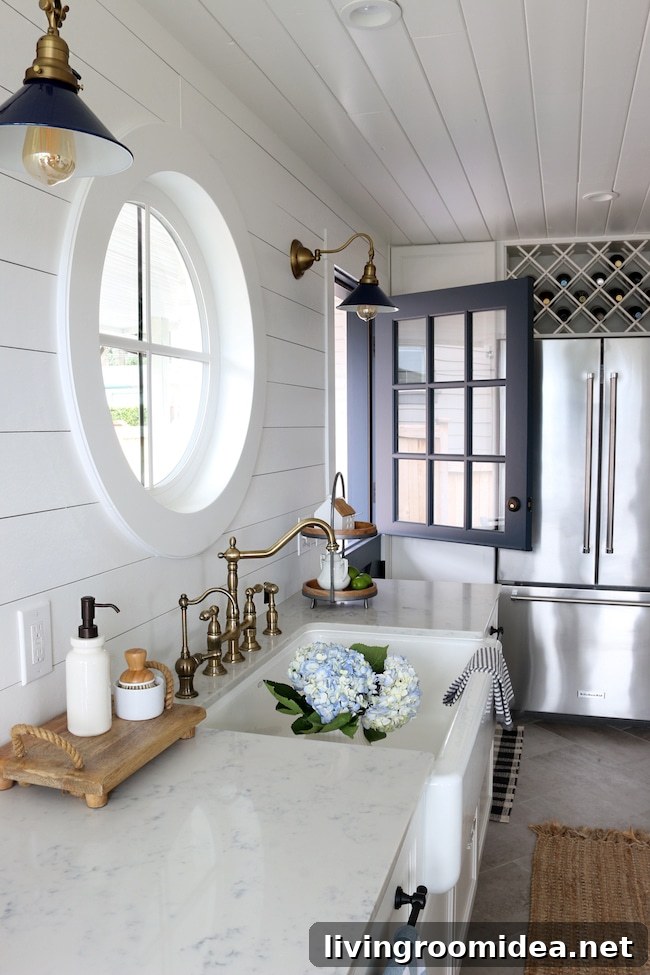
Instead of more black hardware, we chose a warm brass/gold finish for the faucet and sconces to introduce warmth and a “collected over time” feeling. We selected darker brass tones for the sconces so they would harmonize with the black hardware while still adding contrast.
The brass faucet and sconces lift the room with warmth and sculptural shape and help tie in the wood and natural textures throughout the space.
Conclusion: Mixing finishes in a room can seem complicated, but if you set a few reasonable rules—consistency in key finishes, repeated patterns, and thoughtful exceptions—you can achieve a layered, timeless look that still feels cohesive.
We’re thrilled with how the details came together. The mix of finishes feels interesting without being trendy, and the simplicity of the palette makes it easy to update the room with new colors or textiles in the future.
Sources mentioned in the post are listed with the original article.