
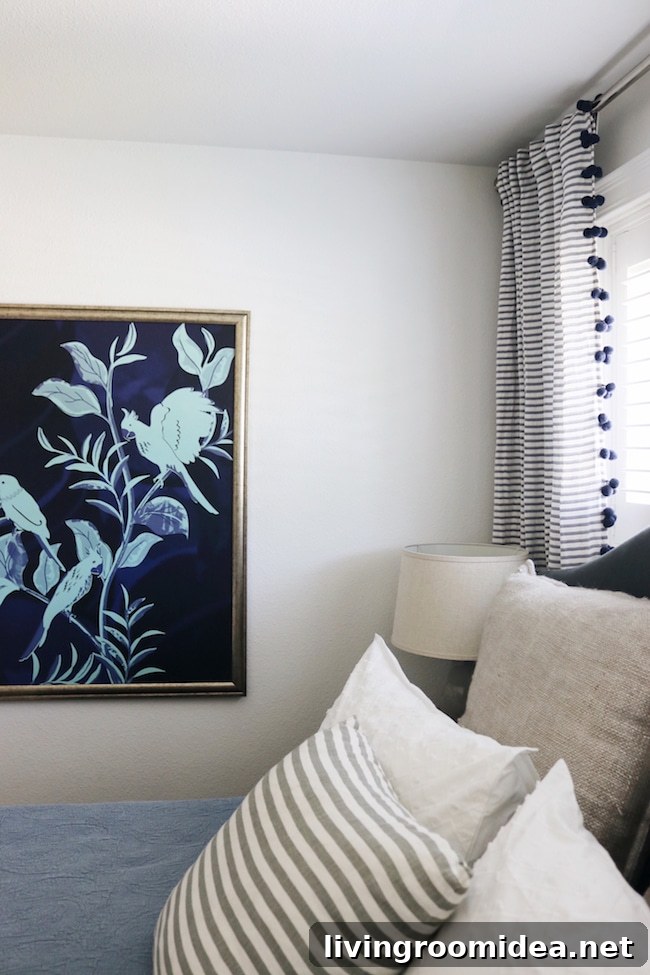
Choosing artwork for your walls can feel daunting, especially when you want to create a grouping. How do you know what works together? How do you use art to pull a room’s look together?
I’ve written about selecting artwork before, covering sources and practical guidelines. Those posts dig into why I choose certain pieces and how to place them for the best effect.
Because I’m often asked about this, here are three common decorating mistakes people make when displaying artwork — plus two mood boards to inspire how pieces can work together in a room.
Art is personal, so there’s no single correct approach. I’ve seen gallery walls that break the rules and look wonderful. Use these tips as helpful guidelines, but ultimately choose what makes you happy in your home.
Below you’ll also find two mood boards that show art combinations I think are effective.
Three common decorating mistakes when displaying artwork:
- Using only small artwork
Relying exclusively on small pieces can make a wall feel busy and disjointed. Mixing sizes, shapes and scales adds visual interest; including at least one larger statement piece helps anchor the space without creating clutter. If your room already feels busy, a single oversized artwork can calm and focus the design.
2. Displaying too many pieces with words or quotes
Artwork with words can be striking, but filling a room with quotes — on walls, pillows, or other surfaces — can create a noisy, frantic feeling. Your eye keeps moving trying to read everything, which prevents the space from feeling serene. If words matter to you, choose one meaningful piece as a focal point instead of scattering text everywhere.
3. Failing to create a cohesive design and color palette
Art should complement the room’s overall design. When artwork clashes with the color palette or mood of the space, the room can feel disconnected. Use art to reinforce the room’s colors, or select one key hue from the palette for a statement piece. Repeating that color in small doses around the room — ideally three times — helps guide the eye and unify the space.
Consider the style and subject matter of each piece when assembling a grouping. Diverse artworks can read as a cohesive collection when tied together by a consistent color scheme or repeated motif.
Below are two mood boards that illustrate how different prints can work together.
Explore these art pairings as examples of how scale, color, and subject can combine to create a pleasing display.
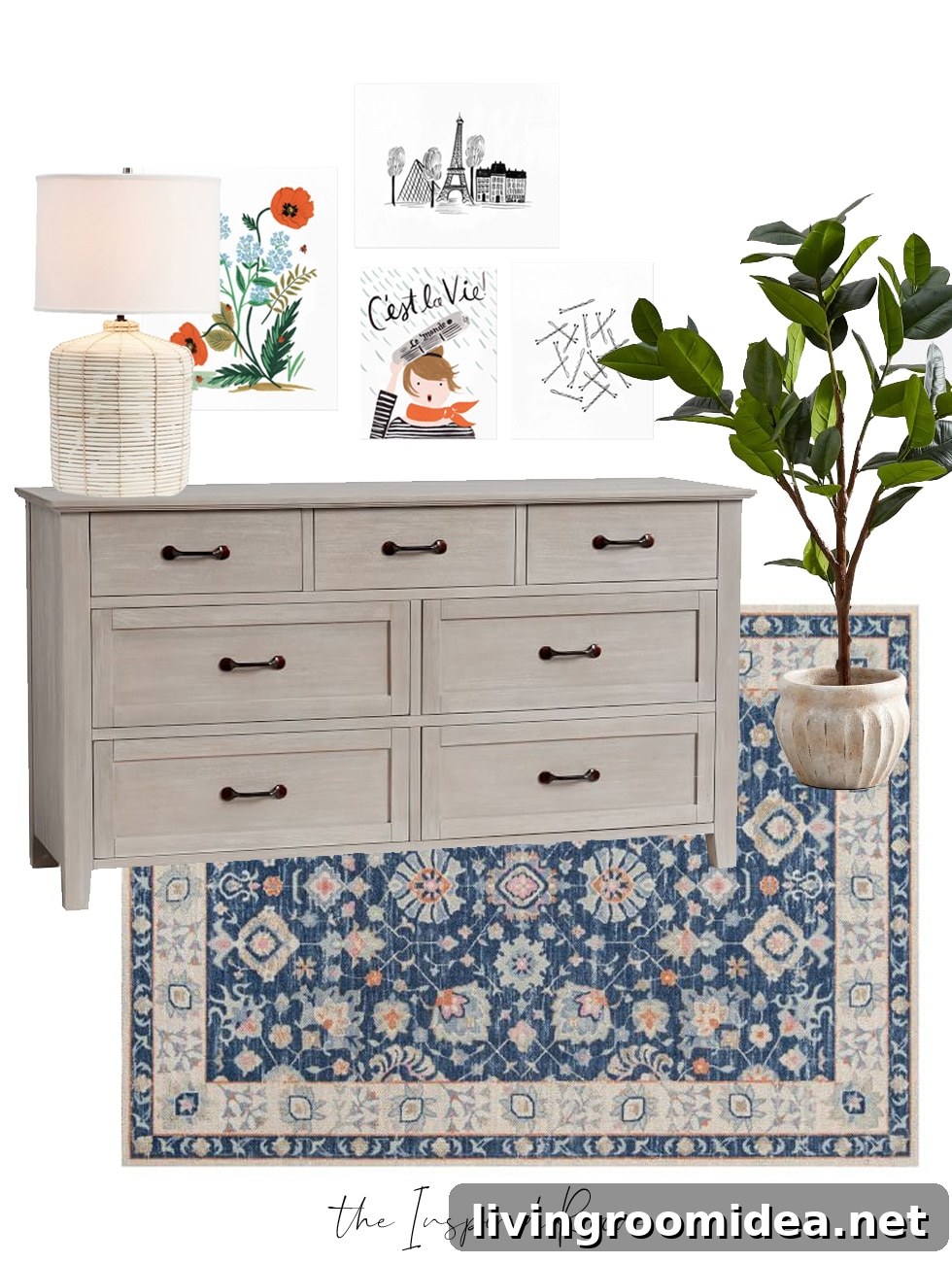
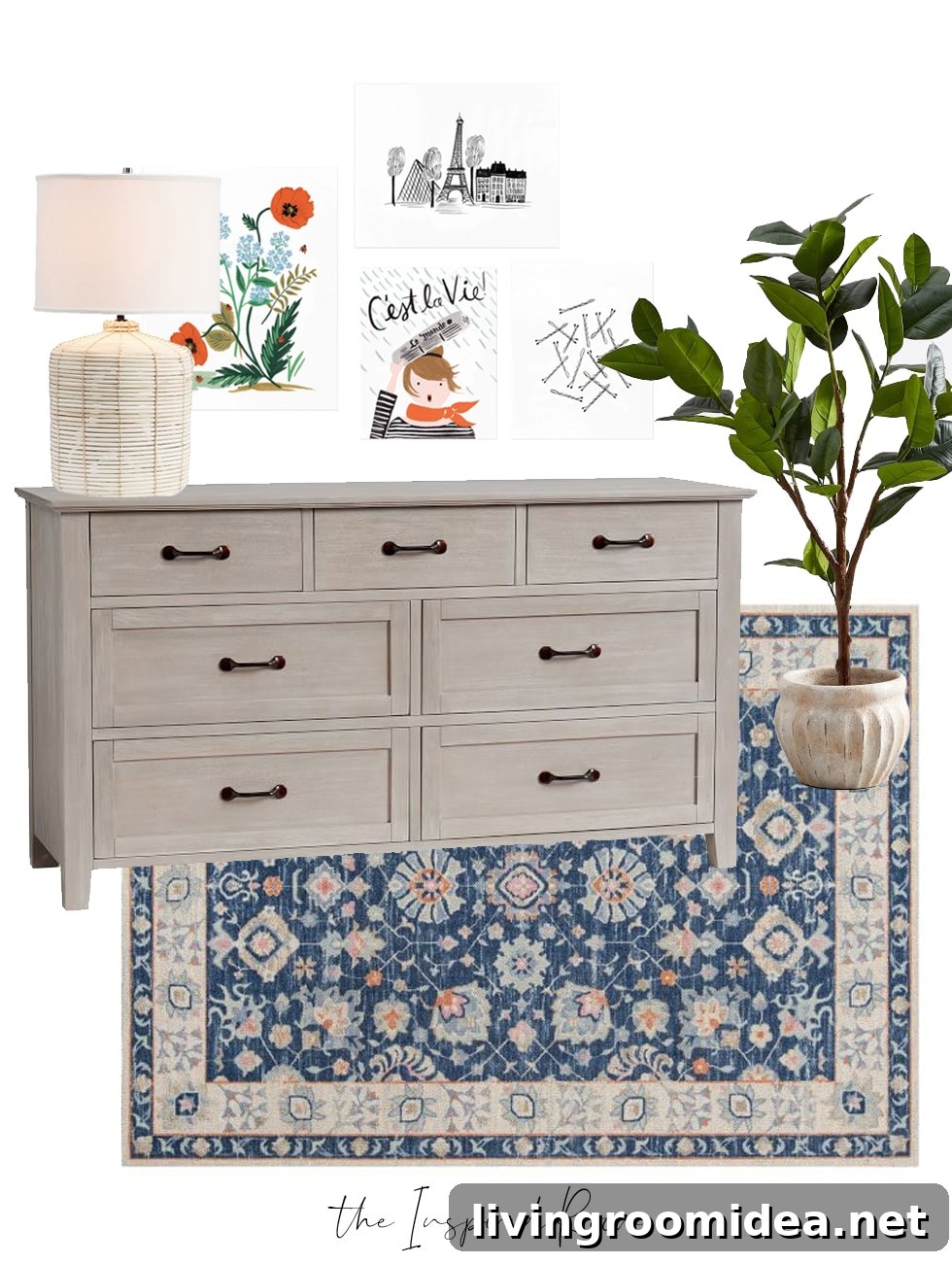
This first mood board mixes subjects — a botanical print, a portrait with the phrase “C’est la vie,” a Paris landscape, and a small-object study. The palette of black and white with pops of red-orange unites these varied images. The phrase adds a whimsical touch while the recurring red-orange in the rug ties the arrangement into the room.
Sources for above: Dresser // Faux Potted Rubber Tree // Poppy Botanical Floral Art Print // Paris Sketch Art Print // C’est La Vie Art Print // Bobby Pin Art Print // Patterned Rug // Rattan Lamp
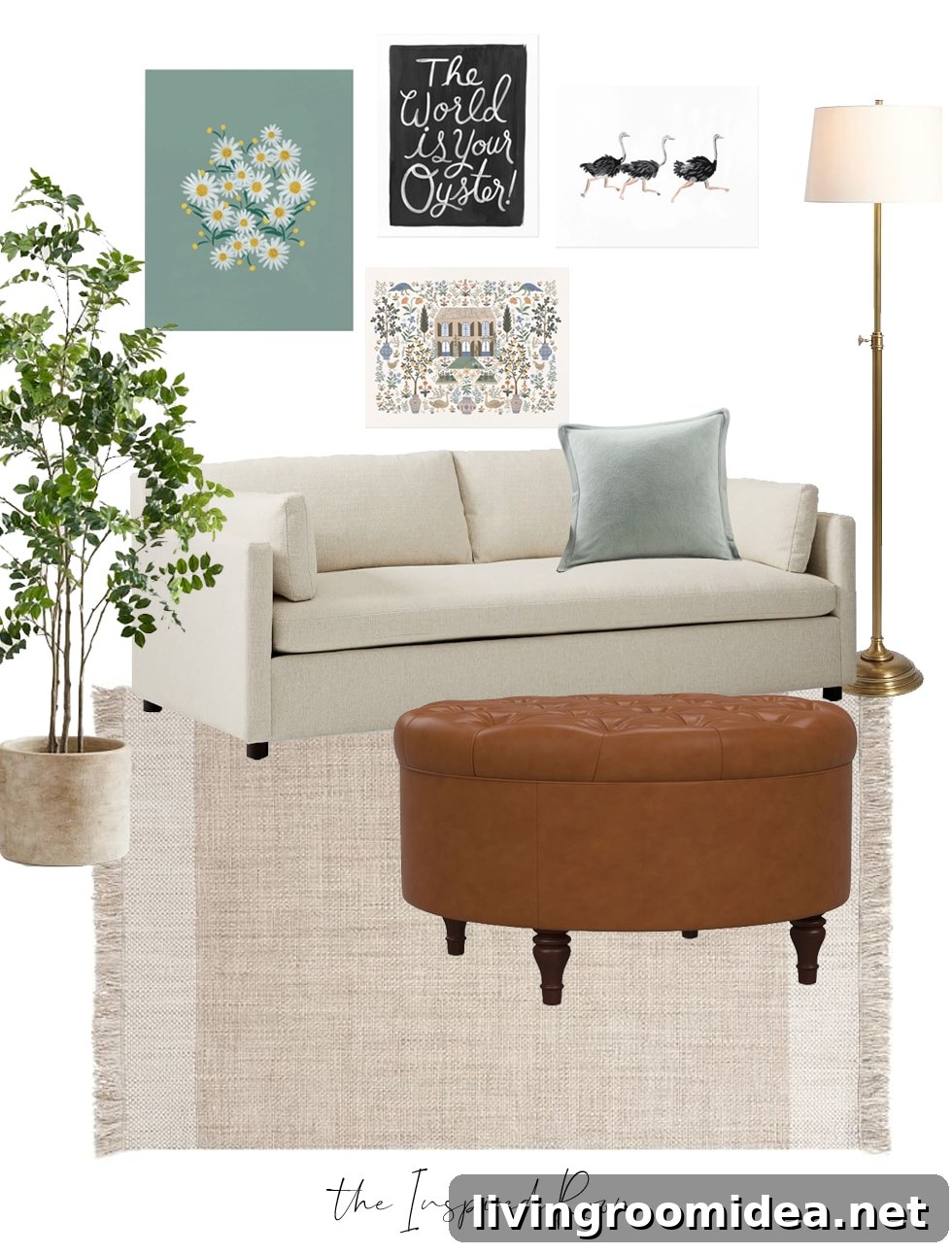
The second mood board pairs a floral, a quote, a detailed house/landscape pattern, and a simple ostrich print. The house/landscape print establishes a color story for the room: sage greens, blues, black and tan. A light green pillow echoes the artwork’s tones and helps circulate the eye through the space, while neutral sofa and rug keep the focus on the art.
Sources for above: Sofa // Faux Green Leaf Tree // The World is Your Oyster Art Print // Sage Green Daisies Art Print // House Pattern Art Print // Ostrich Art Print // Green Pillow // Leather Storage Ottoman // Gold Shade Floor Lamp // Indoor Outdoor Natural Stripe Rug
Shop featured art prints from Rifle Paper Co. to recreate similar looks.
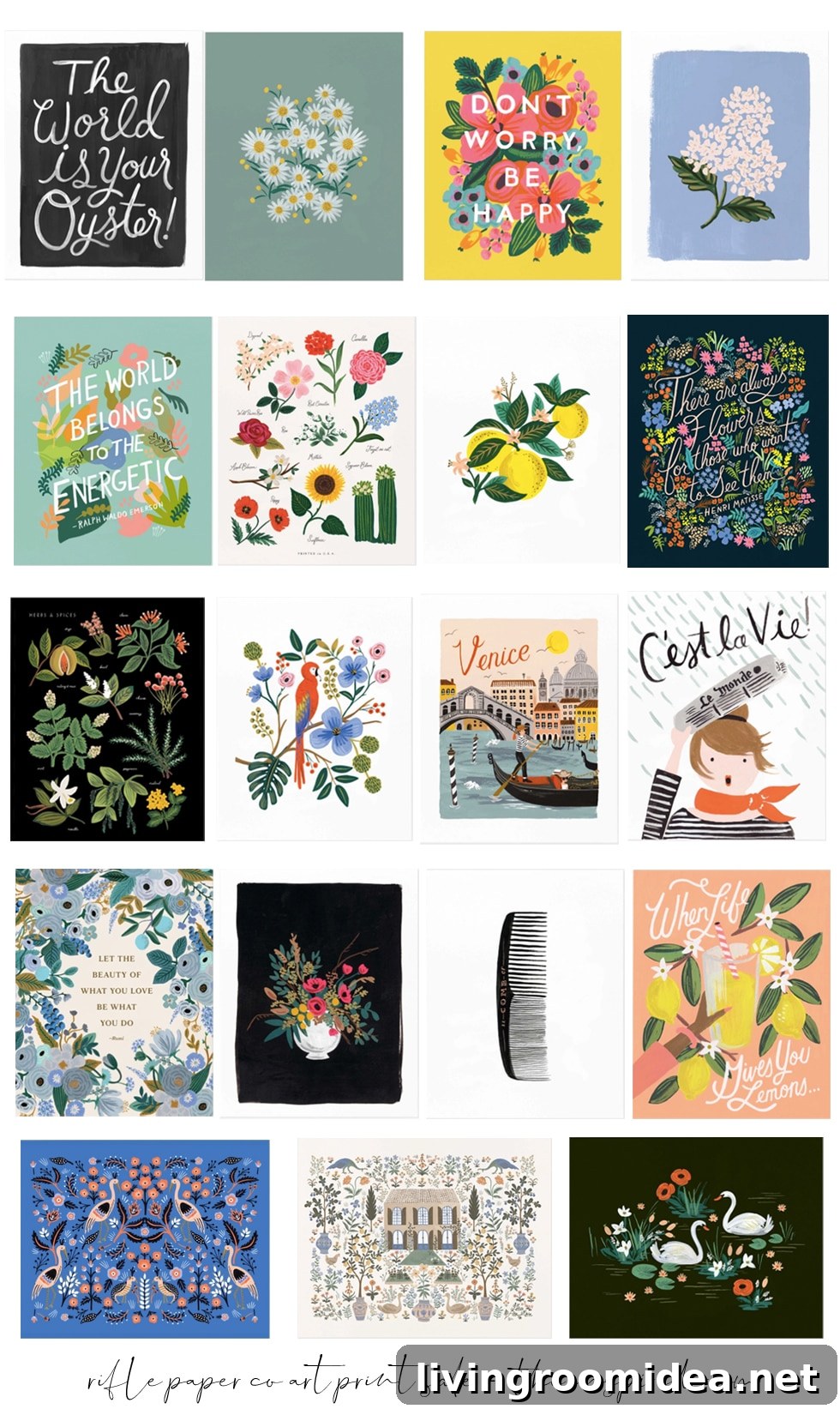
For more seasonal ideas, see a recent post with additional pretty artwork for spring.
If you’d like more decorating guidance, my book answers practical questions about arranging furniture and decorating rooms to feel comfortable and cohesive.
Find room-by-room inspiration and tips to help you place pieces and create balanced, welcoming spaces.