
After my tile-laying extravaganza, grouting and sealing felt like small tasks — especially since I took the week between Christmas and New Year’s off and planned several days to finish them. Still, I dreaded grouting. My dad called it “the pits,” and friends like Katie Bower admitted it was the hardest part of tiling. Even the employee at the home improvement store hinted it wouldn’t be pleasant. Couldn’t we just leave it?
Of course it had to be done, and I had already postponed it twice. First, I mixed the grout wrong — I misread the measurements and added far too much liquid — and a snowstorm kept us from getting more supplies. The next day I picked up a replacement box but an accident delayed me until late, so I couldn’t start before bed. In the end, those delays were a blessing.
Before demo we’d bought nonsanded Polyblend grout from Home Depot. We chose nonsanded grout for both shower walls and floor because it’s recommended for 1/16″ grout lines and sanded grout can scratch marble. We had a box of “bright white” for the shower and “nutmeg” for the floor, although the nutmeg was redder than we liked. Over the break someone suggested visiting a specialty store like The Tile Shop for a higher-quality grout with better mildew and mold resistance and a broader color selection. That tip was spot on.
The quality remains to be fully judged over time, but the color options were a game changer. The Tile Shop had a color guide that let us hold our tile up against actual grout, not just a label, to see how they’d look together:
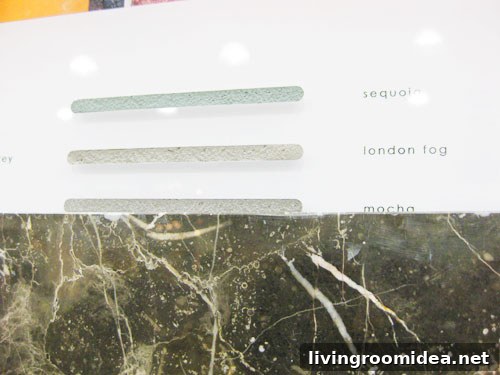
We chose “standard white,” a subtler white closer to our tile color than the Home Depot “bright white,” and “mocha,” a browner alternative to the red-toned nutmeg. It was the same price as the Home Depot product, so the switch was a no-brainer. We were glad we hadn’t used the first grout, which would have made our shower lines look like over-whitened teeth and the floor like bad auburn streaks.
With better grout in hand and after allowing the tiles at least two full days to set, it was finally time to grout. I gathered supplies, most inherited from my dad’s bathroom projects and many originally purchased at The Tile Shop. My grouting kit included:
- A grout float
- Sponges
- Buckets (one for grout, one for water)
- Paper towels and rags
- Flexible Grout Admixture
- Grout Release
- Marble Sealer
First I prepped the surfaces. The grout release acts like a nonstick layer, making it easier to remove excess grout from the tiles later. The marble sealer protected the marble floors and would also be used later to seal the grout — a handy multitasker.
Once the release and sealer were applied, I mixed the grout. Determined to avoid my earlier mistake, I followed the box instructions carefully. Instead of mixing the powdered grout with plain water, I used Flexible Grout Admixture per the tile specialists’ recommendation. It’s supposed to reduce shrinking, cracking, and discoloration over time — useful benefits for a bathroom.
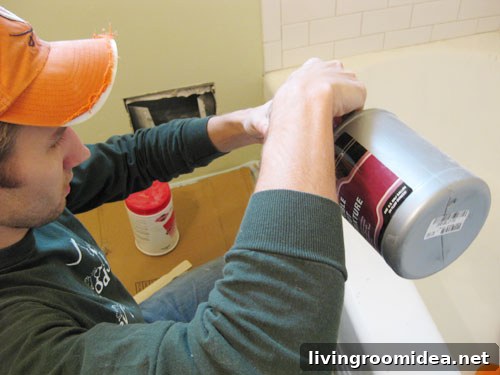
Many people warned me that mixing grout by hand is unpleasant, so I mixed only what I thought I could use in about 25 minutes before it would begin to set. Using a paint stir stick, I worked out the lumps and aimed for a consistency like toothpaste or cake batter — not too runny, not too dry. It took some elbow grease (and one broken stick), but it wasn’t nearly as bad as I’d feared. After letting the mix sit ten minutes, I stirred again and grabbed the grout float.
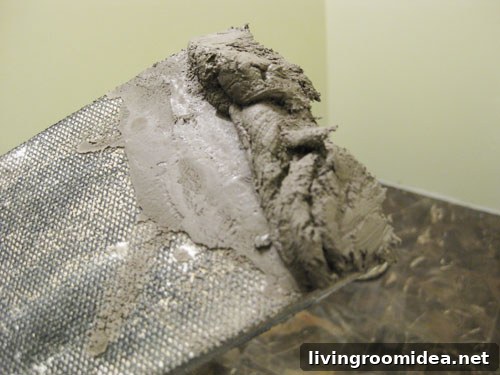
The grout float is like a rubber trowel. I used it to pick up a small amount of grout and press it firmly into the joints, holding the float nearly flat and spreading the grout back and forth to pack the cracks. With narrow grout lines this was quick, though you should apply firm pressure to ensure full coverage. Then, holding the float at a 45-degree angle, I scraped away excess grout from the tile faces.
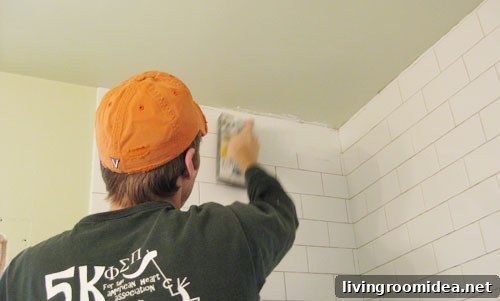
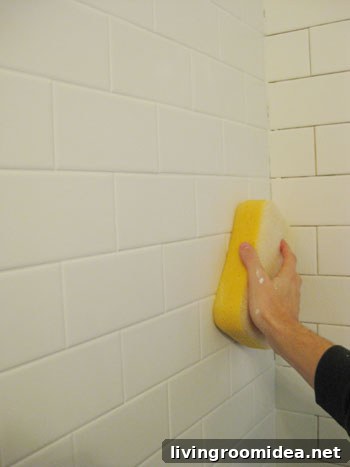
Even after removing most of the excess with the float, some grout remains on the tiles. After eight to ten minutes of grouting (you don’t want to wait more than 15 minutes), I used a lightly dampened sponge to wipe the tiles. Light pressure and frequent rinses of the sponge are key. This step both lifts remaining grout from the tile faces and smooths the grout lines. Keeping the water fresh and avoiding oversaturation made the process surprisingly effective. The grout release really helped here — the tiles wiped clean without much fuss.
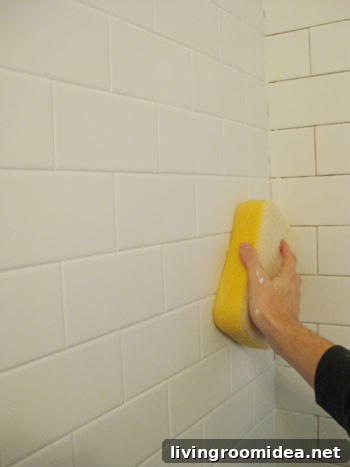
I won’t pretend it was effortless — grouting the entire shower was tiring and a bit monotonous, and I had to stop occasionally to mix a fresh batch. I used about 3 lbs from a 5 lb container for the tub/shower surround. When I stepped back, though, the transformation was amazing: the dark gaps were gone and the focus returned to the tiles themselves.
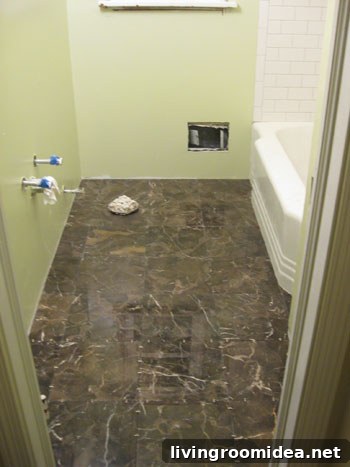
Next I grouted the floor. Mixing the darker mocha color required a bit more attention to achieve consistent color, but grouting the larger tiles went faster. I used roughly 1.5 lbs of grout for the floor. The effect was again dramatic — until the haze appeared.
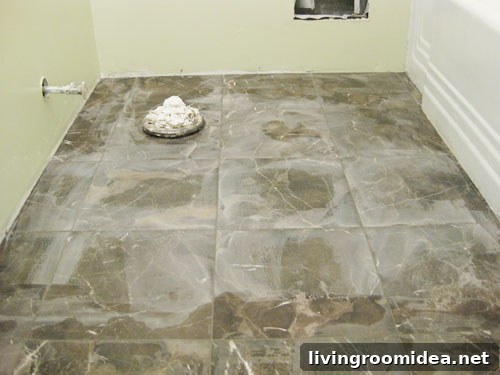
No matter how careful you are, a thin haze of grout film often remains once the surface starts to dry. The marble sealer helped, but a few more passes with a damp sponge just moved the haze around rather than removing it. I had a bottle of haze remover on hand but wanted to avoid extra chemicals on our marble, so I tried drying the haze with a paper towel. With elbow grease and several passes, the dry towel method removed the haze on both floor and walls. A finger swipe left no residue — victory.
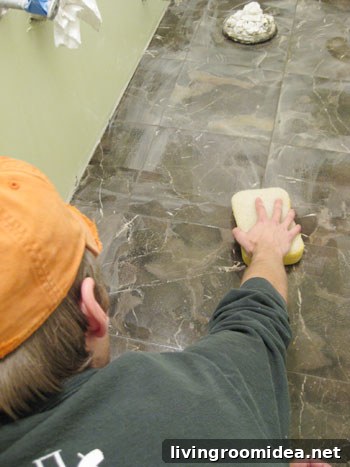
After 48 hours of curing we planned to seal the grout, but a minor “water incident” extended that to 72 hours. While I was out, a helper accidentally turned on the sink’s water valve, sending a spray onto the ceiling and drips onto the floor. We decided an extra day of cure time wouldn’t hurt.
Sealing was straightforward. I applied a few coats of marble sealer to the floor and SurfaceGard to the tub/shower surround to protect the grout from stains and mildew long-term. Note: sealing slightly darkened the grout, which blended nicely with the mocha tones in the tiles.
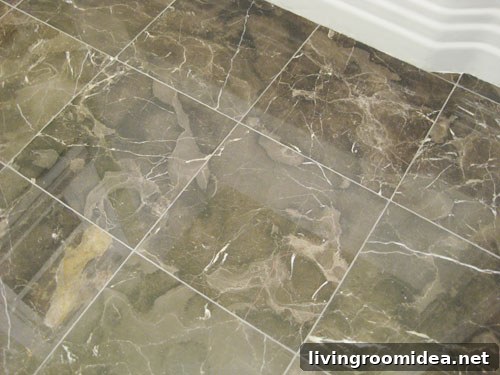
So that’s my grouting story. Maybe working with thin grout lines in a small room made the job easier, or maybe good preparation and the right products did the trick. After a couple of coats of sealer and some final touches like installing fixtures and caulking edges, the room felt almost shower-ready. Light at the end of the tunnel indeed.
Psst — Want to read about the earlier chapters of this bathroom makeover? Check out Chapter One, Chapter Two, Chapter Three, and Chapter Four.