
Martha Stewart
I have always enjoyed the challenge of living well in a smaller home and making every inch count. In the tiny English cottage I once lived in, finding clever storage and smart furniture arrangements was like a game — a satisfying puzzle to solve so the house worked perfectly for our family.
How can you make the most of your small house?
1. Turn finding space into a game.
In a small house, every item often has just one good spot. We adapted: my husband’s closet became a hallway linen cabinet, canned goods were neatly organized on plastic shelving in the basement, baking dishes lived on wire shelves on the enclosed back porch, and beds were placed on risers to create valuable under-bed storage. Approaching these decisions playfully made optimizing the home enjoyable rather than stressful.
Small spaces can feel cozy instead of cramped when you focus on clever solutions. I took pleasure in arranging storage and furniture to meet our needs. Thinking of space planning as a creative challenge helped me feel confident that the house had enough room for what mattered.
2. Make rooms serve more than one purpose.
Rooms that serve dual functions save space and add flexibility. For example, a combined library and dining room can be both charming and practical — serving as a place to eat, a home office, or a reading nook. Multipurpose rooms allow you to use your square footage more efficiently without sacrificing style.
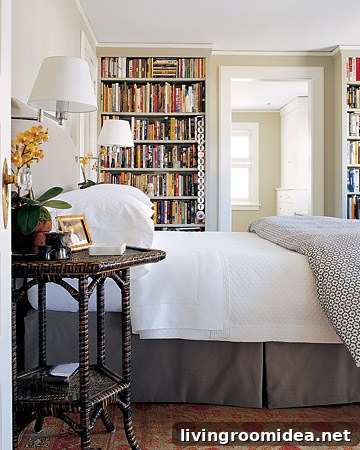
Bookshelves in a bedroom can work — although I sometimes worry about dust — and if that’s the best spot for your collection, it’s perfectly fine. But if you have the option, placing books in a shared living or dining area can create a warm, lived-in look while keeping bedrooms more restful.
Southern Living
3. Choose built-ins over bulky furniture.
Freestanding furniture can consume a lot of floor space. Built-in pieces — or furniture that fits into a niche as if it were built-in — give you more functional space for the same footprint. I particularly love banquettes: built-in bench seating with a table can replace a full set of chairs and a dining table, making an eat-in kitchen possible even in a small room.
Consider other built-in opportunities like shelving, window seats with storage, or custom closets that use vertical space wisely. If building in isn’t an option, aim for streamlined furniture and fewer, more versatile pieces to keep rooms feeling open and uncluttered.
4. Be creative with multifunctional solutions.
Creative, dual-purpose pieces can dramatically increase a home’s usability. One striking example is a custom dining table that doubles as a pool table: a family meal can quickly become an evening of games without dedicating an entire room to recreation. Though custom pieces can be expensive, they illustrate how one element can serve multiple needs.
In our small house, the dining room doubled as a playroom for the first two years of my son’s life. Prioritizing a play area over a formal dining space was practical and made daily life easier. Letting go of less-used rooms and tailoring spaces to what you truly need helps a small home function far better.
If you want to make the most of a small house, look for ways to double a room’s usefulness. Often we don’t need more square footage — we need smarter solutions.
Do you consider your home small, medium, or large?
Country Homes & Interiors Feb 2005 via House to Home
Custom Made Pool Table by Sir William Bentley Billiards
Related posts:
A Small Kitchen Makeover
A Cute Teeny Tiny House {via Jewel Box Home}
Making a Small House Feel More Open