
Update and add charm to a kitchen on a budget
A
Are you ready to update your kitchen? Do you want to add charm and personality but aren’t sure where to start? Creating ambience is the key to having a truly beautiful home.
You know how you can look at some magazines and see a perfectly decorated room — but it seems to be missing something? That is often because it is missing ambience, that little ingredient that makes a room feel special, warm, personal or inviting. You can add ambience through accessories, but the architecture and small built-in details are where a lot of character can come from.
The most charming homes have personality even when the furniture and accessories are removed. You can’t always change the structure, but often you can trick the eye into thinking the architecture is more interesting than it really is.
I updated the kitchen in my old English-style house and learned how far a reasonable budget will take you. The previous owners had given this house a 1970s kitchen, so my job was to bring back an older, cozier look without changing the layout or blowing the budget.
I focused on affordable details and spent a lot of time thinking about each one. Below I’ll describe the practical approaches that added real personality without breaking the bank.
Sink and surrounding details
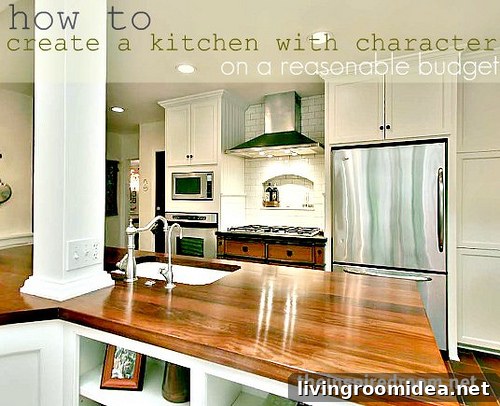
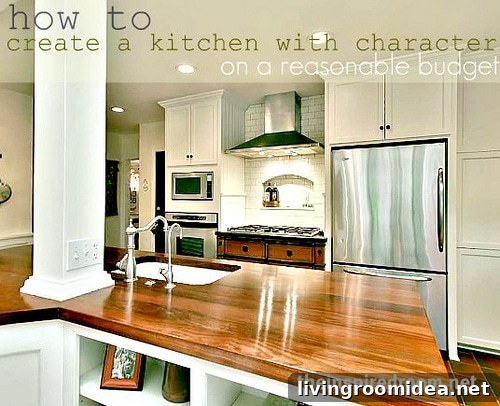
I wanted an apron-front farmhouse sink but it was pricey. Instead I chose a sink that matched the size and built an inset cabinet that created an apron-front effect. It gives the farmhouse feeling without the cost of a true farmhouse sink and adds its own charm because of the recessed cabinet.
Look closely at the wood cutout around the sink — the curvy shape was a “happy accident.” It’s the shape left when the wood is routed and rounded, and I asked the contractor to keep it. That small choice added a unique detail at no extra expense.
I also selected faucets with character and mixed countertop materials: soapstone for its patina (maintained with mineral oil) and Brazilian cherry for warmth. The cherry counter was hand-crafted, sealed with Aqua Spar, and offered a rich, old-world look that felt right for the home without the cost of stone.
Under the counter we added decorative brackets. Instead of settling for plain supports, we chose curvy brackets that made us smile — an affordable detail that elevated the look. The island ends were finished differently from other cabinet ends, using beadboard for variety at no additional cost.
Creating living spaces inside the kitchen
I wanted the kitchen to feel lived-in, not just functional, so we carved a small bookshelf into the leftover space behind the sink and dishwasher. Books instantly make a room feel homey, and this built-in added warmth without stealing useful space.
Between cabinet banks we added open shelves to display colorful ceramics. Beadboard on the shelf backs and matching brackets tied these shelves into the overall design and referenced the porch brackets for continuity.
Cabinet updates and finishes
To save money, we kept many of the original cabinet boxes and replaced only the doors. With crown molding at the tops and a creamy Antique White paint, the cabinets read as custom and timeless. The full-size refrigerator was given a built-in appearance by creating space for it to sit flush, avoiding the premium cost of custom built-ins.
We mixed cabinet treatments for visual interest: some ends have beadboard (we even used the reverse side for a v-groove look), and one bank features glass doors to vary the texture and display opportunities.
Tile, hardware, and variety
I couldn’t tile the entire kitchen, so I chose a couple of key walls for subway tile and ran it partway up to evoke that classic look without the expense of full coverage. A darker grout tied the subway tile to the existing rusty floor tile and made the new work feel cohesive with what remained.
Hardware was intentionally varied: four styles of hammered black iron knobs and pulls plus glass knobs on the display cabinets. Mixing inexpensive hardware styles cost no more but added layered personality, like a room that evolved over time.
Custom-feel pieces
We built a cabinet with working drawers to hold the stove and pots. Rather than match every cabinet, we treated this piece like a small furniture item. It includes real bamboo trim — cut and burned for character, glued onto the face — and little hooks on the sides for potholders. It added charm with creativity rather than huge expense.
The niche above the stove became a focal point. While it added a bit to the budget, it created a center of interest that made the whole cooking area feel intentional and finished.
Finishing touches
To give the plaster walls an aged, layered look, I used leftover yellow and green paints and ragged smudging. The walls weren’t perfect, so rather than spend heavily on repairs, we embraced the imperfections and made them a feature. The result looks like patina from age and became one of my favorite elements.
Throughout the remodel we balanced splurges and savings. When we spent more in one area, we cut costs elsewhere, always prioritizing visual impact and lasting personality.
Moving forward
We’ve since moved to a new house, and I’m already planning how to bring similar architectural personality into the new kitchen. I miss the old one, but the lessons learned about thoughtful, budget-conscious detailing will guide future projects.
UPDATE! My new house kitchen has been remodeled!! Come see how it turned out in my KITCHEN REVEAL POST!
Some of the before photos from this English Tudor house can be seen in the original project gallery.