
I appreciate all the kind comments about the simple makeovers we’ve been doing around the house. Today I want to follow up on our bathroom makeover reveal and answer some of the specific questions you asked about the vanity and the stencil.
If you missed the reveal post with the full bathroom makeover details, you can find it on the reveal post.
Many of you asked about the painted vanity and the stencil, so here are a few more practical details and tips we learned during the project.
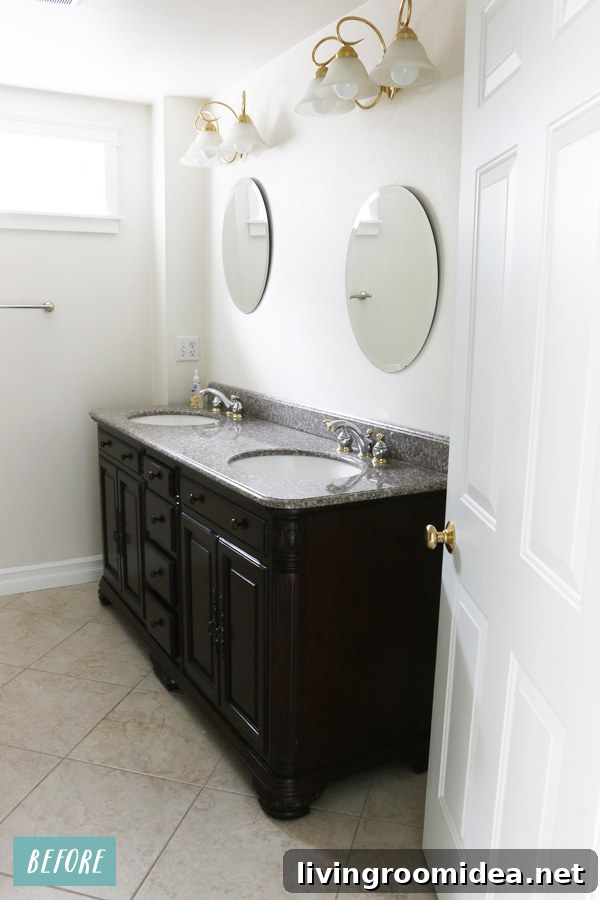
As a quick refresher, here’s the bathroom before the makeover.
Painted vanity details
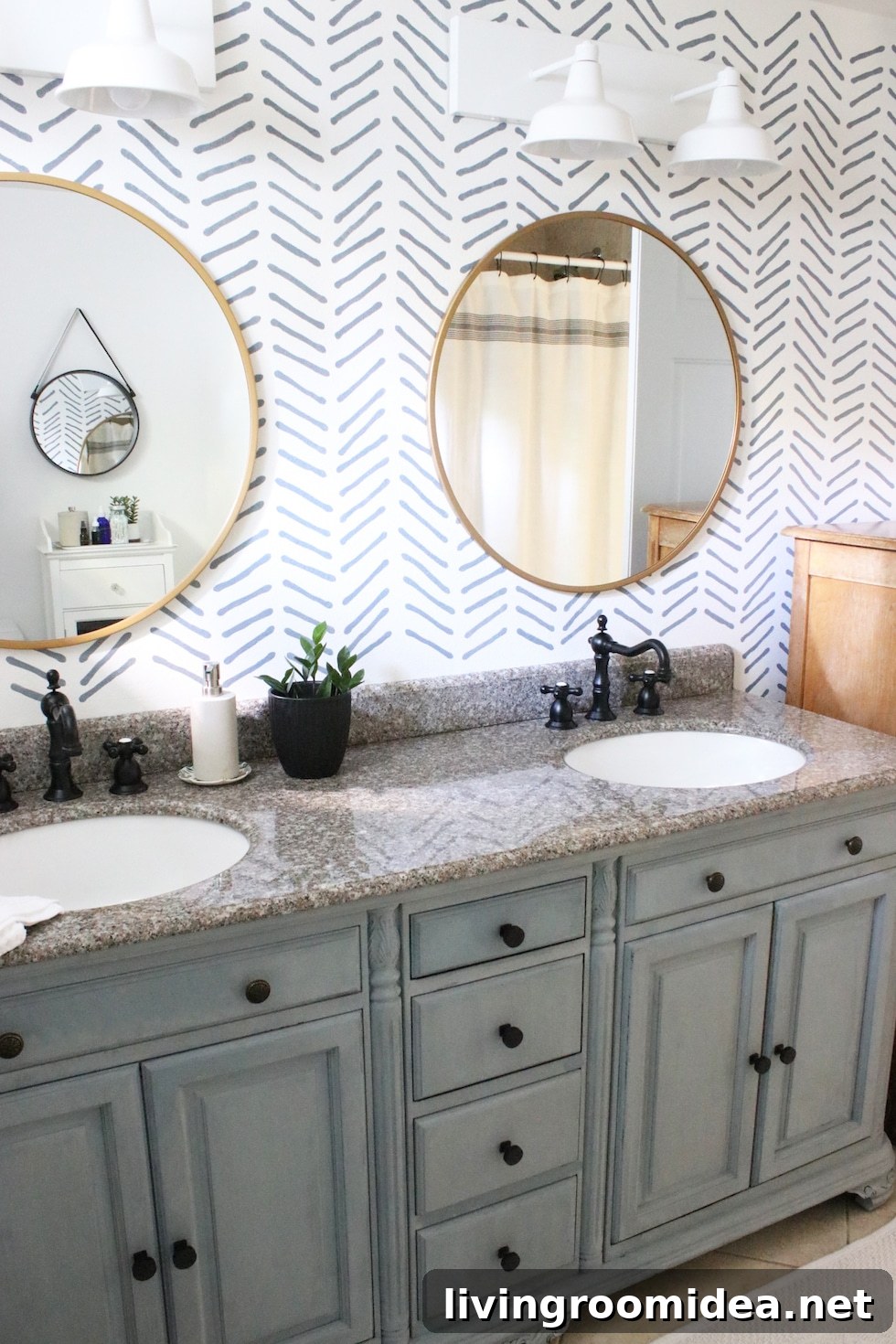
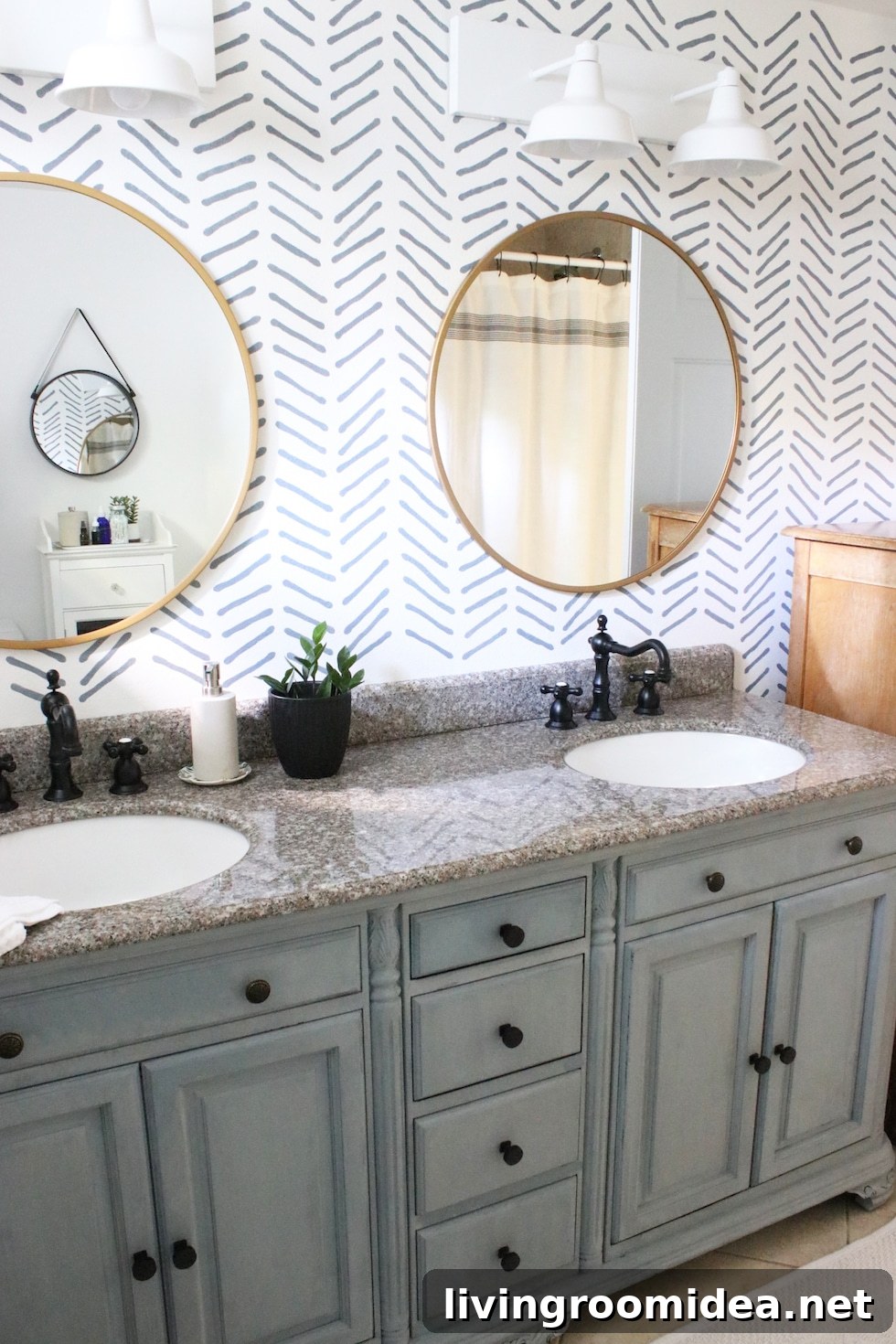
We painted the vanity with Miss Mustard Seed’s Milk Paint in the color Bergere. It isn’t chalk paint, but it produces a similar cottage, antique furniture look. We only cleaned the cabinet, taped off the countertops, removed the hardware, and applied several coats of milk paint.
Because the piece had a very glossy finish and many ornate details, we skipped sanding to avoid extra work in the nooks and moldings. That said, sanding would likely have improved adhesion. To help the paint stick, we mixed in a Miss Mustard Seed bonding agent. In another project, a friend used the same milk paint on a wood armoire without sanding and without bonding agent and had good results, so surface condition and finish can affect what prep you need.
There are manufacturer resources that describe surface preparation, mixing, and finish options. We haven’t added a topcoat to our vanity yet, but we plan to apply a protective finish soon.
Stencil details
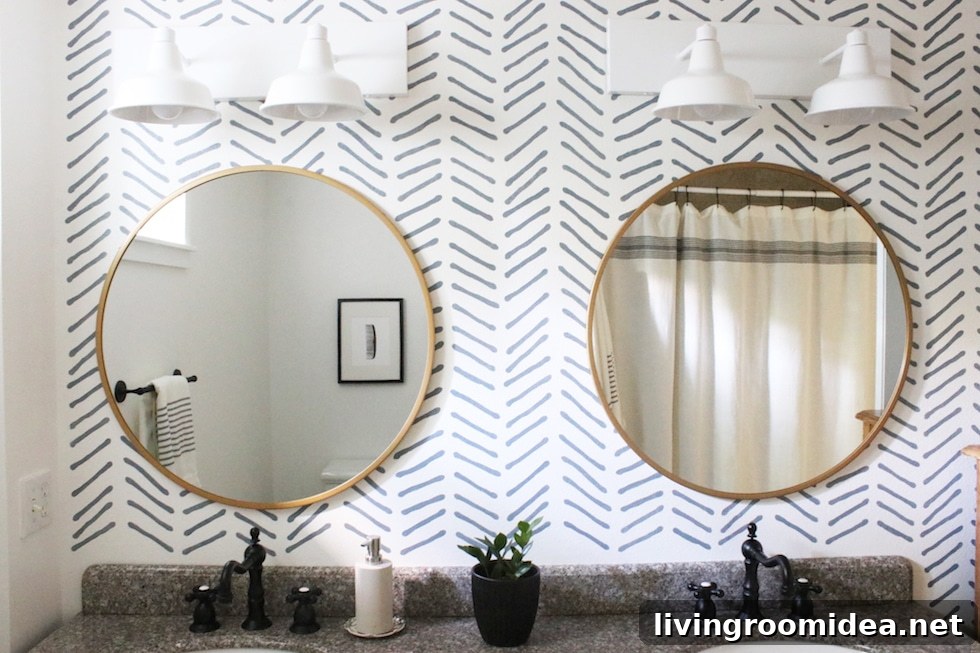
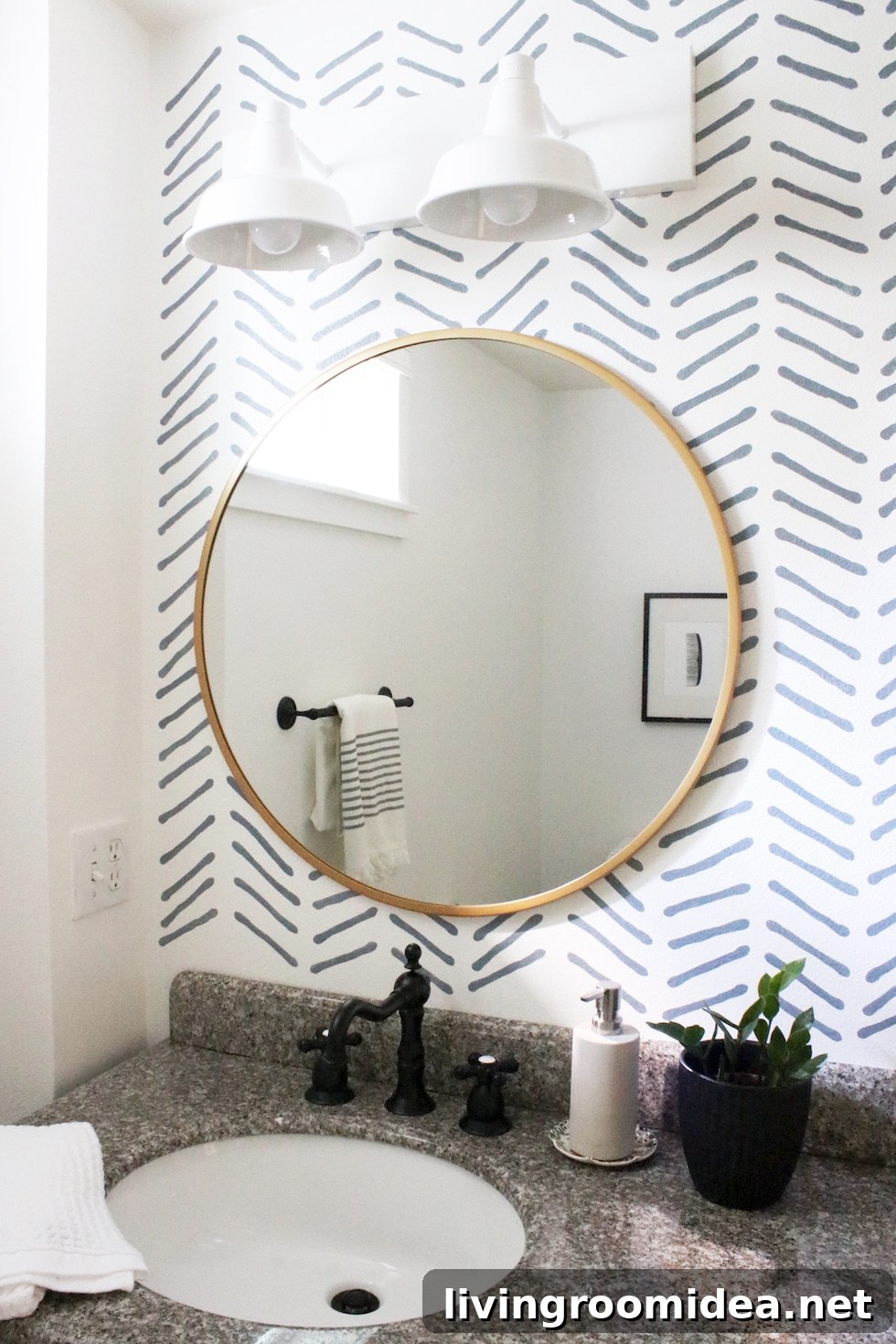
For the walls we used Benjamin Moore Simply White on most surfaces, then added a stencil pattern on one wall. We used a hand-drawn style stencil and painted it with a deep gray (Night Sky Grey by Glidden). The stencil brushes made the process straightforward.
My husband had never stenciled before and found this stencil easy to use. The stencil came with alignment instructions that helped create a continuous repeating pattern. Because the design has intentional imperfections and a hand-drawn feel, it’s forgiving if the walls aren’t perfectly flat or square.
There were a few tight spots—like around outlet switches—where he hand-painted small sections instead of using the stencil. That’s an easy solution when a stencil won’t fit or when you need a neat edge. We only stenciled a single focal wall, but you can extend the pattern to more walls if you want a bolder look.
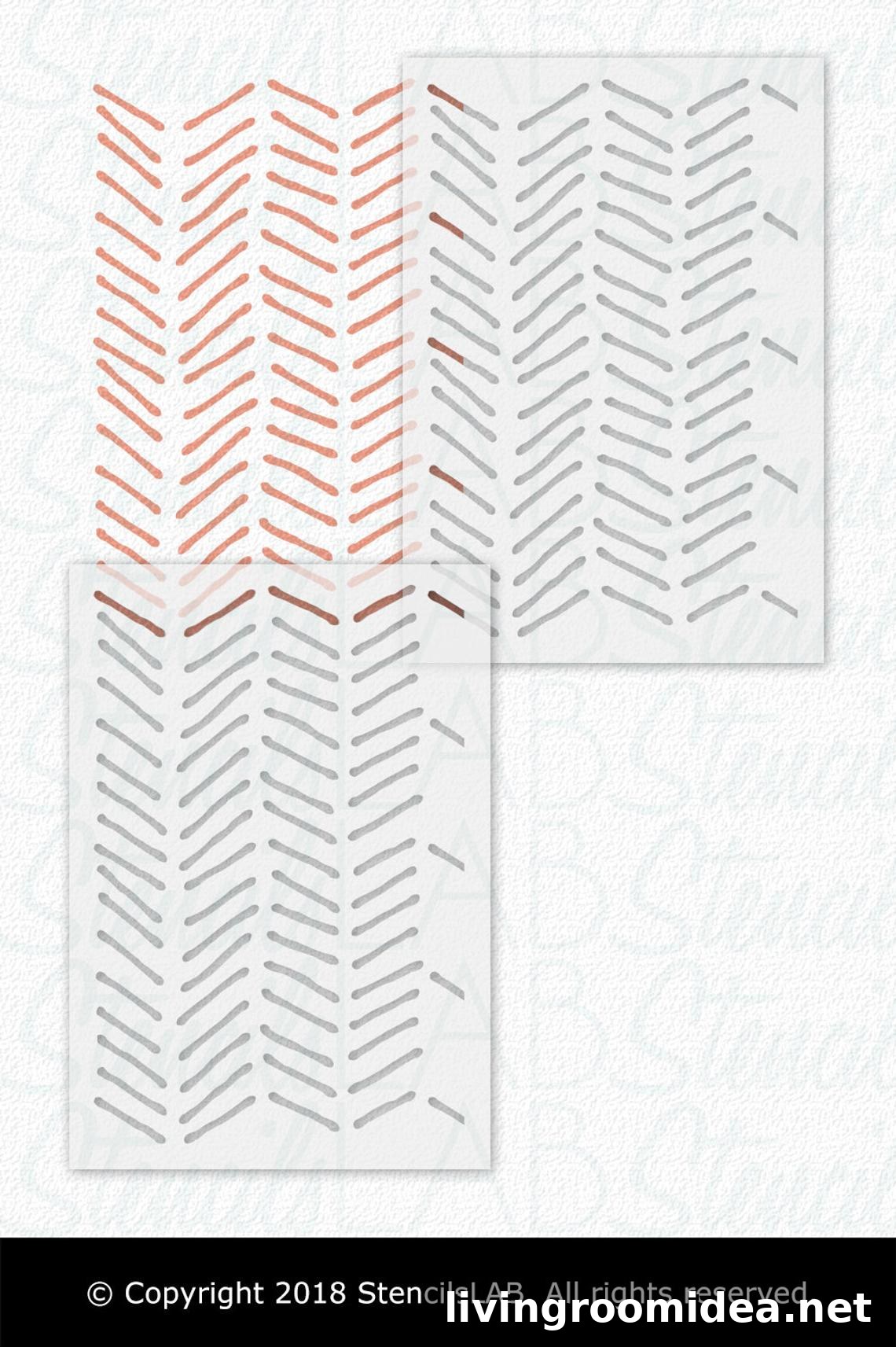
Stenciling gave the visual effect of wallpaper without the cost or the need for perfectly smooth walls, and it’s easy to change later if you decide to paint over it.
We gathered a selection of stencils and wall decals that we liked while planning the project; a single accent stencil can dramatically change a room on a modest budget.
If you missed the full reveal with all the bathroom makeover details, be sure to check the reveal post for the complete before and after.