
Quick note: if you missed the update to last week’s post that went up a few days after it was originally published, you can catch up on that here.
When we moved in, one of the subcontractors wondered why we hadn’t ripped out the old cabinets, mismatched appliances, and pink laminate counters before moving in. If you’ve followed us for a while, you know why: we prefer to live in a space for a while before changing the layout or doing major upgrades like replacing cabinets or countertops. In our last house we waited three years before our big renovation. Living in a home lets us discover how we actually use the space and whether our early ideas hold up over time, instead of guessing at what will work best.
Waiting also gives us time to save for the larger renovation while making small, affordable updates that improve the space now and help test ideas for later. For example: will open shelving feel right, or will we want upper cabinets when we do the full remodel? We hang shelves temporarily and live with them to decide. Or: does the table work best under a pendant in that spot, or will we want to move it later? Swagging a pendant lets us try the layout without permanently locating a junction box. These Phase 1 changes are low-risk ways to learn what we like.
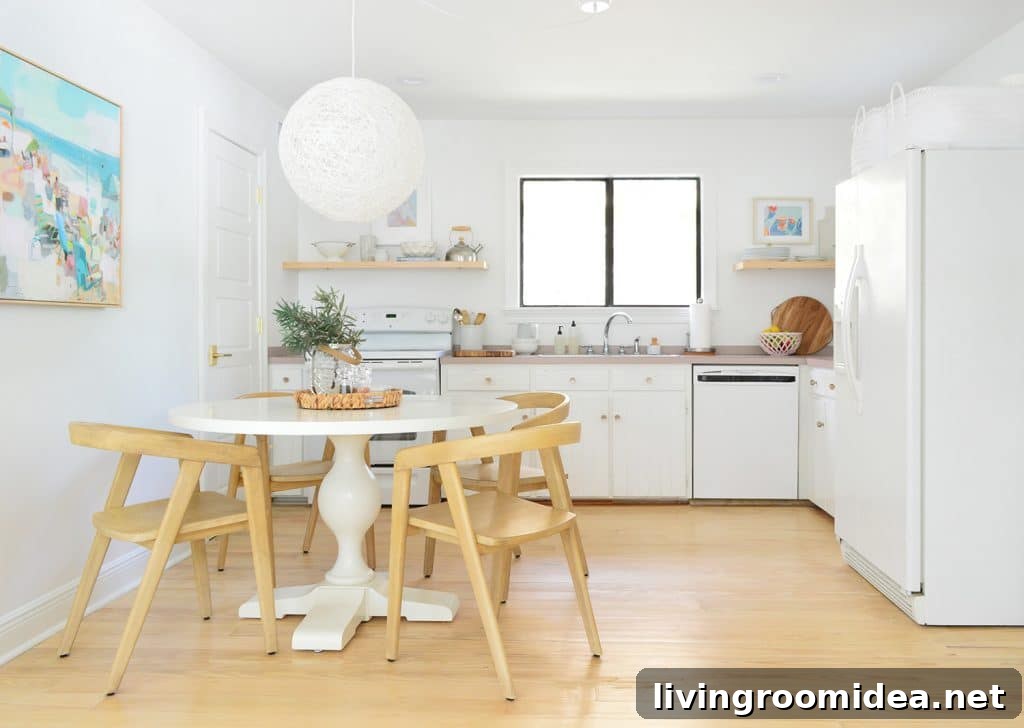
To illustrate, here’s a photo taken recently showing five small updates we made. Below are the changes, with why we did them and how they turned out.
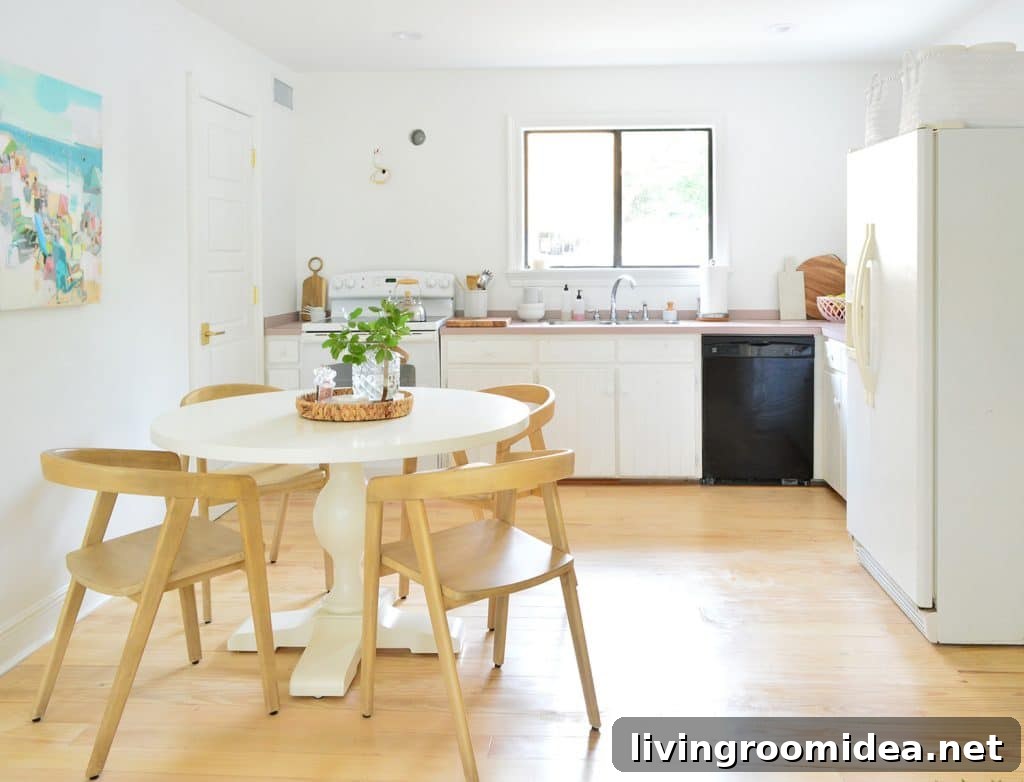
And here’s what the room looked like two months ago, about three weeks after we moved in:
Here are the five updates, explained.
1. New Hanging Pendant Light
The kitchen originally had a small, off-center ceiling light. When we replaced the drywall and added recessed lighting we had the electrician move the original fixture box to the center of the room and cap it. That gave us the option to add an accent pendant later, so we decided to swag a pendant over the eat-in table for instant atmosphere.
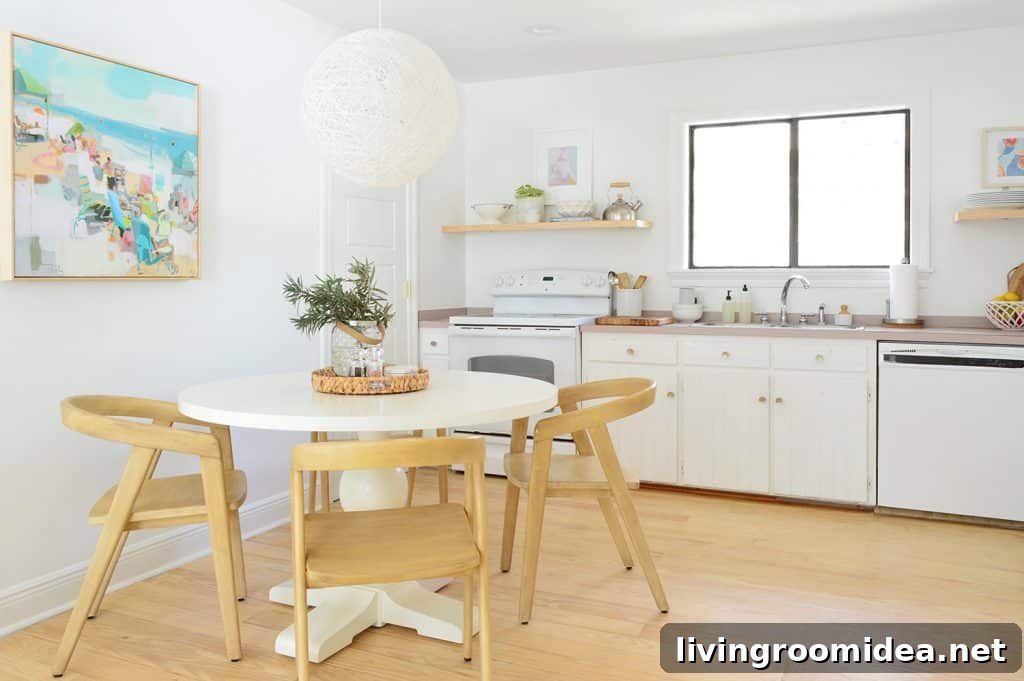
The white nylon cord is subtle against the ceiling, and because the light hangs over a table we could choose a fixture that sits lower than a flush or semi-flush option. We picked a large white woven globe similar to one we already love in our son’s room. The size anchors the dining spot without feeling heavy thanks to the airy, string-like construction. It also lets us dine under a softer glow instead of turning all the cans up bright.
2. Painting the Dishwasher
We didn’t replace appliances before moving in because we want to decide during the full renovation what will work best. The appliances that came with the house were older but functional—except the dishwasher was black while the fridge and stove were white. Rather than replacing it, we painted it with specialty appliance enamel.
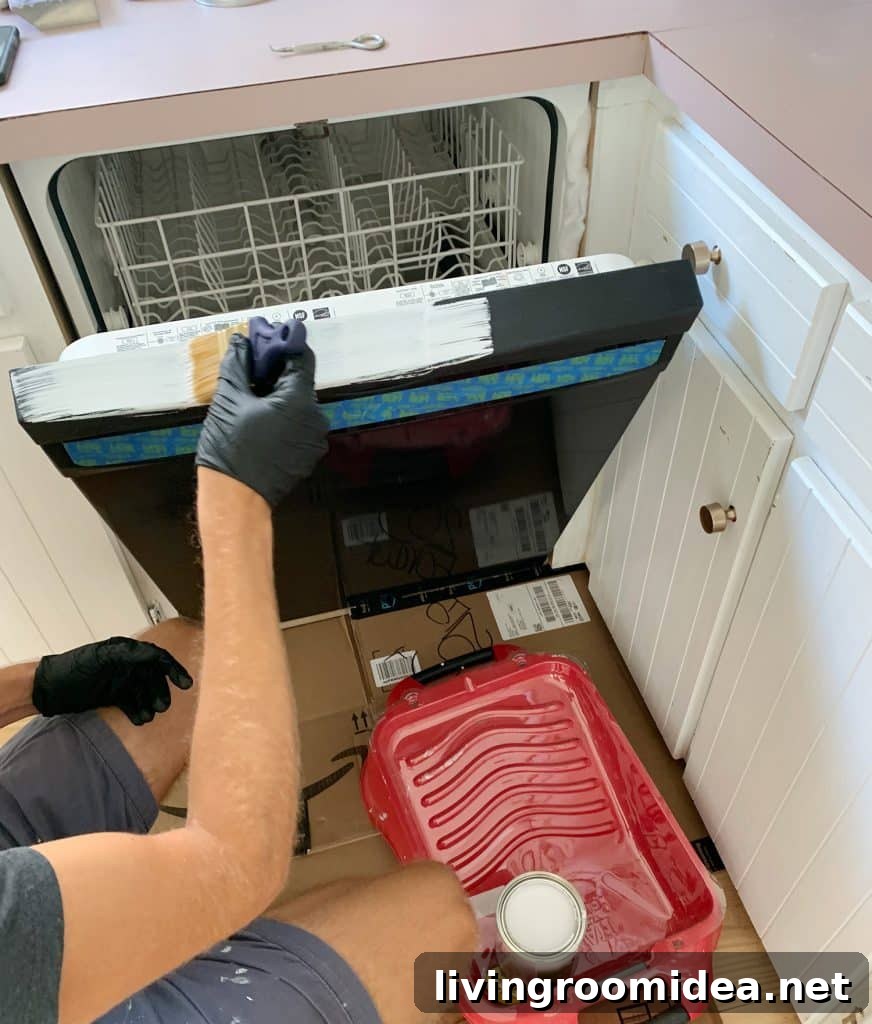
We sanded the surface to key the finish, taped off the controls, and applied several thin coats—using a brush for crevices and a small foam roller for flat areas. Going from black to white required about four coats for full coverage. The white is a cooler tone than the cabinet paint, but it’s a massive improvement over the dark contrast. Appliance enamel is inexpensive and a quick, low-cost fix. Later, when we choose the new cabinet color, we’ll decide whether to repaint the dishwasher to match or add a thin custom panel to the front.
3. Swapping Out the Cabinet Knobs
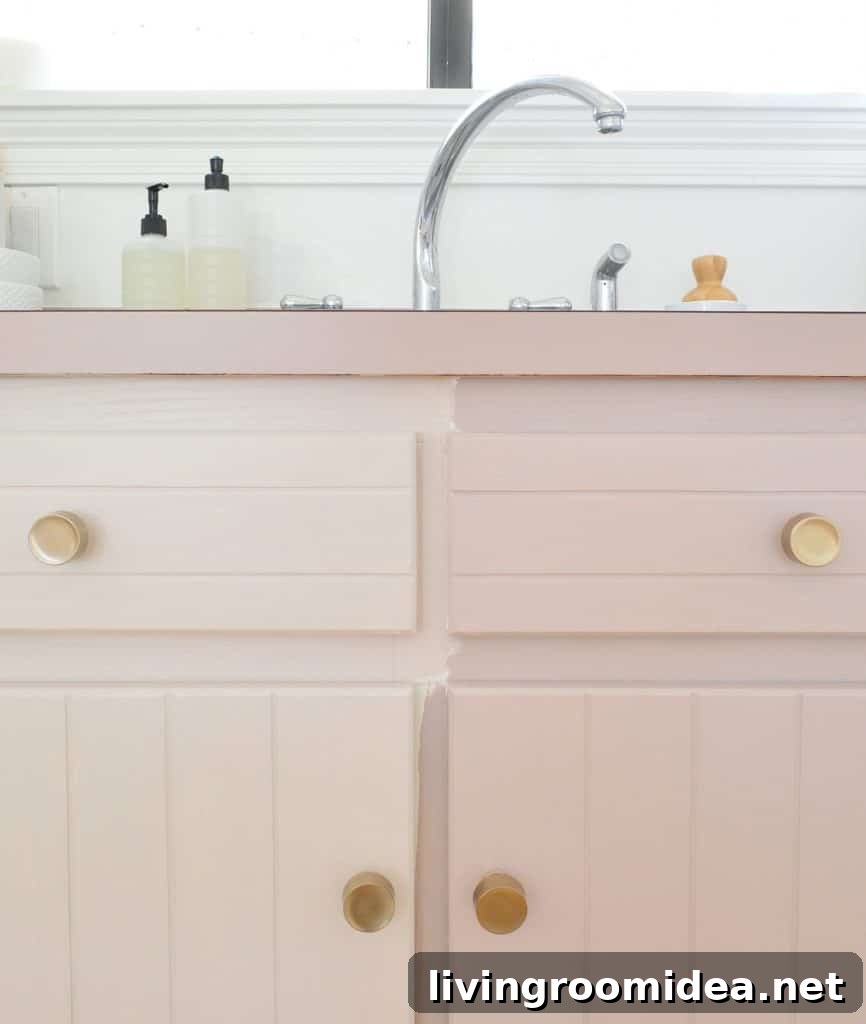
The original wood knobs were painted to match the doors and gave a country vibe we didn’t want. We tried a set of weightier brass knobs we had for another project and fell in love with the updated feel. Metal knobs add a subtle sense of upgrade: they look and feel more finished instantly.
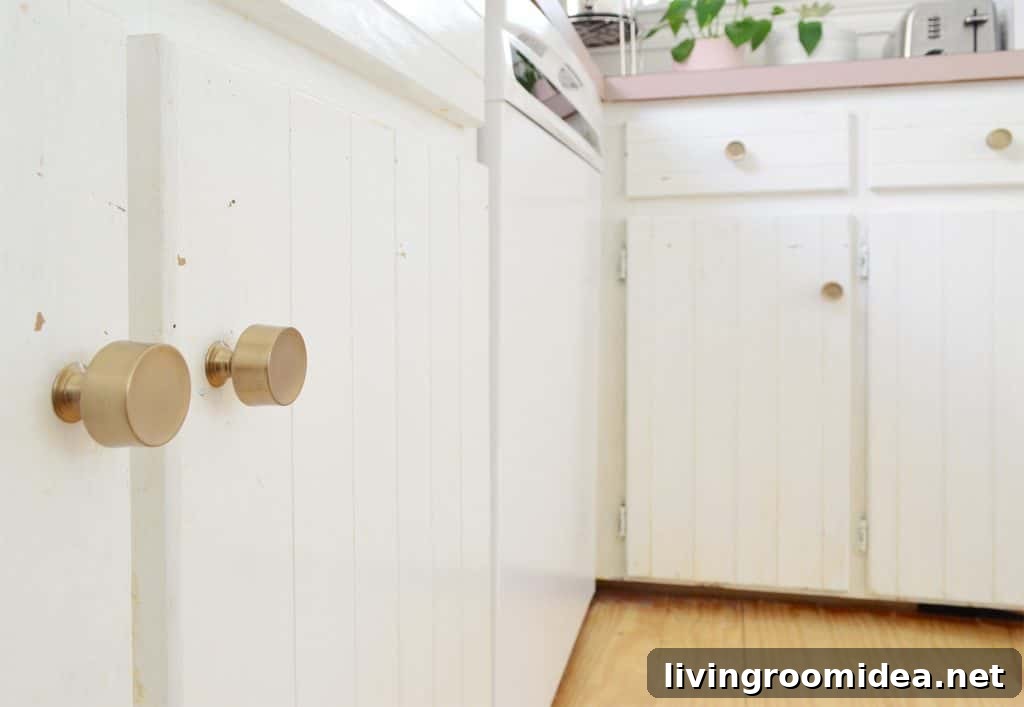
They contrast a bit more than the old knobs, but once the cabinets get their new color the hardware will read even better.
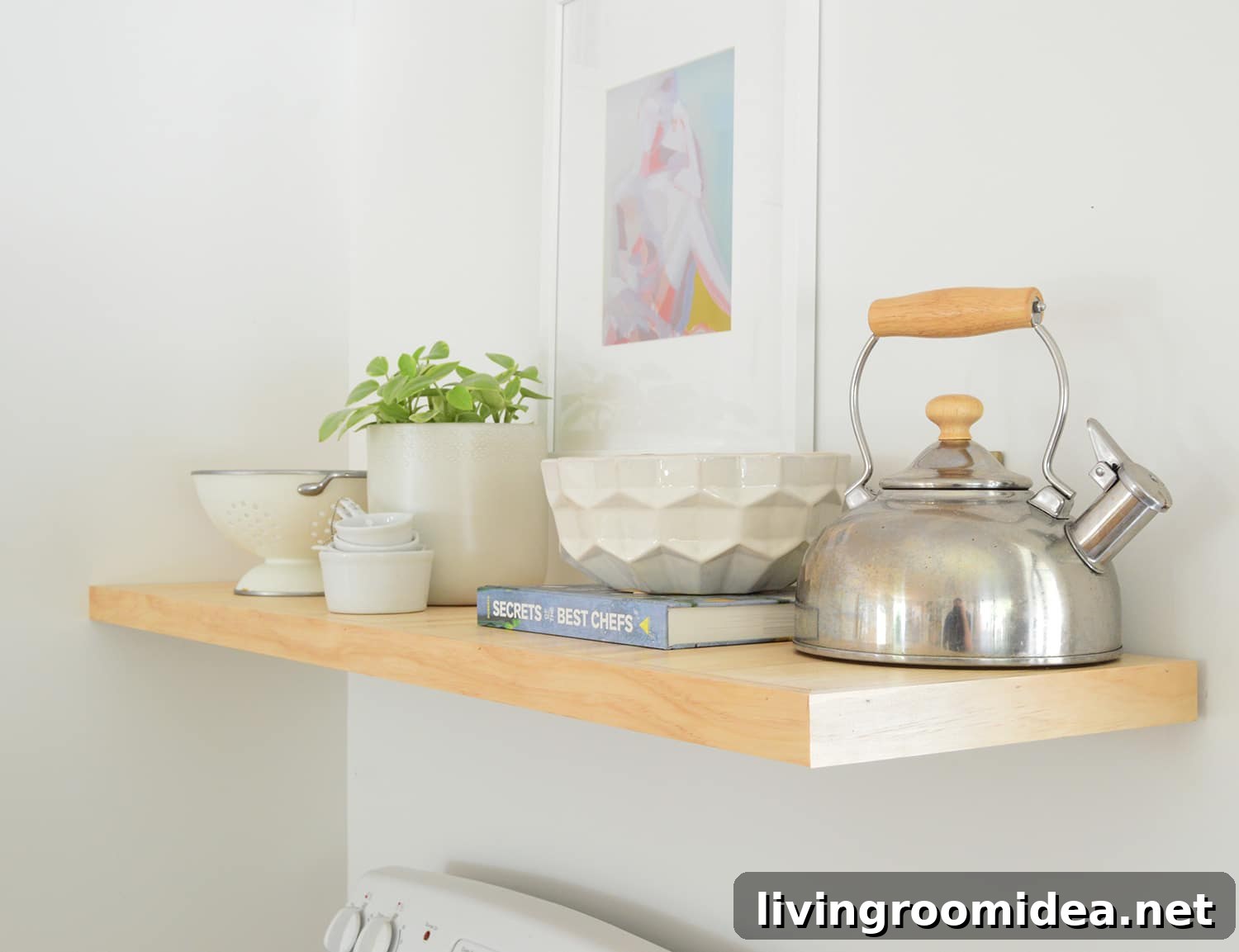
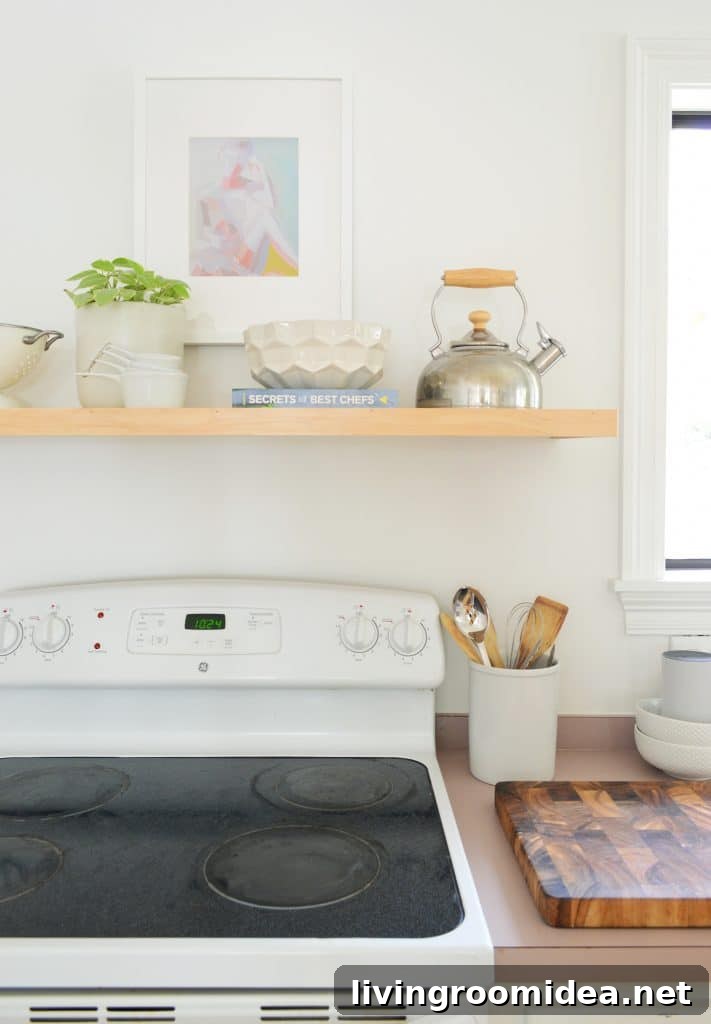
4. Hung Floating Shelves
Removing a soffit meant losing the original upper cabinets. Rather than leaving the vent and exposed wiring visible, we hung floating shelves to disguise that area and add practical storage next to the stove. The shelves help the framed art relate to the wall and give us handy spots for the kettle, mixing bowls, and plates.
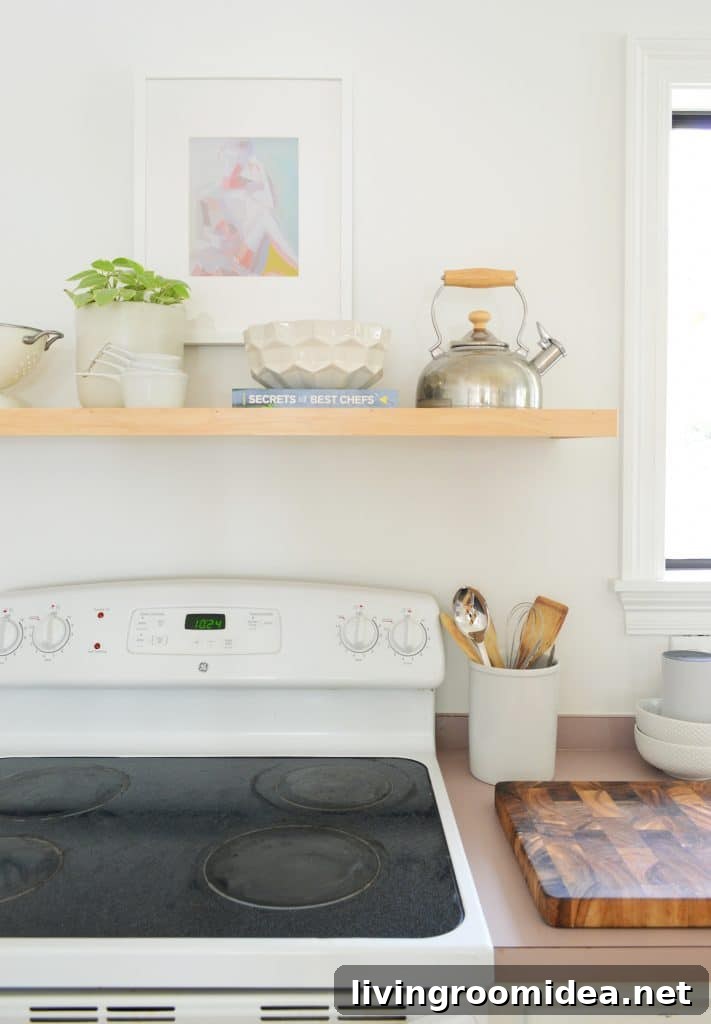
We adapted the layout to avoid showing brackets and to anchor supports into studs where possible. The plywood we used was leftover material from another project, and we sealed the shelves with a clear water-based finish that won’t yellow. The process wasn’t a textbook tutorial, but the result is functional and visually cohesive with the floor and chairs.
5. Framed Our Teil Duncan Painting
Finally, we framed a painting we bought six years ago and had never finished. We made a simple float frame from trim and used spacers to create a consistent gap so the canvas appears to hover. The light wood frame ties the artwork into the rest of the room and makes the piece feel finished and intentional.
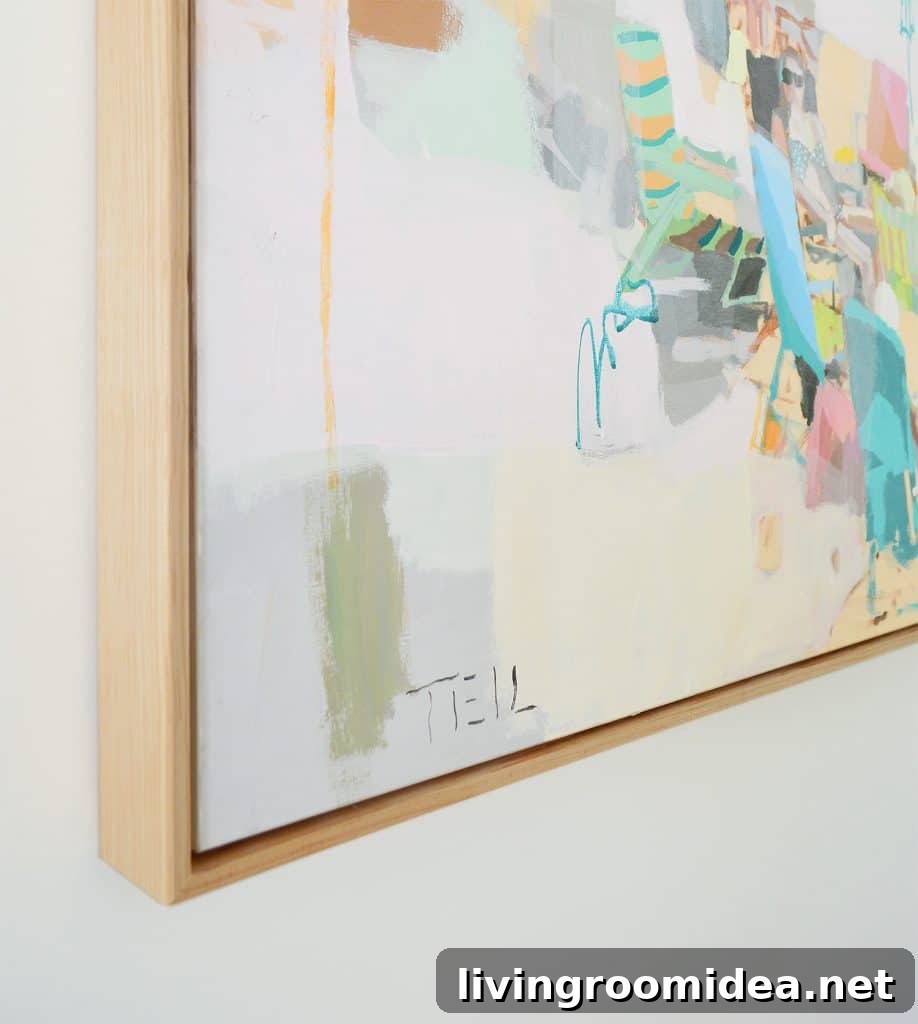
Framing the artwork was an overdue, inexpensive change that instantly elevated the room’s personality.
There’s one more update in progress that will change the room more dramatically than these small tweaks: we’re painting the cabinets. We decided to embrace the existing mauve-toned counters for Phase One and test a tone-on-tone look. We tried two colors and chose the deeper mauve that nearly matches the counters. Since there are just seven cabinets, the job is moving quickly and already looks promising.
Phase 1 updates like these are meant to be flexible: they improve the space now, help us learn what we prefer, and inform decisions for the full remodel later. We’ll share the cabinet progress soon—wish us luck with the dishwasher change!
P.S. To follow along with our full renovation of this house, you can see every update in the FL House archive.