
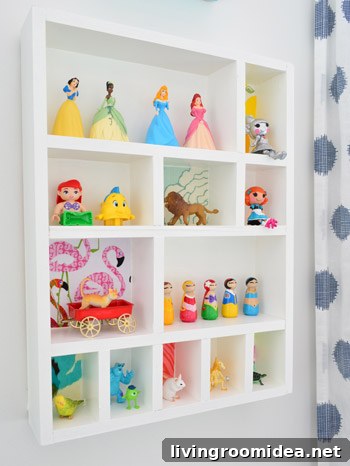
More often than not we’re finishing Clara’s homemade Christmas gift right up to the last minute—sometimes with things still drying in the garage on Christmas Eve—and this year was no exception. The best part of sharing the project after gifting it is getting to include photos of her playing with it, which is always our favorite reaction. Introducing Clara’s new figurine cubby:
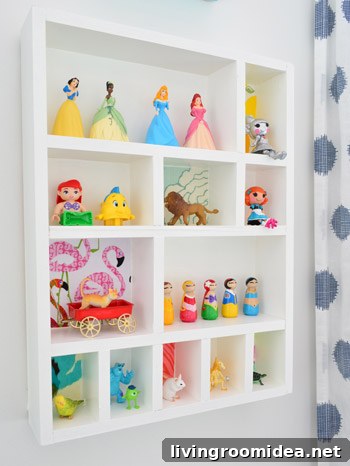
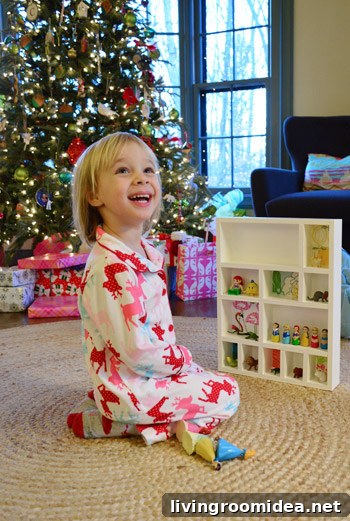
She absolutely loves it.
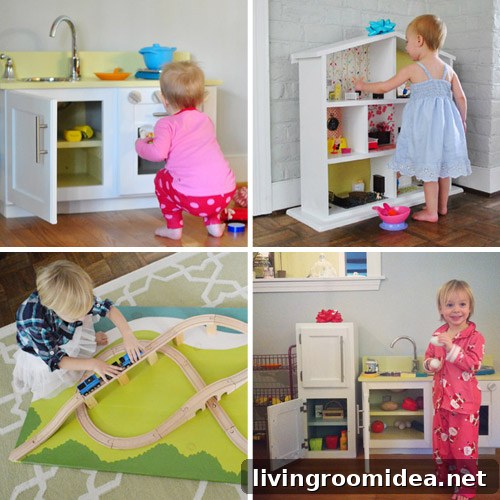
After brainstorming ideas—a tool workshop, a fruit stand, a cardboard playhouse—we realized Clara still plays daily with the larger items we’ve made previously (her play kitchen, refrigerator, dollhouse and train board), so we didn’t want to build another big floor piece. Instead we focused on something vertical to save space.
Clara has a serious love of tiny figures—small animals, fairies, Lego people, ninja turtles, plastic dragons—so we decided a wall-mounted box with multiple cubbies would be a perfect place for her collection. We personalized it using fabric from her photo project that she had chosen earlier, so she could feel involved in the surprise.
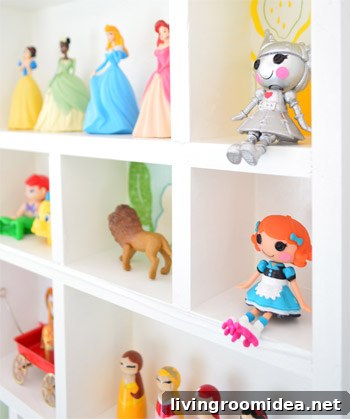
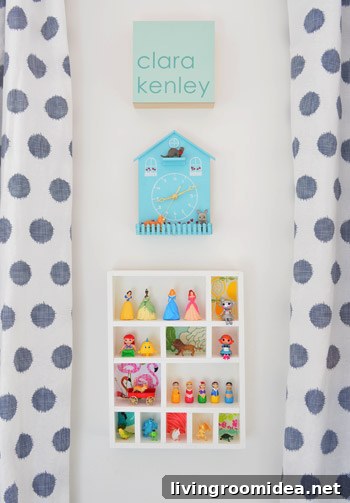
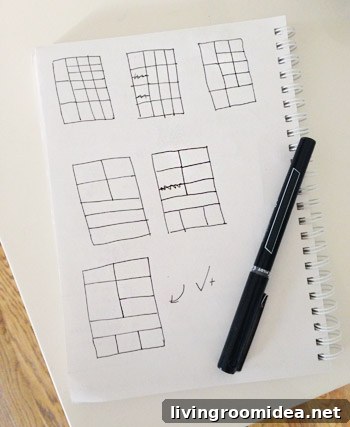
We chose a spot beneath her blue clock where she already likes to set figures on the small ledge. A 13″ x 17″ box fit that space well, so we sketched a few shelf layouts. Initially we thought about identical cubbies, but settled on varied sizes to accommodate different toys and grouping preferences—Clara often keeps some figures together while insisting others stay separate.
With rough dimensions set, we bought several 1/2″ craft boards from Home Depot (about $20 total, including extras for mistakes). John cut the top, bottom and side pieces along with an assortment of interior dividers.
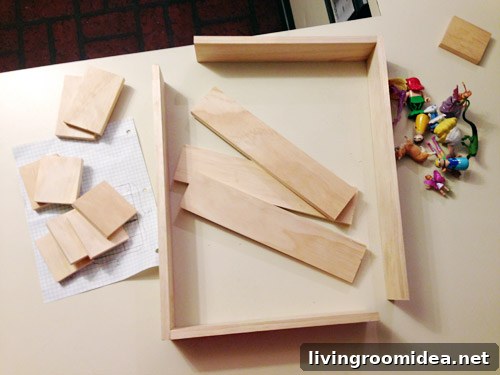
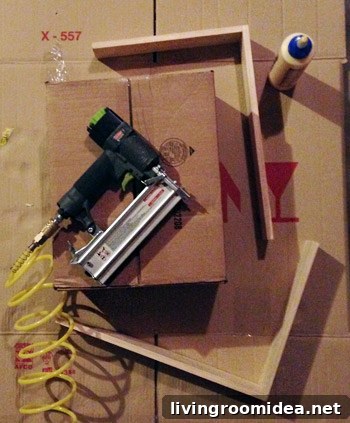
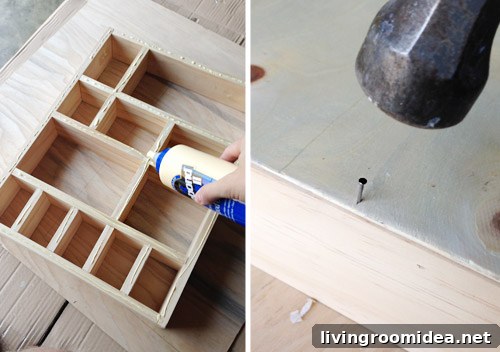
We assembled the outer frame first using wood glue and 1/2″ brad nails. To keep corners square while nailing, John braced the pieces against a box corner, which helped hold everything in place during assembly.
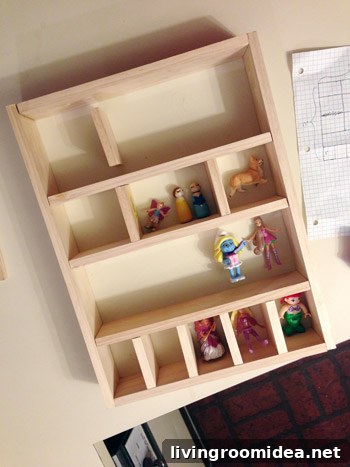
Before finishing assembly we tested the cubby sizes with some of Clara’s toys. Our initial plan needed a few adjustments, so we cut a few more pieces to get the spacing right.
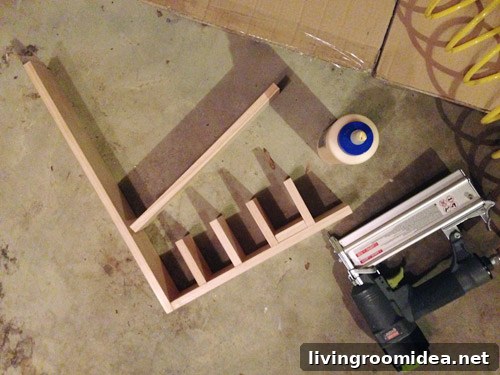
We built from the bottom up. Using a spacer I’d cut, we set the first row of vertical dividers in place with glue and nails from the bottom. John then added the first horizontal shelf and secured it from the top. After letting that dry overnight, we repeated the process for the next row.
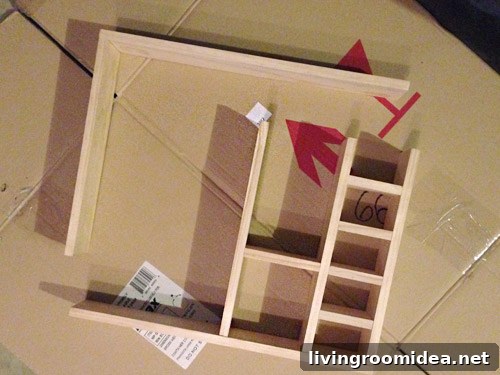
Once the interior pieces were all attached, we finished the frame by adding the second L-shaped piece, then attached a thin piece of plywood as the back, cut to size on our table saw. We used glue and nails for that, similar to attaching backing on store-bought shelving.
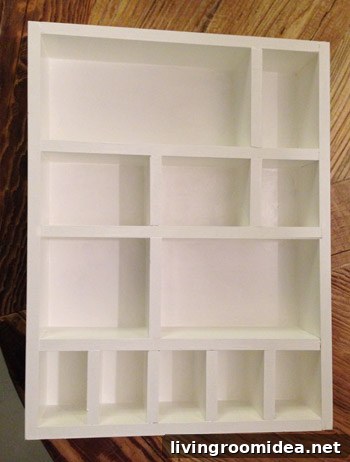
We primed the cubby once and applied two coats of Simply White semi-gloss paint. In hindsight painting some of the pieces before attaching the back would have been easier, but the finish still came out clean and bright.
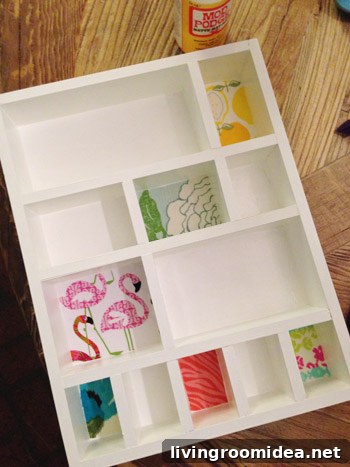
After painting, the fun part began: picking fabric. Clara quickly chose her favorite—”the one with the pink flamingos!”—and selected a few others. I made paper templates for the cubby backs I wanted to cover so the fabric pieces could be cut precisely. I decided to cover roughly half the cubbies to avoid a busy look and left the rest white for contrast.
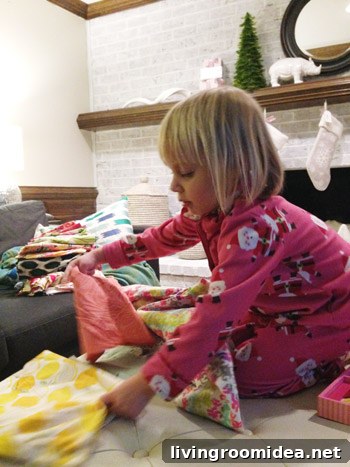
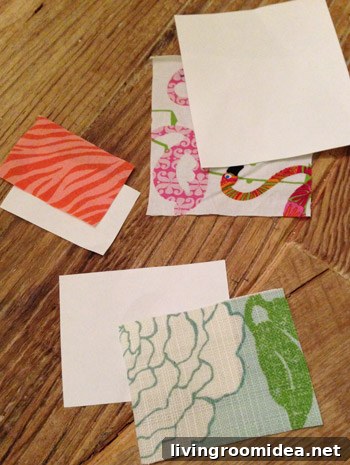
I used Mod Podge to adhere the fabric. With a small craft brush I applied Mod Podge to the cubby back (not the fabric), placed the fabric carefully, smoothed out wrinkles, and let it dry. Within about thirty minutes it was secure and wrinkle-free.
Clara was thrilled on Christmas morning. She loved that her little friends had a dedicated home and that the fabric included the flamingo print she remembered choosing. It’s always special when kids are part of the process; she lit up and said, “You remembered my flamingos!”
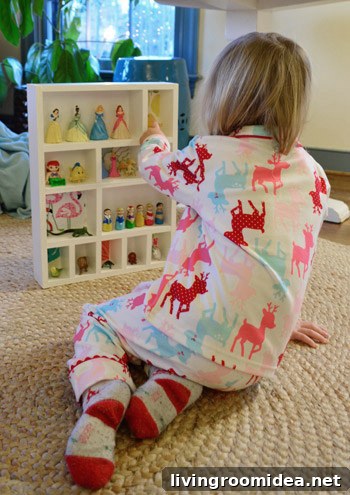
We weren’t sure whether she’d use the cubbies as a display or play area, but she does both. She stages “apartments” for the figures inside their cubbies and also pulls toys out to play with them elsewhere, then reliably returns them to their homes when she’s done.
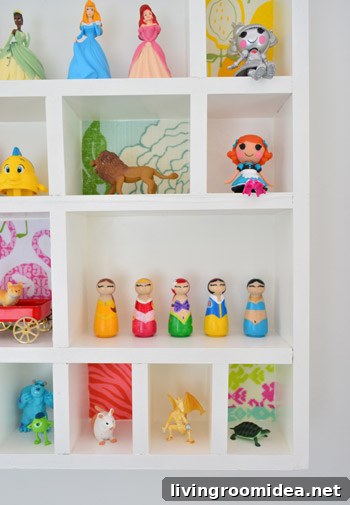
Total cost for the project was about $20 for wood; if you need wood glue, paint or Mod Podge, add roughly $5–$20. To hang the cubby we attached two D-rings to the back and hung them on screws secured in the wall with anchors for a sturdy mount.
Did you make any homemade gifts this year? We’ve seen some wonderful play kitchens lately—hard to believe it’s been two years since we made Clara’s. Time flies!