
And now a post that’s a little more about everyday life than home improvement. When people ask what question we get most often, they usually expect it to be about paint or demo. Instead, it’s always some version of:
How are you liking cloth diapers? How many do you have? What brand are they? Did you get the kind with liners or inserts? Do they work? Does Clara like them? Are they difficult? Do you regret it? Is it annoying to wash them? Do they really get clean? Are there times when you use disposables instead? How long will they last? Are they bulky? What do you do when you’re out running errands? How exactly do you wash them? What colors did you get? How do you store them when they’re dirty? Does Clara have a lot of blowouts with them? Do they give her diaper rash?
Who knew cloth diapering would generate so many questions? We’re happy to answer them all in this post, so brace yourself—you’ll see the word “poop” at least once. If you’re not having a baby and don’t want to read about baby bodily functions, feel free to skip this one and check back tomorrow for house content.
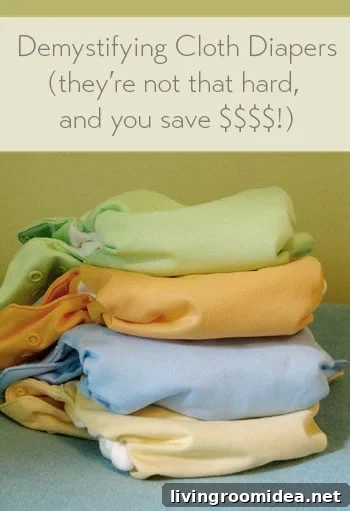
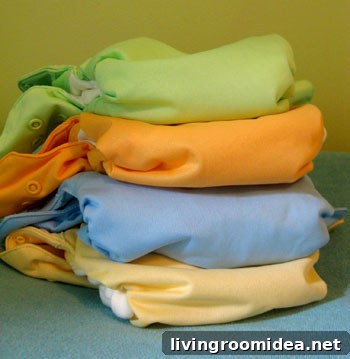
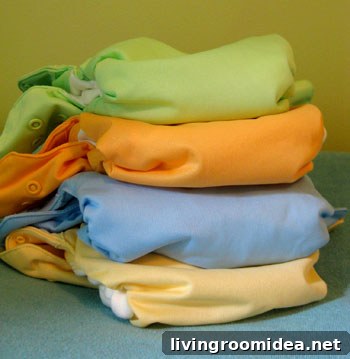
After researching and talking with friends and family who cloth diapered, we chose Bum Genius Elemental One-Size All-In-Ones in the organic fabric with snaps (not Velcro). Snaps tend to hold up better through lots of washings, so we preferred those. We also went with true all-in-ones rather than separate inserts or liners—we figured if we’re washing part of the diaper, we might as well wash the whole thing. All-in-ones have been simple to use and they adjust with snaps to fit Clara as she grows, which helps save money long-term.
We bought a dozen and have found that number works well so far. Many parents aim for 18, and we might get a few more eventually, but 12 has been enough. John actually changes most of the diapers—he volunteered since I nurse multiple times a day—so that division of labor has been a big help (and it’s kind of cute: Clara occasionally pees on him, which he takes in stride).
How about washing them? With a baby you’re doing laundry anyway, so running one big load of diapers every day-and-a-half or so has been manageable. We worried switching from disposables to cloth would be hard—Clara didn’t fit into cloth diapers for her first nine weeks so we used disposables at first—but the actual switch was easy. Cloth diapers are adorable, comfortable for her, and she seems to sleep better. We’ve had far fewer blowouts and no diaper rash since switching from disposables. We only use disposables for overnight trips when washing on the road is difficult.
We bought four colors—three clementine (orange), three grasshopper (green), three twilight (light blue), and three butternut (yellow)—which are gender neutral for future children.
Cloth diapering has also been cost effective, especially paired with our Energy Star front-loading washer and dryer, which keep the cost and water use of laundering low. We often line-dry diapers in the sun to save energy and naturally brighten them. For about $265 for a 12-pack, we have enough diapers for Clara’s diapering days and likely for future babies too. In hindsight, we might have bought some newborn-sized Bum Genius diapers as well: one-size diapers are a bit loose on many newborns, and because we skipped newborn sizes, Clara’s first nine weeks were in disposable Seventh Generation diapers. After nine weeks of disposables we had spent more than $180—almost as much as our full set of cloth diapers—and projected costs for two years of disposables looked enormous in comparison.
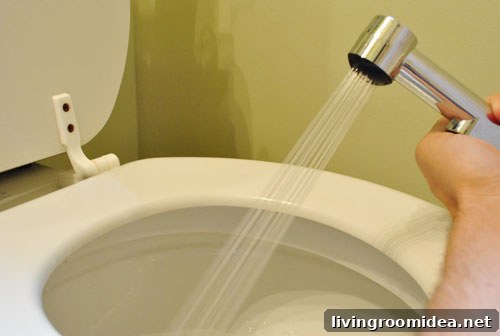
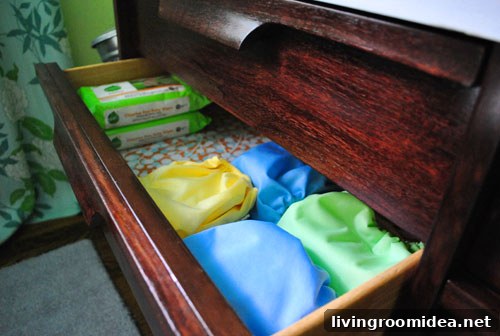
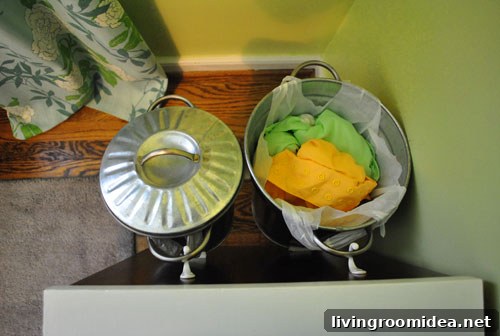
For dirty diaper storage, we use a larger pail for diapers and a smaller pail for wipes in the nursery. We rinse truly dirty diapers with a diaper sprayer attached to our toilet, which helps them come out cleaner and less discolored—especially useful even when a baby is breastfed. After spraying, the dirty diapers go into the larger pail; wet-only diapers go straight in without spraying. Dirty disposable wipes go into the smaller pail. We line both pails with recycled plastic bags when needed. To keep the pails off the floor and within easy reach, we hung them from the dresser with coat hooks and anchors, and added weatherstripping to the bottom edges to prevent scratching the wood.
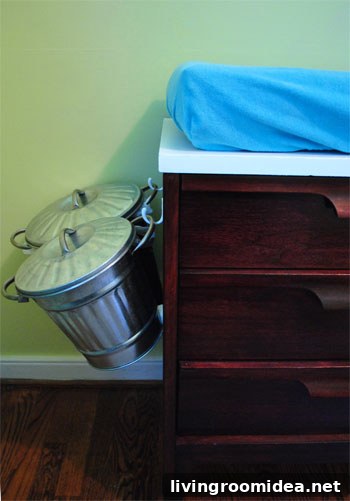
So far, odor hasn’t been an issue thanks to the pail lids, and routine washing every day or two helps prevent smells even after solids start. We follow Bum Genius’ advice to launder at least every other day: we usually wash 11 diapers at once every day-and-a-half and let Clara wear the twelfth so we’re not running tiny loads. We now use Charlie’s Soap Laundry Powder for longevity and cleanliness, washing on a warm heavy-duty cycle and either machine drying or line-drying in the sun. A cold pre-wash isn’t necessary for us, probably because we pre-spray the really dirty diapers.
Occasionally a diaper can come out of the wash with a slight orange tint from breastfed stool. It’s clean and sanitized, but the organic cotton can stain like plastic containers do with tomato sauce. The fix is simple: lay the damp diapers in direct sunlight and the sun naturally bleaches the tint away. It works like magic and is oddly satisfying to watch.
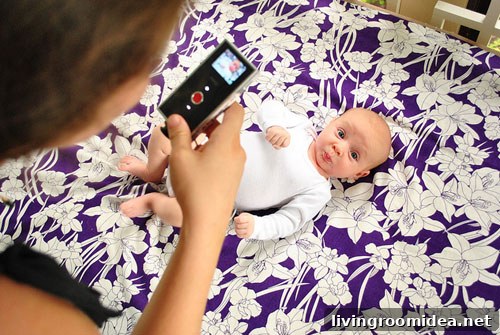
On the go, cloth diapers are easy for day trips. If we change a diaper while out, we tuck the dirty cloth into a plastic bag and rinse it at home. We plan to get a reusable zippered wet bag for outings; for now we reuse plastic bags. The diapers are slightly bulkier than disposables but not excessively so—Clara still fits into some newborn clothes while wearing them and she’s nearly three months old.
In short: we love cloth diapers. They’re not harder than disposables, they’re cost-effective, environmentally friendly, and comfortable for Clara. That said, diapering choices are personal—disposables work well for many families and we use them when they make sense for us. After nearly three months of parenting, we’ve learned there’s no single right way to raise a child—just do what works best for your family. For us, snapping on a fresh cloth diaper brings a surprising little smile every time.
UPDATE: We switched from diaper tins to wet bags, which are easy to toss in the laundry with the diapers and help keep things smelling fresh. As of over a year later, we still use the same 12 diapers we bought originally—they still look great, work well, and don’t smell. Best money we ever spent.
ANOTHER UPDATE: Our cloth diapers are still holding up really well two years later.