
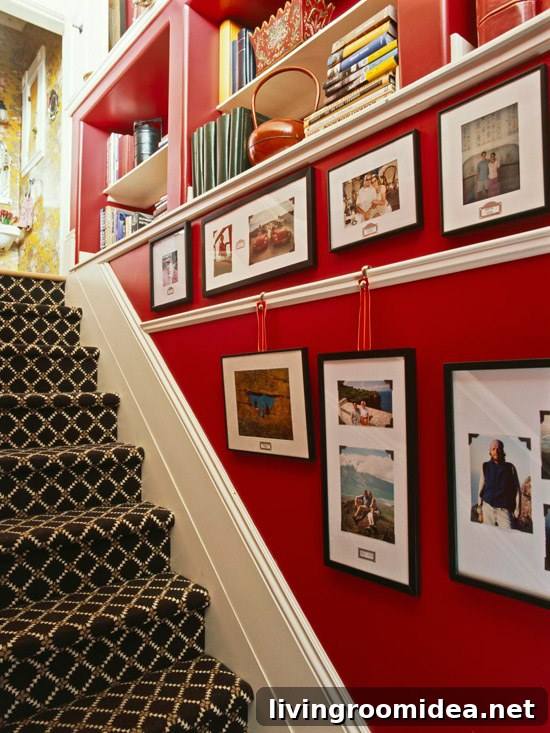
photo via BH&G
Picture Molding
I enjoy finding simple, attractive ways to display artwork and photos, and picture molding is one of my favorite solutions. In older homes it was common to see picture rails along the walls, which made hanging art easy without driving hooks into plaster. Those rails protected the wall and allowed flexible arrangements that could be changed anytime.
When I came across the image above on BH&G, it reminded me that picture molding can work in newer homes with drywall too. You don’t have to limit the molding to the ceiling line — it can be placed in different locations on the wall to complement stairs, doorways, or architectural details. In the photo, the molding runs beside a stair, showing how well it can fit into a home’s unique layout.
Using picture molding lets you hang multiple pieces in a coordinated grouping while avoiding an array of nail holes. It’s also a great option for renters or anyone who likes to rotate artwork often. Hooks and hanging wires slide along the rail, so repositioning is quick and clean. Plus, the molding itself can be a decorative element: painted to match the trim for a subtle look or finished in a contrasting color for emphasis.
There are several practical ways to install and use picture molding. Choose a profile that suits your home’s style — from simple, narrow rails to more ornate, traditional mouldings. Mount the rail securely into studs or use appropriate anchors for drywall to ensure it carries the weight of the pieces you plan to hang. For stair walls, position the molding so the grouping follows the angle of the steps or sits at eye level along the landing for best visual impact.
Beyond functionality, picture molding encourages creativity. You can mix framed prints, mirrors, and small shelves to create layered arrangements. Hanging photos with cord and clips gives a more casual feel, while uniform frames and spacing produce a polished gallery effect. Swapping artwork seasonally or as tastes change becomes effortless, since no new holes are needed.
If you’re considering picture molding, plan your layout before installation. Measure the wall, envision the arrangement, and test different heights with paper templates or painter’s tape. Take into account any furniture or architectural features that might affect sightlines. Once installed, experiment with symmetrical and asymmetrical groupings to discover what complements your space best.
I’m inspired by how adaptable picture rails are and am now looking for a spot in my home where they’ll make an impact. Whether you want to protect delicate walls, create a flexible gallery, or add a decorative trim, picture molding is a practical and stylish choice.