
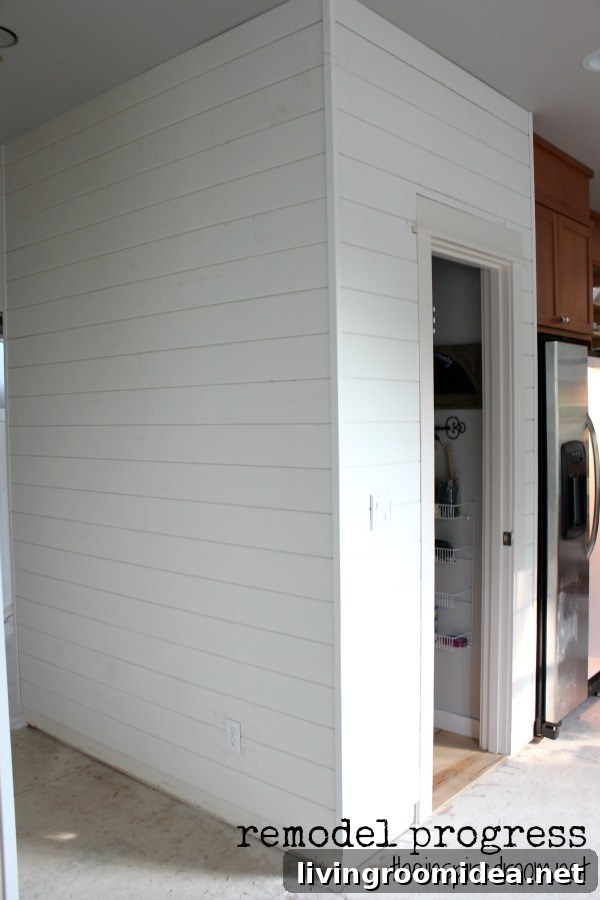
One of the things I miss most about living in older homes is their original woodwork—real plank walls, wainscoting, detailed trim and wood ceilings that give a house so much character. The good news is you can add that character to a newer home, and that’s exactly what we set out to do in this house. It’s taken nearly four years to reach this stage, but the wait has been worth it.
In our kids’ upstairs bathroom we installed a simple faux board-and-batten treatment (minus the board) to create the look of traditional board-and-batten with trim only. That trick works well in many rooms. But sometimes you don’t want a simulation—you want the real thing. Real wood has a texture and presence that faux treatments can’t fully replicate. In photos faux can look convincing, but up close real wood feels completely different. I want our home to feel right as well as look right.
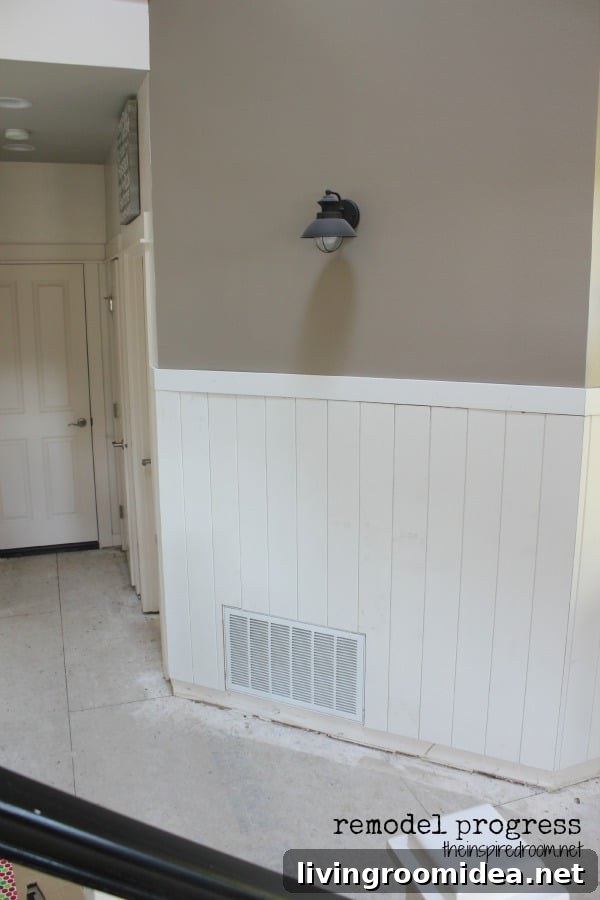
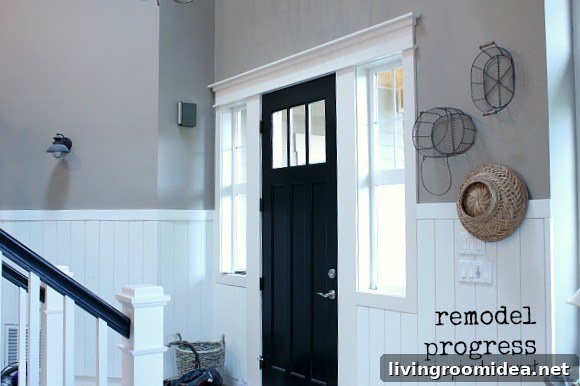
This year, as part of a broader effort to repair and refresh neglected areas, we added real tongue-and-groove pine planks in our entry, hallway and kitchen. These spaces connect and all needed attention after four years of heavy traffic. The new wood transforms those areas and brings back a sense of warmth and craftsmanship that drywall alone simply doesn’t offer.
Plaster walls in an older home can be challenging to repair, but in my experience drywall is often the more disappointing surface when it comes to character. Drywall needs to be flawlessly finished to feel special; otherwise it just reads as builder-grade. Adding real wood instantly changes that feel.
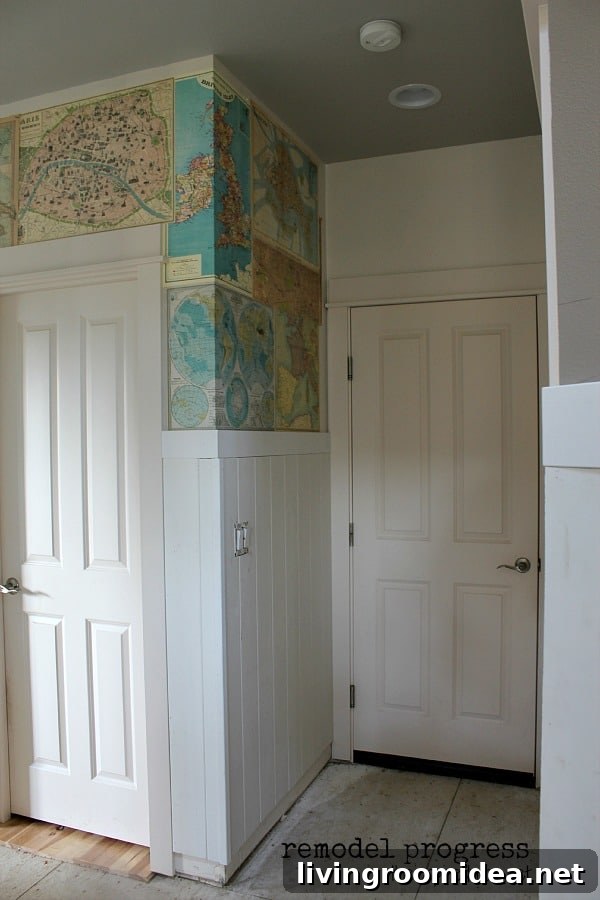
Real wood walls and wainscoting are such an effective way to add charm and warmth. You may recall the map wall I’ve shown before—once the trim and flooring are finished I’ll share a dedicated post about it. Even mid-project, the new paneling has already changed the vibe of the house for the better. I find myself staring at the wood because it makes me so happy.
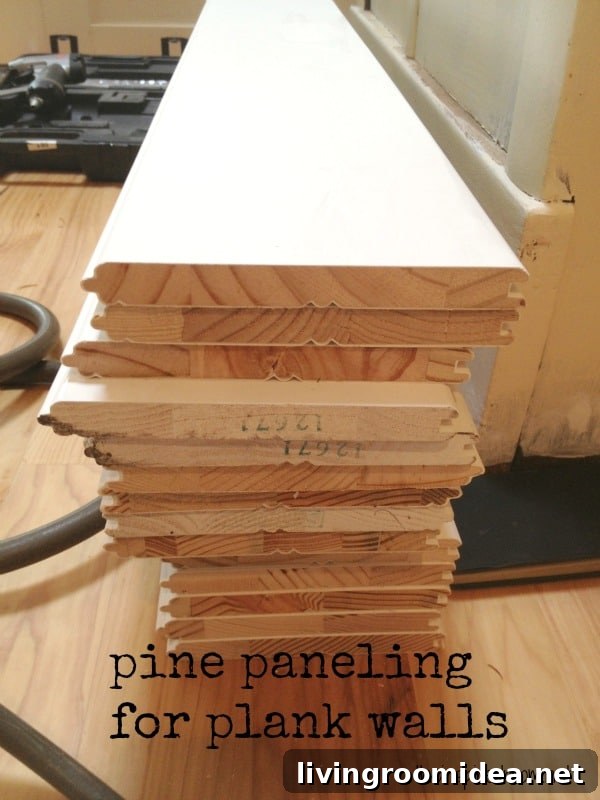
For these walls we used tongue-and-groove pine planks, roughly five inches wide, and chose primed boards for easy painting. We actually used the reverse side of beadboard paneling to achieve a v-groove plank look instead of a beadboard finish. It’s a handy trick we discovered in a previous project when planking cabinet sides with the flip side of beadboard.
On the wall where we wanted horizontal planks, we turned the boards sideways and installed them floor to ceiling. On other walls we installed the boards vertically for a traditional wainscoting look. Our wainscoting height is five feet. With tongue-and-groove paneling there’s no need to prime or paint the underlying wall first because the seams are hidden by the boards.
We kept trim simple to match the rest of the home’s modest moldings. Baseboards were removed for the flooring installation and will be reinstalled afterward.
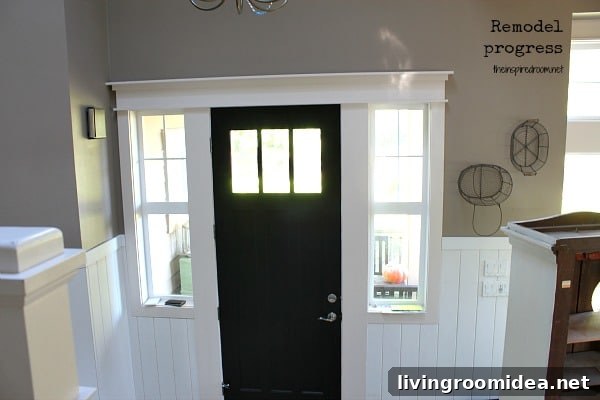
We had a contractor install the paneling and trim so we could focus our time and skills elsewhere. If you enjoy woodworking and have the right tools, installing wood paneling is a very doable DIY project. There are many approaches and materials to suit different budgets and styles, from full plank walls to simpler trim treatments.
There’s a bit more new trim in the family room that I’ll share in a future update, along with more before-and-after photos. This week our new floors will be installed. We’re still waiting on fireplace tile and kitchen cabinet paint, but the project is moving toward the finish line just in time to start prepping for the holidays. (Full disclosure: we’ve already put up one Christmas tree—more on that soon.)
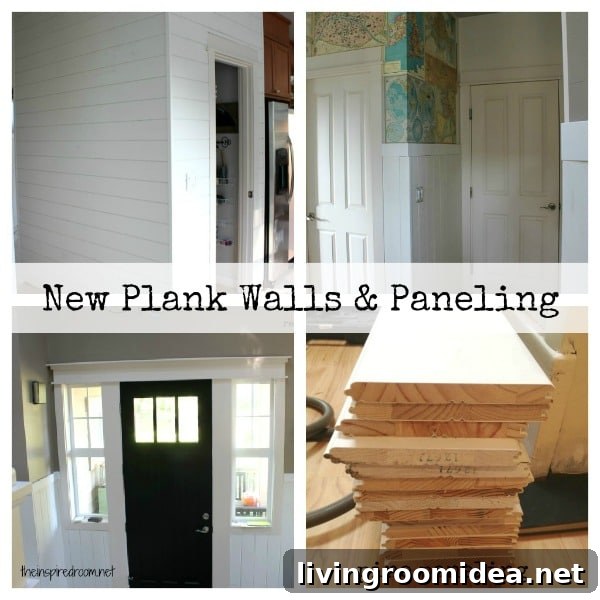
With relatively simple changes like authentic wood wainscoting and plank walls, we’re transforming a builder-grade house into a home that feels closer to the one I imagine—comfortable, warm, and full of character.
Are you making small changes over time to bring your home closer to how you’d like it to be?
Related inspiration post: Plank Walls