As part of our home remodel late last year — which included a kitchen renovation and new hardwood floors — we added some new trim and wainscoting. We wanted to add charm and durability by installing real wood tongue-and-groove wainscoting in a high-traffic entry and hallway that connects to the kitchen.
Of course, new woodwork needs to be painted. While painting is a task many homeowners tackle themselves, we chose to hire professionals for this job.
There were several reasons we opted for professional painters.
1. We have a history of painting mishaps and wanted to avoid costly mistakes.
2. Woodwork can be tricky to finish properly. We wanted the charm of traditional wood details without a sloppy paint job that might make the whole remodel look less intentional. Older homes can hide imperfections; newer homes show them.
3. We lacked the time, patience and consistent skill to do a high-quality job ourselves. My husband is a perfectionist about paint but doesn’t enjoy DIY projects, and I’m less detail-oriented with painting. Hiring professionals turned out to be a marriage-preserving decision.
4. We chose to have the woodwork sprayed rather than brushed. Spraying produces a smooth, factory-like finish, but it also requires more preparation and expertise than brushwork.
We wanted the best of both worlds: the character of period-style trim with the crisp, smooth finish that suits a newer home.
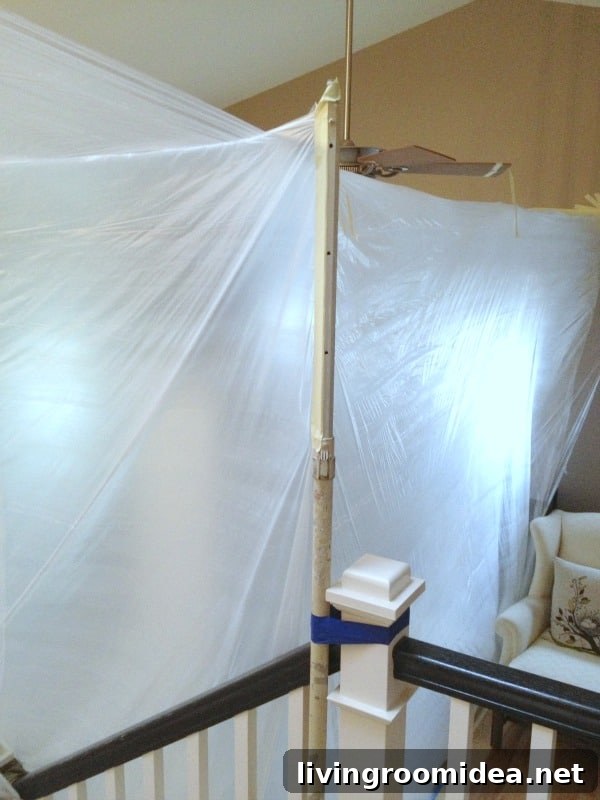
A project of this scale requires extensive preparation.
First, we had to move furniture out of the work zones. Luckily we could shift pieces into other rooms instead of hauling them out of the house, but it’s still disruptive and time-consuming.
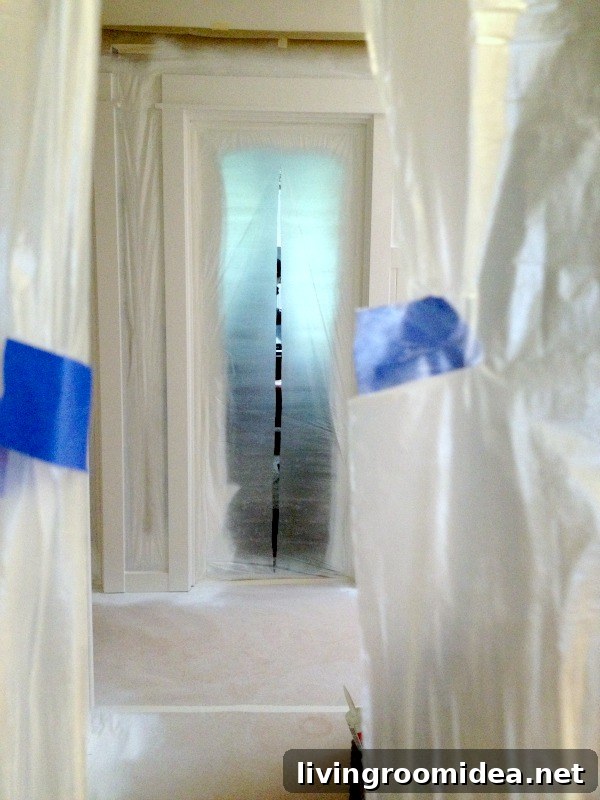
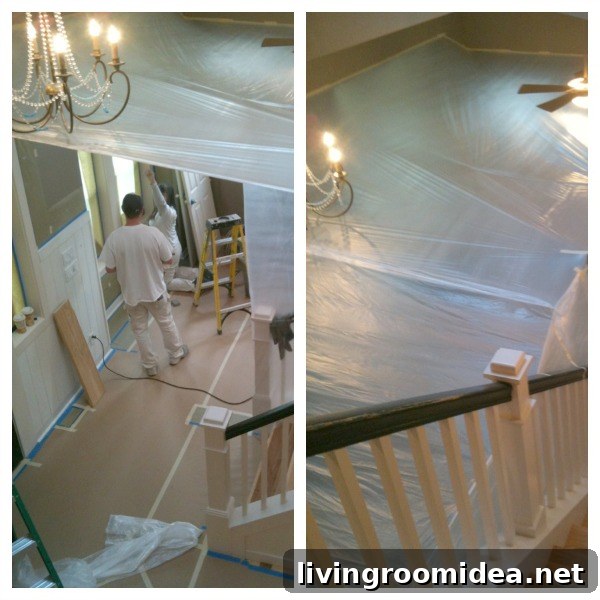
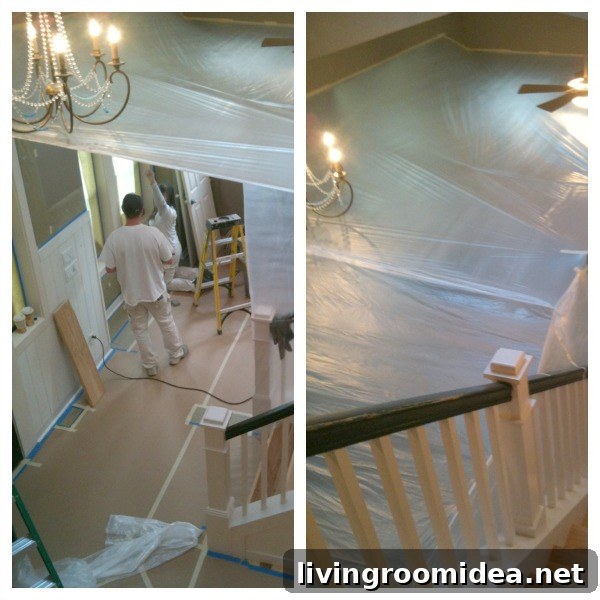
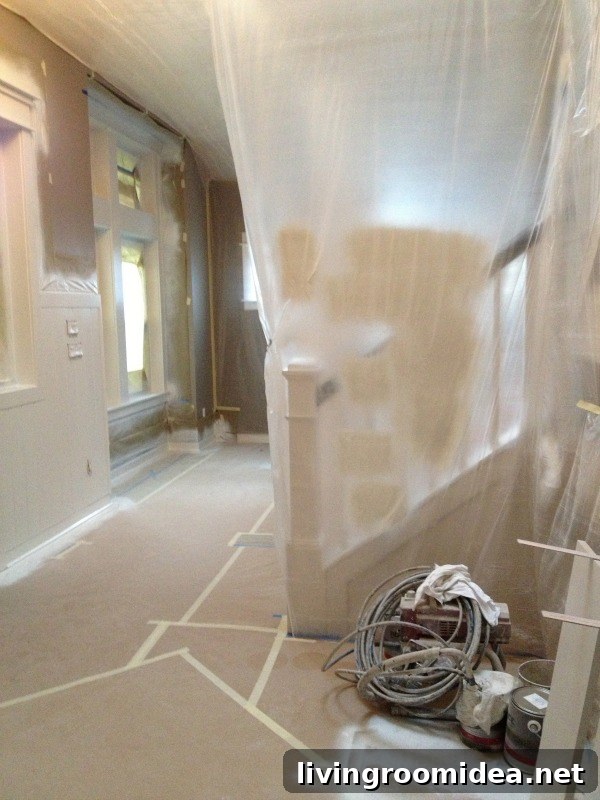
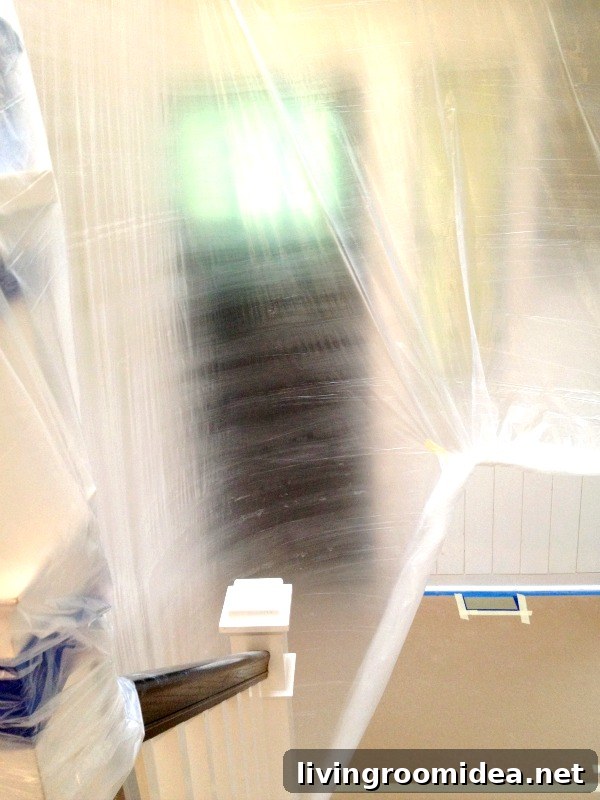
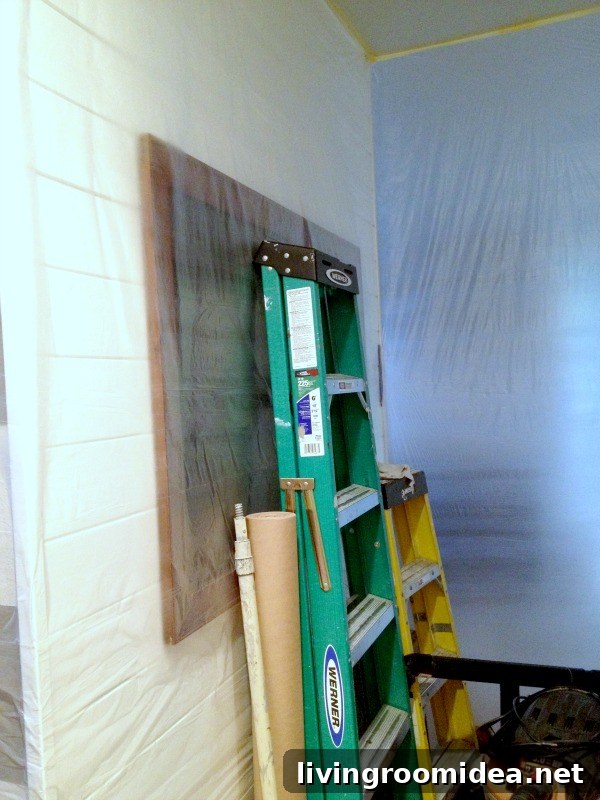
The painters built large plastic tents and booths using plastic sheeting, tape and poles to contain overspray while they sprayed trim in the living room and entry.
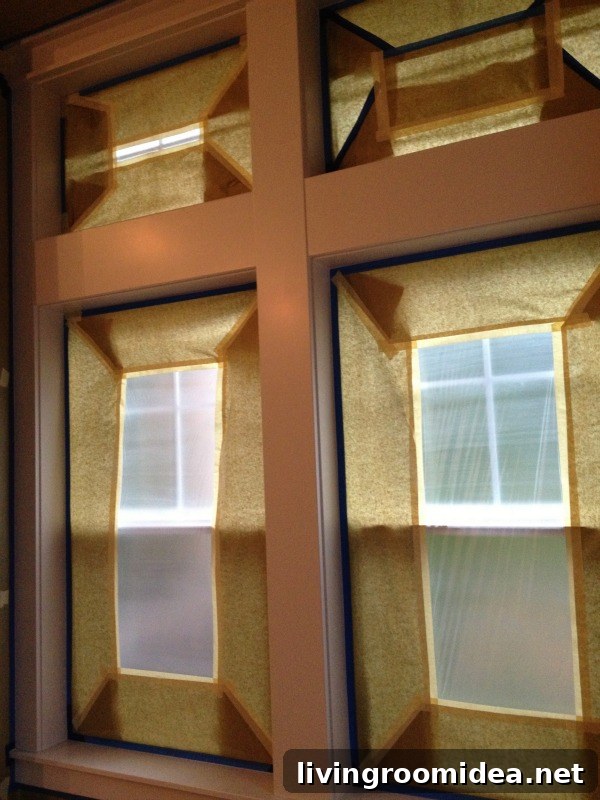
Windows were covered with paper so the glass stayed clean during spraying, and doorways were sealed with plastic. Floors and walls received protective paper and tape to prevent any accidental splatter.
Before any spraying began, the crew did thorough preparation: caulking gaps, sanding surfaces, sweeping and ensuring all surfaces were clean and smooth. Those steps are essential for a durable, flawless finish.
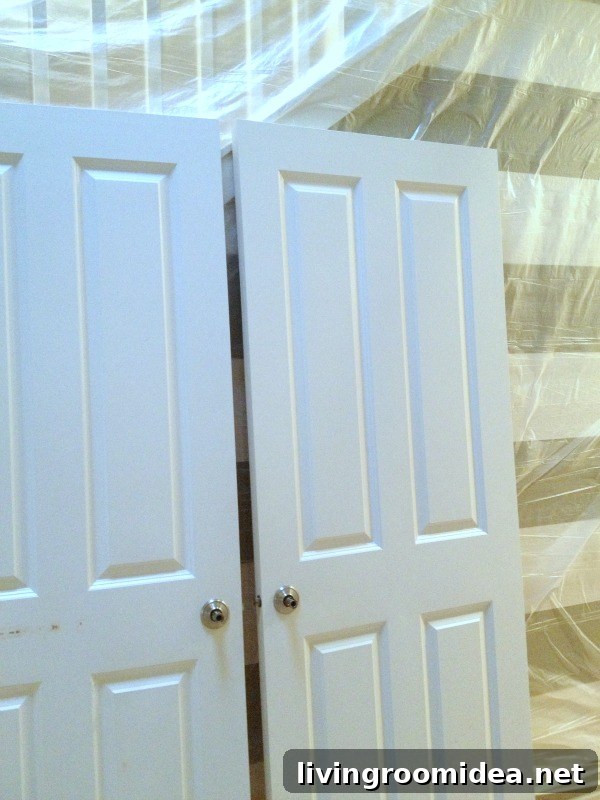
They removed three interior doors to spray them more easily. Eventually we hope to install more characterful solid wood doors, but for now refreshing the existing doors with paint made the most sense. I had considered darker or colored doors for added personality, but we decided to keep the painted woodwork white for simplicity and consistency—plus spraying multiple colors would complicate the process. Our front door remains black on the interior for contrast.
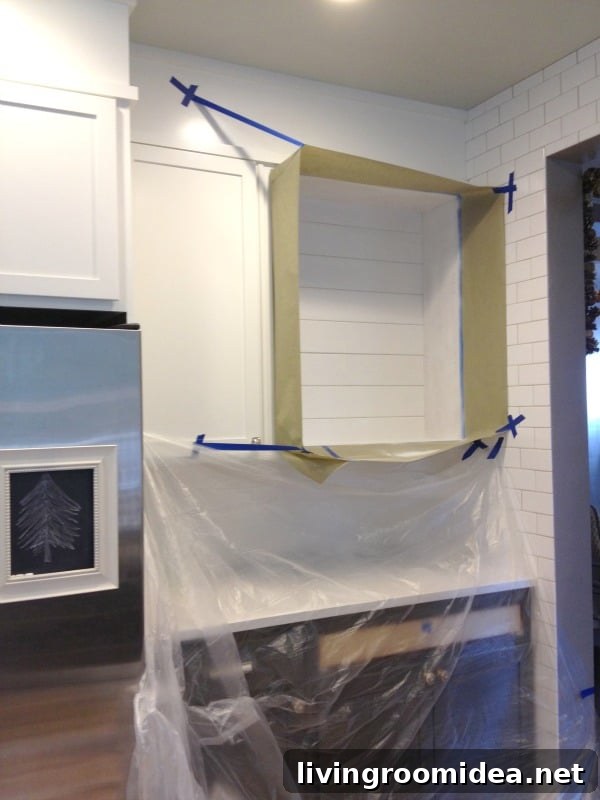
The painters also sprayed my open kitchen shelving, so we’ll need to be cautious while the paint cures. Even after the surface is dry to the touch, paint can take days or weeks to fully cure, so we’ll avoid placing items on shelves and trim until the finish is properly set.
When the paint is fully cured and everything is put back in place, I look forward to enjoying a more finished, polished home. This won’t be the last painting project—we still have more trim planned down the road—but hiring professionals for this stage gave us a clean, consistent result and saved us a lot of time and stress.
Have you tackled a large trim or woodwork painting project in your home? Or hired a job you could have DIYed as a way to keep the peace? Share your experience.