
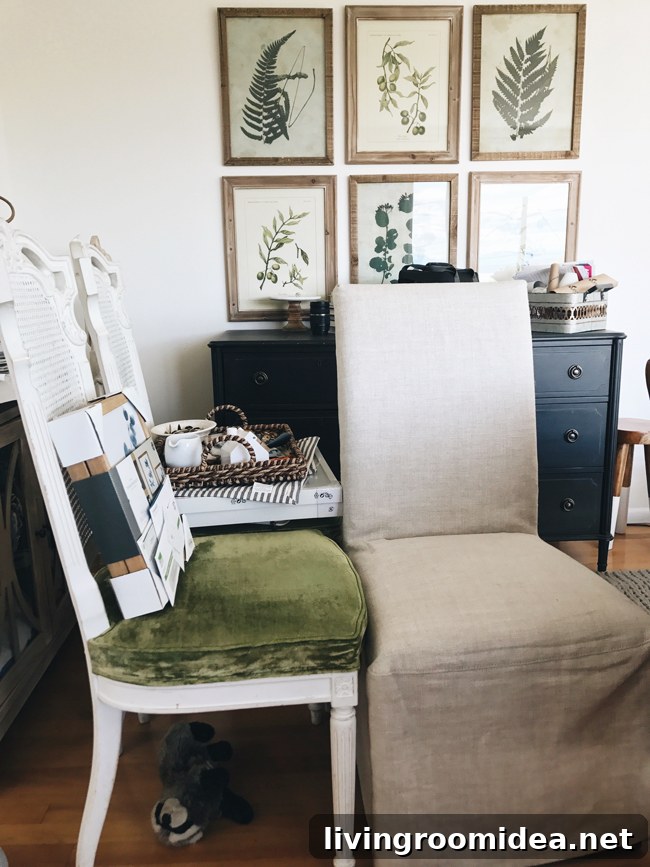
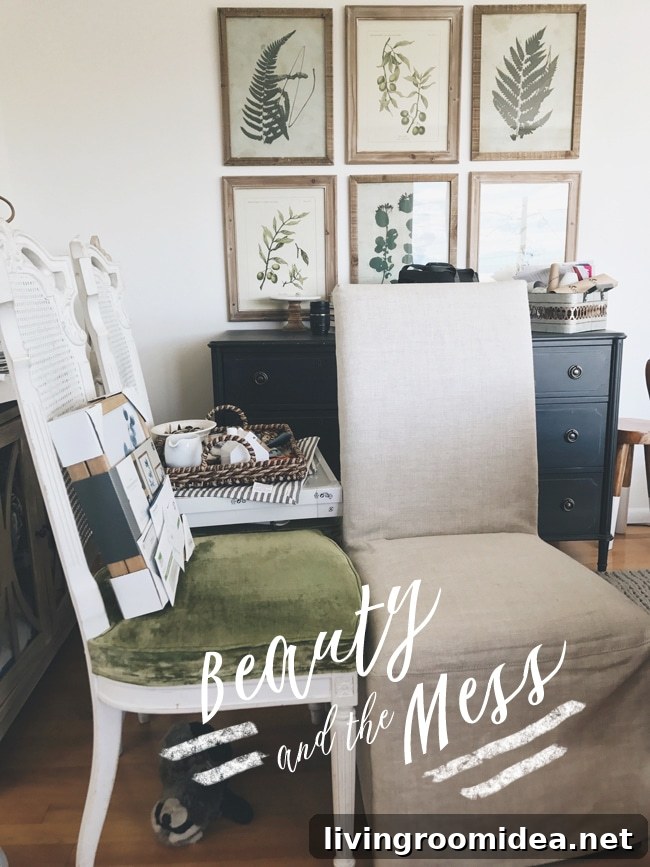
When I moved a few pieces around in my dining room recently, it unintentionally created a mess in the living room. Does that ever happen to you — a small change in one space setting off a chain reaction elsewhere? If it doesn’t, consider yourself lucky; at my house this is a frequent occurrence.
I’ll get one area looking a bit more organized and intentional, and the room next door temporarily unravels. Piles appear, accessories get displaced, and what seemed tidy suddenly looks chaotic. It’s not that the projects are unrelated; rooms in a home are connected, both physically and through the way we live in them. A decision in one space often impacts another.
That give-and-take between the polished and the imperfect is part of making a home. Creativity rarely follows a straight line. Progress in decorating or organizing is often a process of trial, error, and rearrangement. You try a new layout, borrow items from another room for a fresh look, or move things around to test scale and balance — and in doing so you accept a little disorder as part of getting to the final result.
Instead of treating messes as failures, I’ve come to see them as signs that something is evolving. They mark the middle of a process rather than the end. An afternoon of shifting furniture and trying different accents can leave a trail of temporary chaos, but that chaos usually leads to a more considered, livable outcome. The important part is remembering that the temporary disorder is purposeful and will pass.
This ebb and flow between beauty and mess is normal. It teaches patience, helps clarify preferences, and often results in a space that feels more personal and functional. Embracing the messy middle makes it easier to experiment and to make confident choices once the pieces settle into place.
What does this look like in your home? I’d love to hear about the balance of order and disorder where you live. Share the truths: the projects that spill into other rooms, the piles that appear while you’re trying to create something new, and how you cope with the in-between stages.
Related reads:
How to Decorate: The Slow Process to a Style You’ll Love
Find my new book Simple Decorating here.