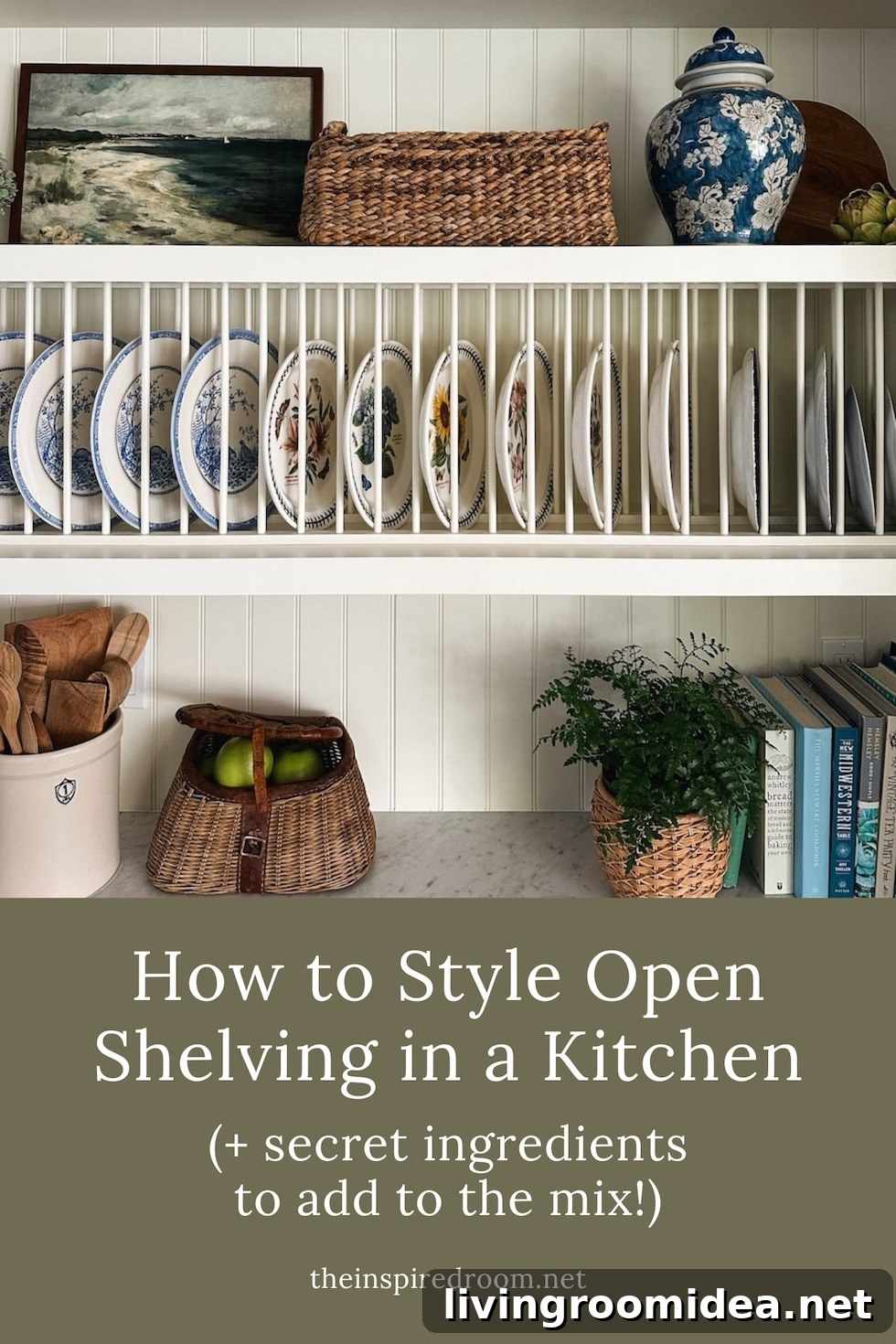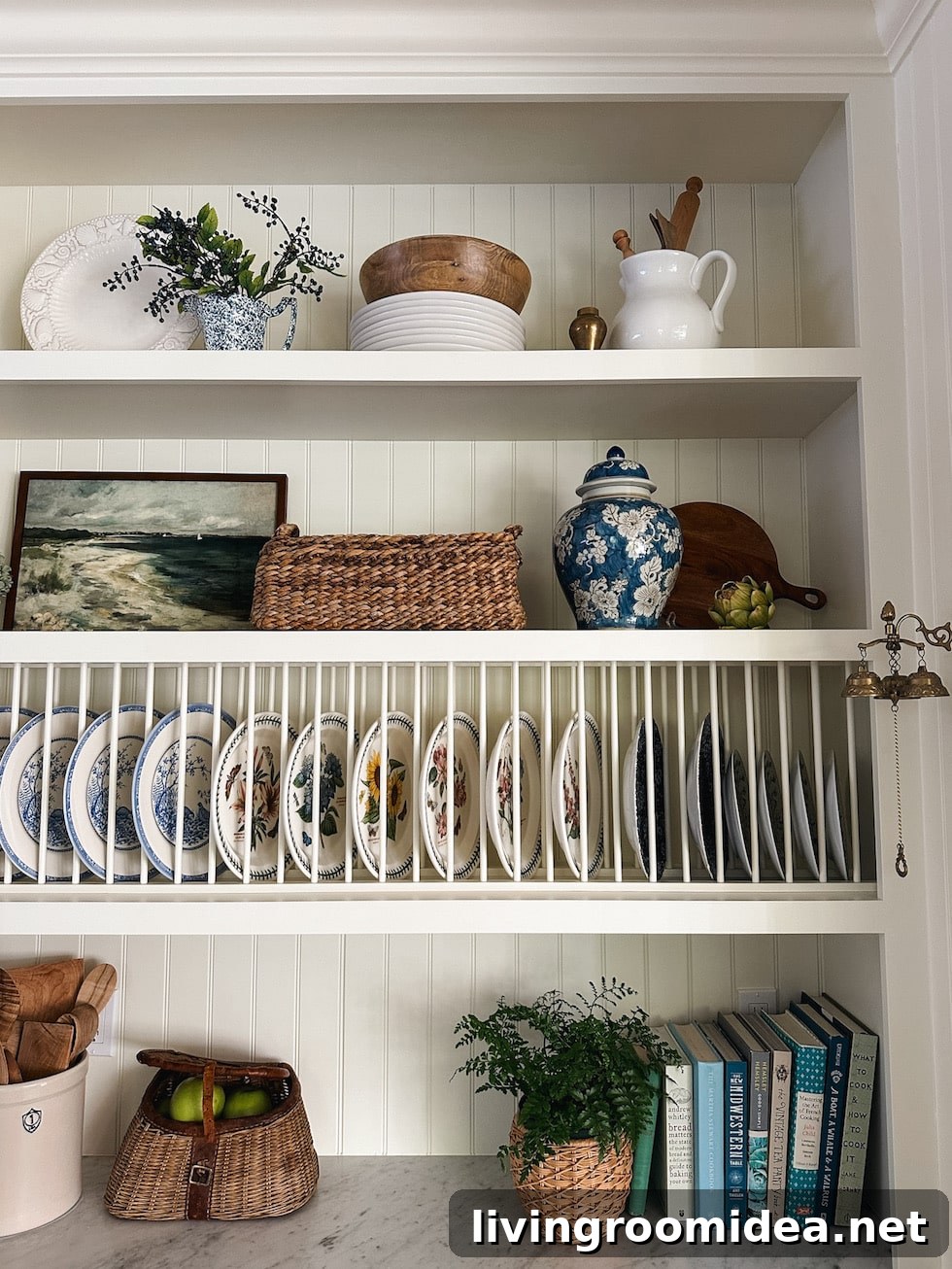
Styling open shelves can feel intimidating, but with a few designer tips it becomes enjoyable and manageable. Knowing how to choose the right pieces and how to arrange them will help your shelves look intentional, balanced and beautiful.
Below are practical, tested tips for selecting items to display and styling open shelving in the kitchen—or anywhere in your home where you want a curated look.
Watch the short video below, then scroll down for more tips!
Pair practical and pretty
I always combine practical items with decorative pieces. Display things you use—like plates, pitchers or baskets—alongside pretty accents. When functional items are attractive, they contribute to the shelf styling and make the space feel lived-in and useful.
Set the mood with a palette
A clear palette instantly ties a shelf display together. Decide on a mood—serene, colorful, moody, or bright—and choose colors and textures that support it. A cohesive palette doesn’t require everything to match perfectly, but it should feel deliberate.
Try selecting a mood word or two to guide choices. Does the space feel seasonal, coastal, cozy, or modern? If an item distracts from the intended mood, consider removing it.
A formula I use often in my home:
A few shades of two colors + a wood and a white tone + a metal tone. Accent colors kept small.
For example, the top shelves show variations of blue and green with mid-tone wood and white accents, plus tiny pops of red and yellow limited to the dishware.
Use unmatched and unexpected pieces
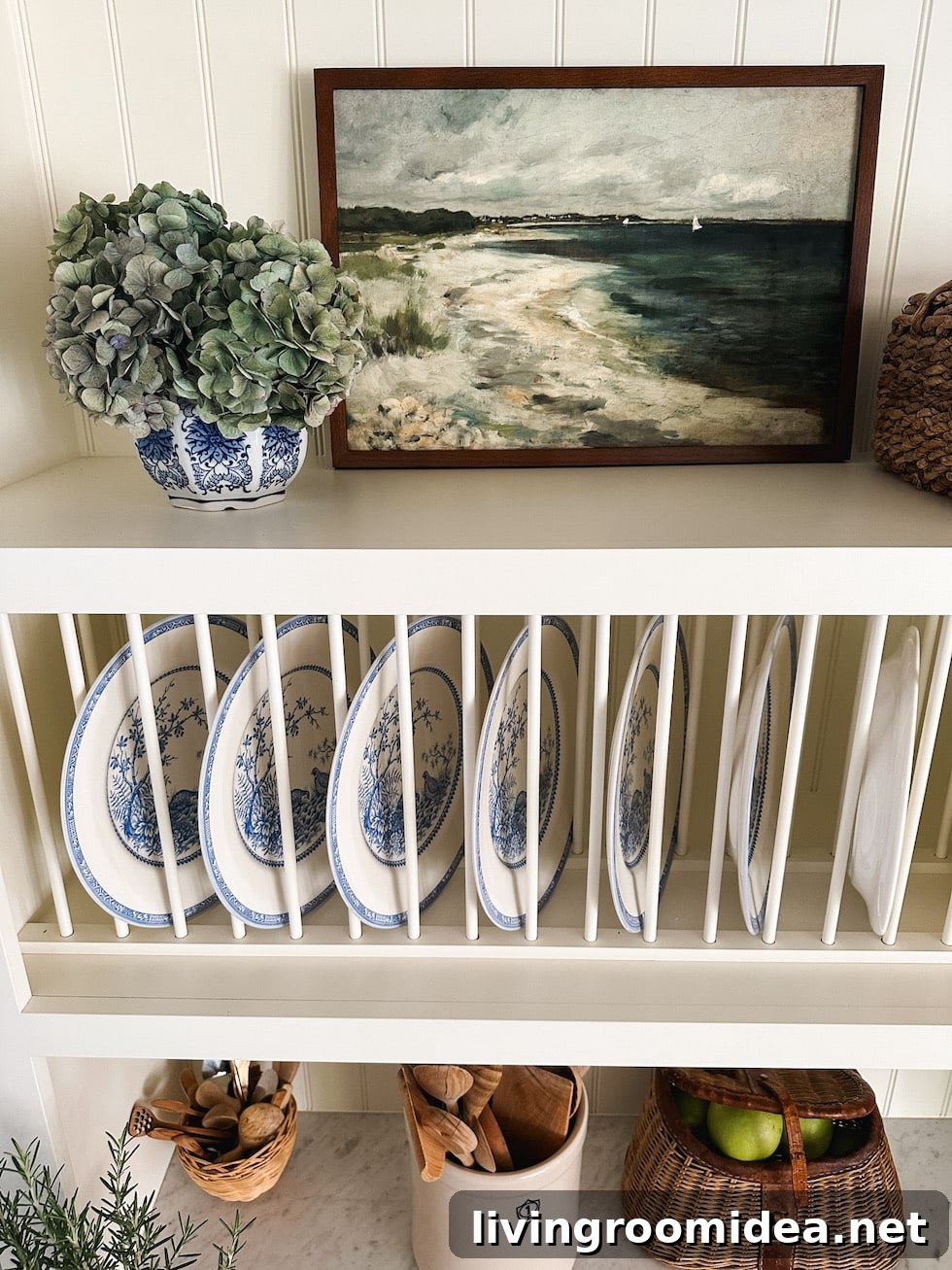
You can create impact with matching sets, but mixing unmatched or unexpected items adds personality and makes seasonal updates easier. Mismatched pieces work when they support the chosen mood and palette.
Include collected or vintage finds, plants (real or faux), books, organic elements like florals or vegetables, baskets and artwork. These elements bring texture and interest beyond strictly kitchen-related items.
Blend sizes and shapes
Mix rounds, cylinders, rectangles and organic shapes to create visual contrast. Avoid overcrowding with too many tiny objects; instead, use a few small pieces to add rhythm and scale. Combining opposite shapes makes the arrangement feel deliberate and dynamic.
Pair, lean and layer
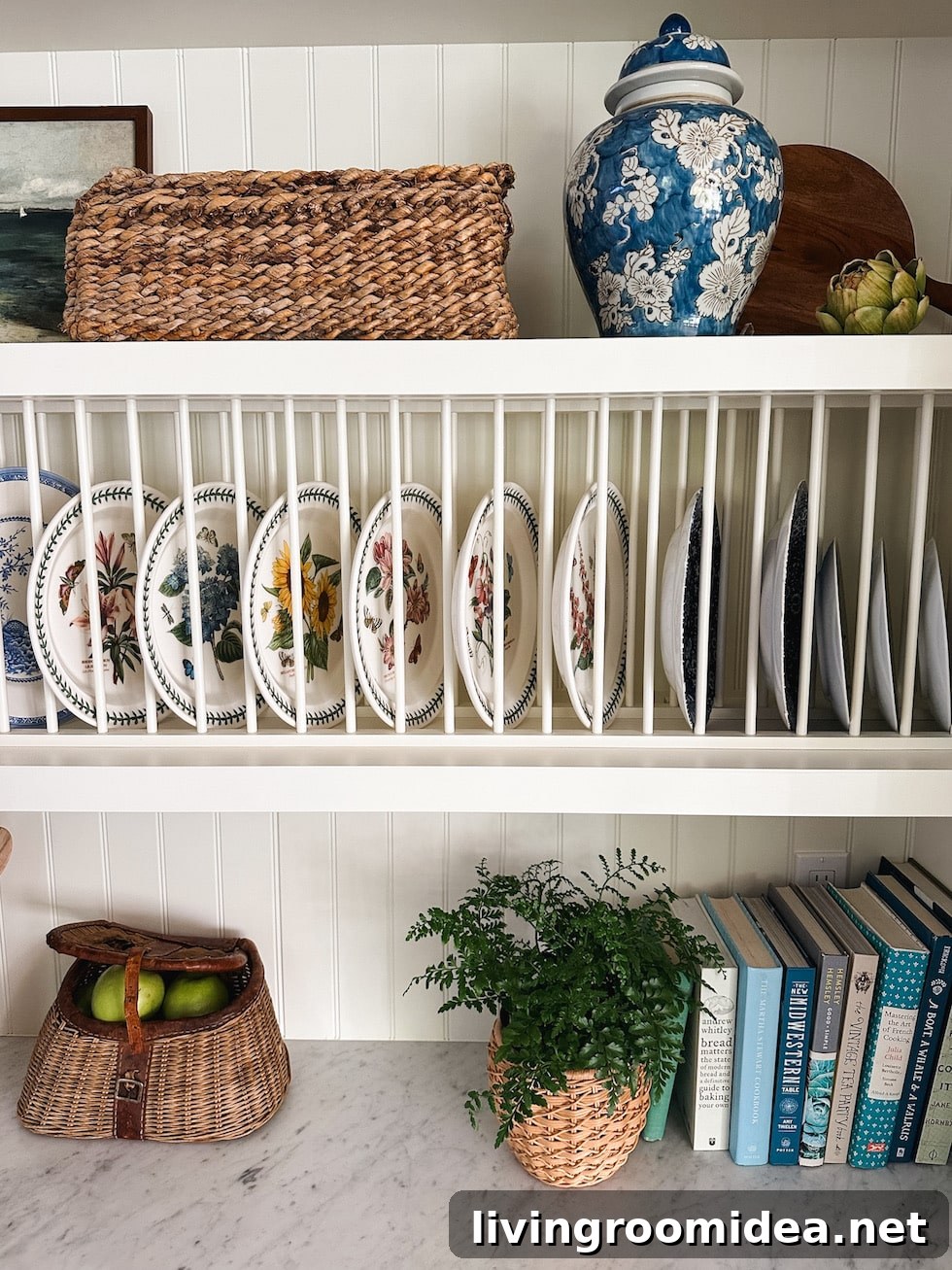
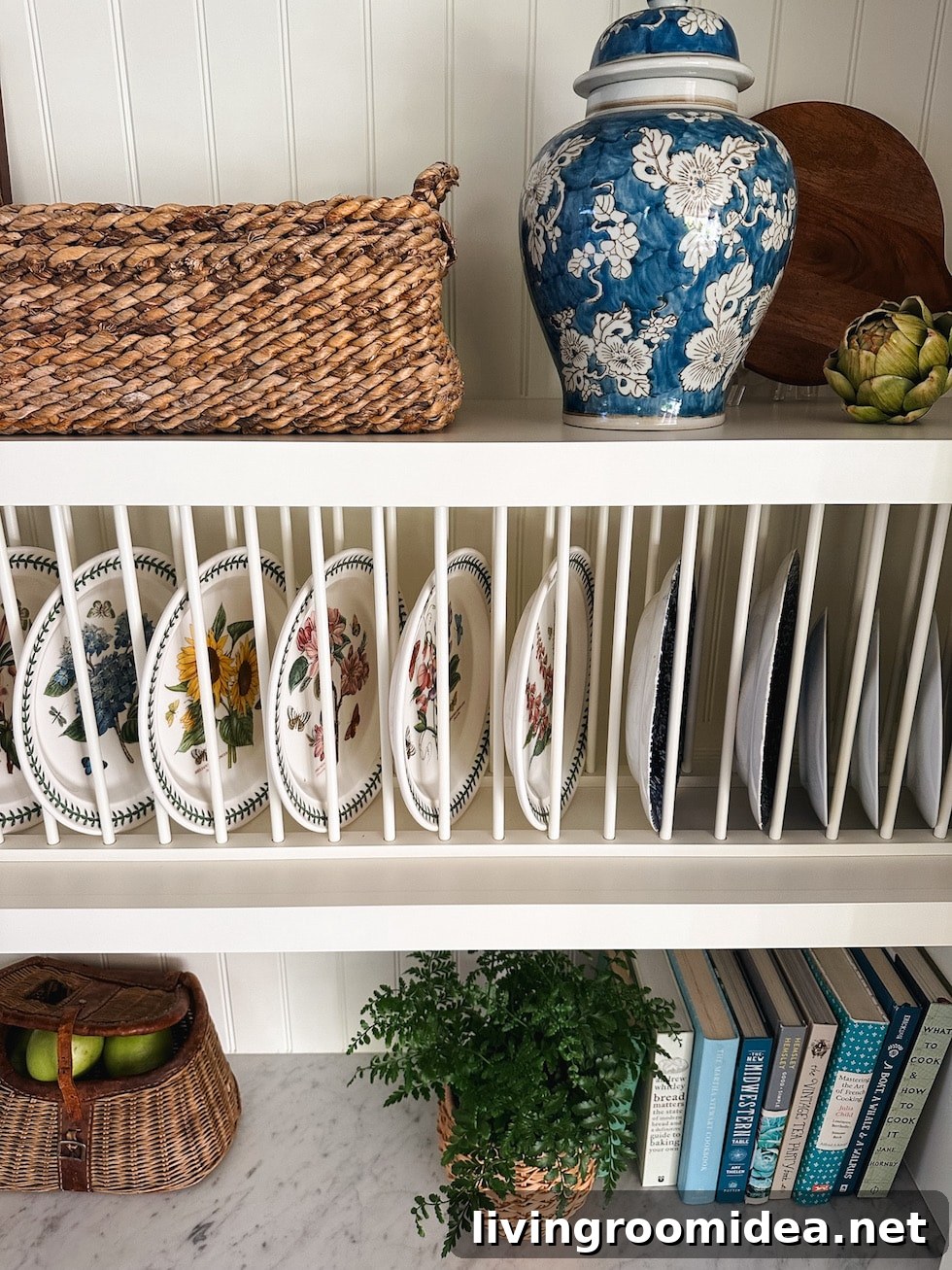
To make varied pieces feel cohesive, start by placing taller or larger items at the back. Lean artwork, platters or large plates against the back of the shelf, then layer smaller items in front. Grouping items in threes often creates a balanced look. Pair different heights and textures and allow breathing space between clusters. Combining form and function—such as apples in a basket—adds warmth and purpose.
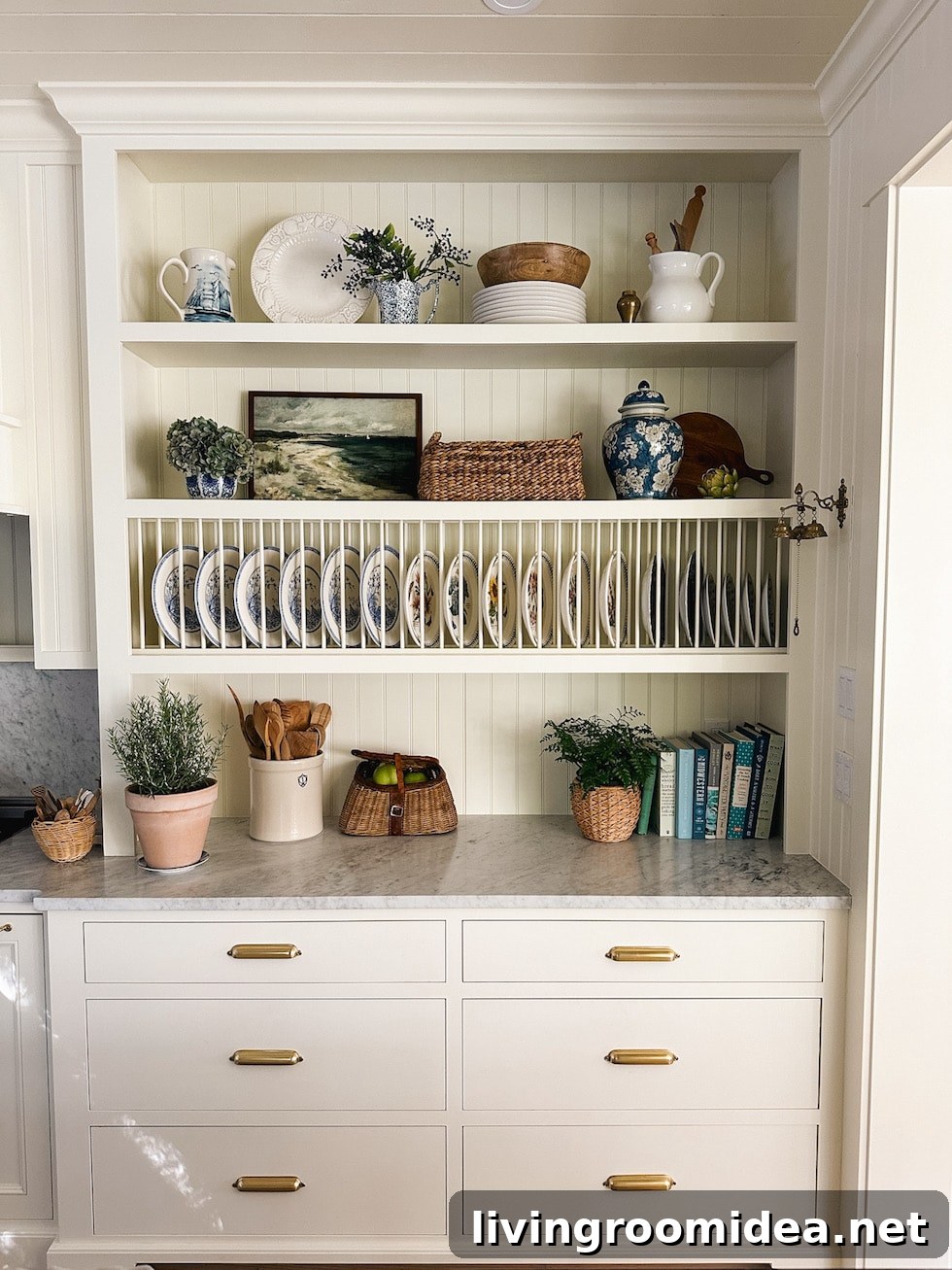
Step back and evaluate
After arranging, step back and view the shelves from across the room. Does the display feel natural and pleasing? If it feels cluttered or flat, adjust the balance of colors, shapes and sizes. Tweak until the overall effect feels right for the space.
If you’d like a deeper look at my home and decorating process, I host a weekly community where I share decorating tips, answer questions and walk through projects in real time. Join us to learn simple strategies for creating a home you love.
Related Post: How to Get the Look of a Nancy Meyers Kitchen

Botanical Plates
Brass Bells
Blue and White Chinoiserie Ginger Jar
Seascape Art Print in a wood picture frame — ordered for a specific size, but other sizes and framed options are available
Blue and White Plates
Stoneware Crock
Favorite Cookbooks
Artificial Artichoke
Kitchen Hardware examples
Blue and White Chinoiserie Planter Pot on a shelf
Basket plant is in a pineapple-lidded basket style
Basket with apples — similar styles used for styling
Decorating with Fishing Baskets — ideas for using a collection of baskets
Paint color used: Classic Light Buff, Sherwin Williams
Kitchen tour and additional details available in my kitchen reveal and style posts.