
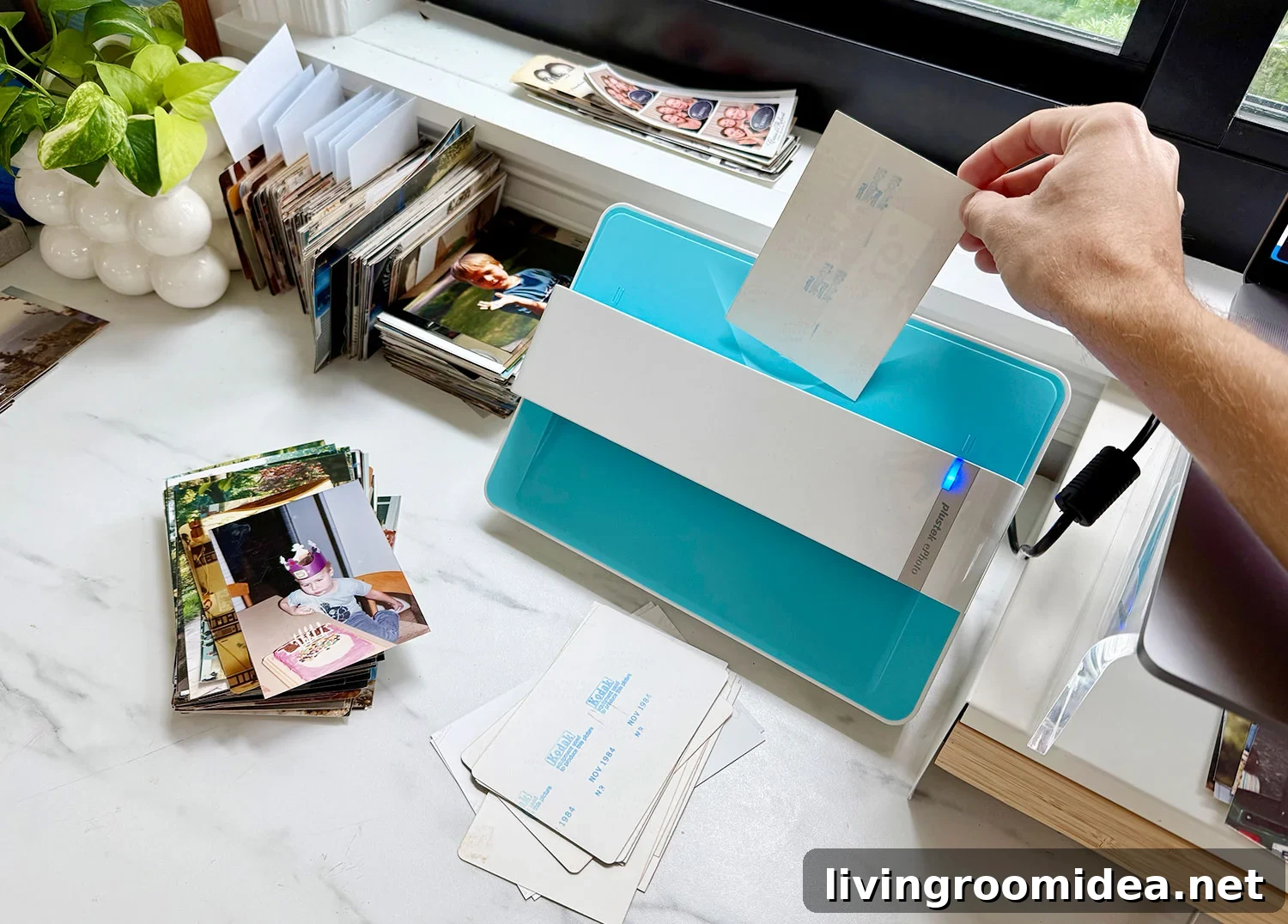
When I get hyper-focused on a project, I go all in — and that’s exactly how I tackled the huge job of digitizing our old photo albums. We crowdsourced recommendations, spent time on message boards, and Googled the options. From that research I narrowed the approaches to five common photo-digitization methods and tested each for quality, cost, speed, and overall convenience. One method emerged as our favorite, though several other options are valid depending on your priorities.
None of the products or services mentioned were sponsored. Everything was purchased and tested with our own money, and we’re sharing what worked best for us based on real use.
The Photo Digitization Methods We Tested
We tested a variety of approaches — some free, some paid, some fast and some more hands-on. The methods were:
- Your phone’s camera (photographing prints)
- A bulk photo scanning app for your phone
- The flatbed scanner on a home printer we already own
- A dedicated photo scanner
- Mailing photos to a third-party digitizing service
Note: our printer is an older model from 2018; the link referenced is the closest current model.
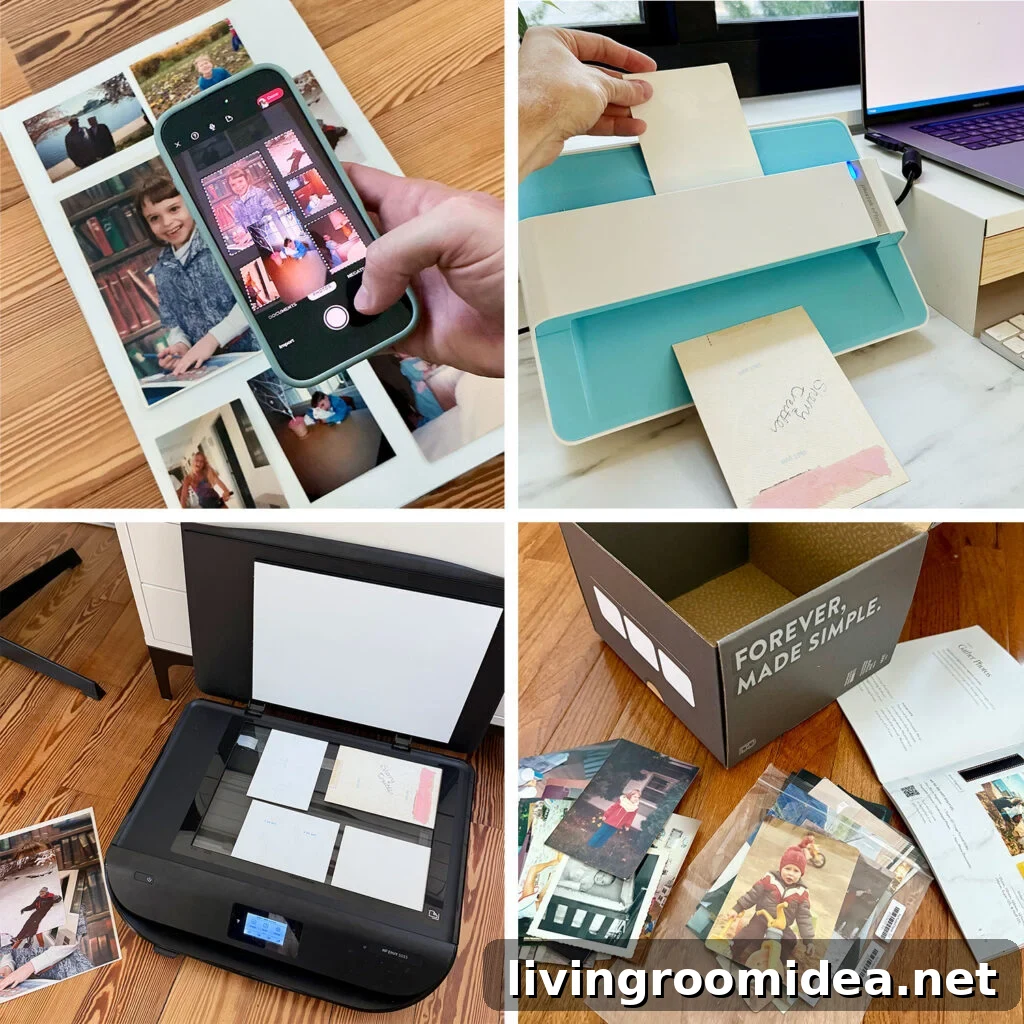
I also recorded a short video demonstrating the phone app and the dedicated Plustek scanner, since those approaches are less familiar to many people.
In each test we focused on these criteria:
- Cost
- Quality
- Speed
- Ease of use
- Overall convenience
Convenience was especially important for us because we have well over 1,500 prints to digitize, and any method that drags or feels tedious makes it easy to lose momentum.
Our Test Photos
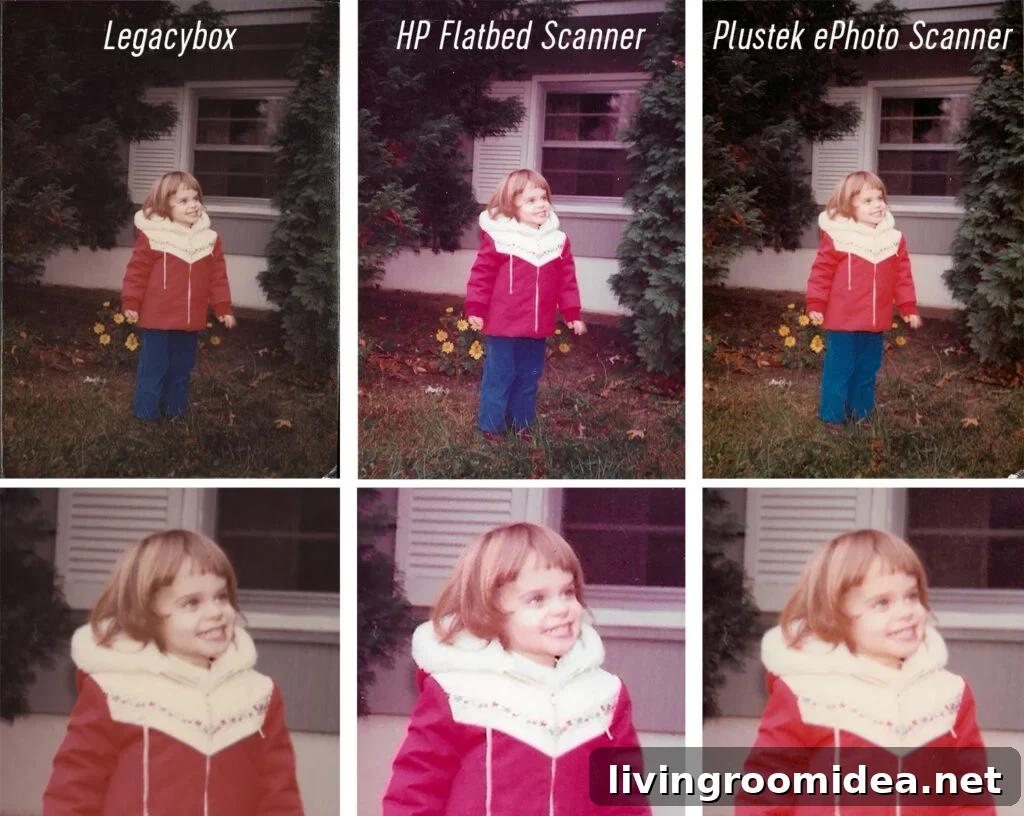
To compare methods fairly, I used the same photos for most tests — many of which are shots of a young John and teen Sherry. I selected one darker indoor photo specifically to evaluate how each method handles poorly lit prints.

Unless I note otherwise, the images shown are unedited scans or photos straight from the device so you can see the raw results each method produced.
Best Price ($0): Your Phone’s Camera
Using your phone costs nothing if you already own one, and modern phone cameras can produce good results. I tested with an iPhone 16 Pro. This approach is inexpensive but requires setup and patience for best results.
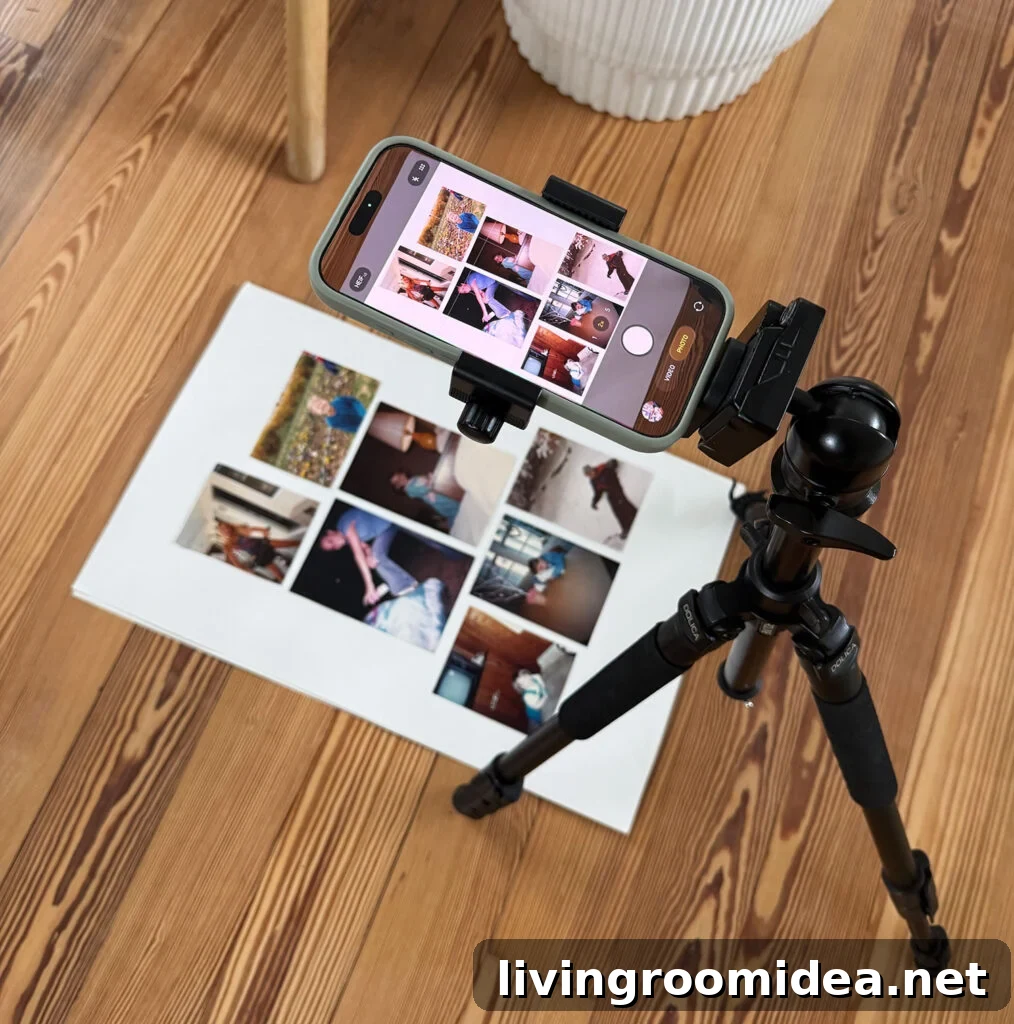
Tips to maximize quality when photographing prints:
- Set the camera to its highest resolution.
- Use a tripod and timer to reduce blur.
- Place photos on a plain white background.
- Shoot in even, indirect light to minimize glare.
Photographing several prints at once can be efficient, but it reduces sharpness on the outer prints because you have to step back. Photographing prints individually gives the best detail.

While photographing 50 prints only took four minutes, cropping each into separate files consumed nearly half an hour. For bulk projects that makes this method inefficient despite its zero-dollar cost.
VERDICT: Best for digitizing a small number of photos for free. For large collections, skip this unless you enjoy the process and extra editing work.
Best Quality: Flatbed Scanner
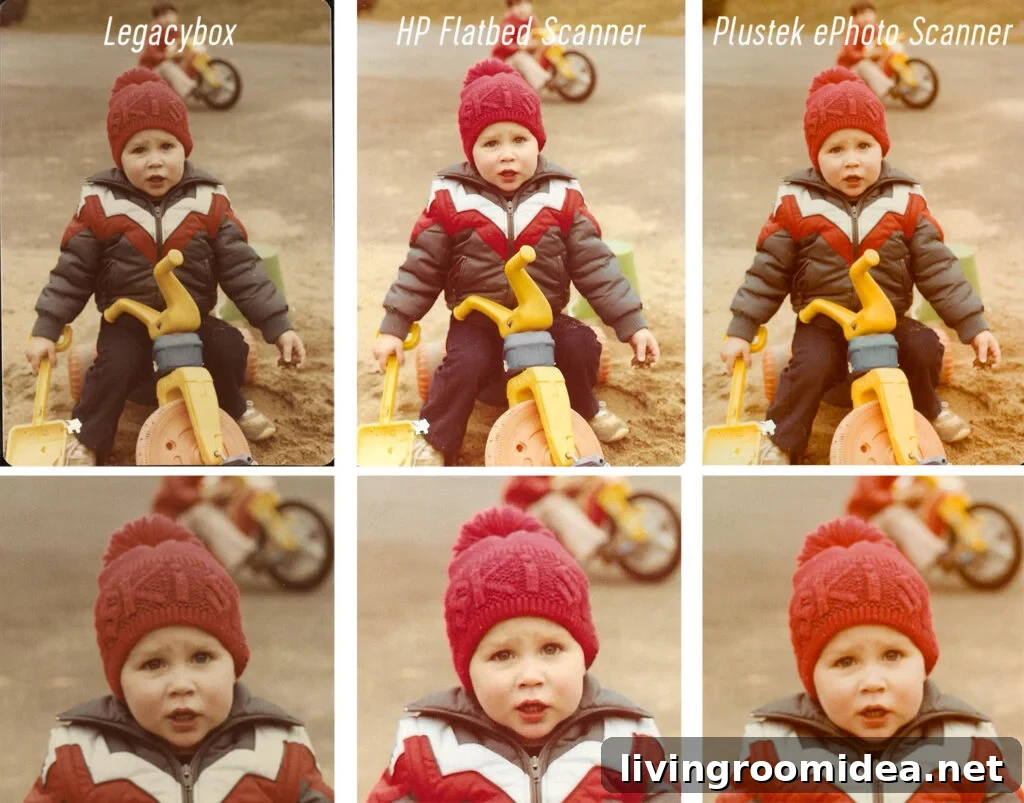
For raw image quality, the flatbed scanner built into our HP Envy printer produced the clearest, most vibrant scans straight out of the device. This was a no-cost test for us because we already owned the printer; new models are typically under $100.
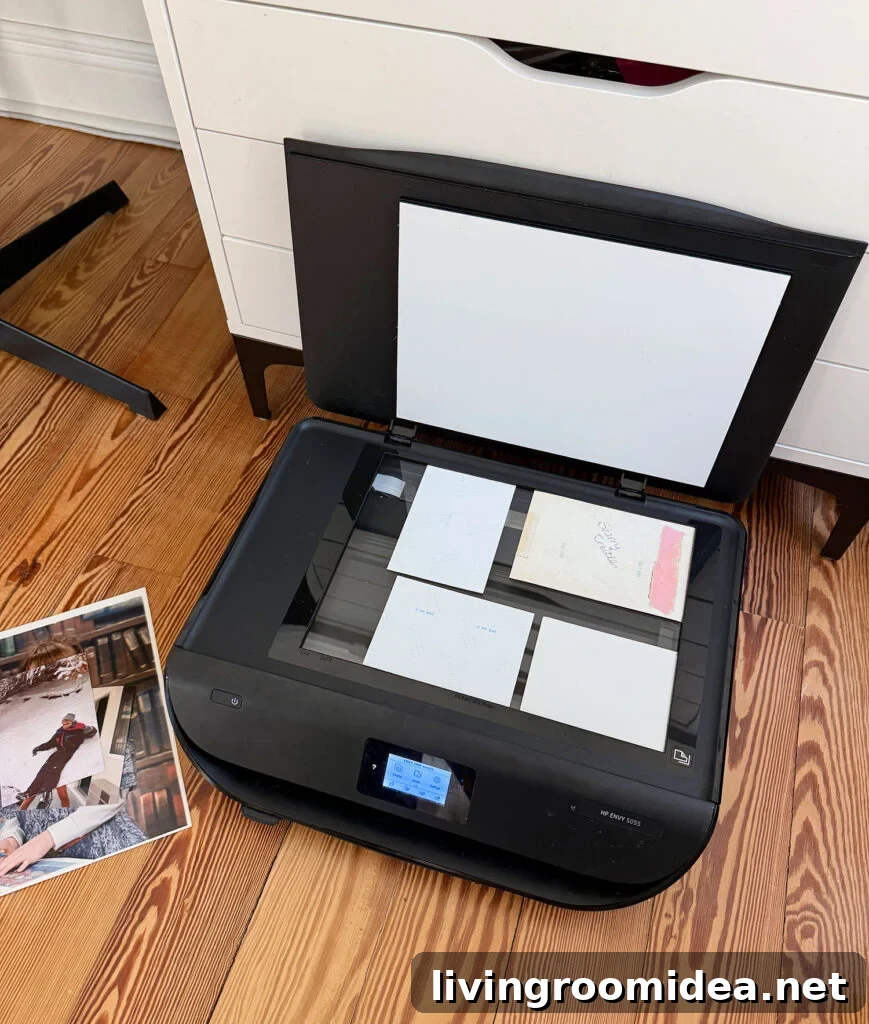
The flatbed handled non-photo items like greeting cards and letters especially well, producing usable scans with minimal tweaking. It also performed well on the darker, indoor photo I used for comparison.
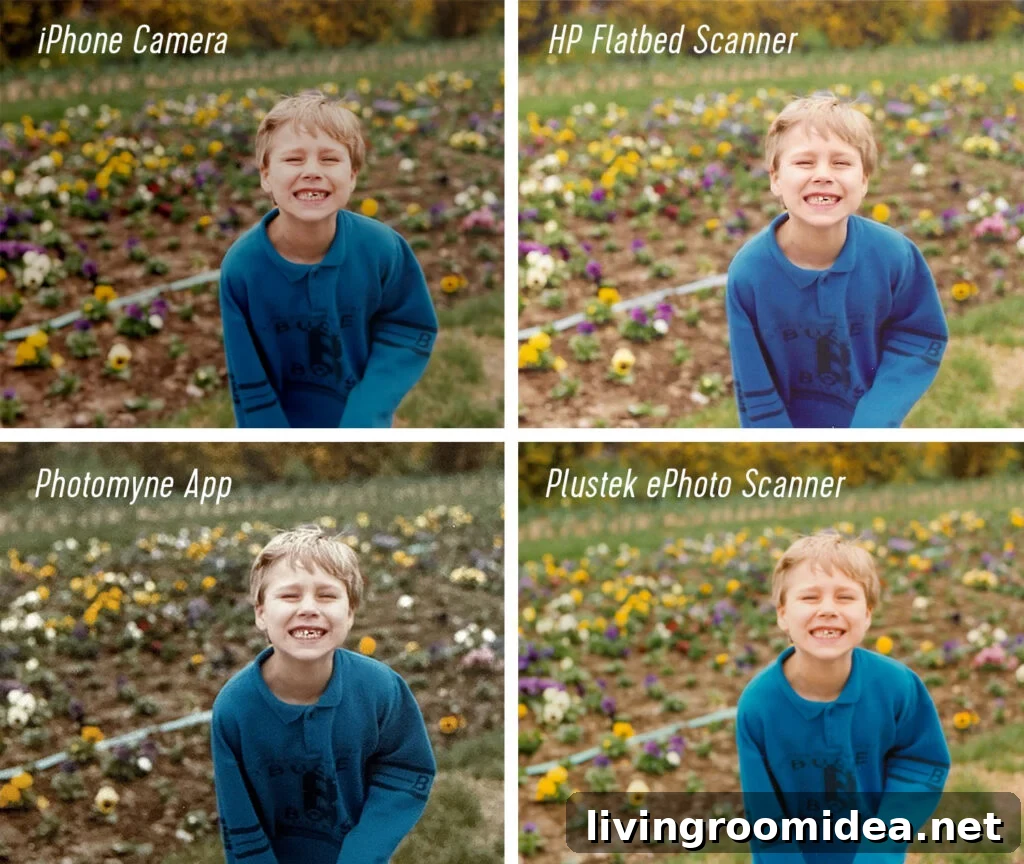
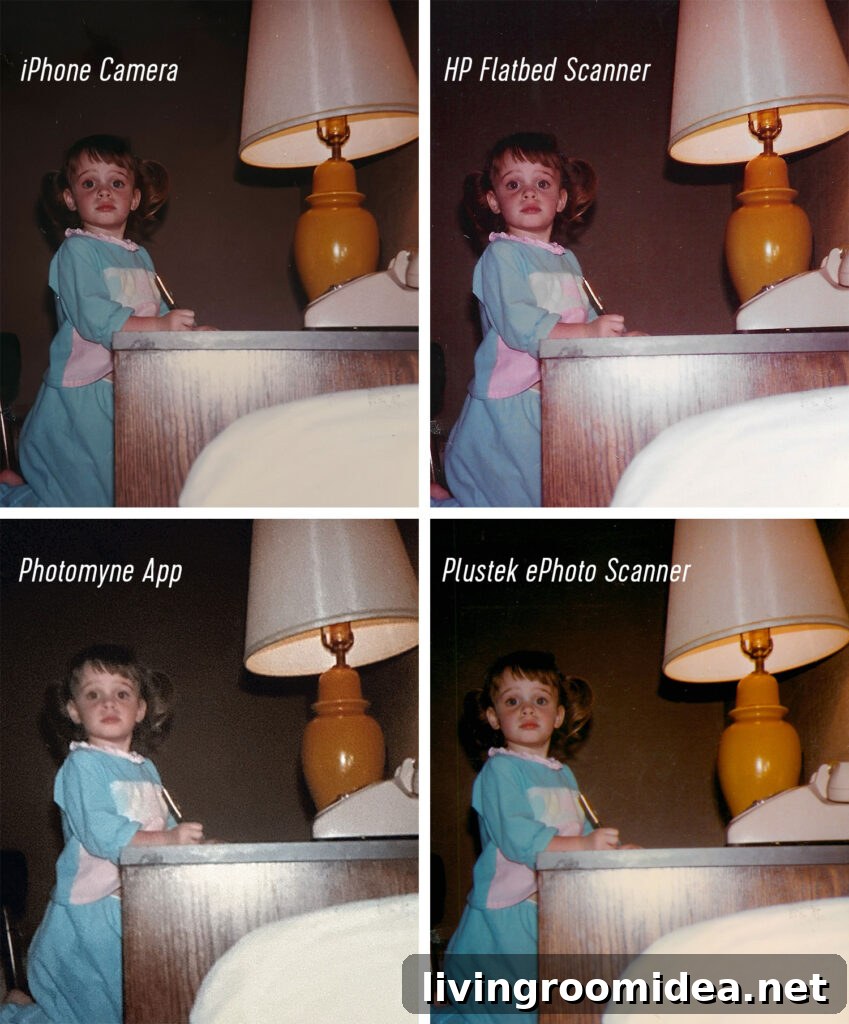
The downside is speed. Lifting the lid, placing prints, waiting for scans and then cropping them into individual files made this the slowest method. For a small batch where quality matters most, it’s a great choice; for thousands of prints, it’s impractical.
VERDICT: Best for highest-quality scans when you have a small number of prints to digitize.
Best For Speed: Plustek ePhoto Scanner
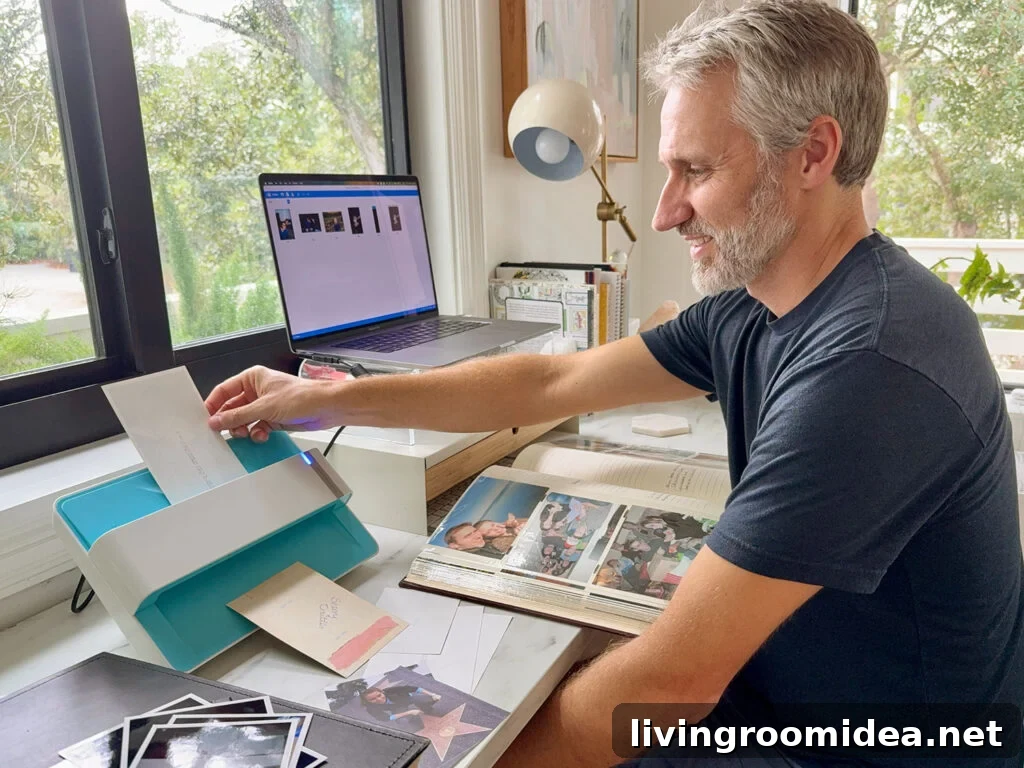
The Plustek ePhoto Scanner was widely recommended, and for good reason. It cost around $200 and proved to be the fastest, most efficient option for large batches. You place a single print face-down, the scanner feeds it automatically, and the software returns an already-cropped image in seconds.
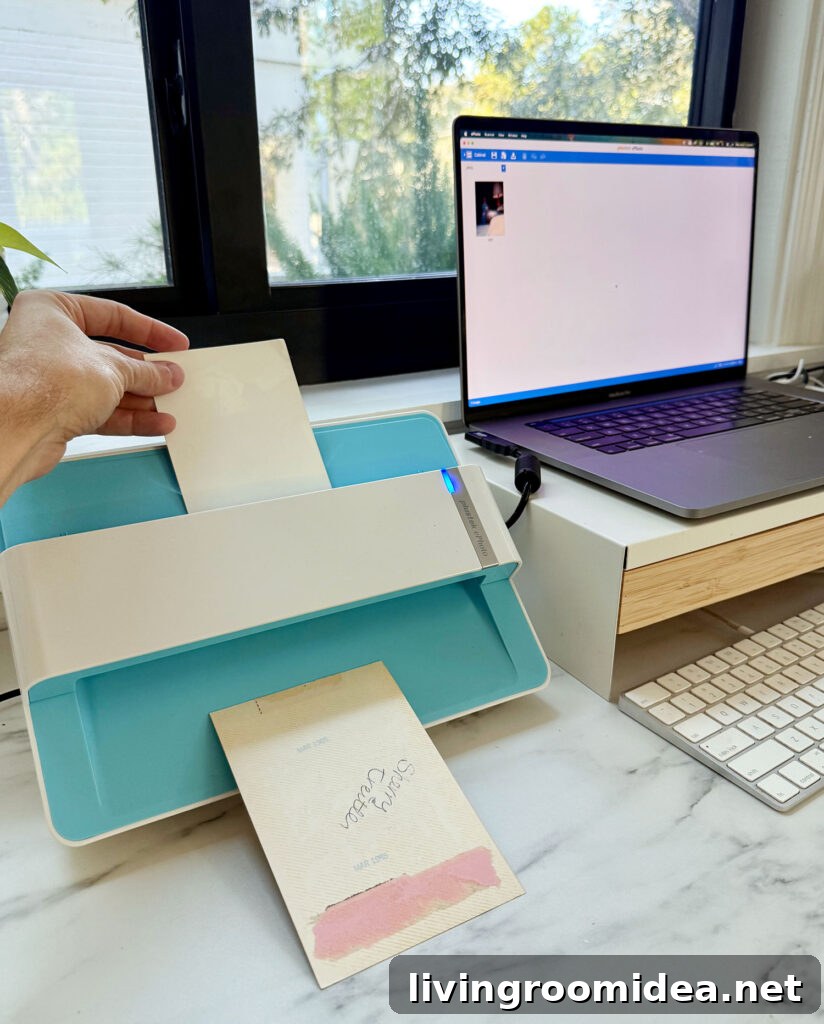
I scanned 50 photos in under five minutes, which is dramatically faster than the phone or flatbed options. The balance of speed and output quality made this the clear choice for a large digitization project.
VERDICT: Best for fast, high-volume scanning without sacrificing solid image quality.
Getting the Best Quality from Plustek
My initial Plustek scans were a bit dark, but tweaking the software settings fixed that. Turning on the ICC profile and selecting a photo-specific profile improved brightness and color significantly. Do a few test scans and adjust preferences until you’re satisfied.
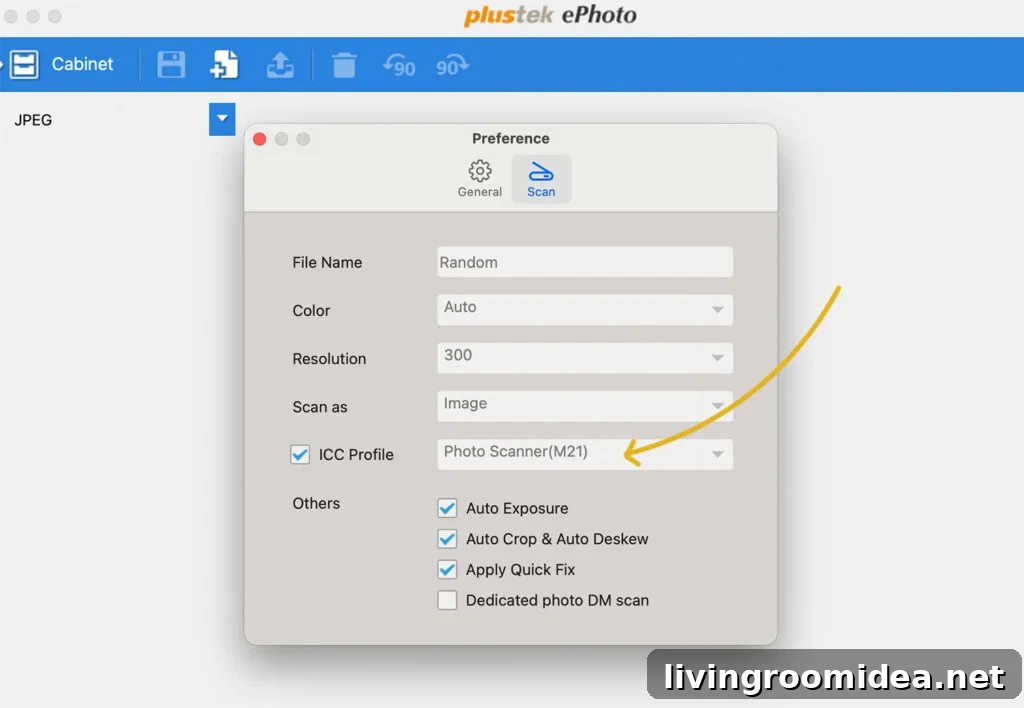
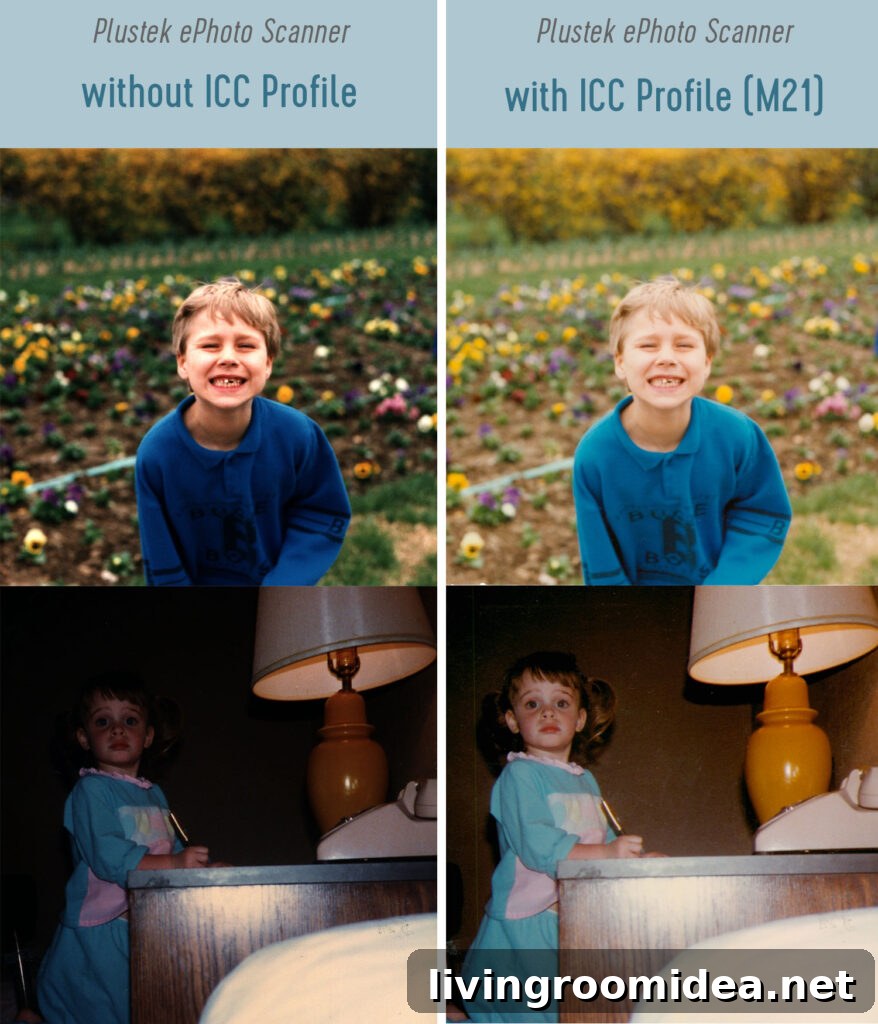
The ePhoto software includes color and photo adjustment tools, which can be useful but are a bit clunky. Most scans, after proper preferences are set, come out well without extra editing.
Best For Speed (Runner-Up): Photomyne App
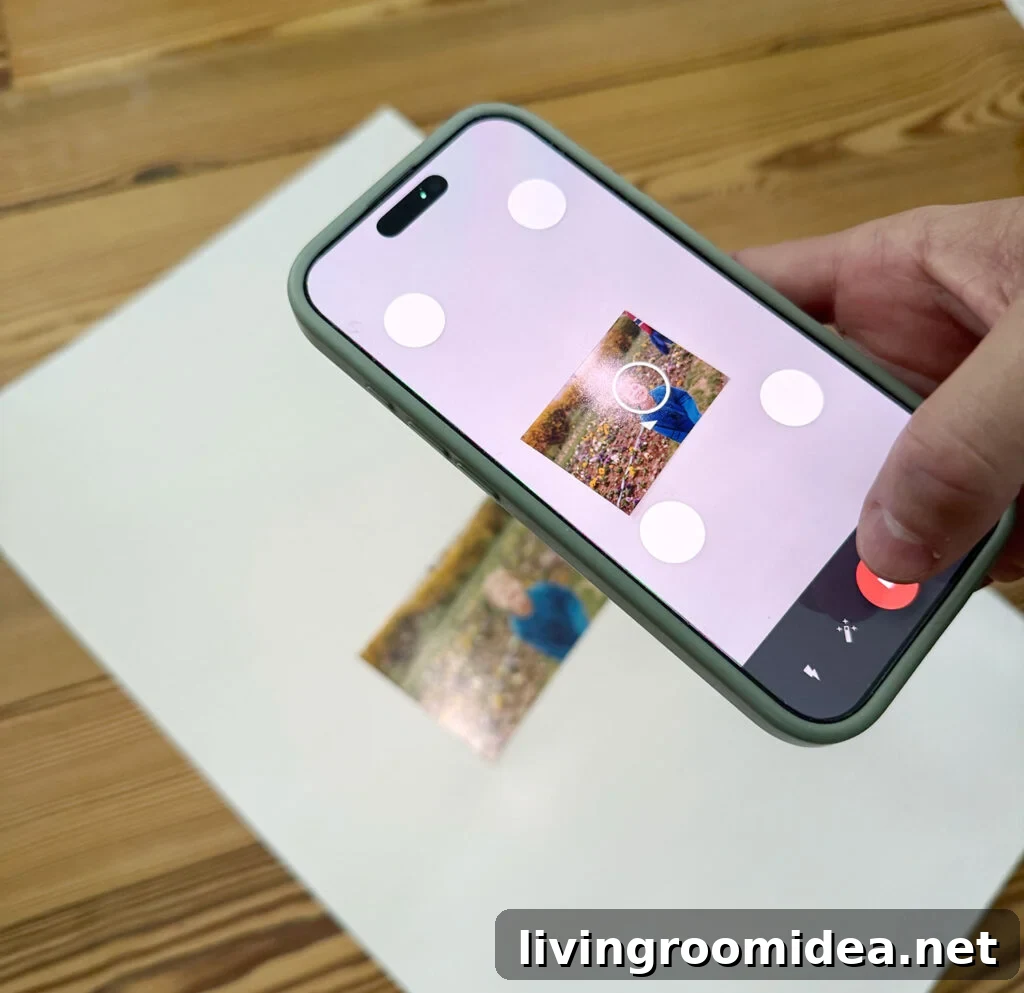
If you don’t want to buy another device, the Photomyne app is a strong alternative. It automates cropping and speeds up the phone-capture workflow. Photomyne isn’t free (roughly $60/year) but offers a short free trial.
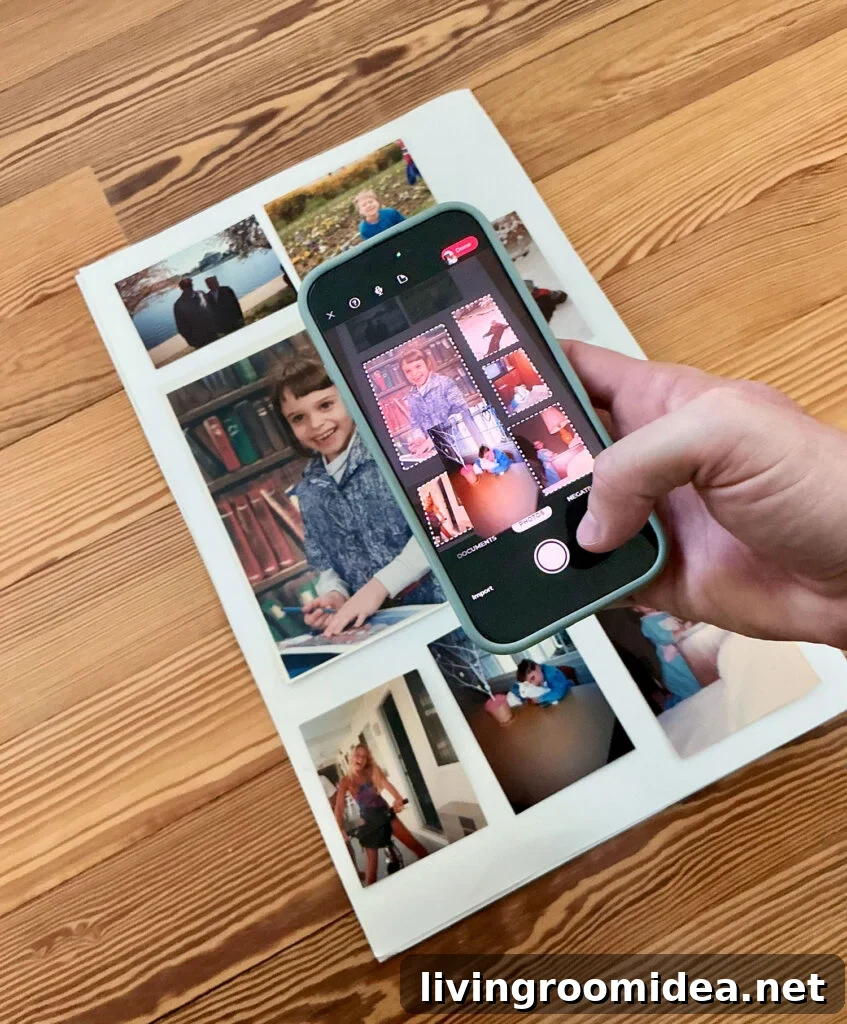
Capturing groups of prints is faster but reduces detail; shooting one at a time gives better quality but loses some speed. Some of Photomyne’s automated editing features, like AI sharpening, can produce odd results, so I didn’t rely on them for final files.
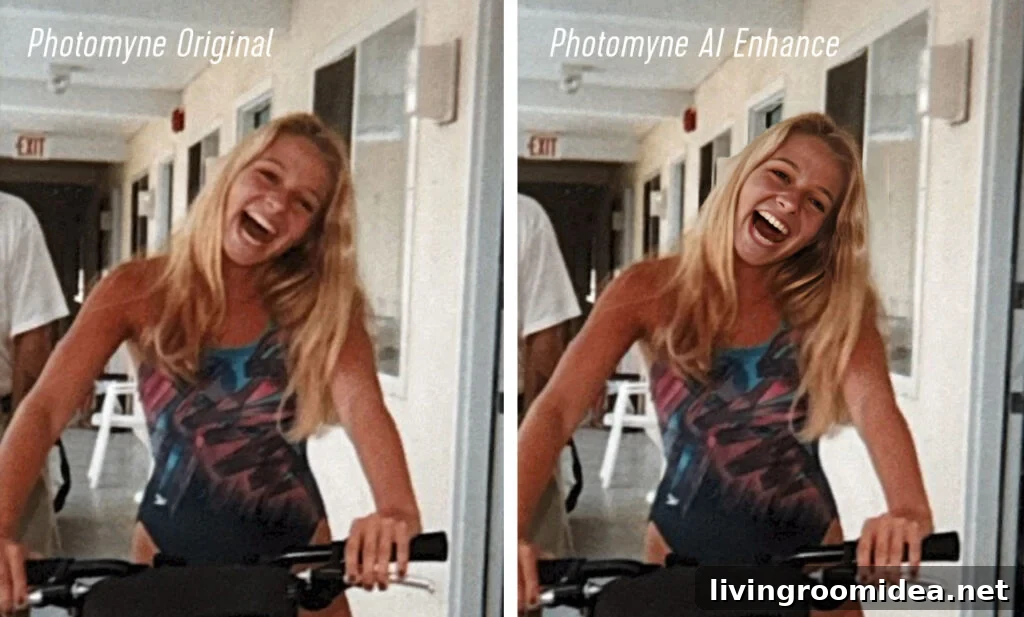
Overall, Photomyne is fast and convenient if you don’t want to buy hardware, but you may still need to do some cleanup afterward.
VERDICT: Second best for speed if you prefer an app-based approach instead of purchasing a dedicated scanner.
An Alternate Photo Scanning App
I also tested Google’s PhotoScan app. It captures a single print at a time by guiding you through multiple partial captures to eliminate glare. Results were mixed — sometimes sharp, sometimes blurry — and the multi-capture process felt tedious for bulk work. It’s free and integrates with Google Photos, which is useful for some users.
Best For Ease: LegacyBox
LegacyBox is a mail-in service that digitizes prints, negatives, slides, and various video formats. They send a box, you fill it and send it back, and they return your originals along with digital files. It’s extremely hands-off, which makes it appealing if you don’t want to do any scanning yourself.
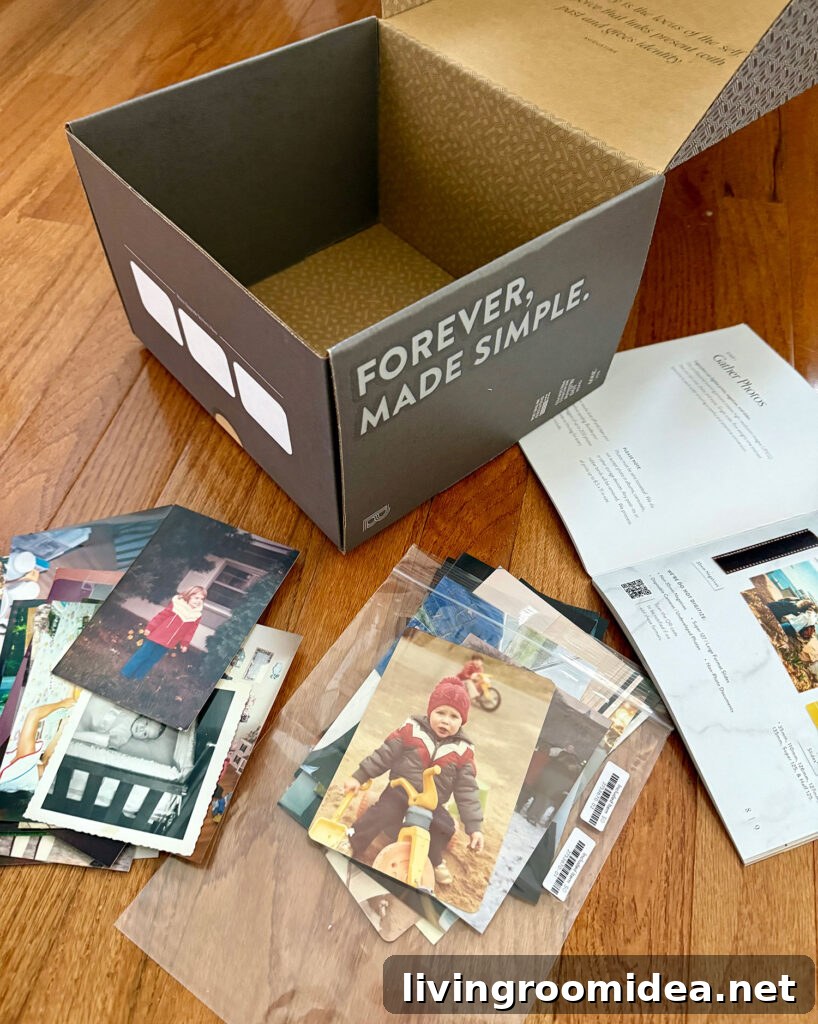
I paid for a promotional rate to digitize 50 photos, but after fees and shipping the total was closer to double the advertised discount. LegacyBox can be cost-effective at scale, but it becomes one of the most expensive options for large collections. Processing takes several weeks.
Quality from LegacyBox was serviceable but a bit darker and less vibrant than our home-scanned results. I appreciated that they scanned both fronts and backs of prints, but matching paired files required extra effort.
VERDICT: Best if you want a fully outsourced, hands-off option and time and budget are not constraints.
Our Final Verdict: The Best Photo Digitization Method
After testing, the method we’re continuing to use is the Plustek ePhoto Scanner. For a large archive it strikes the best balance of speed, convenience, and reliable quality. There’s no elaborate setup, no shipping, and the simple feed-and-scan workflow made a daunting project feel manageable.
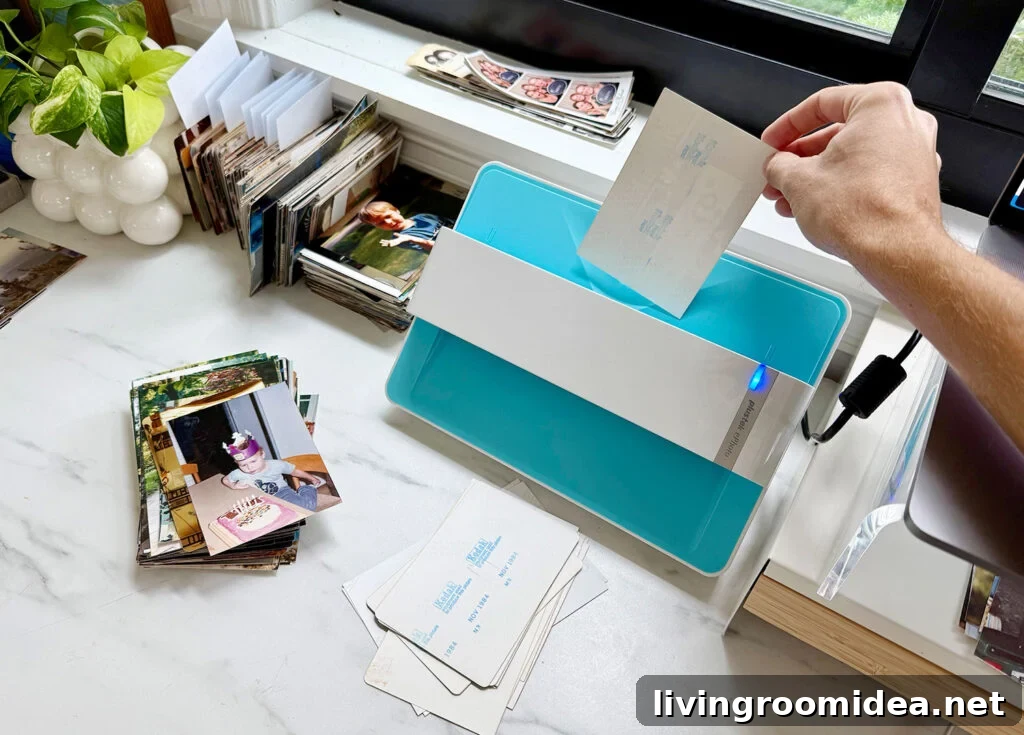
If you can invest in a dedicated scanner, it will likely save you hours compared with photographing every print or using a flatbed. The convenience and consistent results are why so many people recommended it.
What’s Next For Our Digitization Project?
We still have plenty to do. Beyond scanning, our next steps are backing everything up locally and to the cloud and creating printed photobooks to replace the bulky albums. Photobooks store hundreds of images in a much thinner, more durable format and take up far less shelf space.
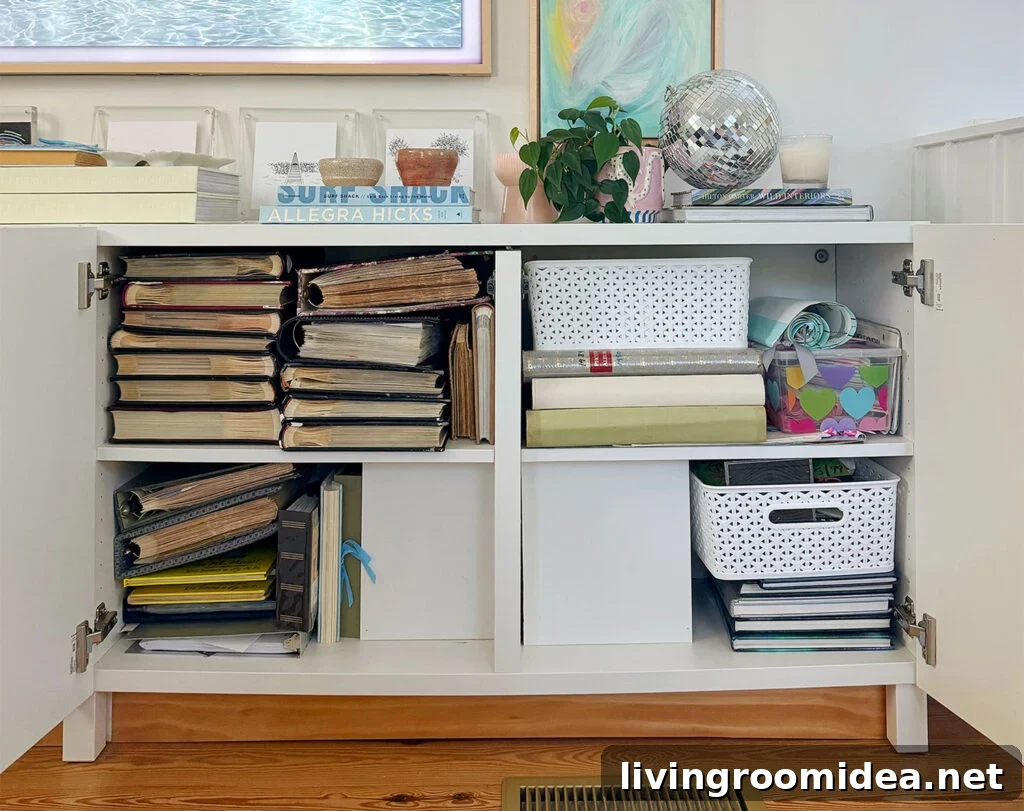

We’re excited to reclaim storage space and to ensure our photos are safely preserved in multiple locations. Once the project is complete I’ll publish a follow-up with final tips and what we decided to do with the originals. Don’t worry — we’re not tossing everything out.
This post contains affiliate links, and we may earn a small commission if you make a purchase through links on our site at no additional cost to you.