
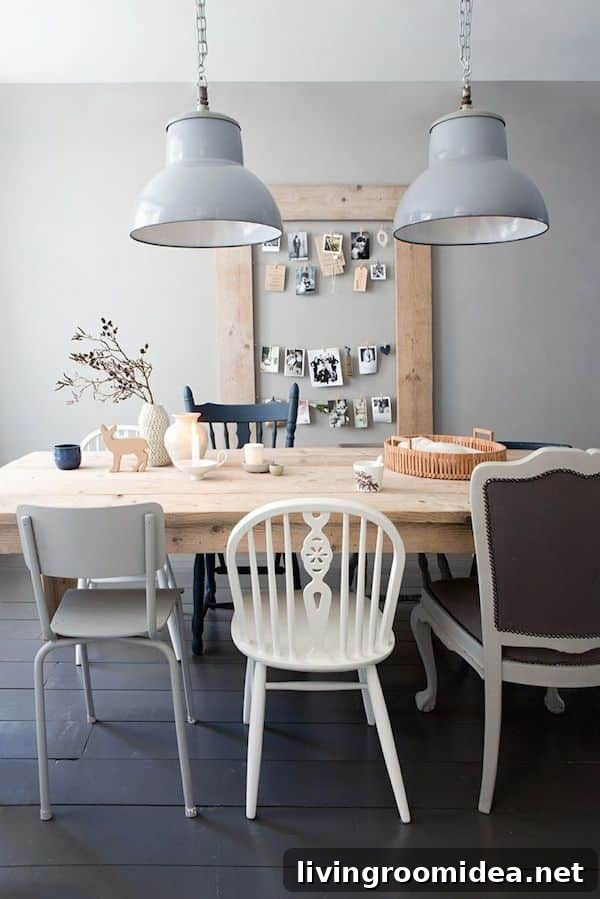
 original source unknown, found here
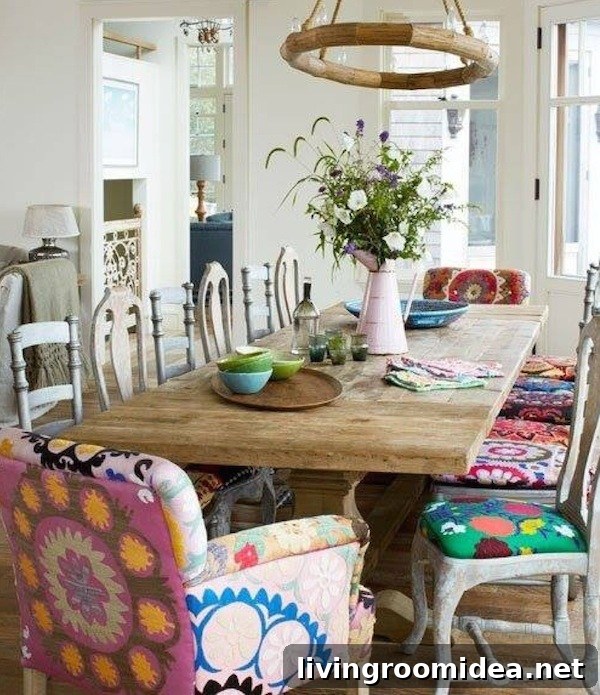
Country Living
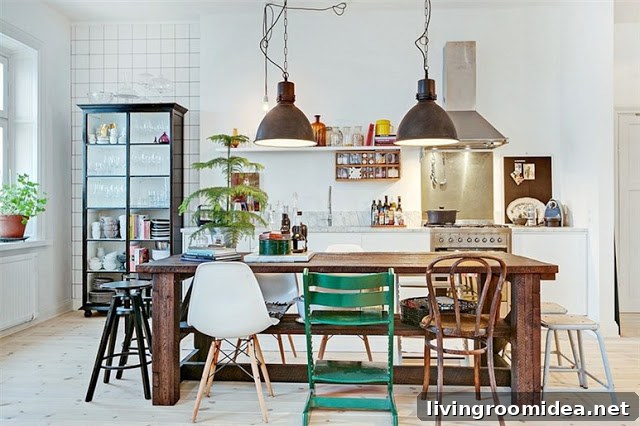
La Maison d’Annag
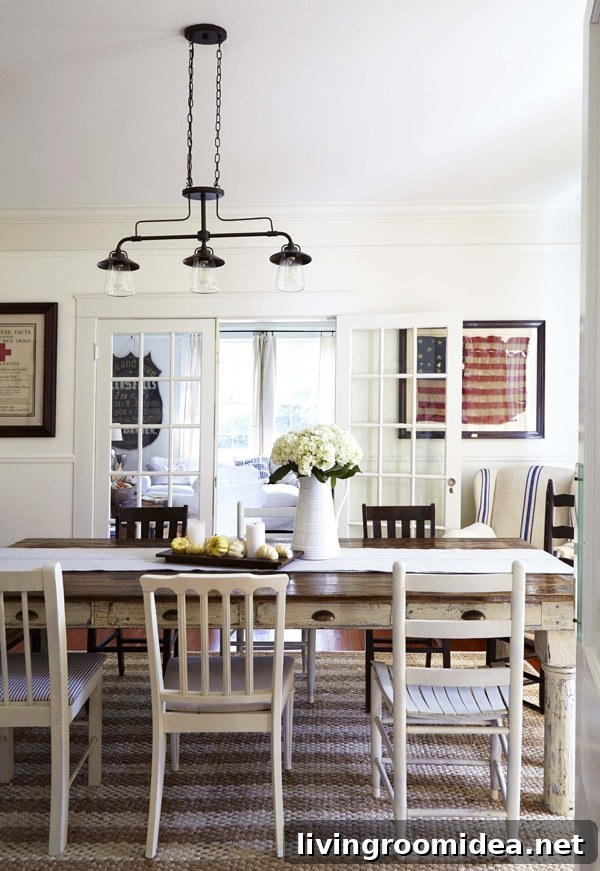
Southern Weddings
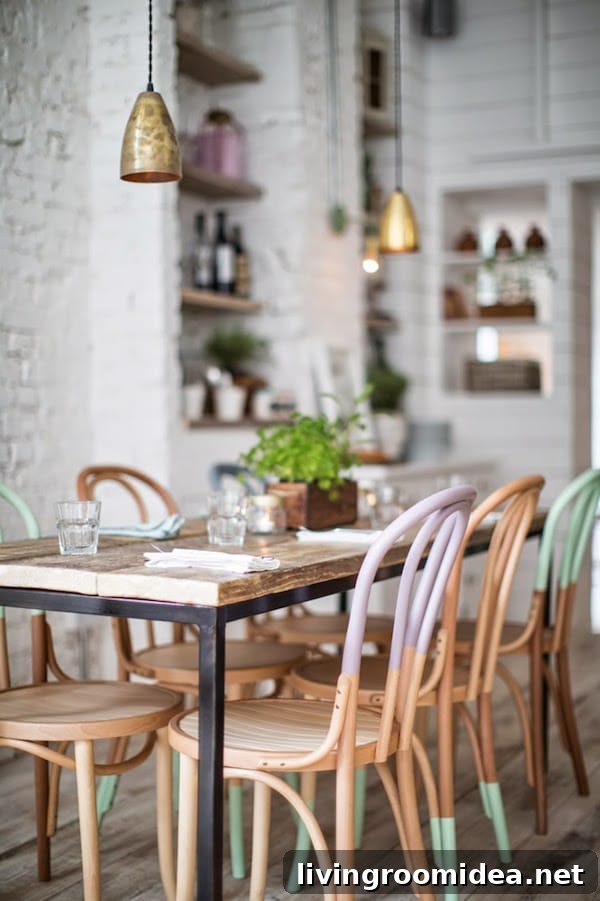
Alexander Waterworth
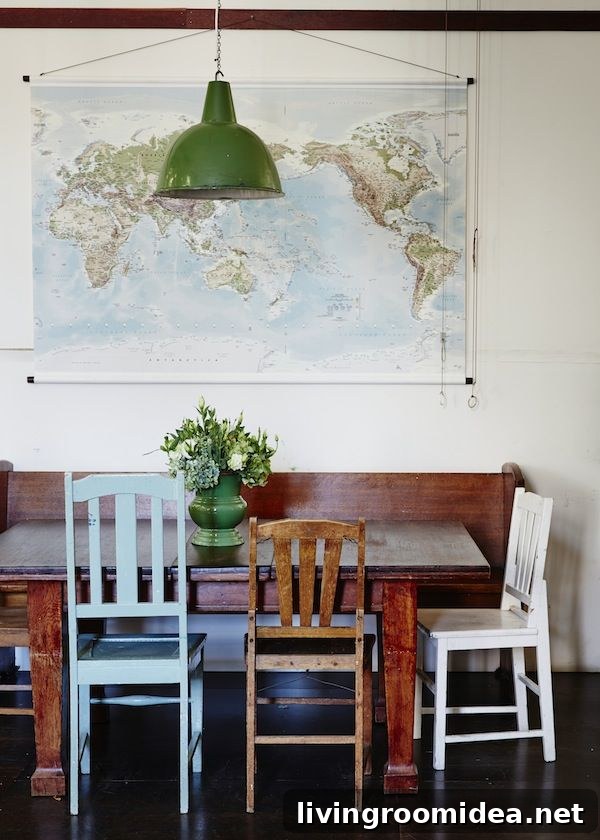
The Design Files // Photo by Sean Fennessy
So, what do you think? An eclectic mix of mismatched dining chairs can bring personality, warmth and visual interest to a room, while a matching set creates a calm, formal and cohesive look. Both approaches work beautifully—your choice should reflect the mood you want to create and the style of your home.
Mixing chairs allows you to layer textures, colors and eras for a collected, lived-in feel. Pair a vintage wooden chair with a painted spindle, a simple modern seat and an upholstered armchair to create contrast that feels intentional. Keeping one element consistent—such as a shared finish, complementary color palette or similar scale—helps the assortment read as a thoughtful design rather than random clutter.
If you prefer a more formal dining area, matching chairs offer symmetry and rhythm. A coordinated set makes a statement of refinement and restraint, especially when combined with a classic table, chandelier and neutral backdrop. You can add subtle variety through seat cushions, upholstery or a single standout chair at the head of the table without losing the overall harmony.
For those who love color and pattern, alternating painted chairs or using different patterned seats can bring energy to the space. Pastel-dipped legs, distressed finishes and mixed fabrics all contribute to a playful, creative atmosphere. When mixing patterns, balance is key: limit the palette and repeat at least one color to tie the look together.
Function is also important. Consider comfort, durability and how many chairs you need for daily use versus entertaining. Mixing styles doesn’t mean sacrificing practicality—choose chairs with similar seat heights and proportions so they work comfortably around the table.
In short, neither option is right or wrong. Mismatched chairs are ideal if you want character and an informal, personalized space. Matching chairs are best when you want structure, elegance and a cohesive design. Whichever route you choose, thoughtful repetition, scale and color will help the final arrangement feel curated and intentional.
Happy Monday, friends!
Related Posts:
{Inspired By} Patterned Floors
{Inspired By} Conservatories