
Creating Visual Flow Room to Room
Ilove when rooms flow. When you can stand in one space and look through to a hallway or another room without being jarred by an awkward color, pattern, or unfinished detail, the whole house feels calmer. My home doesn’t have to be perfect, but a sense of visual continuity from room to room brings a peace that means a lot to me. After years of painting and slow updates, we’re finally beginning to see that flow I’ve been aiming for. There’s still more to do with furniture and accessories, but the foundation is coming together.
Even simple changes can make a big difference. For example, I can now look from our bedroom to the hall and into my daughter’s room and notice how the colors and the wood floors connect the spaces instead of the mismatched carpet we once had. Those small harmonies make my heart do a little happy dance.
Walls and flooring are foundational. When those elements are right, everything else—art, rugs, lighting, and furniture—starts to fall into place and the home reads as a cohesive whole.
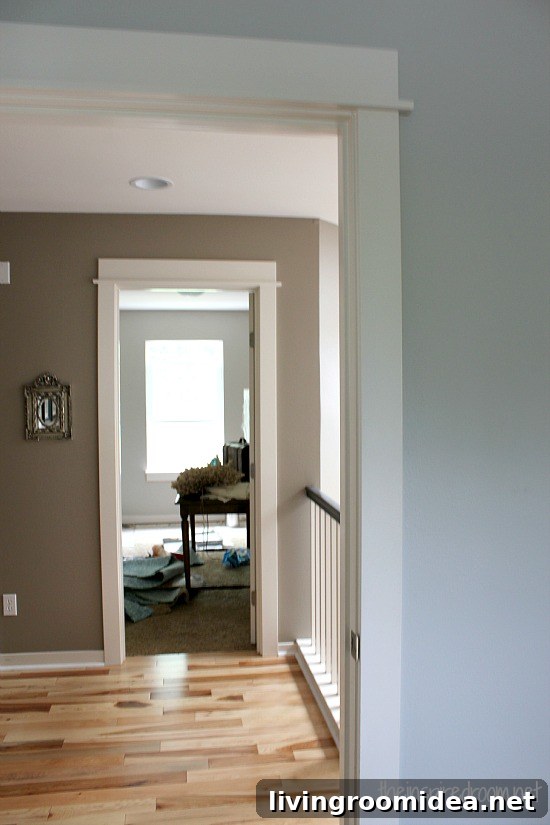
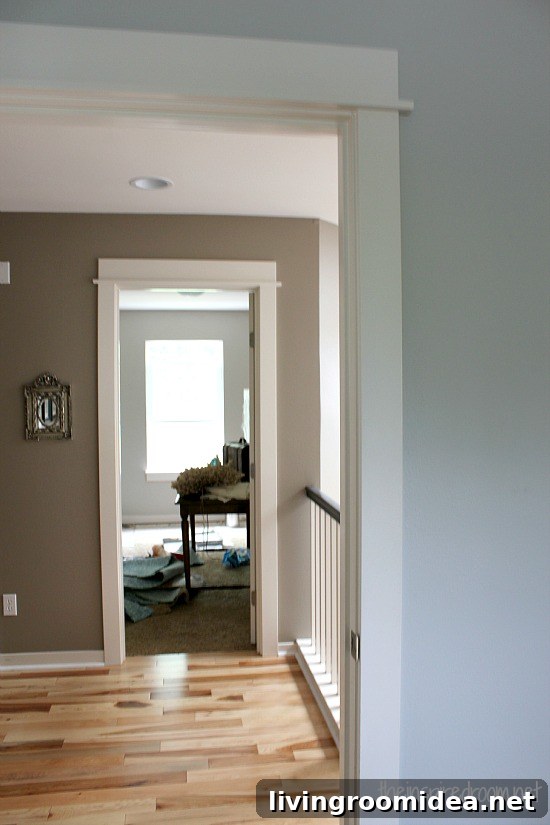
The top photo shows my middle daughter Courtney’s room looking out toward the stairway and upstairs hall. She painted her room this weekend and we finally replaced another “swine” pink room with a much calmer color. Courtney’s room now shares the same base paint color as the hall—Studio Taupe—but we lightened it by mixing approximately two parts white to one part Studio Taupe. In person the bedroom reads noticeably lighter than the hall, and we’re very pleased with the result. You can see the difference more clearly in the next image.
Paint tip: Taking a darker paint color used nearby and adding white creates a related but lighter shade that visually links rooms without changing the original color. Use the same paint brand and finish—satin in our case—so the finish and sheen match when you mix and apply the paint.
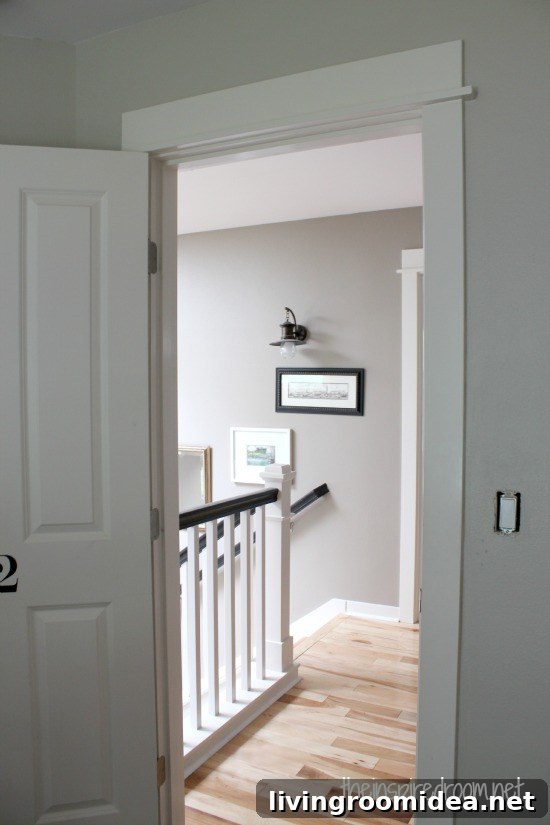
The photo above looks from our bedroom, which is a softened blue-gray (Glidden Wood Smoke, lightened), toward the hall and Courtney’s room. Wood Smoke, lightened, isn’t the same as Studio Taupe, but the subtle shift from a brown-based gray in the hall to a blue-based gray in the bedroom makes the transition feel intentional rather than abrupt. I’ll share more bedroom pictures in a future post, but I’m already happy with the way the color reads in the space.
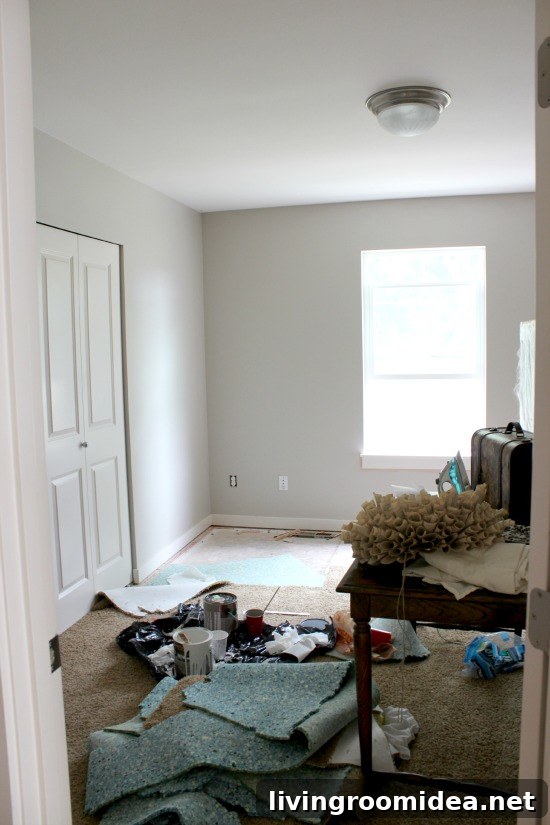
This coming week the room will be measured for affordable new carpet, which will help complete the flow at the top of our stairs. Reworking this bedroom also clears the way for a new sectional in an adjacent room. Long story short: my daughter has swapped bedrooms twice since we moved in, and she’s moving back to her original room so we can convert the larger bedroom into an upstairs family TV and hangout area for our son and his friends.
One decorating principle I follow is that every room doesn’t need to exactly match to achieve flow. A single paint color throughout the house or all-white walls would create a clear, cohesive feeling, but I enjoy some variety and unexpected moments as you move from space to space. Subtle shifts in hue, a few bold departures, or a splash of vibrant color in a home office can make the journey through a house more interesting while still feeling connected.
Visual flow can also be reinforced through furniture placement, fabrics, and accessories. Coordinating undertones, repeating textures, or sharing an accent color across adjoining rooms helps link them together even when paint colors differ. As we move into the next phase of decorating—bringing in furniture and finishing touches—I’ll focus on those details to strengthen the continuity and create a comfortable, layered home.
Do you like your house to flow from room to room?
How do you achieve that flow—do you prefer the same color throughout or a mix of tones and surprises?