
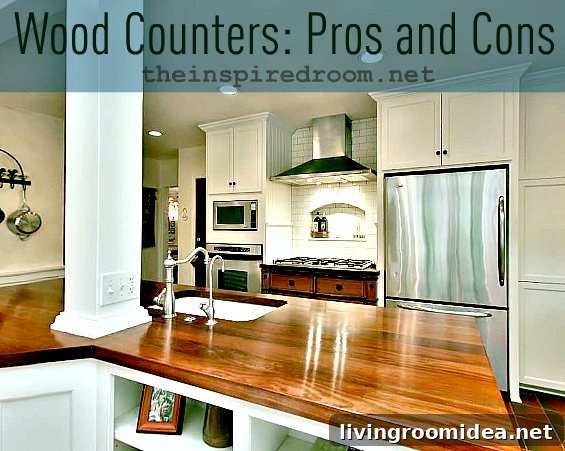
Wood Countertop in the Kitchen
FAQ from readers about my counters
Recently several readers have asked about the wood countertops in my old house and whether they were difficult to care for. The kitchen was designed before I started blogging, yet it still attracts questions I haven’t formally answered in a post. Today I’ll address the most common reader questions about those wood counters and share my real-life experience so you can decide if wood is right for your home.
Like other posts where I share firsthand experience—such as my thoughts on white slipcovers, cleaning stainless steel appliances, or living with open shelving—this piece is intended to give practical insight. I loved my wood counters, but they aren’t necessarily the best option for everyone.
Disclaimer: Not all wood countertops are the same. Quality, finish, and required care will vary. I can’t compare these counters to IKEA butcher block tops because I never had those.
Q. Why choose wood instead of a stone countertop like granite?
During our kitchen remodel we tried to prioritize what was necessary and offered the best value. The counters definitely needed replacement. Initially we planned soapstone counters and hardwood floors to balance the hard surface of stone with warm floors. However, removing the existing brick-colored tile to install hardwood proved too expensive at the time. To keep costs manageable we kept the tile floors and installed a wood countertop on the island while using soapstone around the stove.
Q. Who made the wood counter and what kind of wood is it?
The counters were custom-made on site by our remodeling contractor using wood my husband selected from a local lumber supplier in Portland, Oregon. They were thick slabs of Brazilian cherry—solid, wide planks glued together to create a smooth, attractive surface.
Q. Did you stain the counters?
No stain was applied. They were finished with several coats of Aqua Spar, a marine-grade sealer. The sealer deepened the wood’s natural color; before sealing the surface looked lighter and less rich.
Q. How did you prevent water stains and scratches?
First, the Aqua Spar sealer provides excellent protection—it’s designed for wood exposed to water, much like a marine finish. Second, we treated the counter like a cherished piece of furniture: we kept it clean and dry, avoided placing wet glasses directly on it, and used protective items like doilies under decorative objects. There were occasional spills and overflows, but the finish held up well. Because we appreciated the counters so much, they rarely became cluttered with dirty dishes, which helped preserve them.
Q. Didn’t having kids make wood counters impractical?
We had both preschool-age boys and teenagers frequently in the house. It could have been risky, but we taught our kids to place wet or dirty dishes in the sink, dishwasher, or on placemats instead of directly on the wood. We accepted that counters are replaceable if they get damaged—sanding and resealing is possible—so we balanced caution with everyday living. This was actually the second kitchen we had with wood counters and children, and both experiences were fine.
Q. How did you handle entertaining with wood counters?
We didn’t make guests feel awkward with strict rules. Our home wasn’t a museum. We allowed people to cook and eat in the kitchen without handing out a list of restrictions. If anything needed attention after a gathering, we cleaned and cared for the surfaces afterwards. Living in your home and enjoying it is more important than constantly worrying about marks.
Q. What about heat, food prep and cutting?
We didn’t place hot pans directly on the wood and we didn’t use the countertop as a cutting surface. We used trivets for hot cookware and cutting boards for food prep to avoid heat marks and knife damage.
Q. What was long-term care like? Did you need to refinish them?
A couple of years after installation we reapplied Aqua Spar after a light buff with steel wool to refresh the protective coat. The process was quick and restored the finish nicely. Regular maintenance was simple: keep the surface clean and dry, and reapply sealer as needed to maintain protection.
Q. Do you recommend wood countertops?
Yes—if you love the look and feel of wood and don’t mind a bit of added care. For me, the aesthetic and tactile pleasure of the counters made the extra attention worthwhile. I preferred surrounding myself with things I adored and was happy to care for, rather than choosing indestructible but uninspiring surfaces. If you appreciate beautiful materials, maintaining them is often part of the enjoyment.
Have you had wood counters in a kitchen before? What are your experiences?