
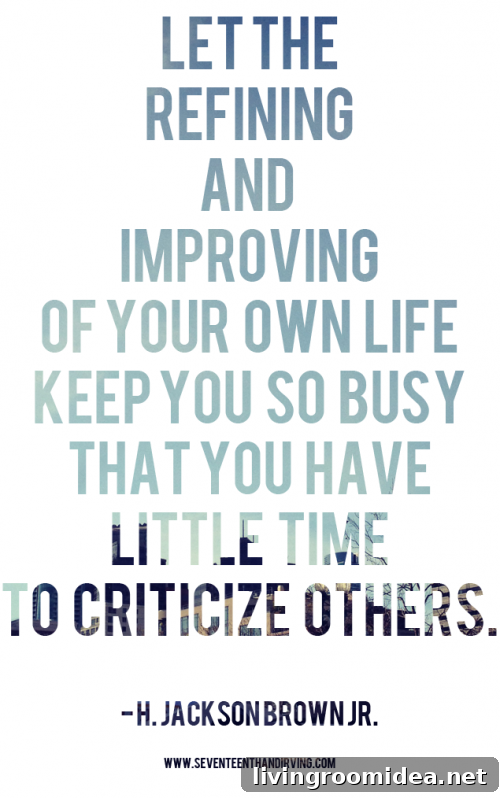
Image via Seventeenth and Irving
This simple, direct message—”Don’t Criticize”—serves as a thoughtful reminder about the power of our words and attitudes. Criticism, especially when offered without kindness or constructive intent, can damage relationships, undermine confidence, and create unnecessary conflict. When we pause before speaking, we give ourselves the chance to choose empathy, patience, and encouragement instead.
Choosing not to criticize doesn’t mean ignoring problems or avoiding honest feedback. Rather, it invites us to communicate with compassion and clarity. Constructive conversation focuses on specific behaviors or situations, proposes solutions, and affirms the other person’s value. This approach helps preserve dignity and fosters a cooperative atmosphere where growth is possible.
In both personal and professional settings, practicing restraint can transform interactions. Replace reflexive criticism with curiosity: ask questions, listen actively, and seek to understand the motives and constraints that shaped someone’s choices. Often you’ll discover circumstances or perspectives you hadn’t considered, and the discussion can shift from blame to collaboration.
Another helpful strategy is to lead with positive observations. Acknowledge what is working before addressing areas that need improvement. This technique lowers defenses and opens people up to change because they feel seen and respected. Similarly, framing feedback around shared goals or values connects the conversation to mutual interests rather than personal failings.
Self-awareness matters too. We can examine whether our urge to criticize stems from stress, perfectionism, or personal insecurity. Recognizing these triggers helps us respond more thoughtfully and prevents unfair judgments. Practicing mindfulness, taking a moment to breathe, or revisiting the topic later when emotions have cooled can make feedback more effective and less hurtful.
Ultimately, a culture that downplays harsh criticism and prioritizes constructive dialogue encourages creativity, trust, and resilience. Whether you’re leading a team, guiding a child, or navigating a friendship, choosing respectful communication nurtures stronger connections and better outcomes. The phrase “Don’t Criticize” offers a gentle, memorable prompt to act with empathy—and to help build environments where people feel supported to learn and improve.