
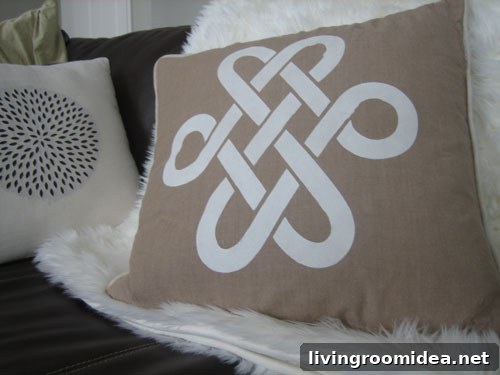
When Dana sent us her simple, budget-friendly stencil project, we had to share it. Below she describes how she used a knot stencil to transform everyday fabric into stylish home accents.
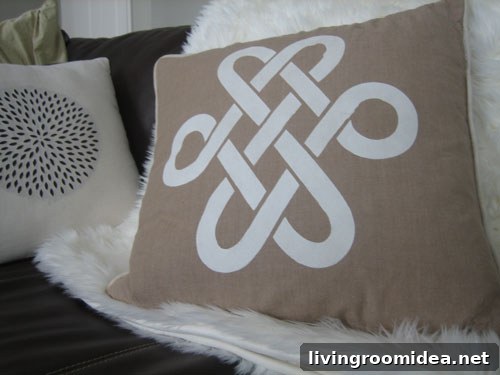
I wanted to pass along a quick, inexpensive project that your work inspired. A while back you featured the knot stencil from Sunny’s Goodtime Paints in a mood board and I immediately fell in love with it. My husband gave it to me for Christmas, and I recently used it to stencil a pillow cover and create laundry curtains (which cleverly hide the laundry room water valves and electrical cords) with fabric paint. It was very easy, and I love the results. Now that I’ve tackled these smaller stenciling projects, I’m planning to use the stencil on my foyer wall. For full details, check my blog. I spent $30 on the stencil, $6 on fabric paint, and $3 to make the laundry curtains from clearance linen; the pillow cover was free since I already had it. My total cost was $39 for one stenciled pillow and two custom linen curtains. Thanks for the inspiration! – Dana (& Steve)
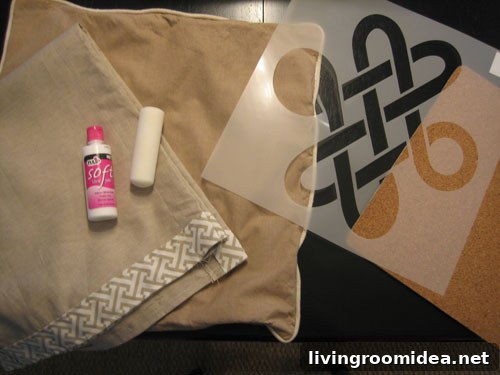
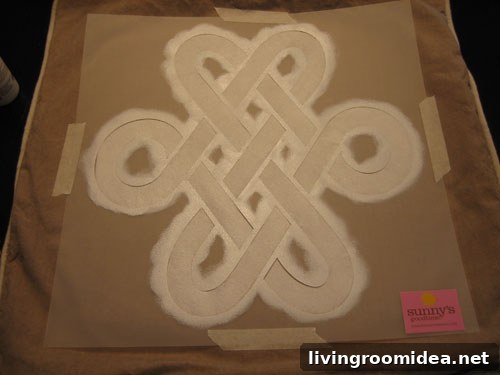
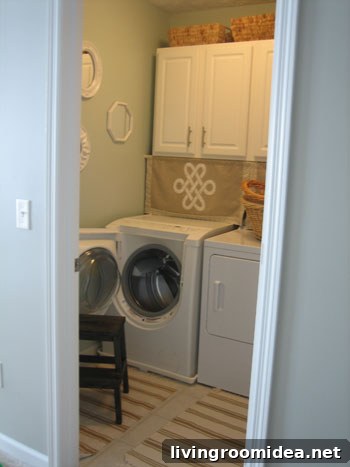
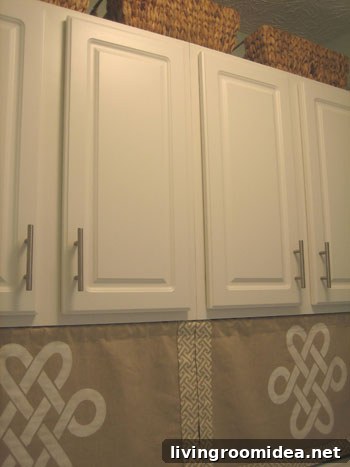
Using a single stencil to update a pillow and sew a couple of curtain panels is an excellent example of how a small investment can make a big visual impact. The knot motif reads as both modern and classic, so it pairs well with many decor styles—coastal, cottage, contemporary, or traditional. Stenciling fabric gives you control over scale, color, and pattern placement, so you can create a custom look that feels polished and intentional.
Here are a few practical notes based on Dana’s approach and general stenciling best practices:
- Choose a stencil size that fits the piece you’re updating. A larger knot stencil can make a dramatic statement on long curtains, while a smaller scale works nicely on pillows and smaller panels.
- Use fabric paint for durability and washability. Test on a scrap first to confirm coverage and color.
- Work on a protected, flat surface. Secure the fabric with clips or weights so it doesn’t shift while stenciling.
- Apply paint sparingly and build up layers—this prevents bleeding under the stencil and keeps edges crisp.
- Repeat the motif with consistent spacing for a cohesive, high-end look. Varying colors or alternating orientations of the stencil can add visual interest.
We love how Dana used curtains to hide functional elements and simultaneously add style to the space. Long, evenly spaced knot stencils on floor-length curtains can read like a custom designer treatment—an effect that looks costly but is actually quite affordable when you DIY.
Thanks to Dana for sharing her photos and budget breakdown. It’s a great reminder that thoughtful, simple projects can refresh a room without breaking the bank. If you’re inspired to try this, start small with a pillow or one panel, practice your technique, and then scale up to larger pieces like full-length curtains or a wall treatment.
Psst — Sunny’s stencils work beautifully on more than just fabric; they’ve also been used to create striking floor patterns, painted accent walls, and other decorative surfaces. The possibilities are wide open when you combine a well-chosen stencil with good paint and a steady hand.