
Painted stone fireplace makeover
You know I love a “better than it was” project, and this painted stone fireplace makeover definitely fits that description. For eight months I stared at the fireplace, bothered by the mauve grout, the dated color and the off-center appearance. Replacing it entirely would have meant time, expense and a lot of disruption, so I kept weighing my options.
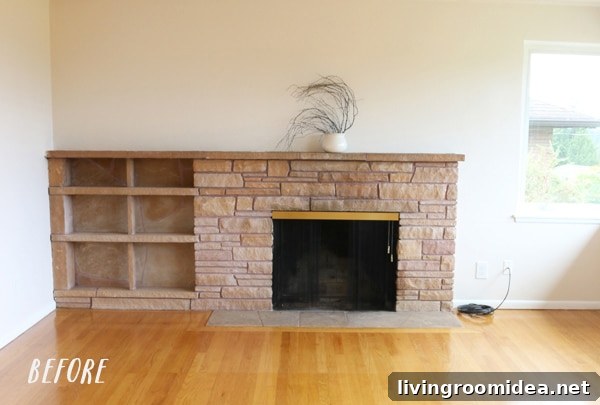
With other projects on the list and a limited budget, I had to decide whether to tackle the fireplace now or wait for a full remodel. If I simply painted it, would it look worse? Would it help at all? The fireplace felt like a billboard that demanded attention and dictated the room’s style, and that was paralyzing. I could clearly picture the ideal version in my head, and I knew that future choices like adding trim or a mantel would improve it, but I wasn’t ready to commit to a full renovation.
Ultimately I decided I couldn’t keep looking at the pinkish stone and grout. I didn’t want a permanent overhaul yet, but I wanted a change that would make the room more pleasant in the meantime. Painting it felt like the right compromise.
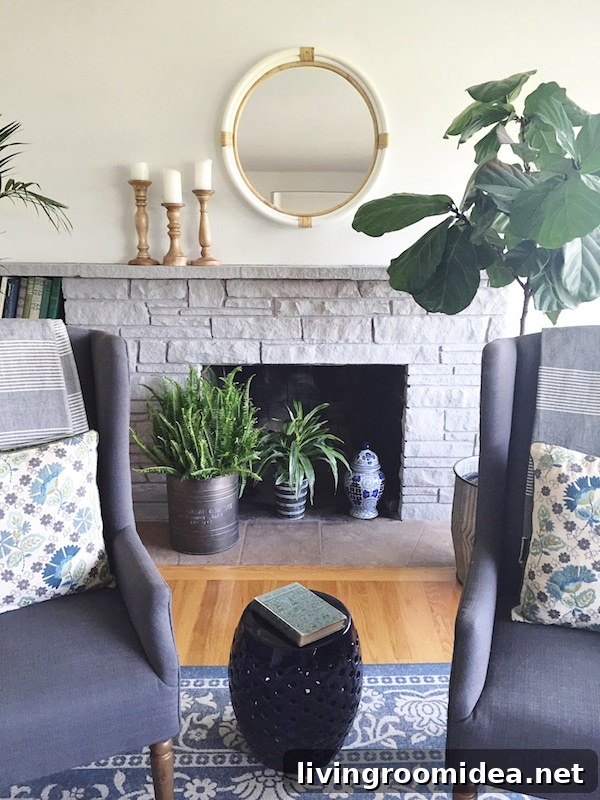
Painting the stone was the simplest, least invasive solution. Worst case, I’d still dislike it and could revisit the idea later. Best case, the room would feel better and I could delay an expensive remodel while saving time and money. Once I committed to painting, new decisions followed: what kind of paint, whether to sand or prime, and most importantly, which color.
At first I considered white to let the fireplace recede, but white can be tricky unless executed perfectly, and I already had a white brick fireplace in another room. I chose gray instead—neutral, calming and compatible with the rest of my palette. If I change my mind later, I can always repaint or remodel.
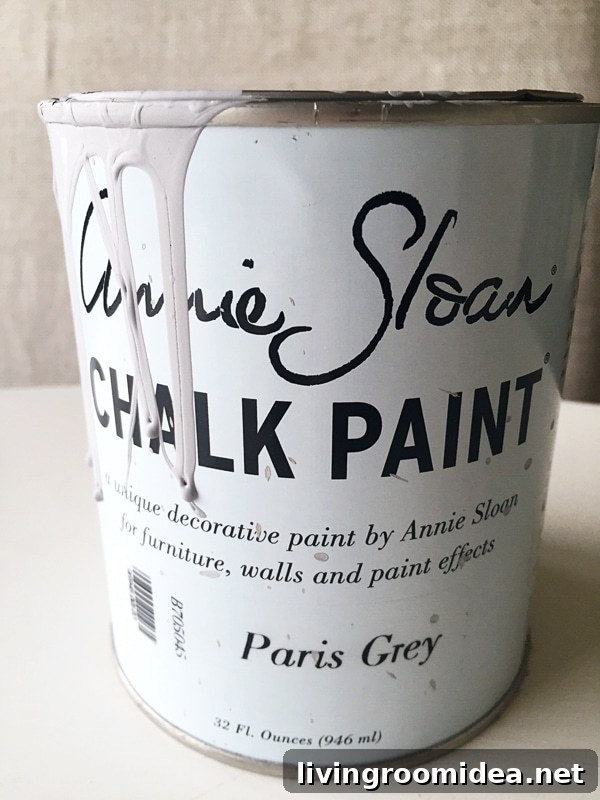
I decided to try chalk paint because it adheres well to uneven surfaces and can give a softer, more natural finish than standard latex. I bought a can of Annie Sloan Chalk Paint in Paris Grey and found it to be an affordable, low-effort option. We used only a small amount, so the makeover cost very little and left plenty of paint for future projects.
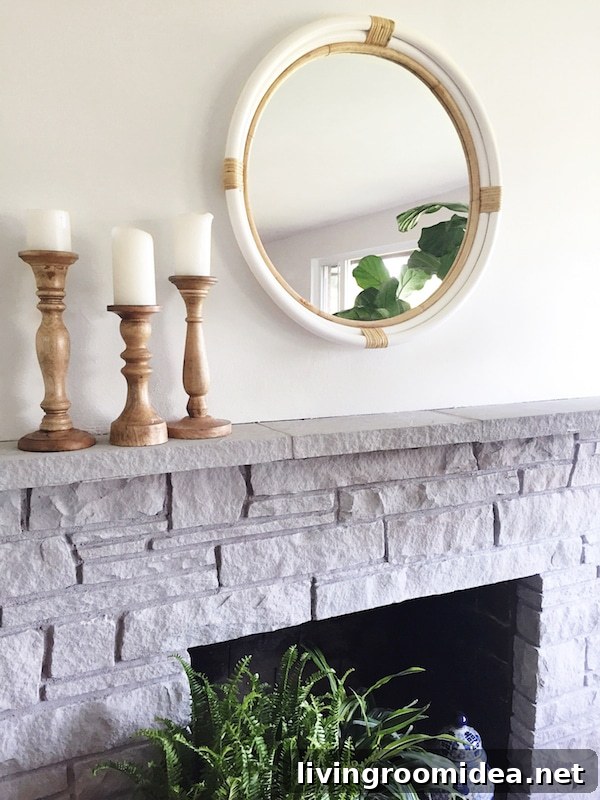
How we did it: first we wiped the stone to remove dust and cobwebs. Then we diluted the chalk paint with water to preserve some of the stone’s natural texture rather than creating an opaque painted surface. The ratio isn’t exact—you can adjust it to get the translucency you prefer. For our project we mixed roughly a quarter cup of paint with water for each cup of mixture and applied it with a brush. One thin coat provided the look we wanted: softer color, less pink, and still some stone character showing through.
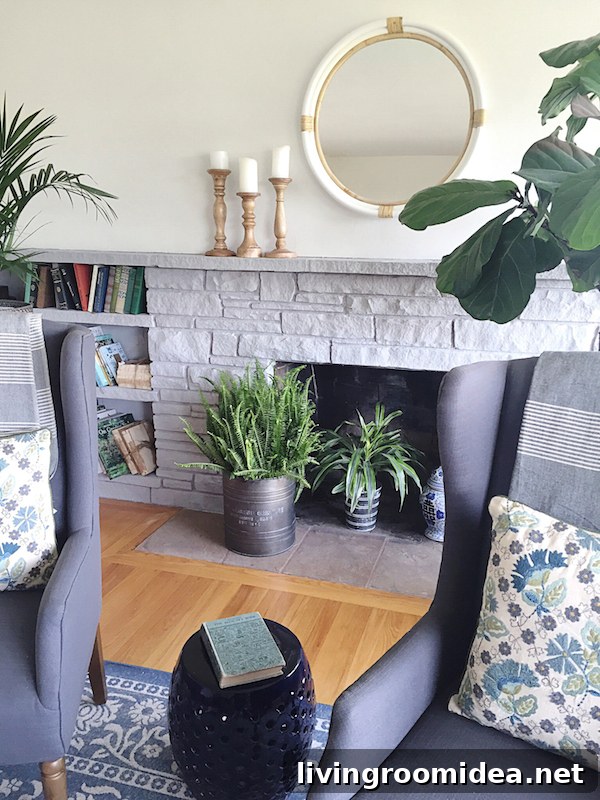
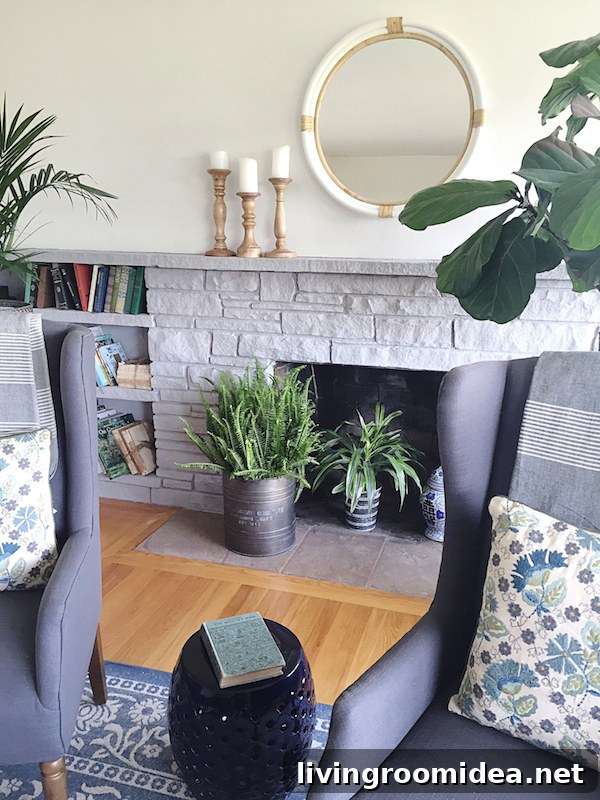
The result feels calmer and more cohesive with the room. I’m still deciding whether to add a mantel or wall planking later, but for now the painted fireplace blends into the space instead of dominating it. It made a noticeable improvement without a major investment.
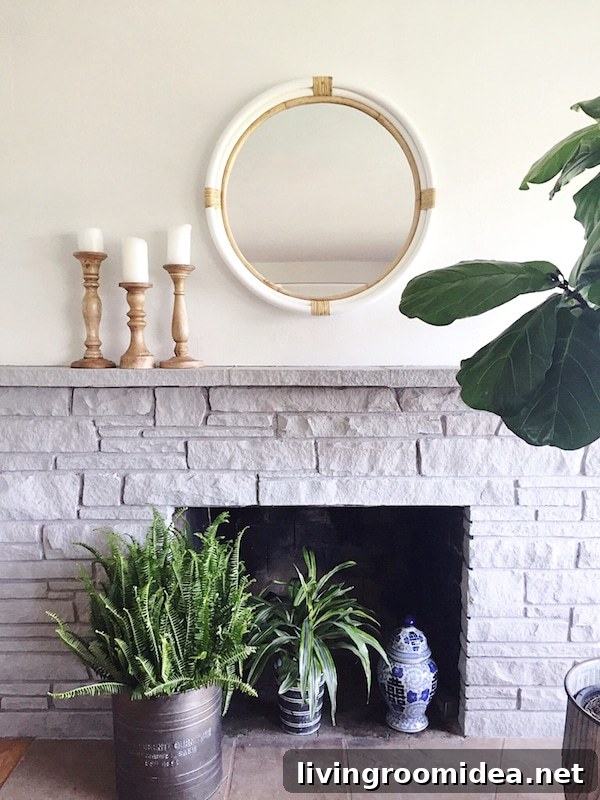
A fireplace can anchor a room, but it doesn’t always need to be the focal point if it doesn’t suit your taste. Painting outdated or distracting elements is an effective way to reduce their visual impact and allow the rest of your design to shine. You may end up loving the interim result—or at least you’ll have made a practical, budget-friendly improvement while you plan the next steps.
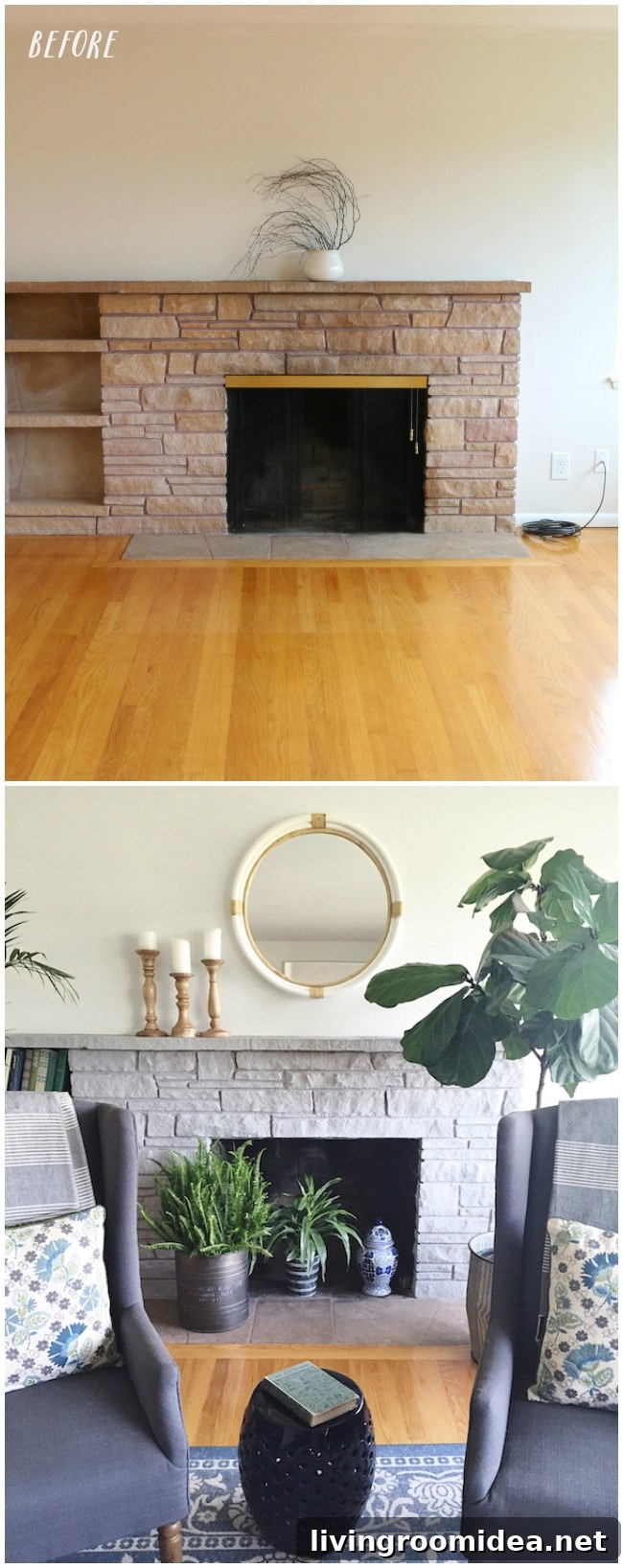
Don’t let a dated feature boss your room around. Paint the elements you don’t love so they blend in, or refresh them to look better than before. No shame in the in-between stage—you might be surprised at how much you like the change.
Sources:
Chalk Paint – Annie Sloan Paris Grey
Paint Color: Swan White by Glidden