
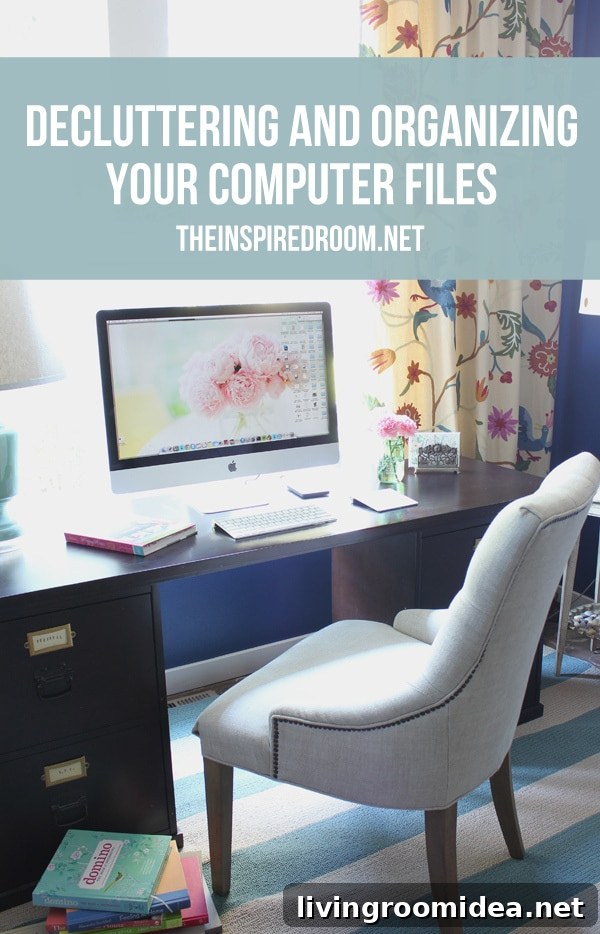
One of my main goals this year is to organize my computer. In the past I stored memories in physical boxes and scrapbooks, but today most of our photos, documents, and important files live digitally. Anyone who has lost treasured photos or critical papers knows how painful and time-consuming recovery can be, so it’s worth taking steps now to protect and organize your digital life.
Excessively cluttered and disorganized files can create frustration, reduce productivity, and increase stress. Beyond that, a messy file system can make your computer harder to use and, in some cases, slow it down. Simplifying your digital storage saves time and helps you find what you need when you need it.
I’m more visual than technical, and if you are too, managing digital files can feel overwhelming. Fortunately, organizing a computer doesn’t require advanced skills—just a practical system and a bit of time. Below are straightforward ideas that helped me get started and that you can adapt to your own habits and needs.
Start by creating a clear folder structure. Think about how you naturally search for files—by project, date, or type—and build folders that match that logic. For example, create main folders like “Photos,” “Personal,” “Finance,” and “Work,” then add subfolders for years, events, or specific accounts. Keep folder names short and consistent so items are easy to scan.
Next, establish a naming convention. Use descriptive, consistent filenames that include relevant details such as date (YYYY-MM-DD), event, or client name. Consistent names make searching and sorting far more effective than vague labels like “IMG_1234” or “document_final.”
Declutter by deleting duplicates and unnecessary files. Use built-in search tools or simple apps to find duplicate photos or old downloads you no longer need. Be intentional about what you keep—if a file hasn’t been used in years and isn’t meaningful, consider removing it or moving it to an archive.
Backups are essential. Set up an automatic backup system to protect your files. Options include an external hard drive, a network-attached storage device, or a reliable cloud backup service. The best approach combines local and offsite backups so you have multiple copies in case of hardware failure, theft, or accidental deletion.
Organize photos by importing them into a single library and tagging or labeling important images. Many photo apps let you add keywords, faces, or locations, making it much easier to find specific memories later. Regularly cull blurry or redundant shots to keep your library manageable.
Keep a routine maintenance schedule. Once a month or quarter, spend a short session clearing downloads, emptying the trash, and sorting new files into the correct folders. Regular upkeep prevents clutter from building up and keeps your system running smoothly.
Finally, protect sensitive documents by storing them in encrypted folders or secure cloud services and by using strong, unique passwords. For important records like tax documents, legal papers, and identification scans, keep both a local encrypted copy and a secure offsite backup.
Organizing your computer is an ongoing process, but a few deliberate steps—clear folders, consistent naming, regular backups, and periodic maintenance—can make a big difference. Start small, adapt the system to your habits, and your digital life will feel more manageable and less stressful.