
How to mix and match different hardware finishes is one of the most common questions I get. It can feel confusing—pick the wrong combo and a room can appear chaotic.
We spent a long time deciding on hardware for our recent kitchen remodel. Starting from scratch felt overwhelming: gold or brass, nickel or black, one finish or a mix? How would the appliances fit in? What finish should go where?
At first we were also debating cabinet colors. Once we committed to a simple black-and-white palette for cabinets and most hardware, the rest of the decisions became much easier. Picking one anchor choice often clarifies everything else.
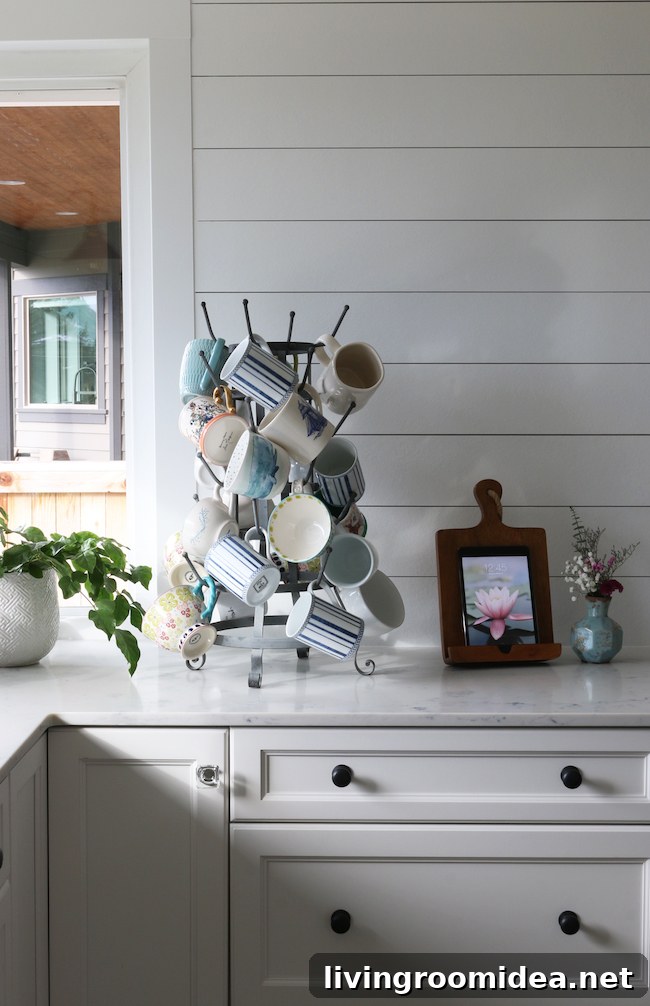
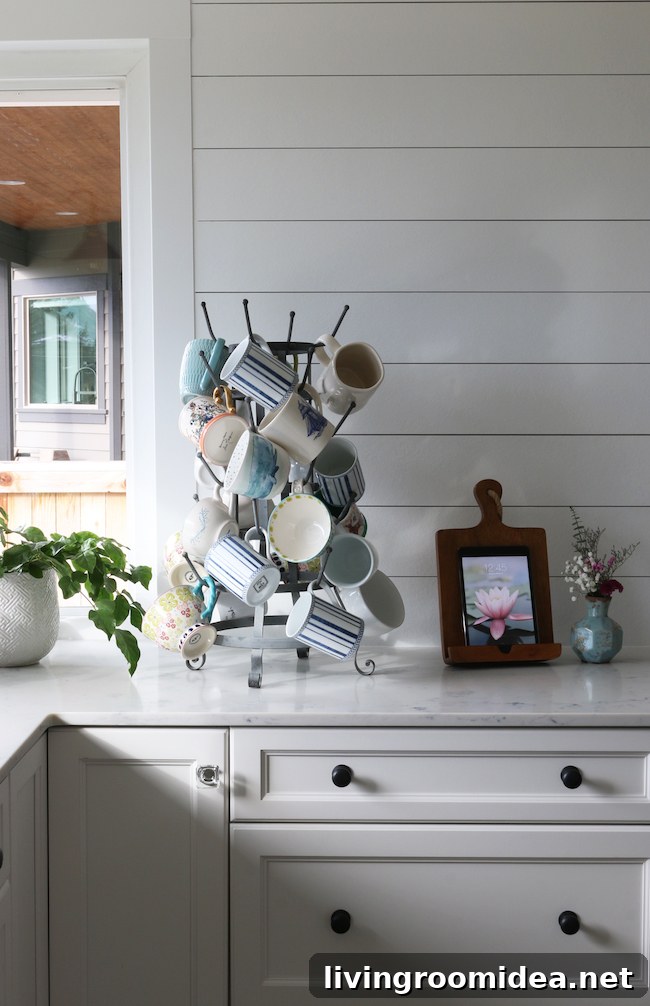 Mug Tree / Cookbook & Tablet Stand
I enjoy mixing finishes because it adds character and a collected, timeless feel. In a smaller kitchen—where we don’t have room for double islands or a dining table—mixing hardware needed a bit more restraint and planning.
In a compact space you have fewer opportunities to change things, so too many different materials can look like a random assortment or indecision. Still, I wanted a warm, collected look without chaos.
We settled on a simplified palette of colors and finishes that suited the mood we wanted for the kitchen.
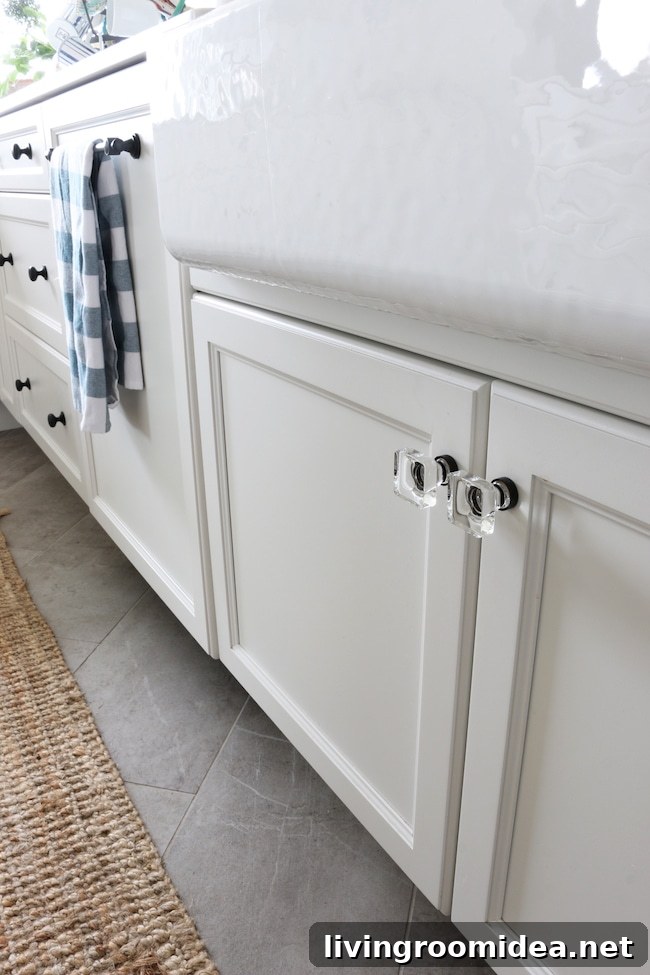
Classic white cabinets paired with black hardware gave the room a clean, simple foundation. The appliances are stainless, but we limited visible appliance finish to the range and fridge and covered the range hood and dishwasher to streamline the look.
That restraint let us introduce a subtle, unexpected mix of other finishes without it feeling busy.
Our secret for mixing finishes was creating a few simple rules for visual symmetry. Those rules brought consistency and continuity to the variety.
Our simple rules for mixing finishes
When we used black hardware, we used the exact same finish throughout (same finish name, same source). Consistency with the same black finish prevents the look from feeling mismatched.
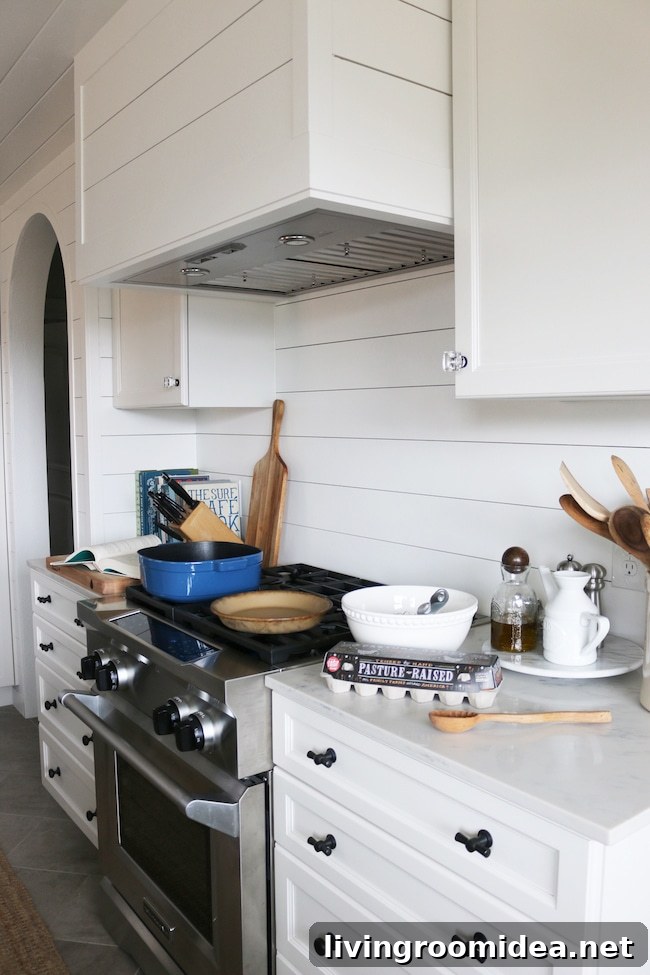
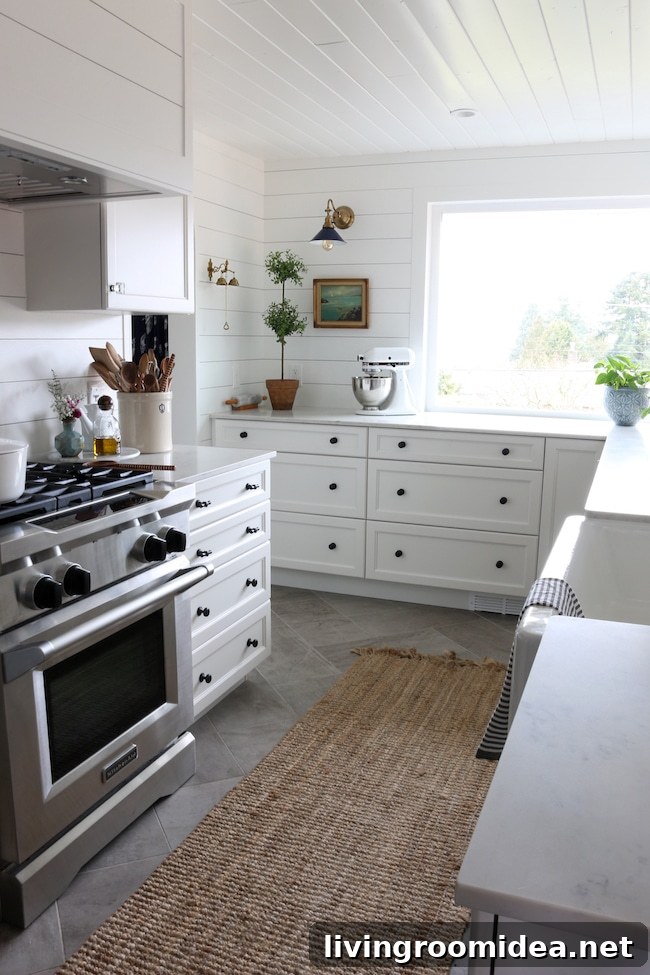 Range and Range Hood
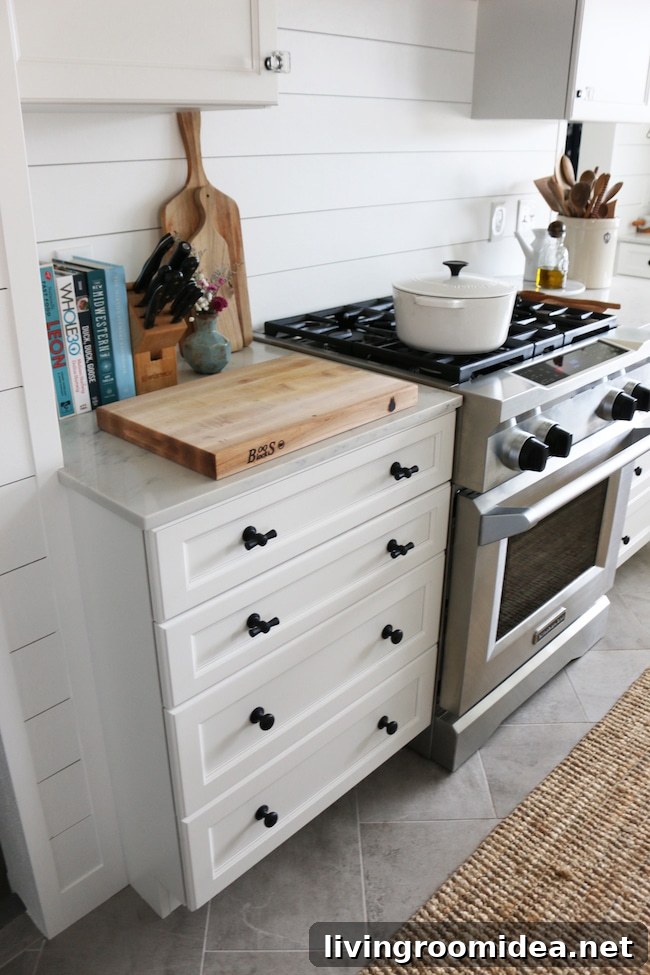
All of the drawers in the kitchen have two identical black knobs.
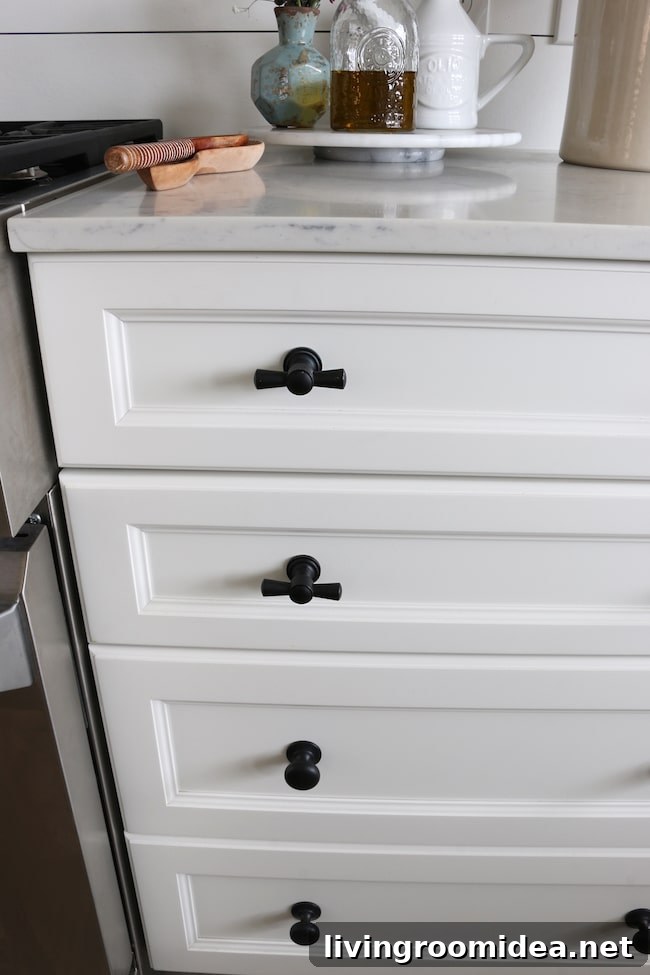
Every drawer uses the same two round black knobs, except for the two narrow top drawers in the sets of four on either side of the stove. Because the stove has round black knobs, we added a bit of whimsy by changing the top drawer hardware to a different shape—nautical-style pulls—on those narrow drawers. This small change creates interest while maintaining balance.
We kept a pattern of two pulls per drawer for continuity and repeated the unique hardware on both sides of the stove for symmetry.
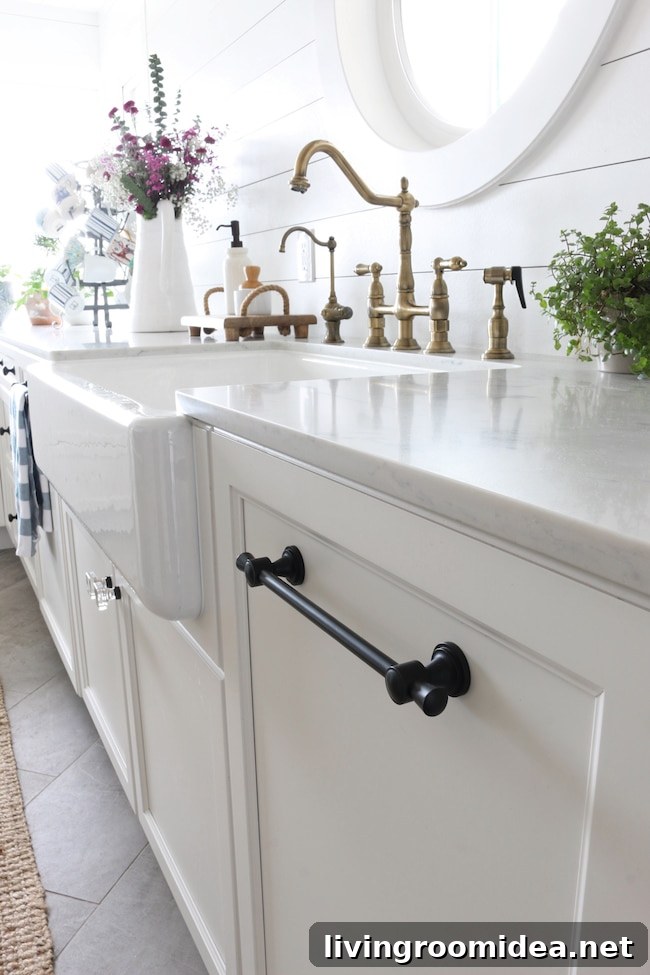
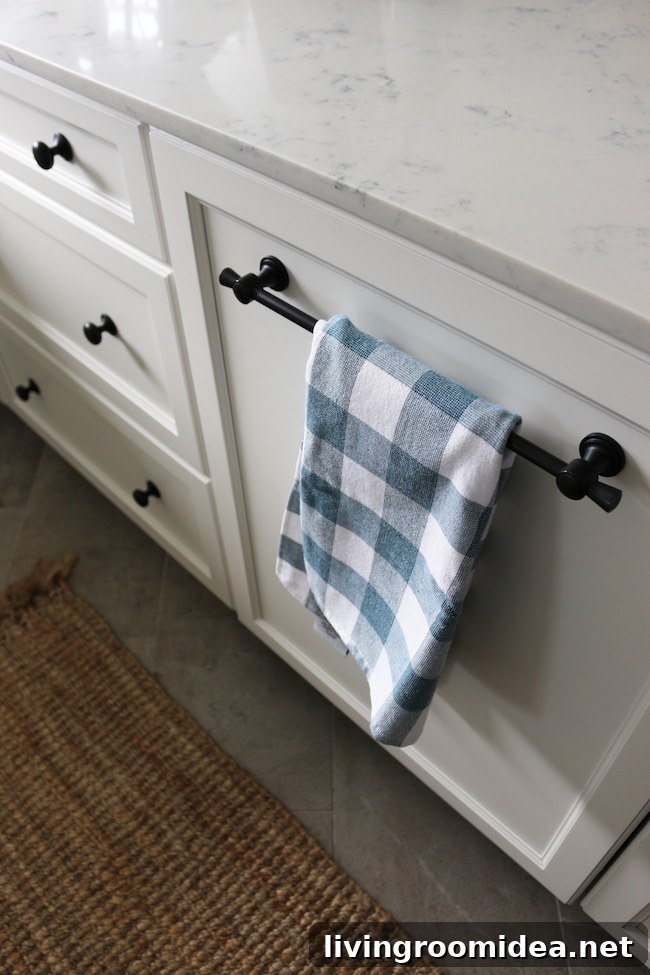
The two similar cabinet fronts on either side of the sink (dishwasher and trash) received longer bar-style black pulls. Long bars work well for pulls and for hanging towels, so they made practical and visual sense near the sink.
 Panel-Ready Dishwasher
Repeating long bars on similar cabinets beside the sink adds symmetry and balance, which simplifies the visual field even when multiple finishes are present.
After making these decisions, we moved on to hardware for the remaining cabinet types.
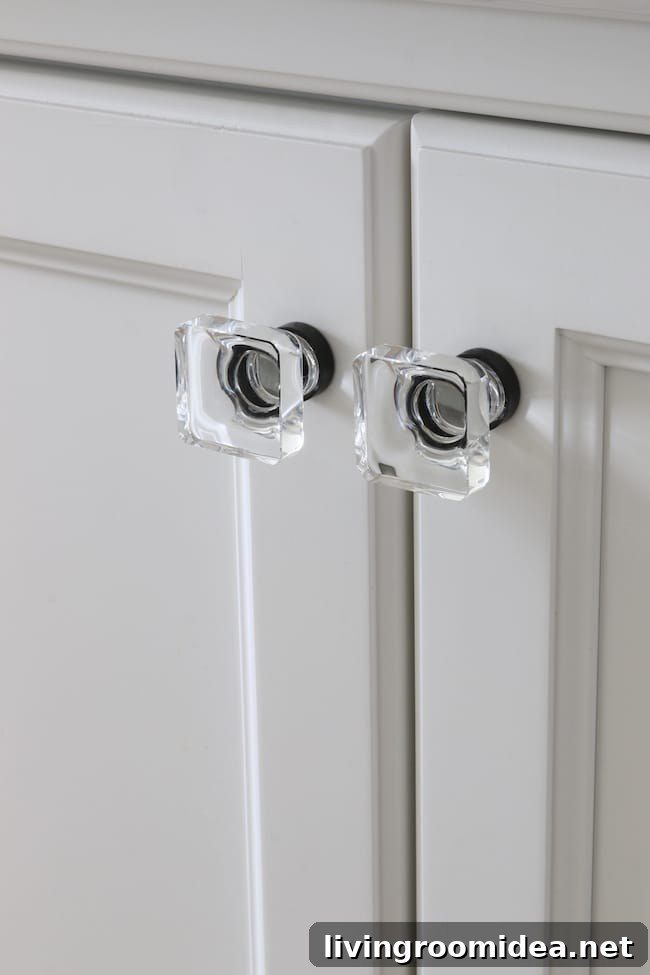
Another rule we adopted was to give every cabinet door a square glass knob with a matching black-backed finish. The glass square shape provides contrast and a little shine against the dark round knobs without overpowering them.
 KitchenAid Refrigerator
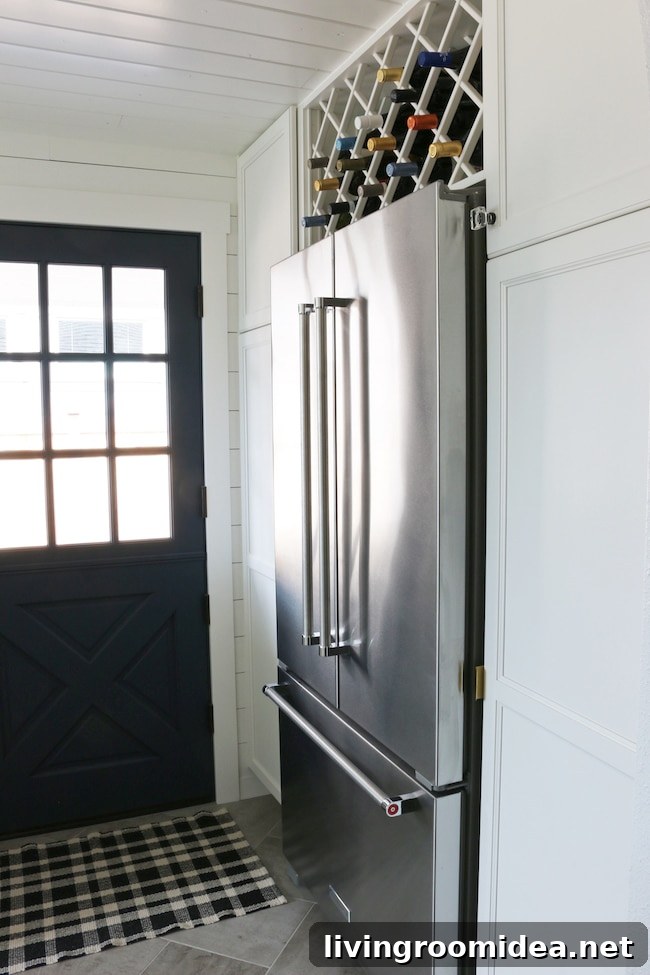
Sometimes restraint or intentional deviation from a rule improves the overall result. For the tall pantry cabinets we didn’t use the glass knob rule. Instead, we chose slim brass handles to complement the other brass accents without competing with the stainless refrigerator pulls. A slim profile kept the pantry hardware from feeling bulky.
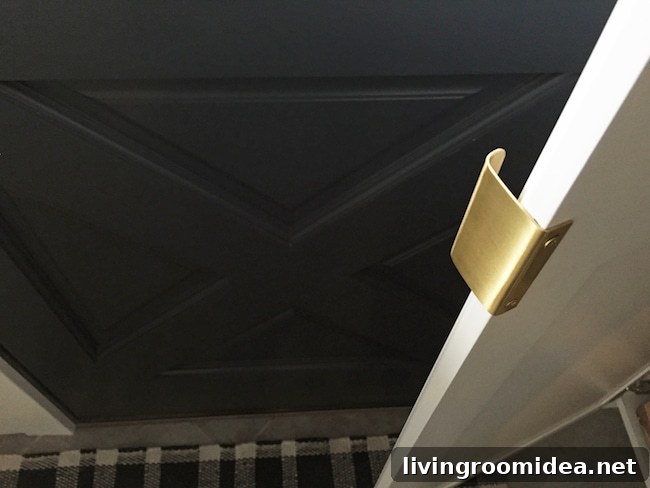 The brass handles as seen when the cabinet is open
We also used black hardware on the navy Dutch door to maintain simplicity and continuity.
After selecting cabinet hardware, two additional finish choices remained: the faucet and the wall sconces.
What about the faucet and the three sconces?
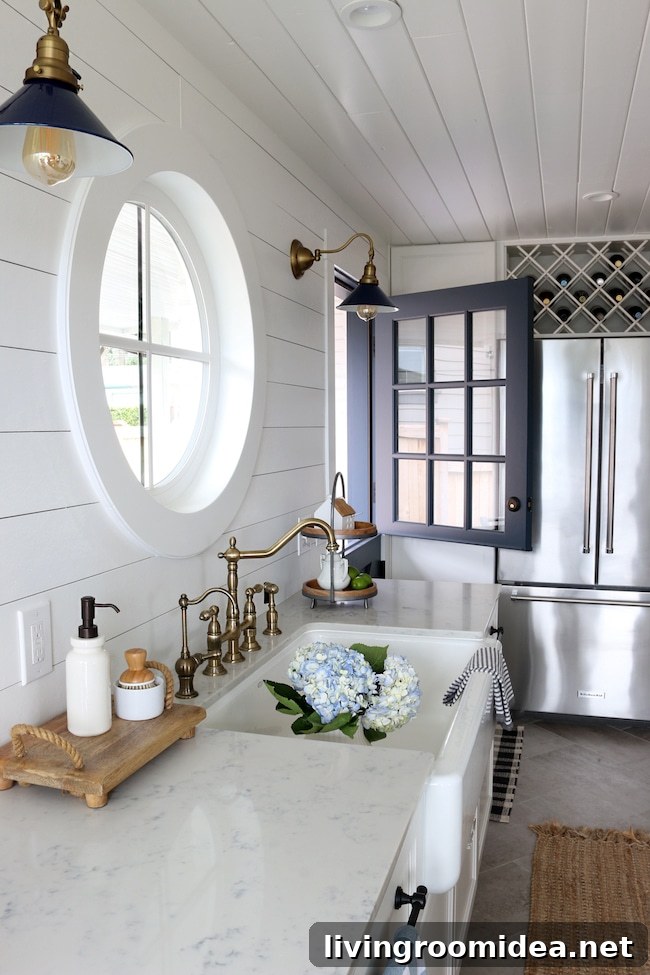
We considered black sconces but decided we had enough black hardware already. To add warmth and a collected feel, we chose a warm brass/gold finish for the faucet and sconces. The sconces are a slightly darker brass, which helps tie them to the black hardware without creating contrast that feels jarring.
The brass faucet and sconces lift the room and complement the wood and natural textures we used. Their warmth balances the cooler stainless and black finishes.
In short: mixing finishes isn’t as complicated as it seems. Stick to a few reasonable rules—consistency in key finishes, repeated patterns, and strategic accents—and the result will feel coherent and visually pleasing.
We’re thrilled with how the details came together. The mix of finishes feels subtle and interesting, and because the overall palette is simple, it’s easy to introduce new colors or patterns later if we want a change.
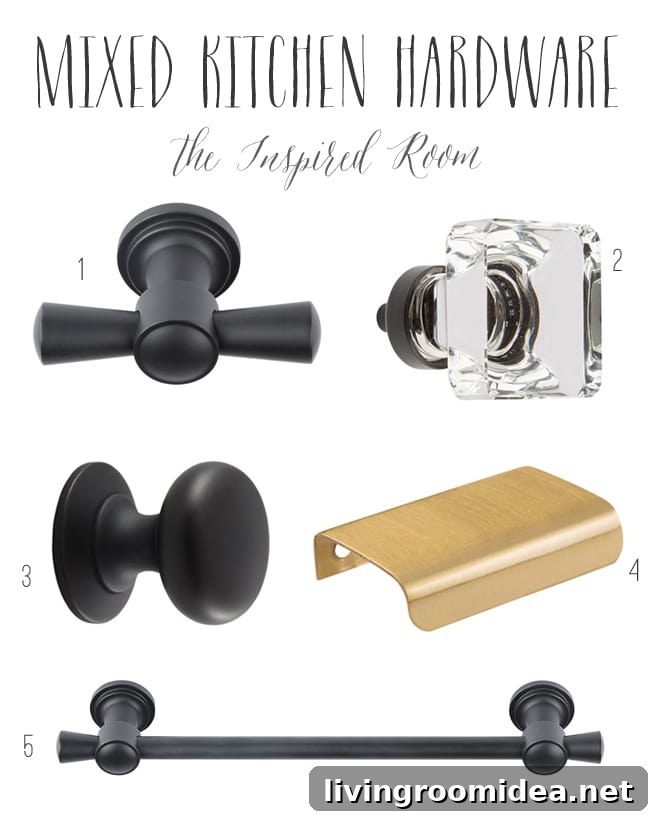
Sources for above:
1. Black Knob // 2. Glass Knob (similar) // 3. Black Round Knob // 4. Gold Edge Pull // 5. Drawer Pull
See the full kitchen reveal post and source list on the original site.
Find other posts about the kitchen here:
Shiplap Walls Behind Stove & Sink
Where we got the Dutch Doors
Kitchen Remodel: Four Design Tips
How we choose our kitchen appliances