
I love having a kitchen coffee station. Making coffee is a small ritual I savor, so in every home I’ve lived in I’ve created a pleasant, dedicated spot for brewing and serving.
When we planned our new kitchen, we naturally considered where the coffee station would go.
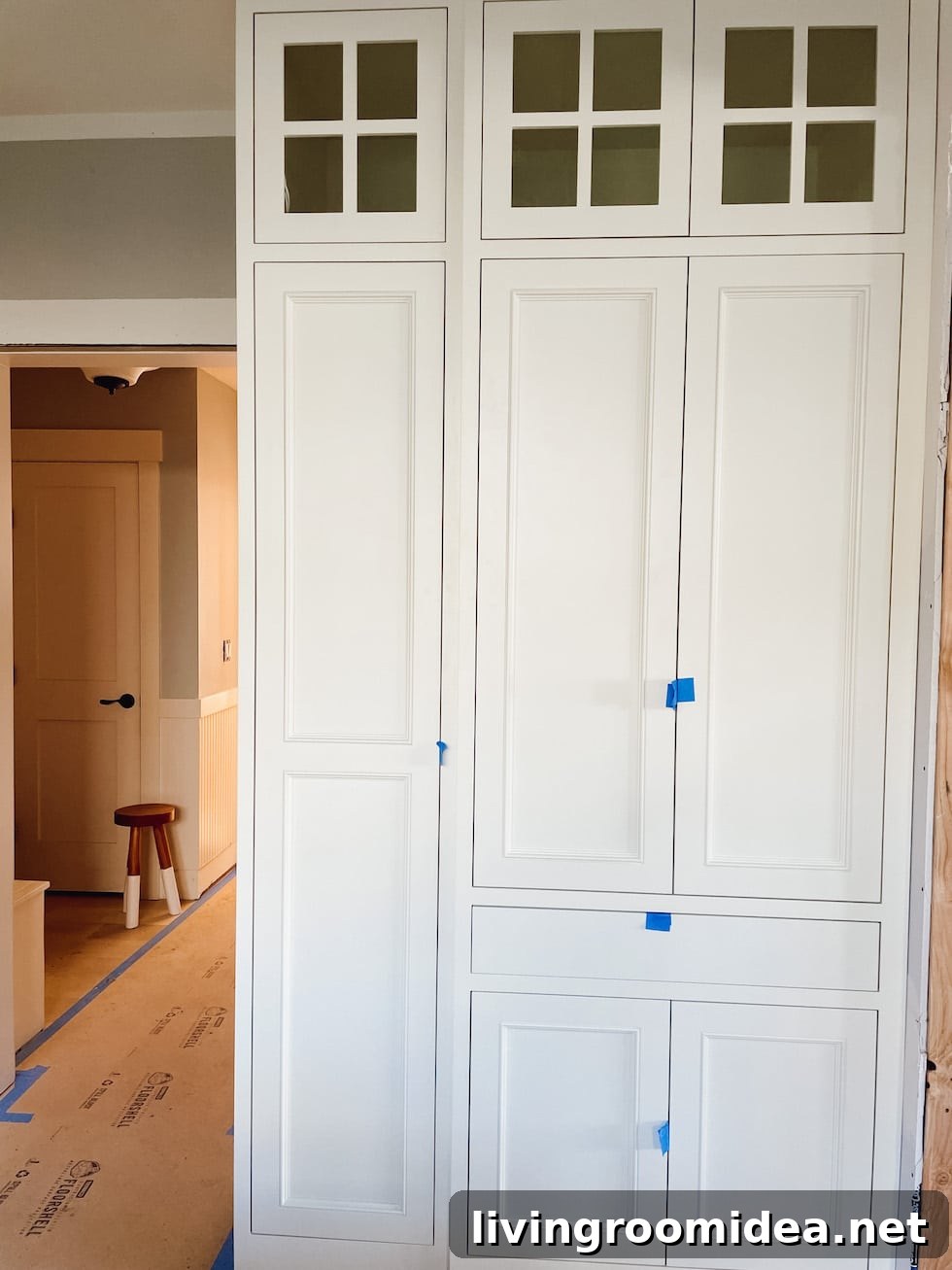
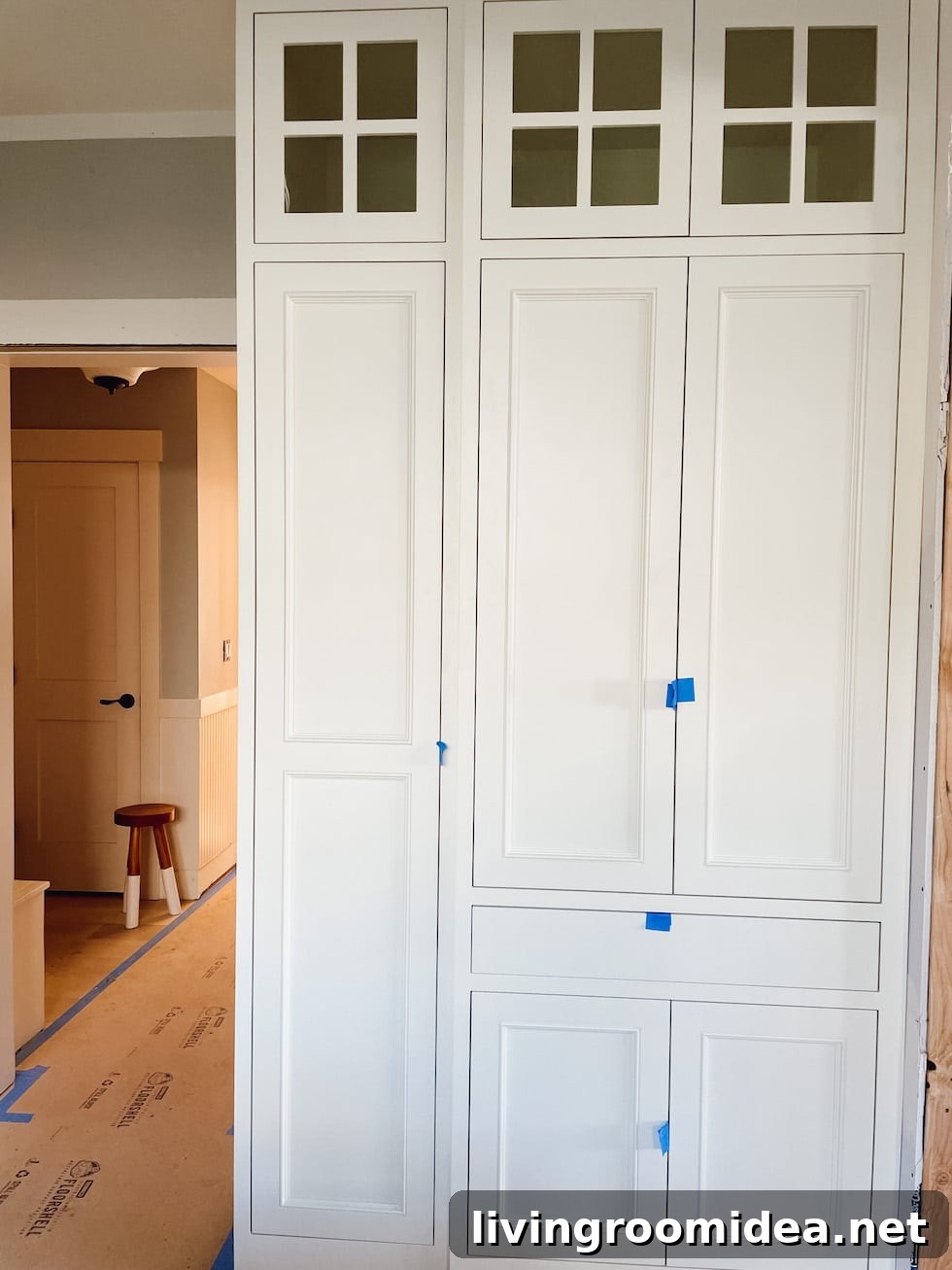
For the first time, we chose a closed pantry-style cabinet specifically designed to house our coffee station.
If that seems surprising because my previous stations were open, I understand. This enclosed cabinet works well for our layout, and I’ll explain why.
Our kitchen and dining area aren’t finished yet — we’re still waiting on casing trim, crown and base molding, hardware, and more — but I wanted to share a sneak peek of the progress.
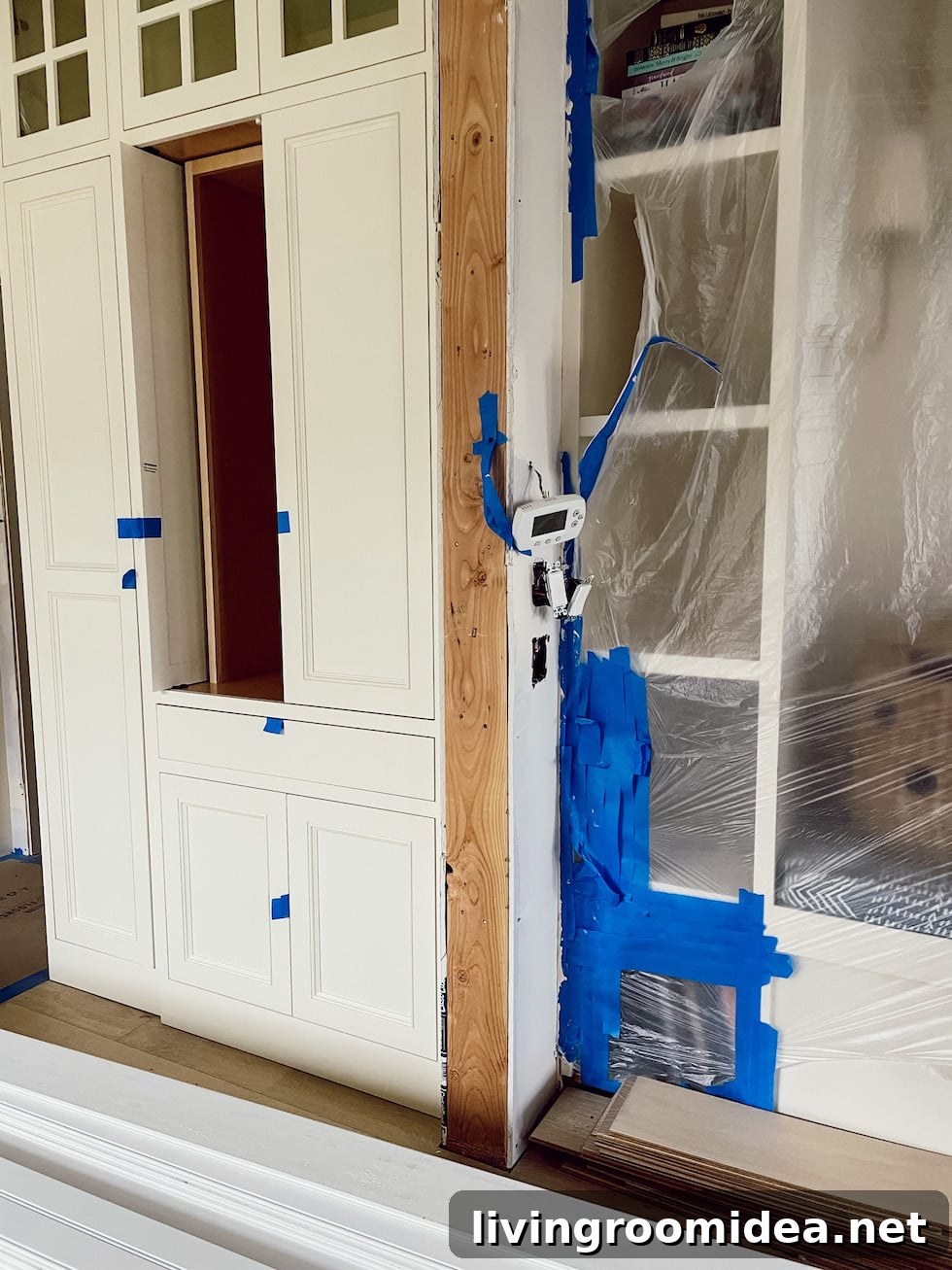
This kitchen has a different layout than our previous homes, so we tailored the design and function to make the most of the available space.
We treated the kitchen and dining areas as one combined zone for cabinetry and storage. That approach let us create distinct task zones and floor-to-ceiling storage where they fit best, while keeping the overall space visually cohesive.
Upper glass cabinets help prevent the built-ins from feeling too closed and reflect light back into the room. I’ll share more about those glass cabinets and other built-ins in another post.
If you missed it, I shared our kitchen floor plan before and after in a previous post.
Our new coffee station cabinet sits in the dining room, to the left of the built-in bookcase and bench in the living room. It will be across from our new dining banquette.
Placing the coffee station here removes a task zone from the main cooking area, which helps when we entertain or have family over in our compact home.
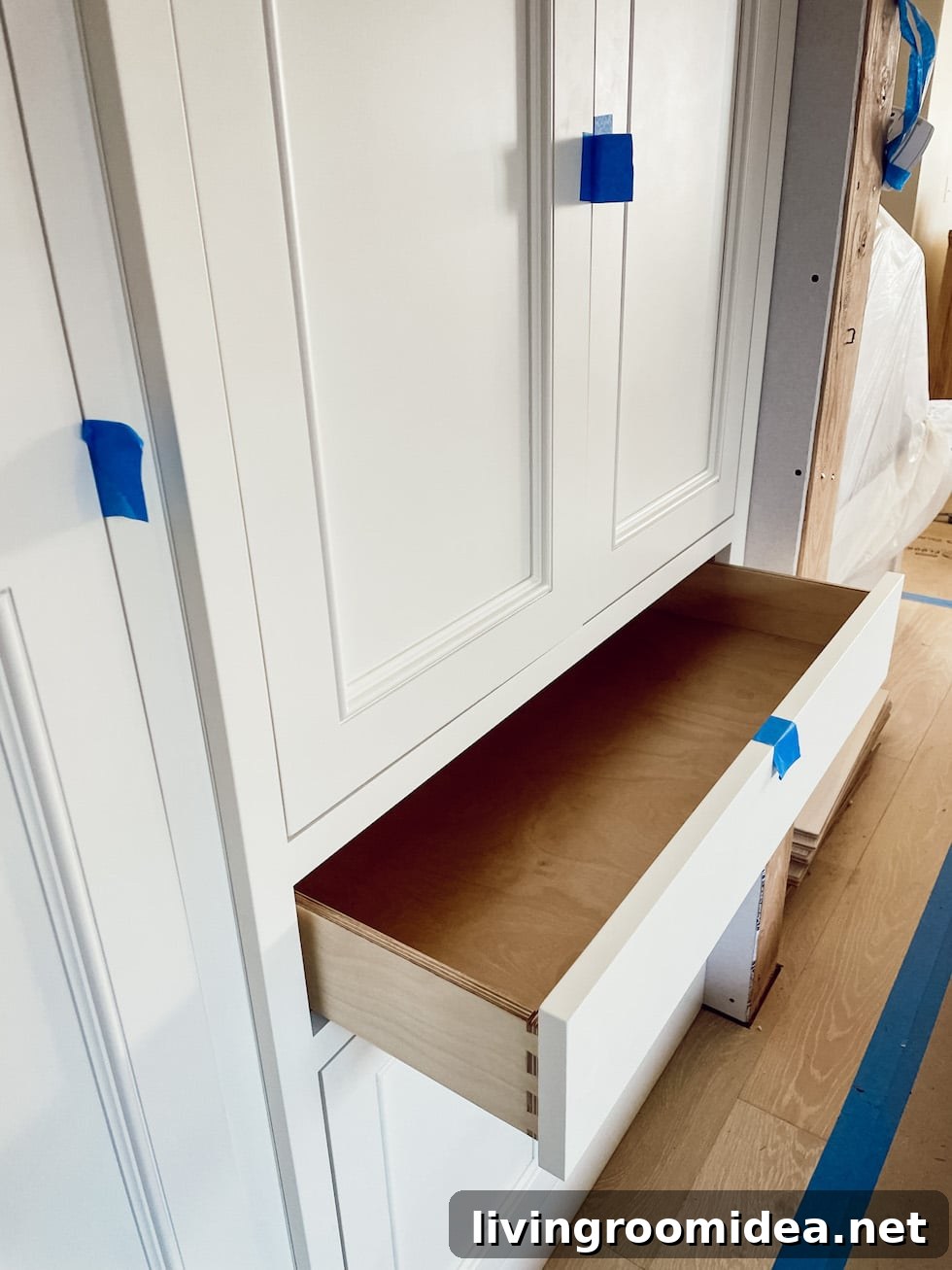
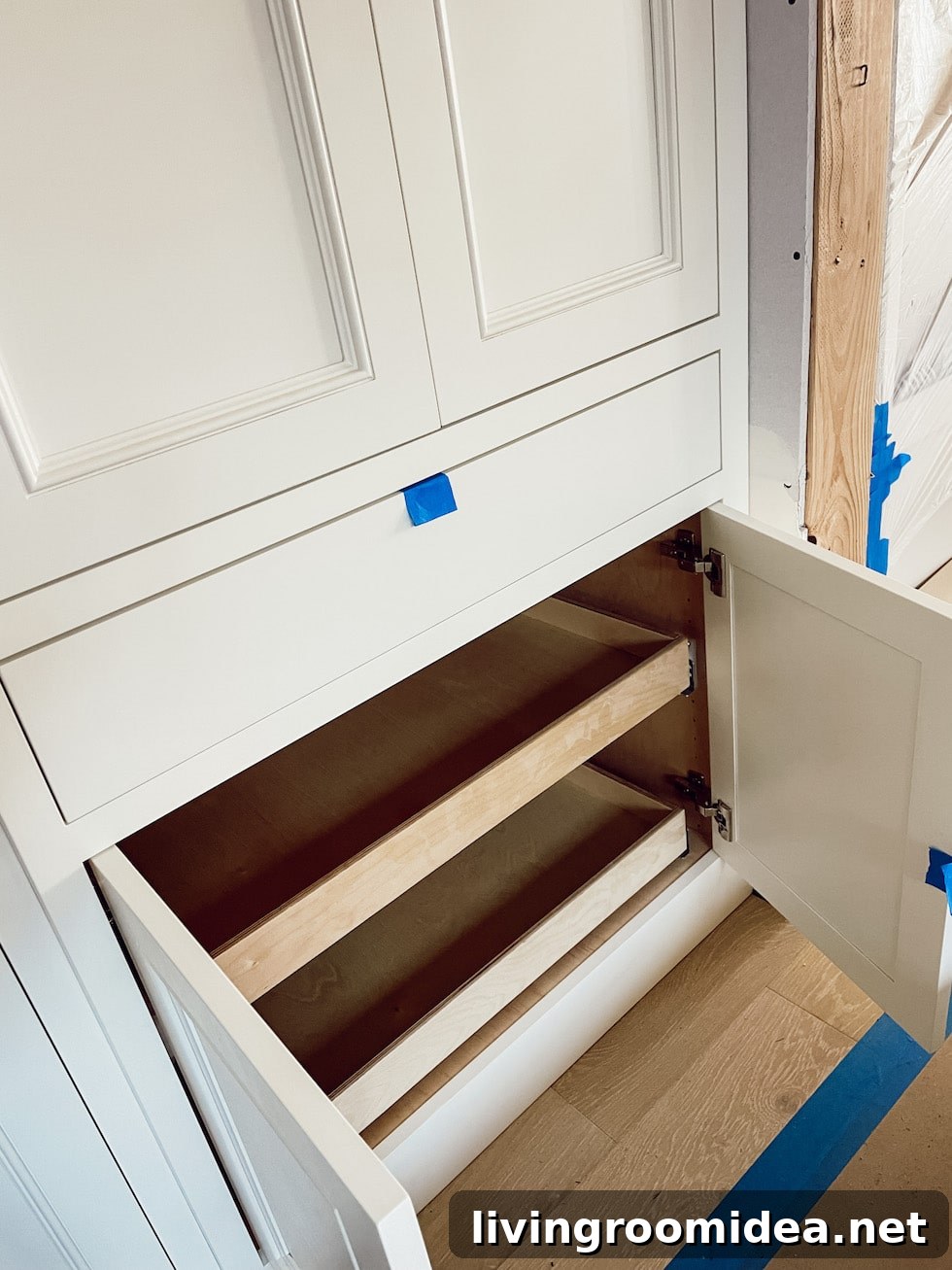
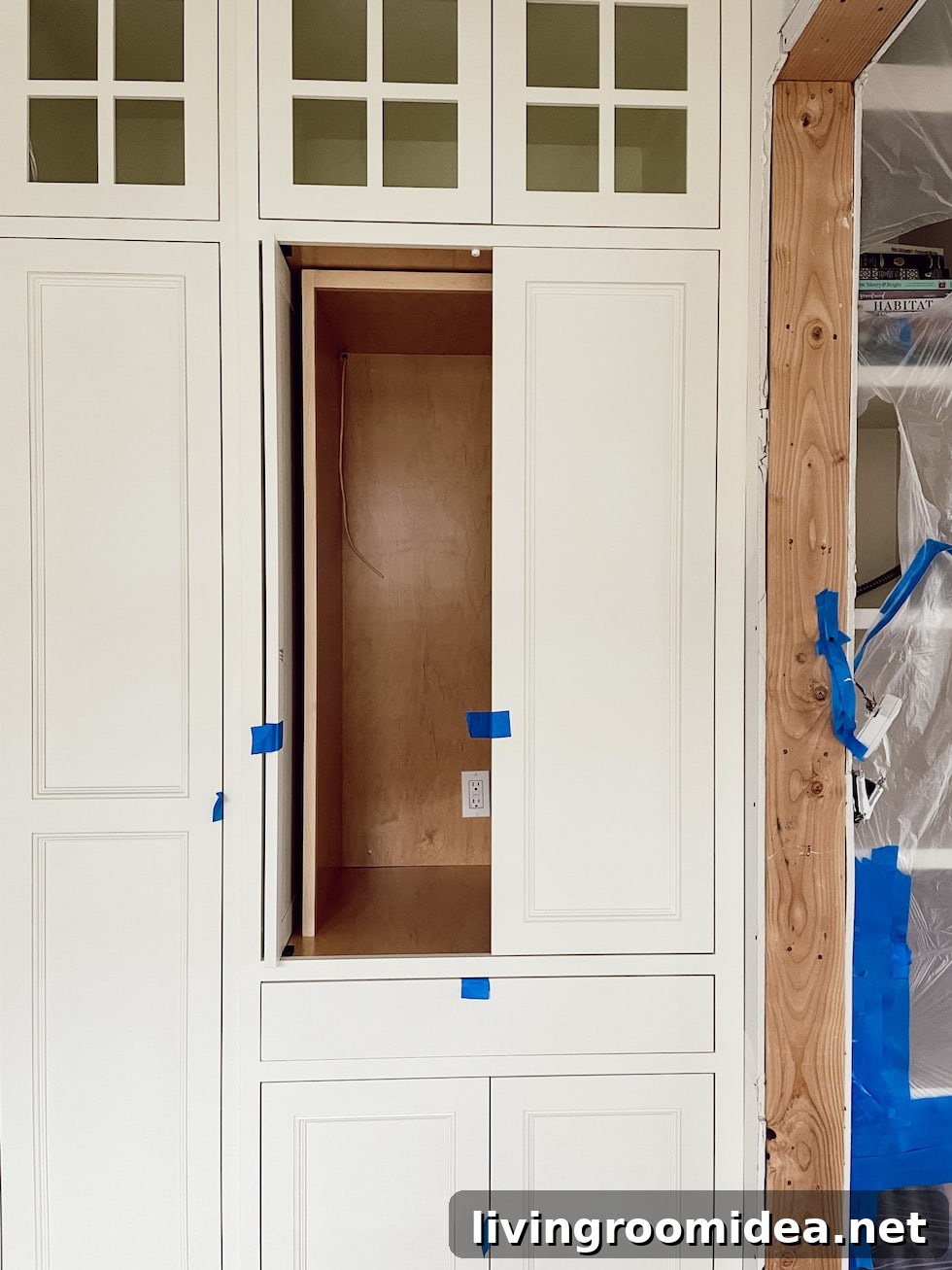
We designed one section to hold our coffee maker and supplies, and added pull-out pantry drawers for flexible storage. The cabinet can also function as a breakfast station for cereal or a toaster. A light will be installed inside to make the space easy to use at night. The goal was versatile storage that can adapt over time — it doesn’t have to remain solely a coffee station.
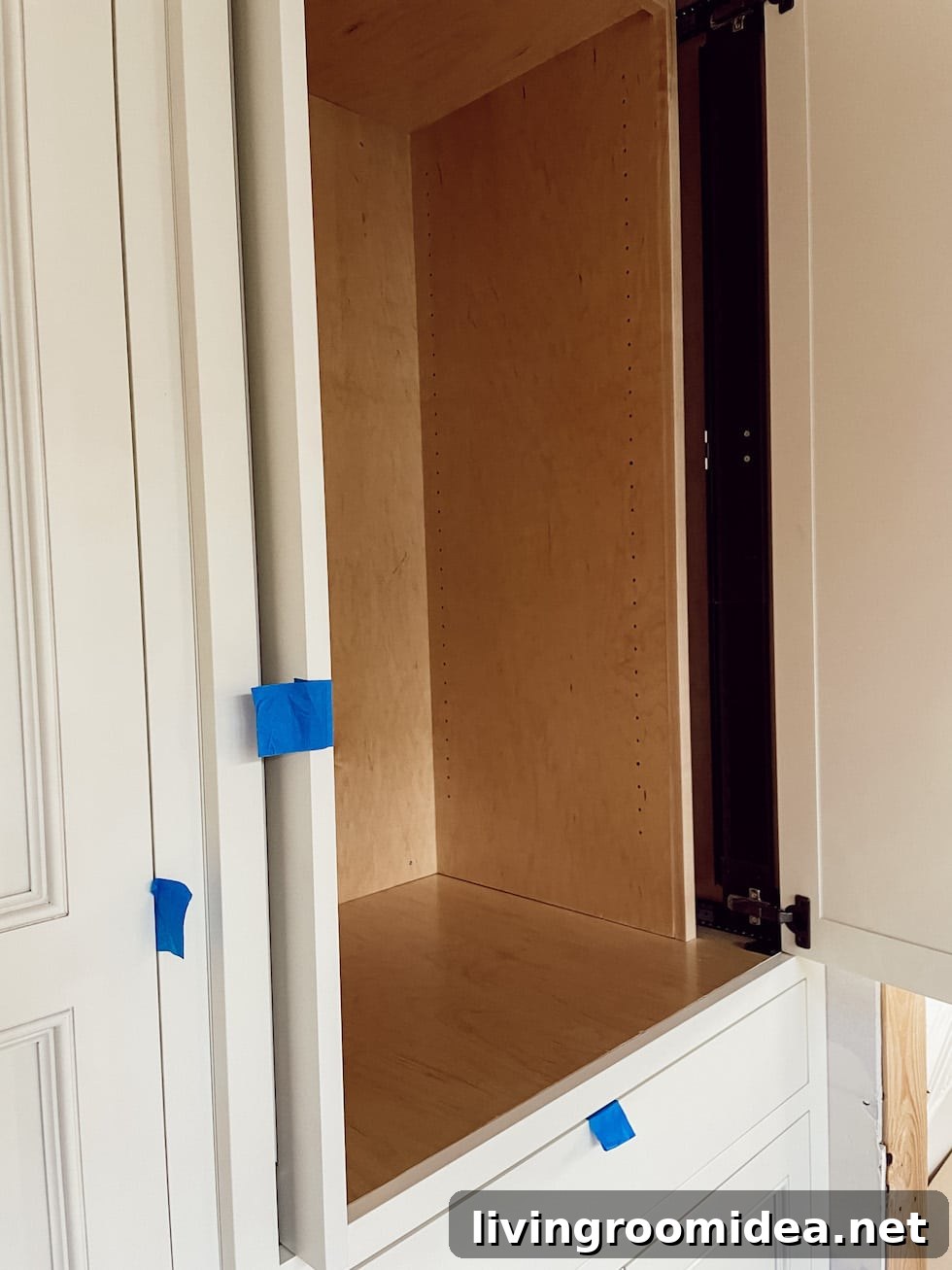
The cabinet features double pocket doors that slide into the sides so they don’t interfere with interior shelving. Pocket doors also let us leave the cabinet open for guests to serve themselves.
Open pocket doors help traffic flow through this pathway between the living room and kitchen, making it less awkward to pass by. When closed, the cabinet keeps the area looking tidy and uncluttered — important in our small main-floor layout where several rooms are visible at once.
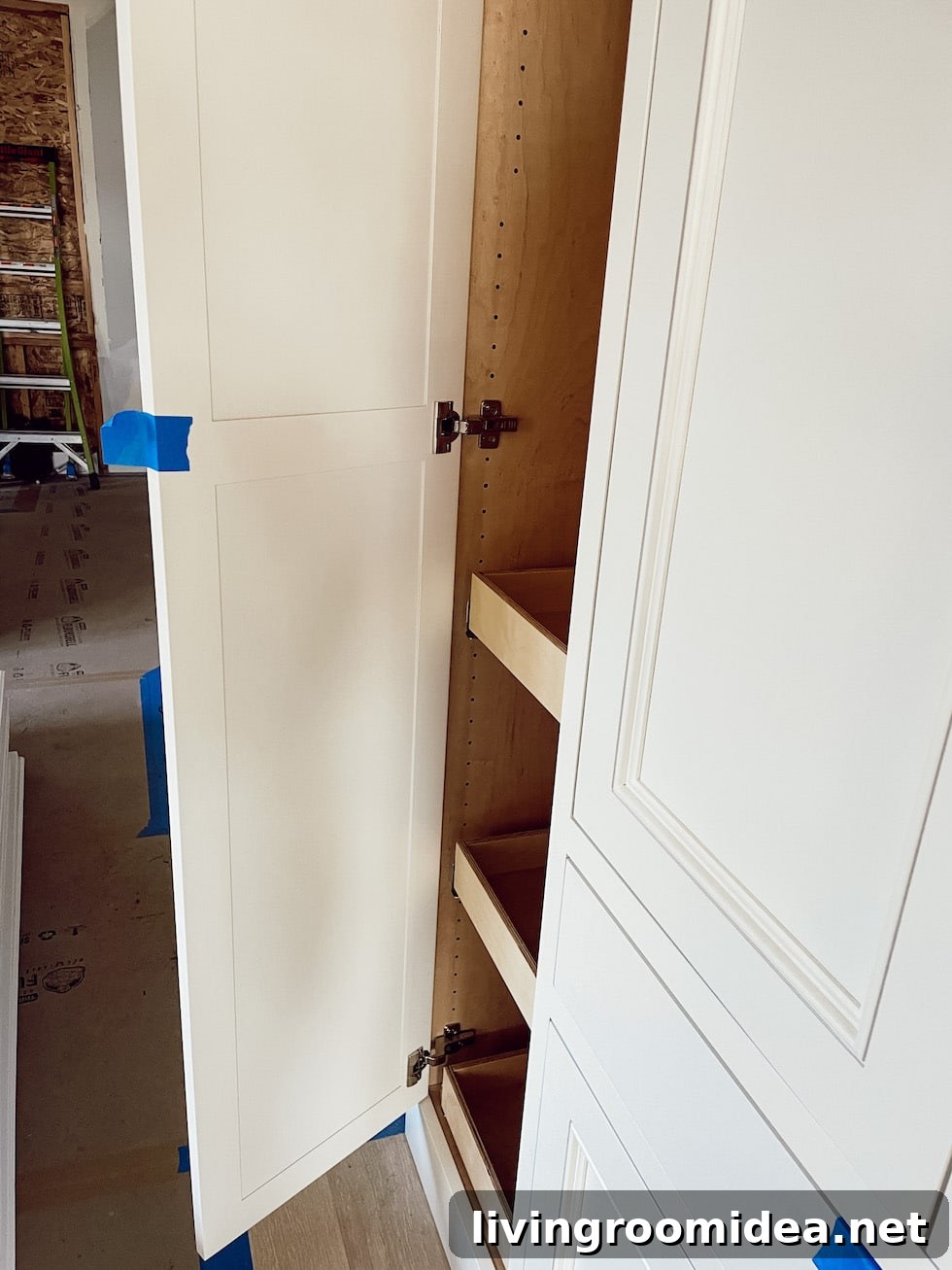
We’ll place our Berkey water filter in a left-side pull-out drawer for easy access to filtered water. It’s not a built-in plumbing solution, but with two sinks just steps away, a simple pull-out works best for our needs. During a remodel it’s tempting to add one more “need,” but we opted to keep built-ins and storage as our splurge and skip more complex plumbing in this cabinet.
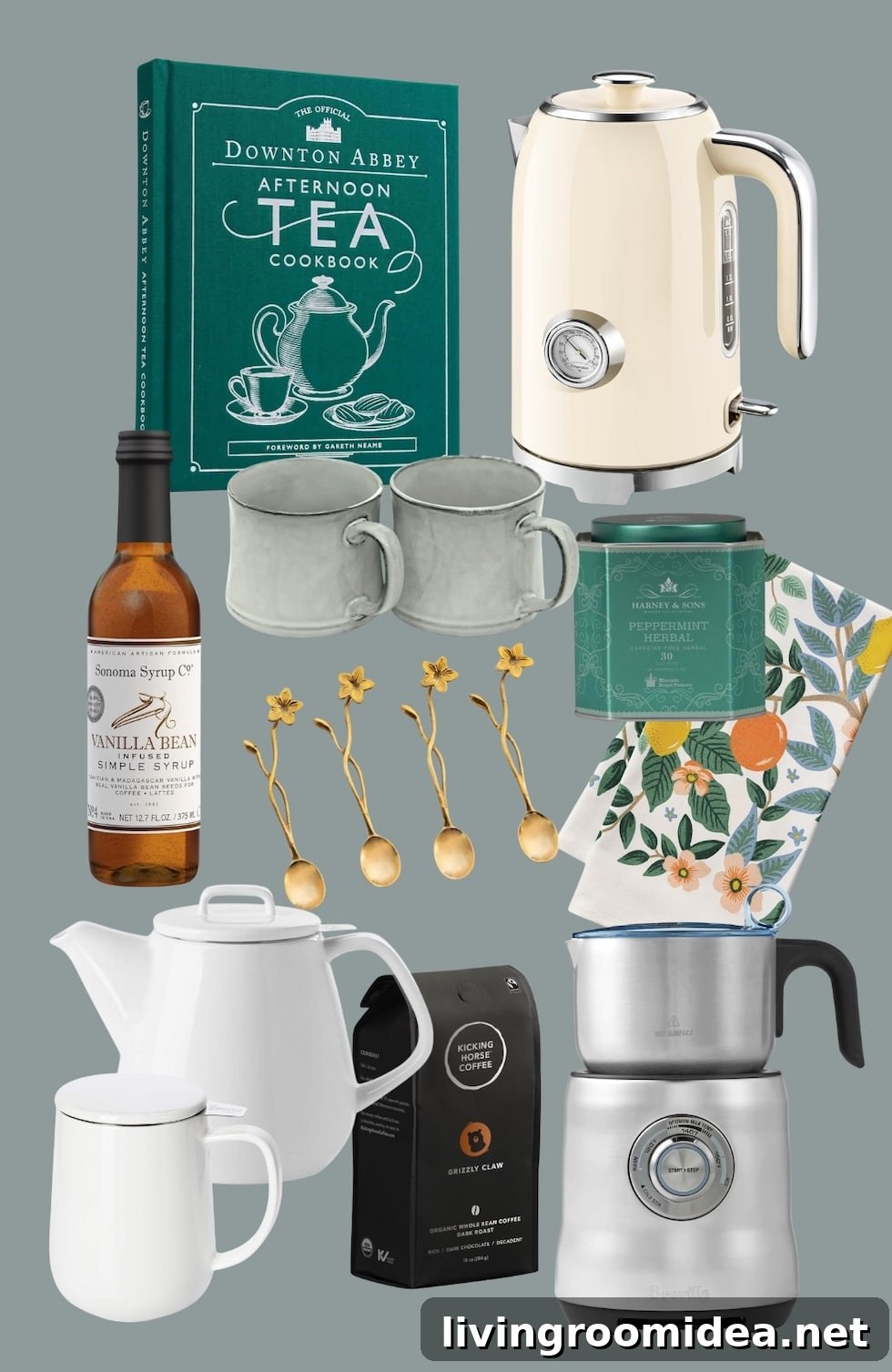
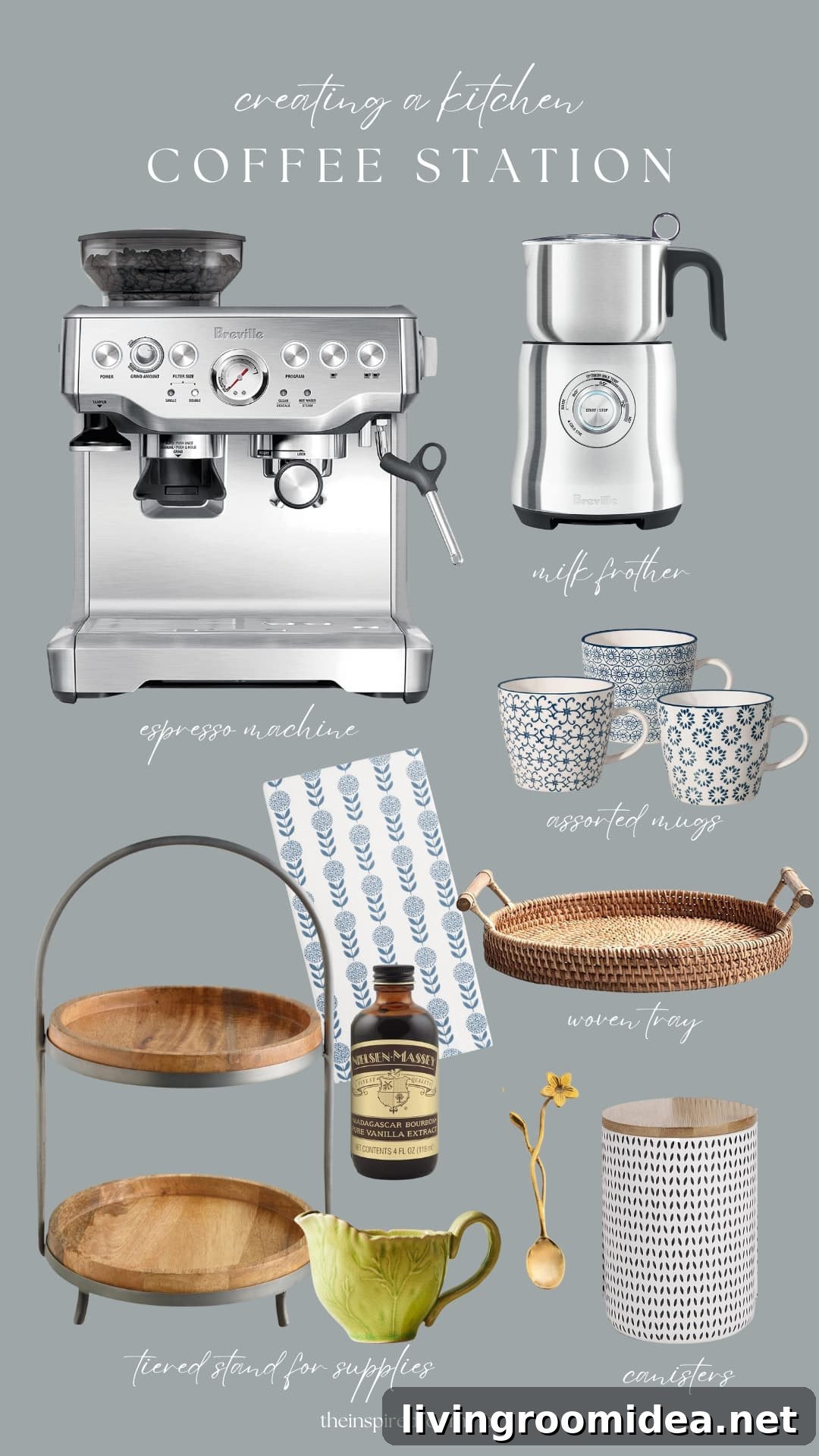
Below are some of the items we use for making and serving coffee that will likely live in the new coffee station.
In past kitchens I’ve used a mug rack, though this time most mugs may be stored on a shelf or in drawers inside the cabinet. If space allows, I’ll try to include a mug rack again.
Even though we’ll have a fancy espresso machine in the coffee station, I still make my daily coffee with a stovetop espresso maker, a ritual I’ve kept for years. Those supplies will also live in the cabinet.
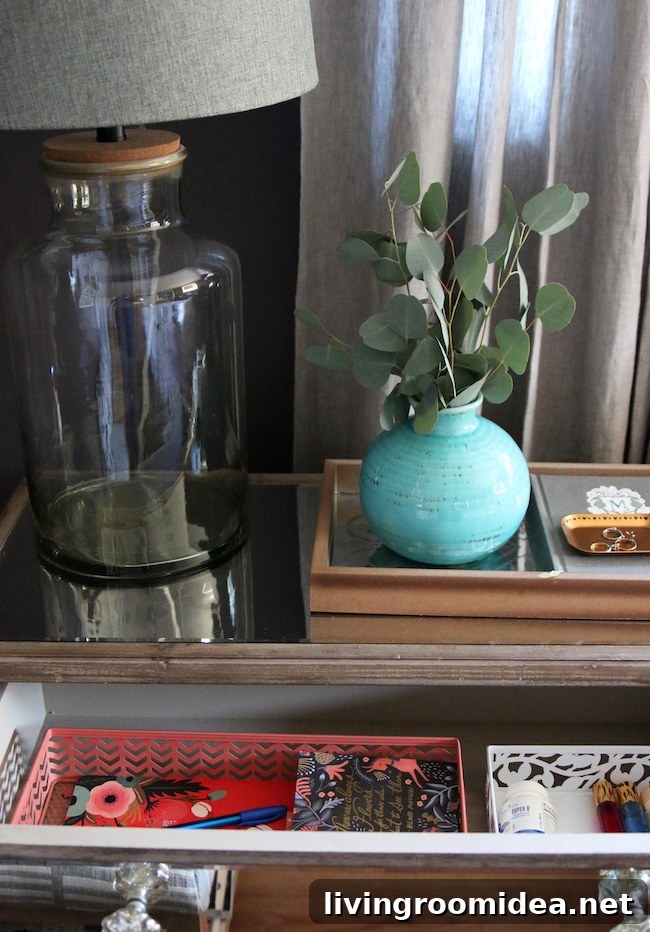
Two of our past coffee stations:
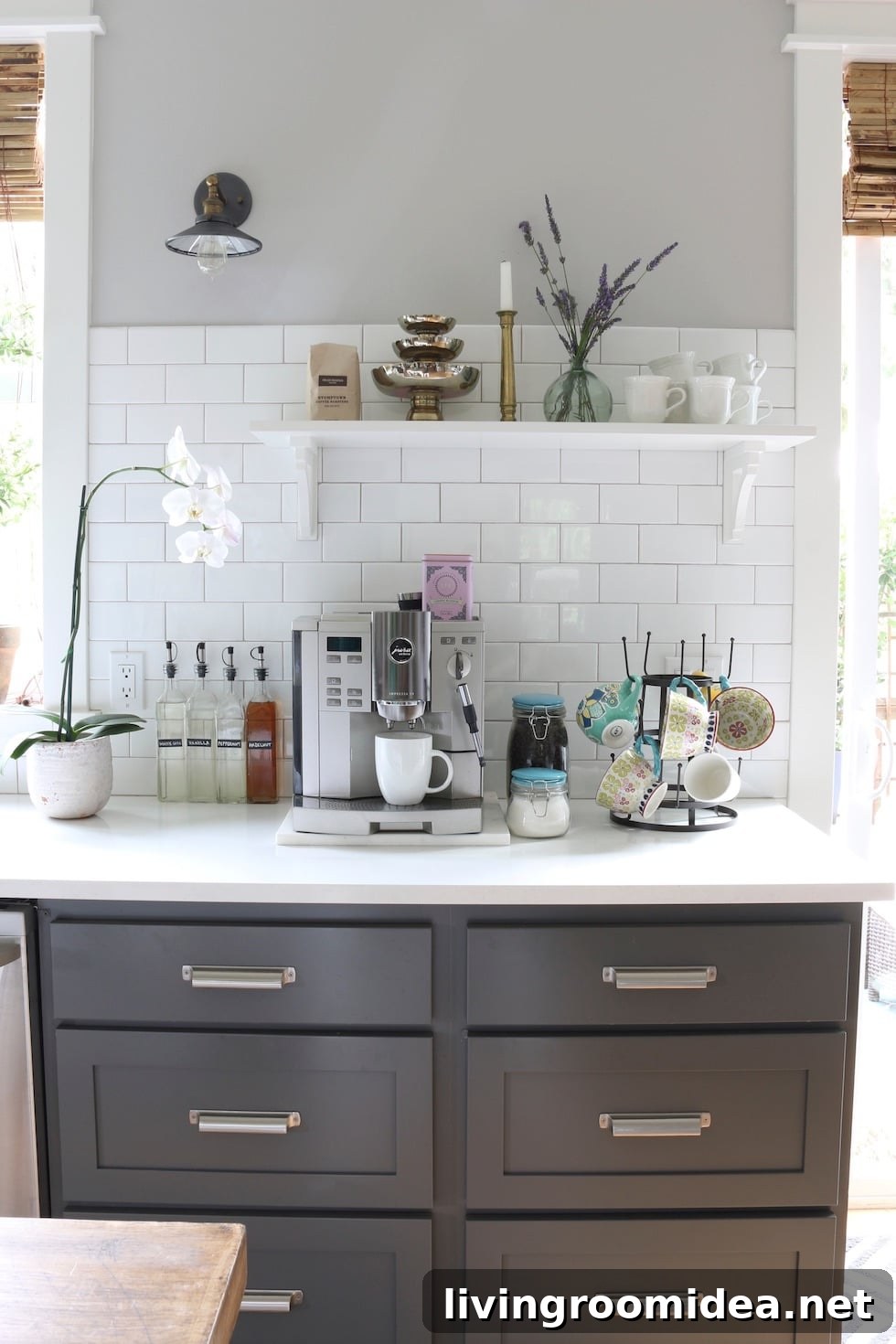
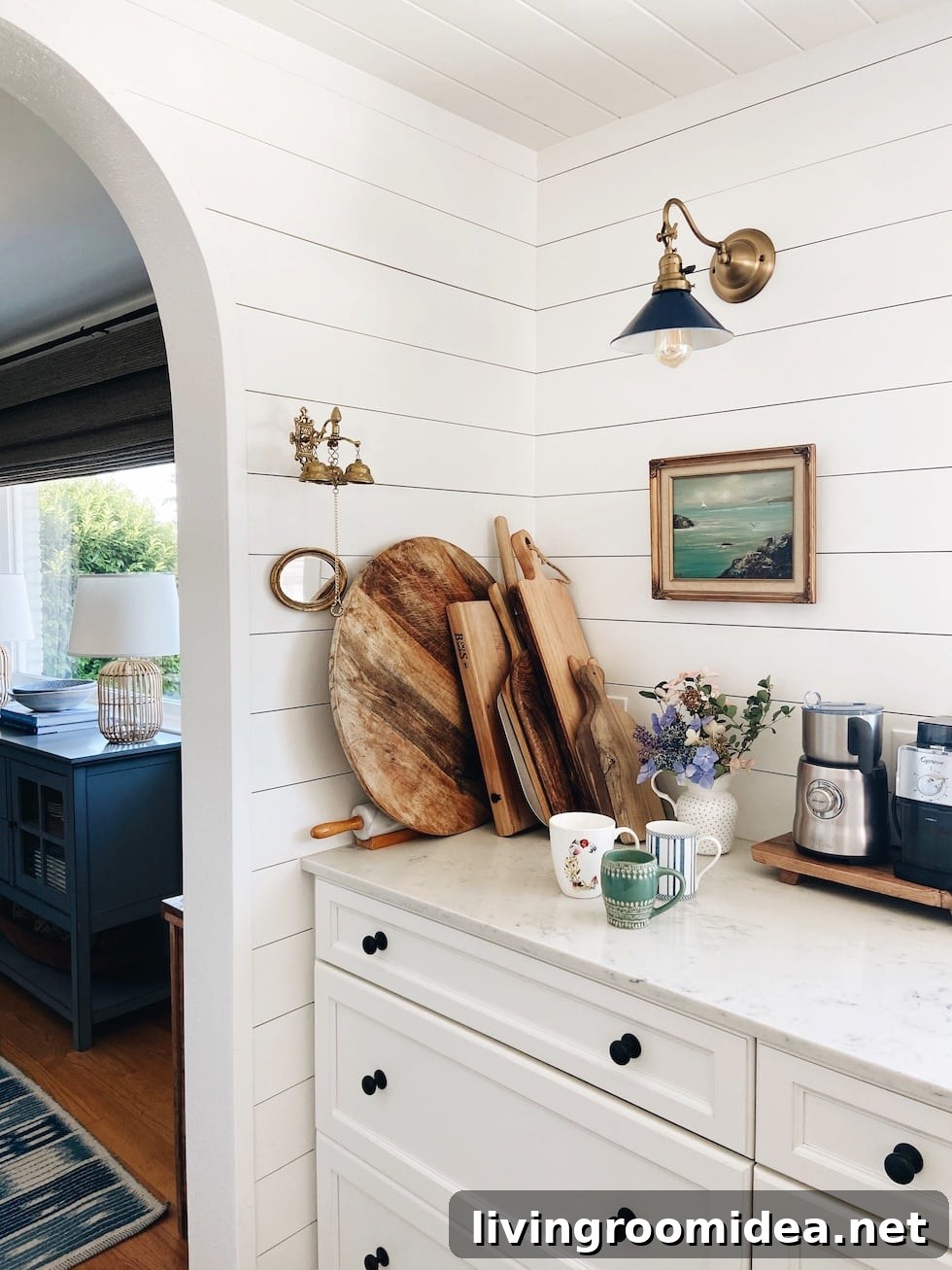
You can see previous coffee station setups and styling in an older post where I share tips for creating a cozy coffee nook.
Related posts and renovation updates
I’ve shared several updates on this renovation, including progress on the tiny backyard cottage addition, our choice of soapstone counters, and other kitchen design decisions. If you’re following the remodel, you’ll find posts about floors, cabinets, sinks, hardware, and design inspiration that show how this coffee station fits into the larger plan.