
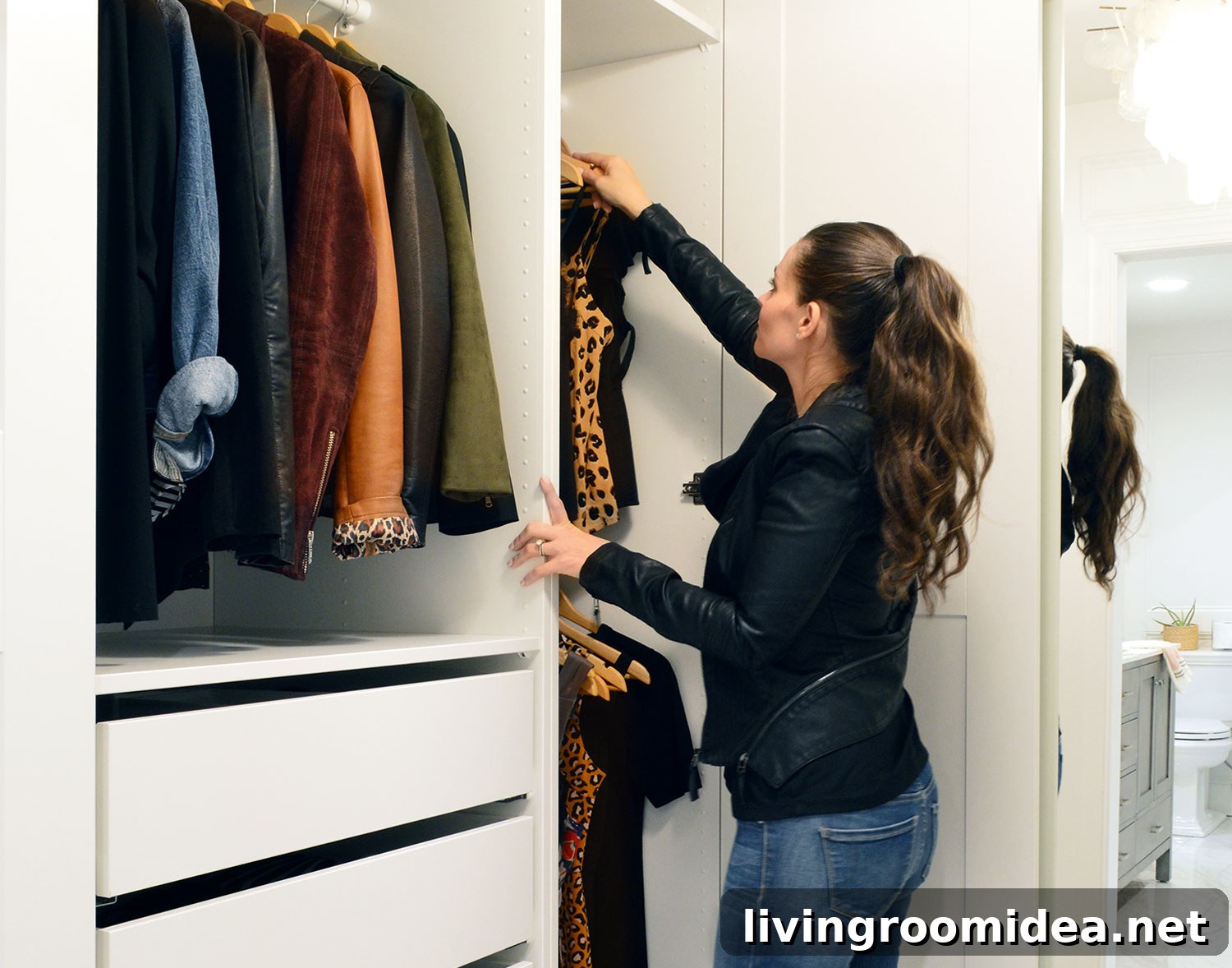
This post covers the full closet remodel: before-and-after photos, a video tour showing how everything is organized, the total cost, closet planning tips so you can tackle a similar update, and the simple trick we used to make the Ikea Pax system look built-in—using only about $65 of primed wood. First up: the before and afters. Also, note Burger’s enthusiastic photobombing throughout.
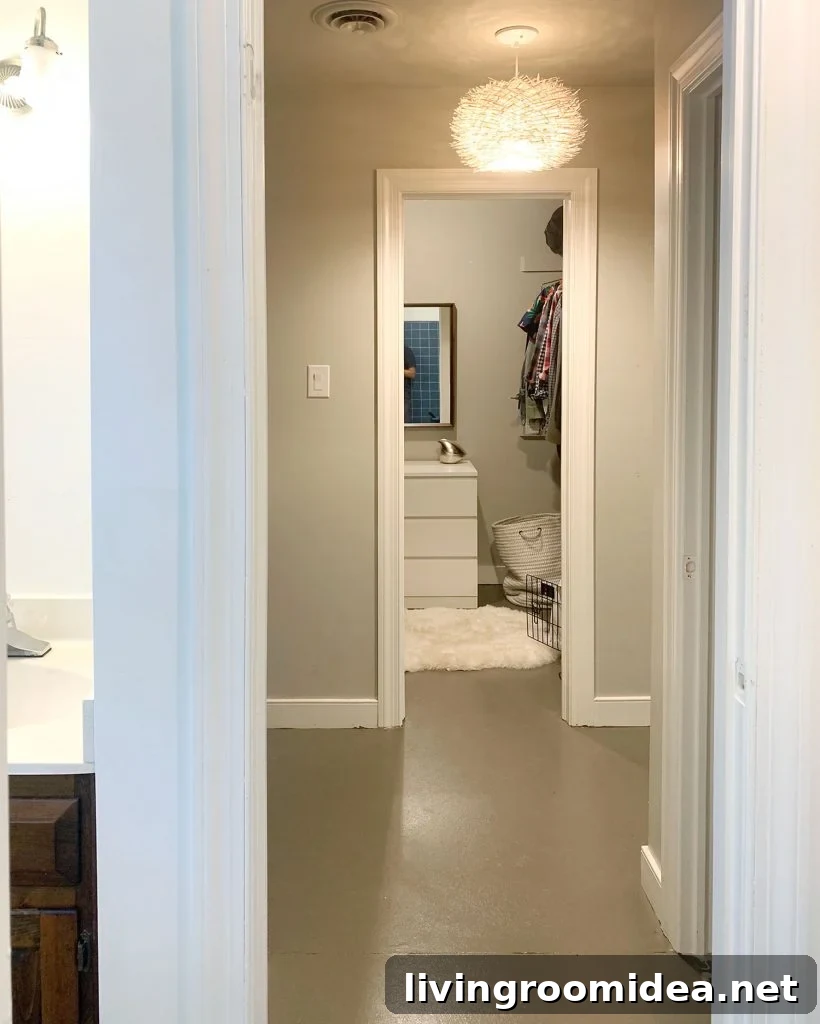
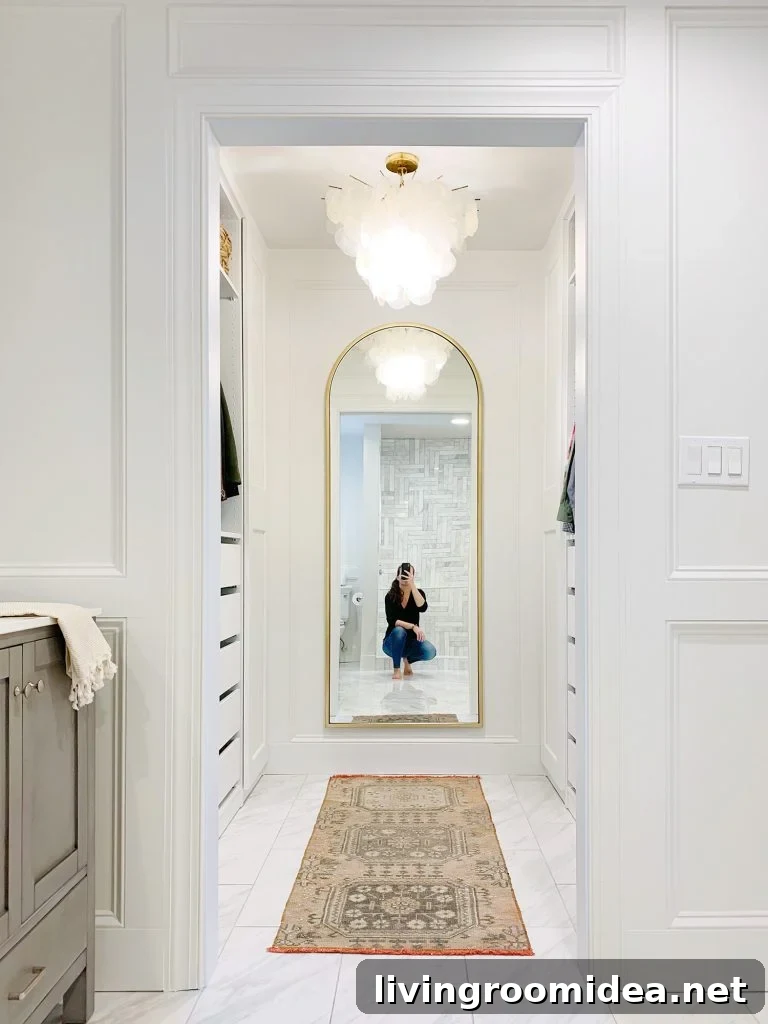
We started with a tiny, awkward entry into the closet. The original doorway was only 22″ wide and off-center—John’s shoulder width is 20″, so he literally squeezed through every day. We removed that door early on and later reframed the opening to a centered 34″ doorway. Widening and centering the entrance changed the feel of the room and allowed us to add symmetrical built-ins on both side walls.
The closet kept its original footprint—8′ wide by 6′ deep—but gained a huge amount of function. Moving the entire wall would have been far more expensive and complicated, and we didn’t want to take more bathroom space after realizing we could fit a shower and a freestanding tub there. Reframing the doorway and adding built-ins was the best compromise.
Before the remodel, the closet was basically a single long hanging bar and shoes on floor racks on one side, and a dresser plus two hanging bars on the other. Over six years we lived with that setup, including temporary subfloor stenciling after ripping out the carpet. The new design aimed to use every inch: clothing and shoe storage, a linen area, a built-in hamper, and a donation drop zone.
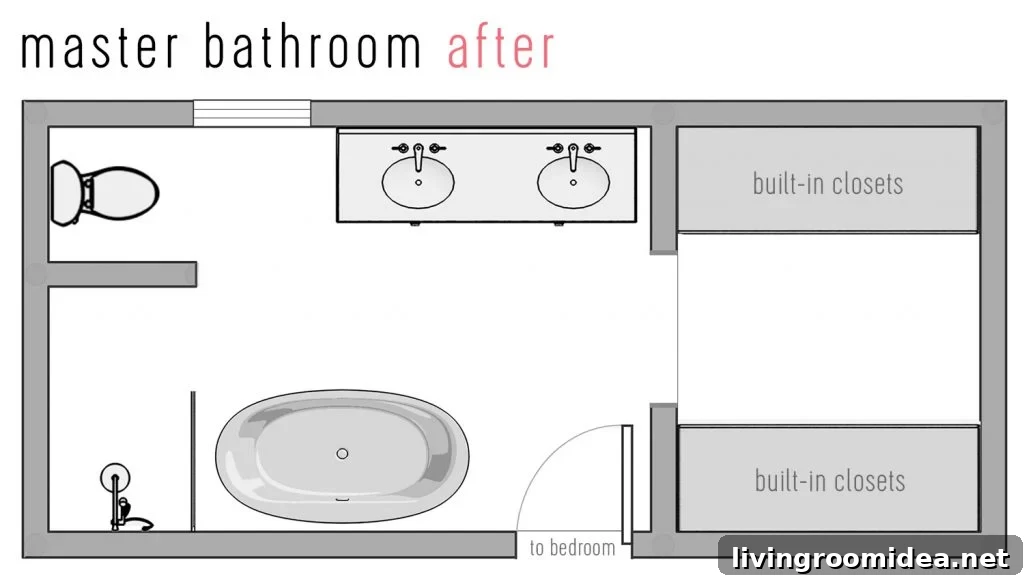
We chose Ikea Pax for several reasons: its configurability, the wide range of interior fittings (drawers, pull-outs, jewelry trays, glass shelves), and the free Pax planning software that helped us visualize the layout before buying. We used the planner, then refined details in-store with a closet expert so the final order matched the space and scale.
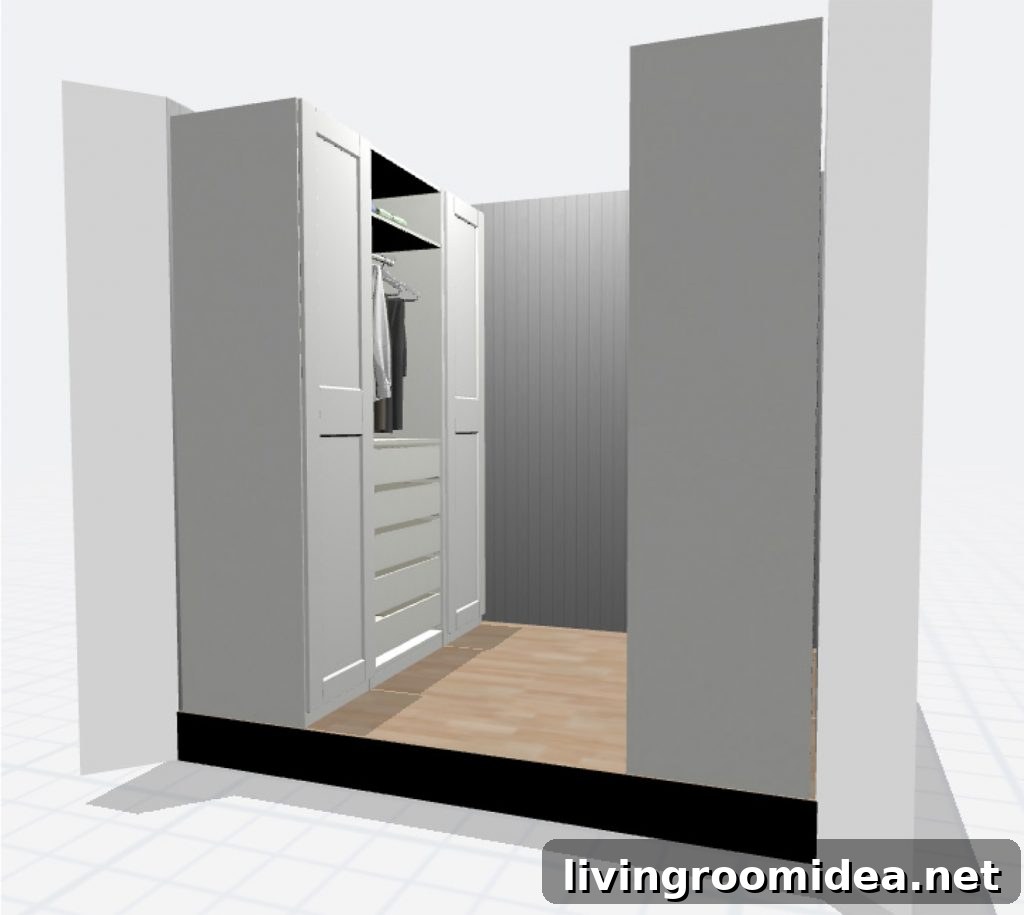
We’d used Pax before 11 years ago, so we were already comfortable with the system. It offers many built-in features—soft-close drawers and doors are standard—and it’s easy to reconfigure later if needs change.
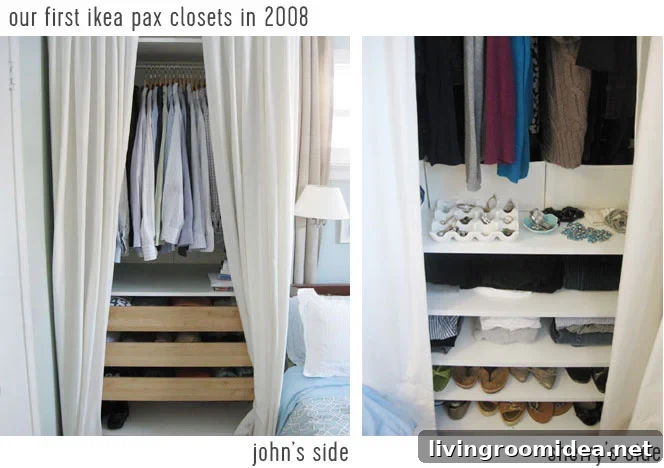
Organization Video Tour
We filmed a video tour that opens every door and drawer so you can see exactly where things live and how the storage functions. The video shows the pull-outs, the hidden hamper, the linen shelves, and more. If you can’t watch it right away, there are photos below to illustrate the main points, but the video is the most comprehensive resource.
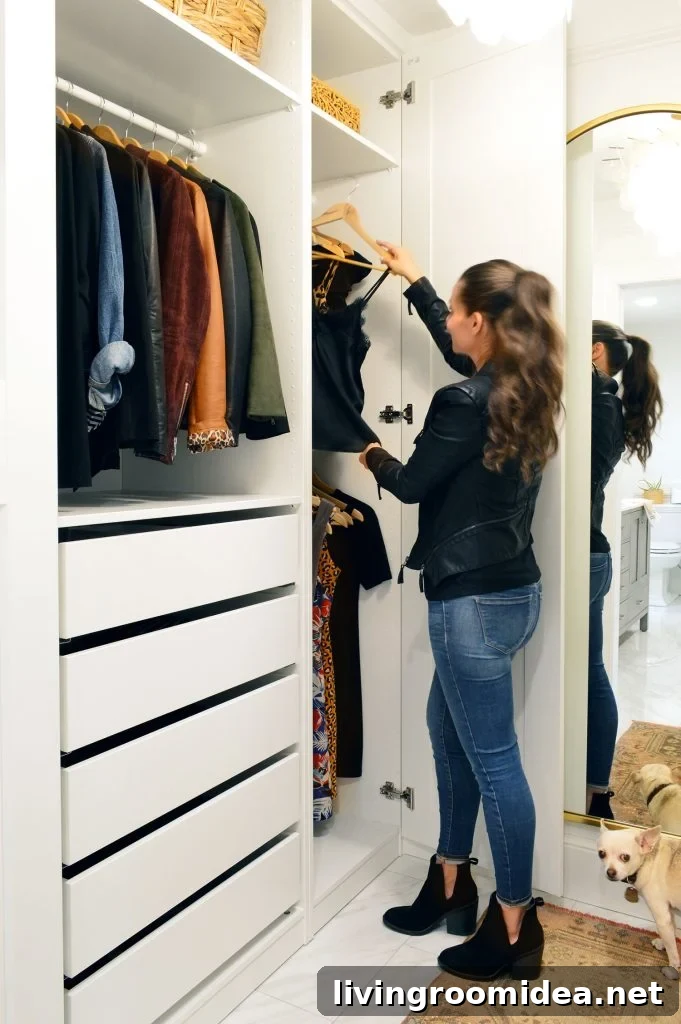
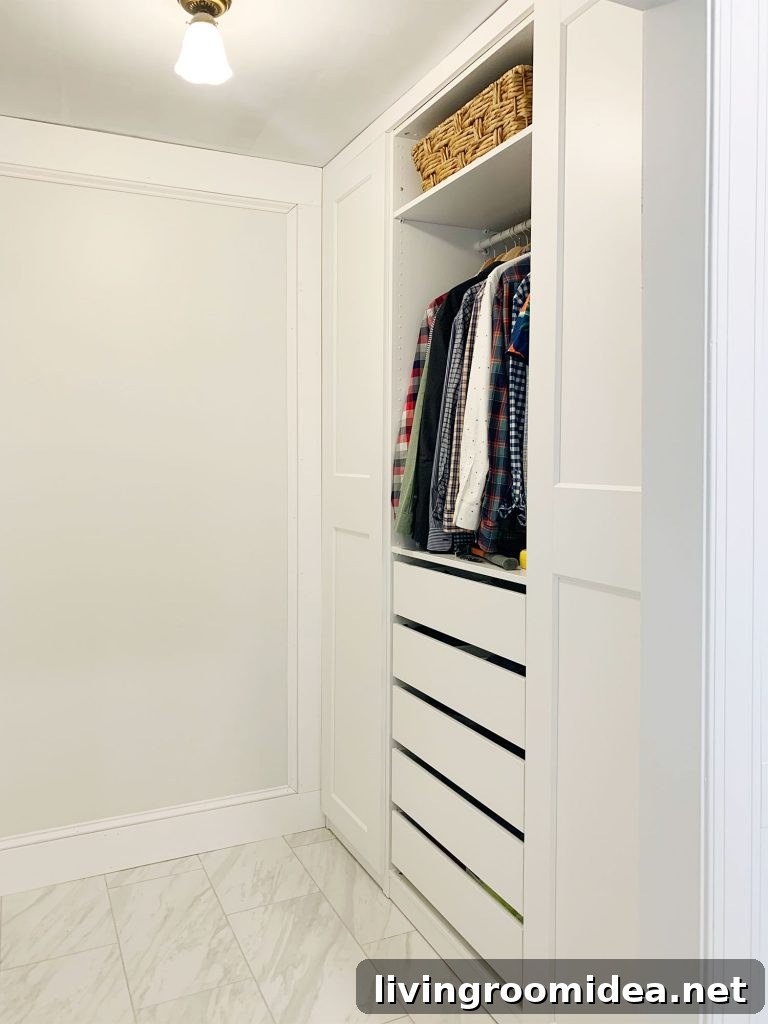
My closet layout includes three hanging bars: jackets and long sleeve shirts on the middle bar, silky tanks and short-sleeved tops on an upper bar, and dresses on a lower bar. I didn’t want one long hanging bar because the three-bar arrangement fits my wardrobe better—plan your hanging zones based on what you actually own.
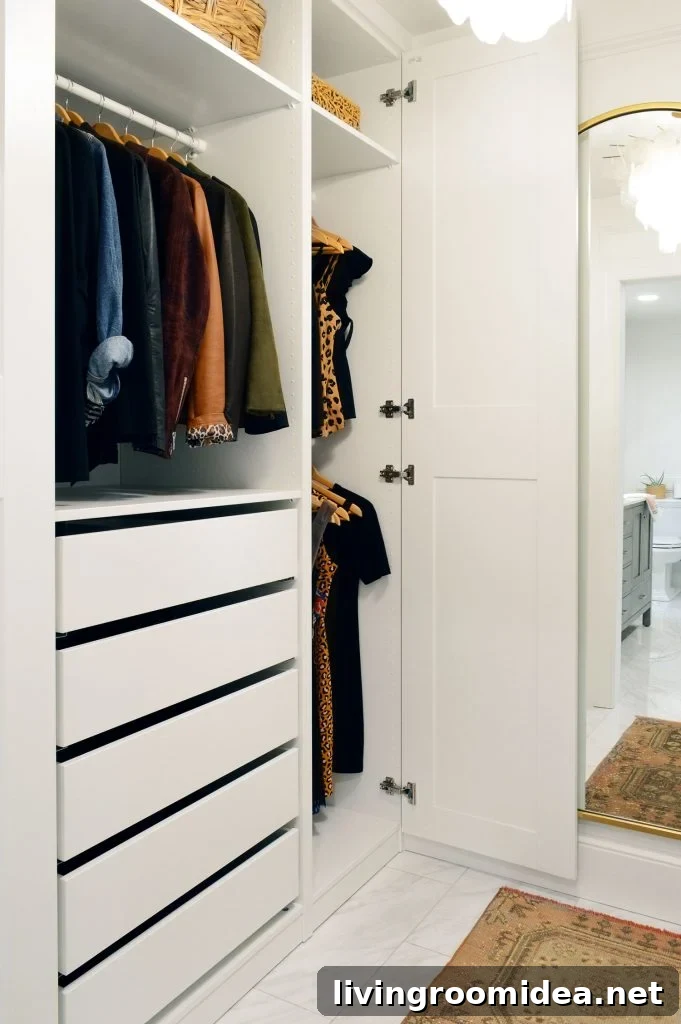
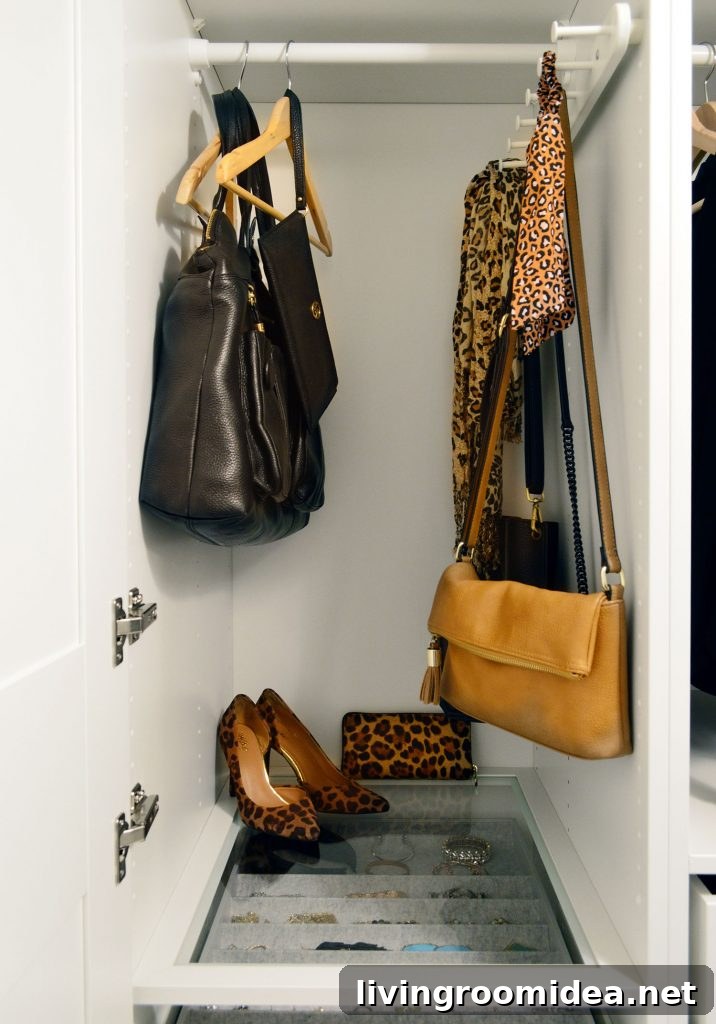
The leftmost compartment on my side is a favorite: purse and accessory storage with a hanging bar plus a pull-out hook rail. Underneath, a glass shelf looks down onto a felt-lined jewelry pullout, which makes everything easy to see and reach. That jewelry tray and its pullout cost about $40, and the glass shelf was $25—small upgrades that look luxurious and feel practical.
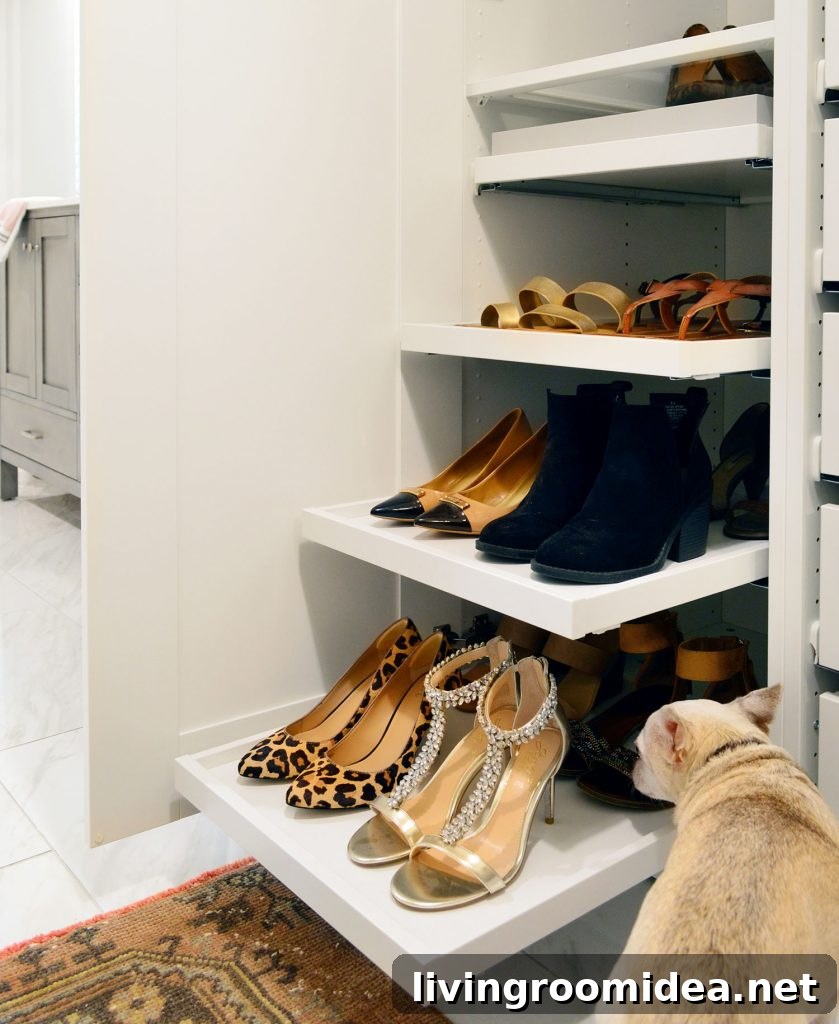
Below the jewelry station are three shoe pullouts. I chose pullouts because they bring shoes to you, so you don’t have to kneel or remove front pairs to get to the back ones. These are used for special-occasion shoes—the everyday shoes live in our built-in mudroom—so pullouts behind doors work well for those less-frequent items.
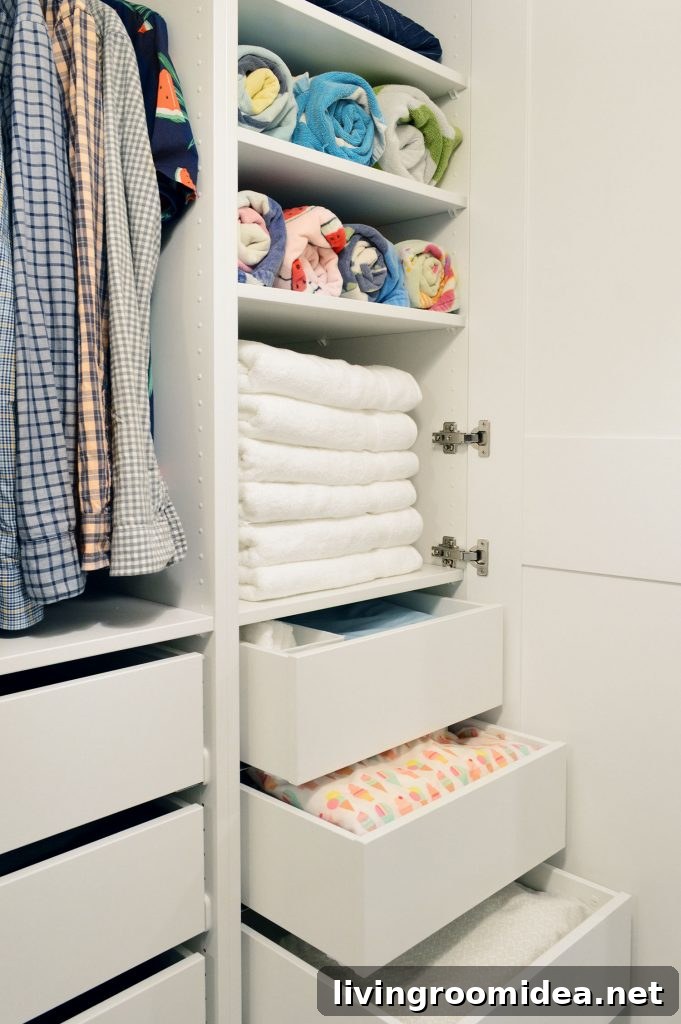
John’s side includes tall storage for a hamper and a step stool, and shelves and drawers for shirts, hats, socks, swimwear, and bedding. We also used an entire wardrobe on his side for linens—beach towels, bath towels, sheet sets and spare pillows fit neatly on shelves and in pullouts. Reintegrating a linen closet into the bedroom closet was a great space-saving decision that opened up our bathroom layout.
Closet planning tips:
- Take a full inventory at home—count shoes, note hanging lengths, and list items that need drawer space. Bring that list to the store.
- Put frequently used items in the most accessible spots; reserve behind-door drawers and pullouts for occasional items.
- Consider small add-ons like hole cover plugs, glass shelves, and felt jewelry trays to elevate the look and function.
- Anticipate sticking points: include space for a step stool or leave clearance above a hamper so hands can easily reach inside.
- Add drop-zone baskets for donations or hand-me-downs to stop piles from accumulating elsewhere in the house.
How We Made It Look Built in
To make the Pax cabinets look custom, we built them in so they read as part of the room. Our closet accommodated two 93″ tall, 19″ wide wardrobe boxes with a centered 29″ box, leaving small gaps at the sides and top. The technique we used is a simple two-board method that creates trim pieces flush with the doors.
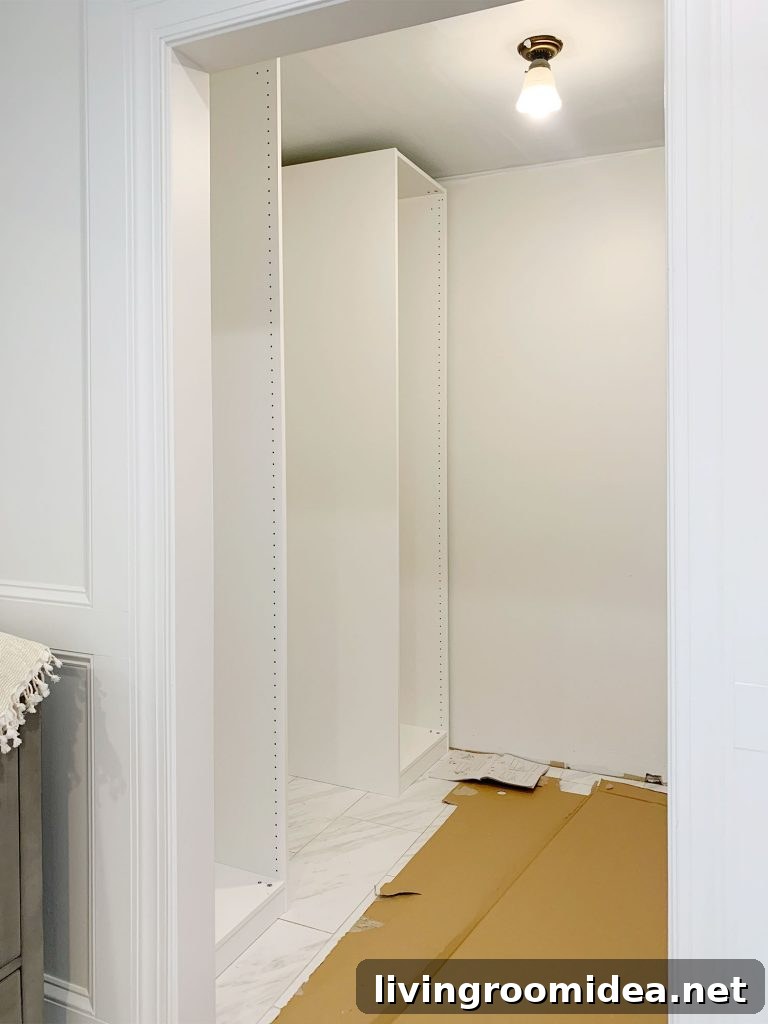
First, nail a rough board to be flush with the cabinet box on the inside edge. Then attach a second, precisely cut primed board to the first so the finished trim sits flush with the doors. Fill nail holes, caulk seams, and paint the trim to match the cabinetry (we used a white that matched the Pax finish). This method creates a clean, built-in appearance for a small material cost—about $65 for the primed wood we used.
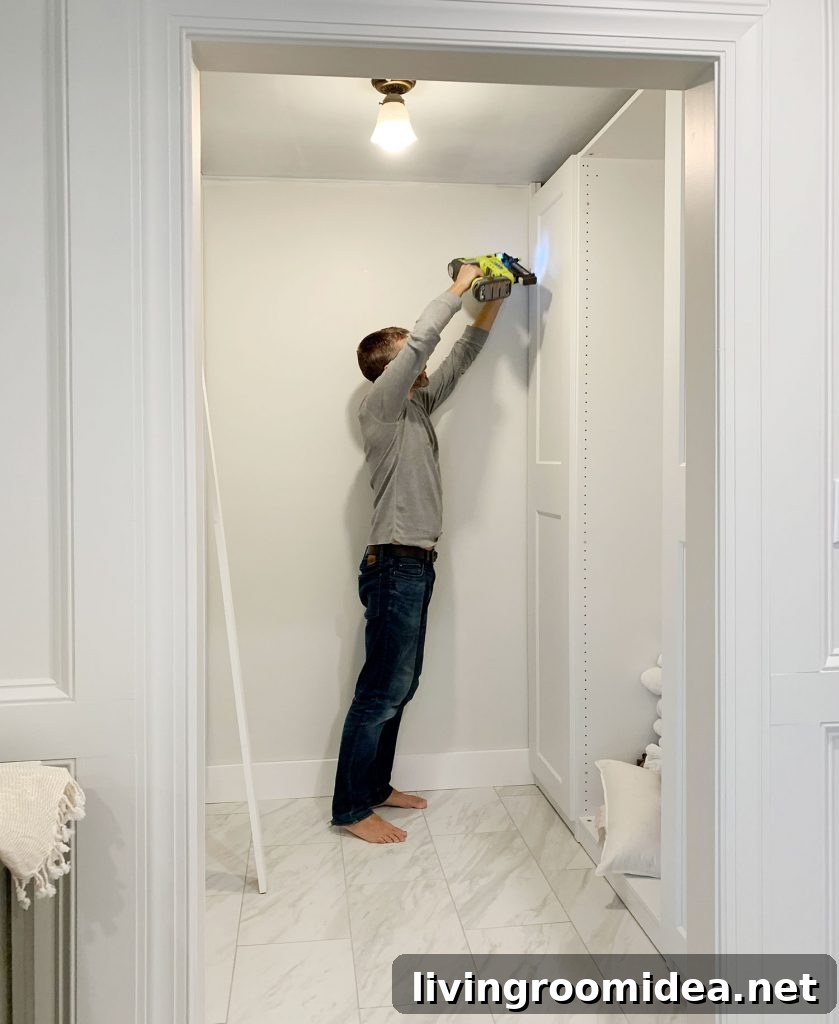
After filling holes and caulking, paint the added trim so everything looks cohesive. The Pax system’s soft-close drawers and doors helped the finished closet feel high-end without a large price jump.
The Budget Breakdown
Here’s the cost summary for transforming an 8′ x 6′ closet into a highly functional, built-in-feeling space:
- Pax wardrobes (boxes): $440 (during a 20% sale)
- Grimo doors: $120 (for four)
- Interior fittings & dividers: $885
- Ikea delivery fee: $129
- Brass arched floor mirror: $385 (on sale)
- Capiz chandelier: $199 (on sale)
- Vintage Turkish rug: $187 (on sale)
- Primed wood to build in wardrobes: $65
- Paint & caulk: $26
- TOTAL: $2,436*
*This total excludes tile, electrical, and drywall repair costs we incurred while renovating the adjoining bathroom; those will be included in the bathroom budget breakdown.
If you need to cut costs, reduce pullouts and drawers in favor of shelves, skip doors, or find a less expensive mirror. We compared Pax to other systems like Elfa and found Pax offered more built-in looks, softer-close features, and greater flexibility for a similar or lower price once delivery and fittings were included.
Wrapping up: a thoughtful plan, an accurate inventory, and a few targeted upgrades made this small closet far more functional and pleasant to use. The built-in trim trick and selective upgrades (jewelry tray, glass shelf, hole plugs) gave the space a custom feel without a custom price. We’ll share the bathroom finish details soon, but for now the closet is organized, beautiful, and perfectly suited to our needs.
*This post contains affiliate links, so we may earn a small commission when you make a purchase through links on our site at no additional cost to you.