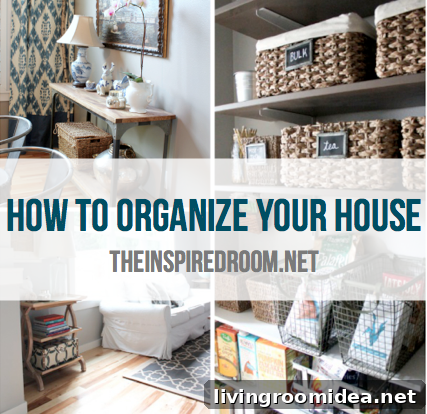
How to Organize Your Home
One of the most common questions I get—both here on the blog and in person—is how I organize my home. It’s a great question, and the short answer is: keep systems simple. I don’t want to spend all my time managing the house, so my organizing approach favors easy, repeatable systems that help the whole family function without stress.
Before you start any organizing, remember a crucial rule: you can’t organize excess clutter. If you have too much stuff, no system will truly work. Begin by removing what you don’t need, use, or love. Once you pare down, you can design organization strategies around the items you actually use daily.
A core part of my system is giving everything a home. When built-in storage is lacking, baskets and containers become the “home” for items—grouping like things together, hiding unattractive packaging, and making items easy to find. Here I’ll walk through how I use containers room by room so you can adapt these ideas to your own house.
Pantry
In our pantry makeover I used baskets, crates and jars for different purposes. Woven baskets hold bulk items—bags of grains, beans, or bulk oatmeal—and glass jars on the accessible shelves are refilled from those baskets when needed. Chalkboard labels on upper shelves help identify contents that are hard to see from below. Wire crates and metal baskets keep snacks visible and accessible so food gets eaten before it goes stale, which helps reduce waste and keeps the pantry tidy. Larger crates store occasional items like extra condiments bought in bulk from warehouse stores and are labeled when their purpose becomes clear.
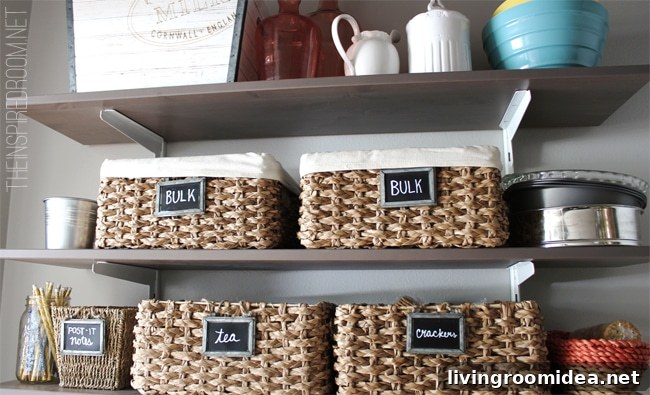
Baskets on the pantry floor hold items we don’t reach for every day—paper plates, disposable utensils, party supplies—while rarely used items move to garage storage. Metal bins can even disguise a dog food container, keeping the room neater than a large open bag.
Living and Dining Areas
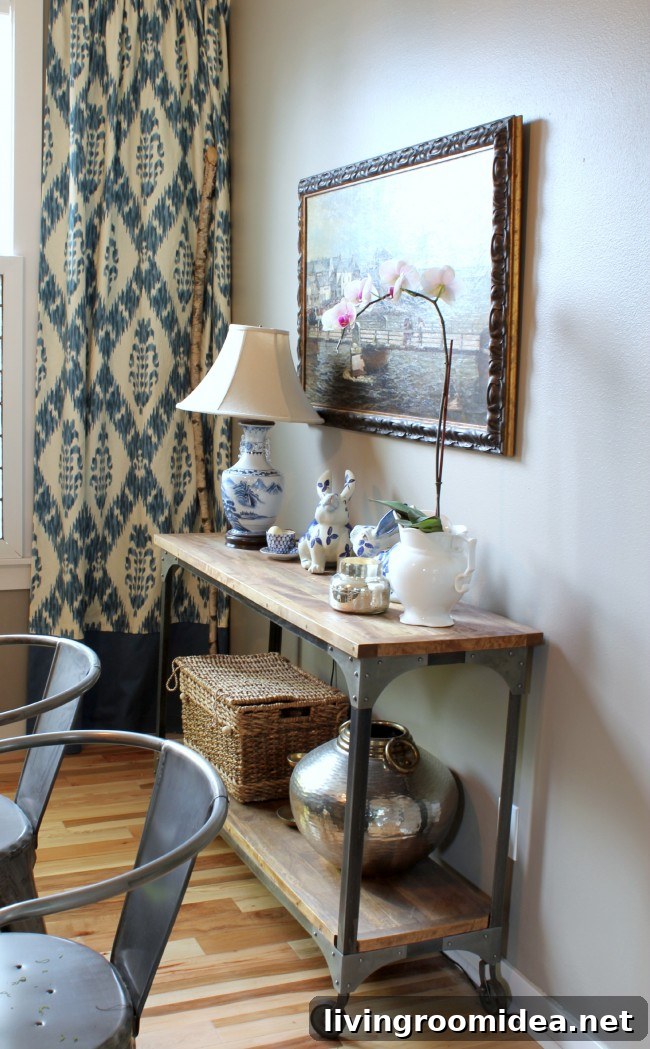
In main rooms I use taller woven baskets to store throw blankets and extra pillows. They add texture as decor while keeping cozy items within reach for guests. In the dining room, baskets hold seasonal decor or entertaining supplies when we don’t have built-in cabinetry. Lidded baskets are especially useful for storing seasonal pieces like vases or themed accents—stackable and tidy, they keep seasonal items accessible without creating clutter.
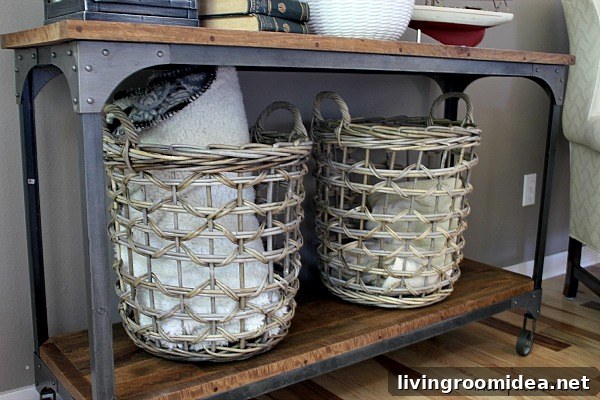
For extra serving pieces or silverware used only at gatherings, baskets make retrieval fast and keep counters and drawers free for everyday items. They are a practical substitute when you don’t have a butler’s pantry or extensive built-ins.
Family Room
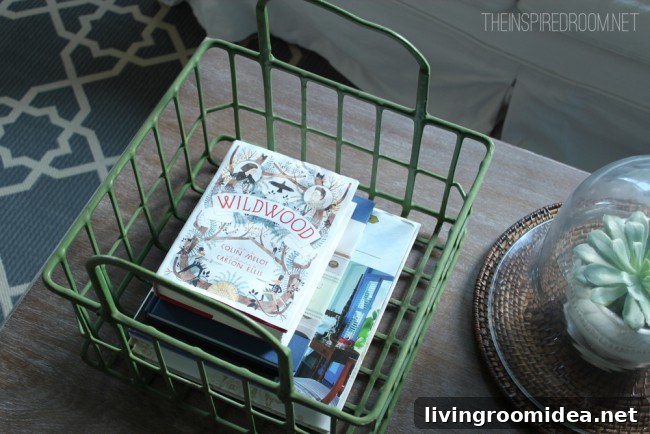
Books and magazines are visible and loved in our family room, but without a library I use crates and baskets to corral them. A thrift-store wire crate works as both decor and storage on the coffee table, keeping reading material neat and giving a dedicated spot for remotes or napkins. Lidded boxes and small trunks are great for smaller loose items—phone cords, notepads, or office supplies—keeping tabletops tidy while still being attractive.
Office
My office uses lidded boxes from IKEA to store grouped supplies: manuals in one box, business cards in another, fabric samples in a third. Grouping by category keeps everything out of sight but easy to access when needed. Simple labels help, but even unlabeled boxes work because the contents are logical and stored near where they’re used.
Entry and Utility Spots
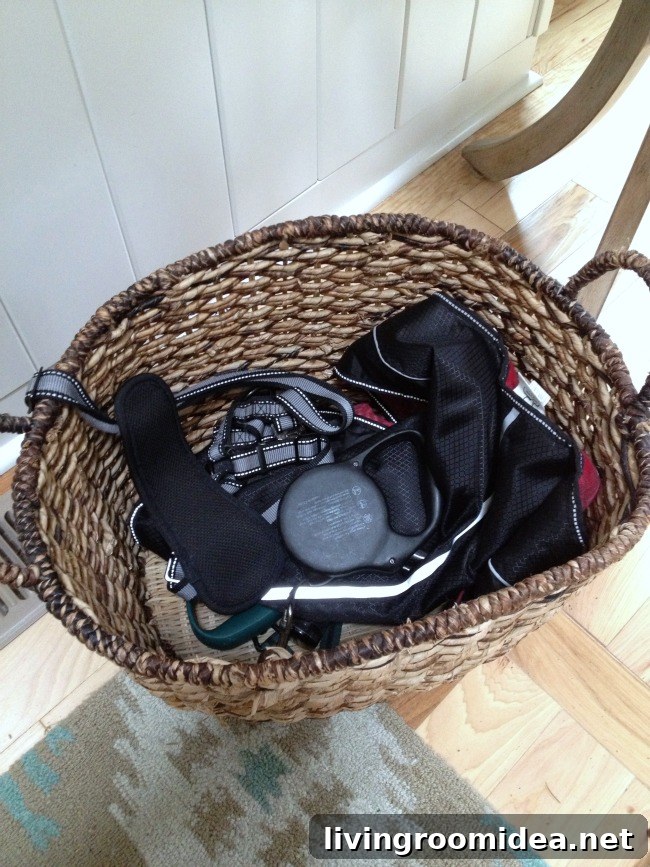
In the entry, an oversized basket holds shoes—practical when family members have many pairs and guests don’t need to remove theirs. A smaller basket by the front door collects dog leashes, harnesses, flashlights and other go-out items so they’re always handy. In the kitchen, a basket under the island stores potatoes and onions, and a wire basket by the sink holds hand towels so drawer space stays free for items that must be tucked away.
Baskets aren’t just pretty—they’re versatile, affordable, and easy to repurpose as your needs change. I keep an eye out for baskets and crates I like and bring them home to solve whatever storage need I have that season.
Practical organizing tip: Group like items with like items, and give each group a clear home. Don’t just shove random things into a container—decide the purpose of each basket or box so it makes sense to everyone in the household.
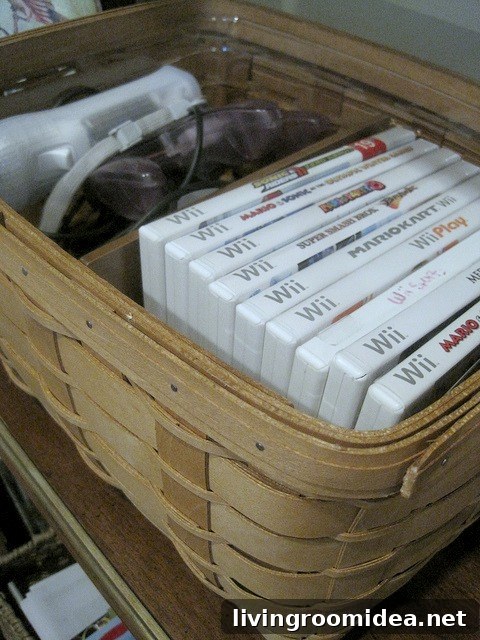
You might wonder how I remember where things are. The secret is simplicity: only a few baskets per room, each filled with related items and placed near where they’re used. Many containers are labeled, but even when they aren’t, it usually takes just a moment to find what I need because everything lives in a logical spot.
Do you give your items homes with baskets and bins? After you pare down, consider what tends to clutter your home and how a few thoughtfully placed containers could solve those issues.
Organizing didn’t come naturally to me, and it’s still a practice. Simplifying, grouping, and assigning homes to things has made our days easier and our home calmer. If you struggle with staying organized, start small: declutter first, then choose a few containers that work with your space and rhythm. Over time, those small systems add up to a home that functions better and feels more peaceful.