
Creating Visual Flow Room to Room
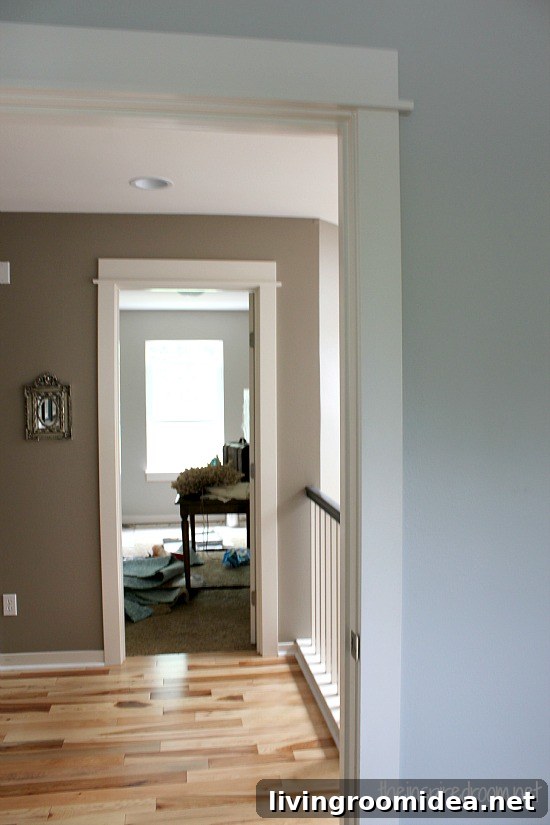
Ilove when rooms flow—when you can stand in one space and look through to a hallway or another room and everything feels cohesive rather than jarring or unfinished. My home doesn’t need to be perfect, but a sense of flow brings a calmness that matters to me. After a couple of years of painting rooms, we’re finally starting to see that continuity appear. There’s still more to do with furniture and styling, but progress feels really good.
Simple things like seeing consistent flooring connect rooms instead of mismatched carpet, and noticing color relationships from one doorway to the next, make my heart do a little happy jig. Foundational elements—walls and floors—set the tone for the whole house. When those are right, everything else tends to fall into place.
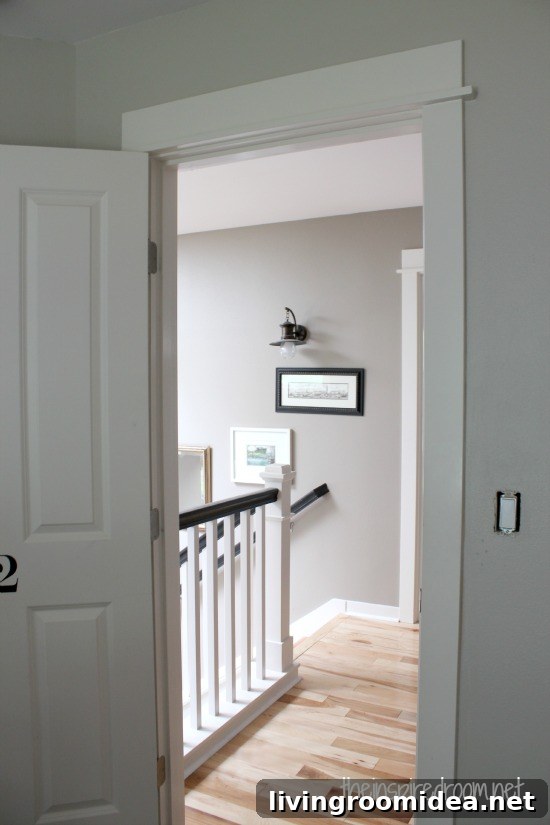
The photo above shows my middle daughter Courtney’s room looking out toward the stairway and upstairs hall. She painted the room over the weekend, and it’s now the same base color as the hall—Studio Taupe—only lightened with roughly two parts white to one part Studio Taupe. In person the room reads noticeably lighter than the hall, and we’re really pleased with the result. You can see the subtle variation better in the following image.
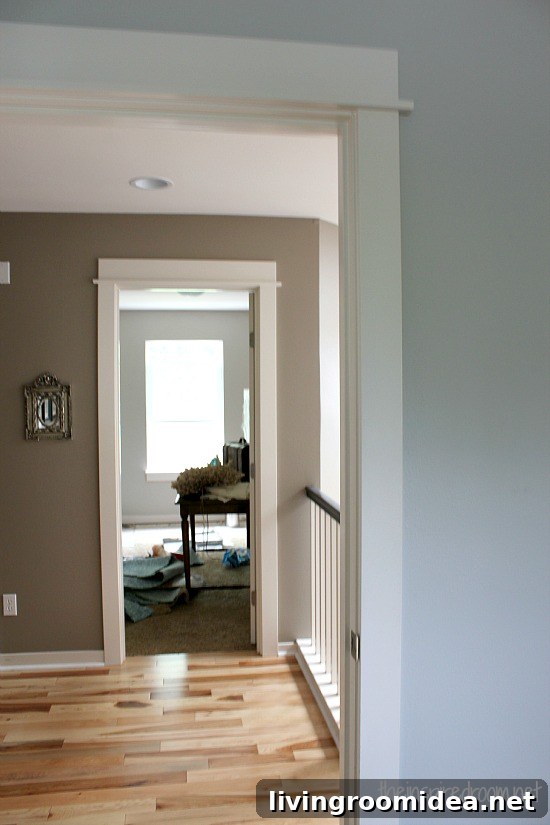
Paint tip: Take a darker color used in one room and add white to create a complementary, lighter shade for an adjacent space. Using the same paint brand and sheen—satin in our case—helps the mixed color apply smoothly and appear consistent across surfaces.
The picture above also shows how the bedroom, painted a lightened blue-gray (Glidden Wood Smoke, lightened), transitions to the hall and into my daughter’s room. Wood Smoke, even when lightened, reads differently than Studio Taupe, but the mix of a brown-based gray with a blue-based gray creates a pleasing, subtle variation. I’ll share more bedroom photos later, but I’m already happy with how it’s coming together.
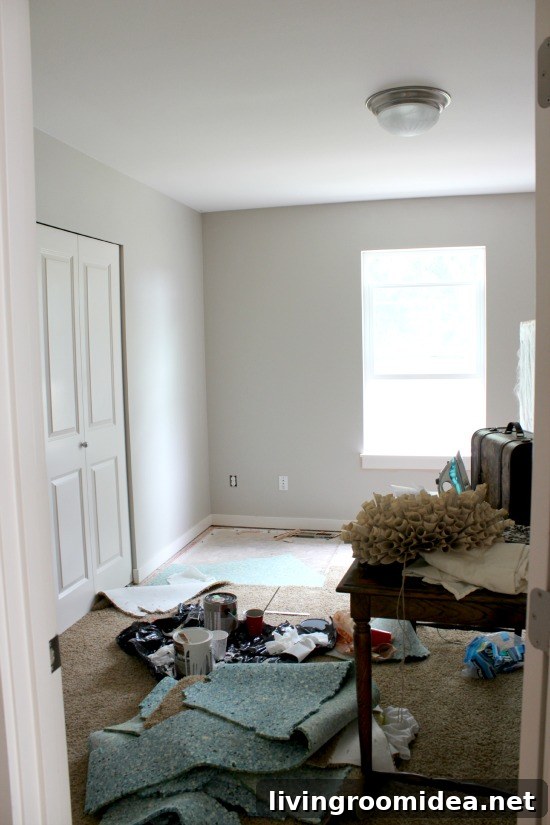
On Monday we’re having the room measured for new, affordable carpet, which will further complete the look at the top of our stairs. Reworking this bedroom also clears the way for a new sectional in another room. My daughter has moved bedrooms twice since we moved here, and she’s returning to her original room so we can convert the larger bedroom into an upstairs family TV and hangout space for our son and his friends.
As a decorating note, rooms don’t have to be identical to achieve visual flow. While painting every room the same color—or keeping everything white—would create immediate uniformity, I prefer a bit more variety. Subtle shifts in tone or a few bolder, unexpected rooms keep movement through the house interesting. For example, a vibrant blue office can be a delightful surprise amid softer adjoining colors.
Beyond paint and floors, accessories, furniture placement, and fabrics play important roles in connecting spaces. Cohesive color accents, repeated textures, and thoughtful furniture alignment can guide the eye and maintain harmony even when rooms are different. I’ll talk more about those elements as we bring furniture and accessories into the newly painted spaces. We’re getting closer to that stage and I can’t wait.
Do you like your house to flow from room to room?
How do you achieve that flow—do you prefer consistent color throughout or do you mix things up?