
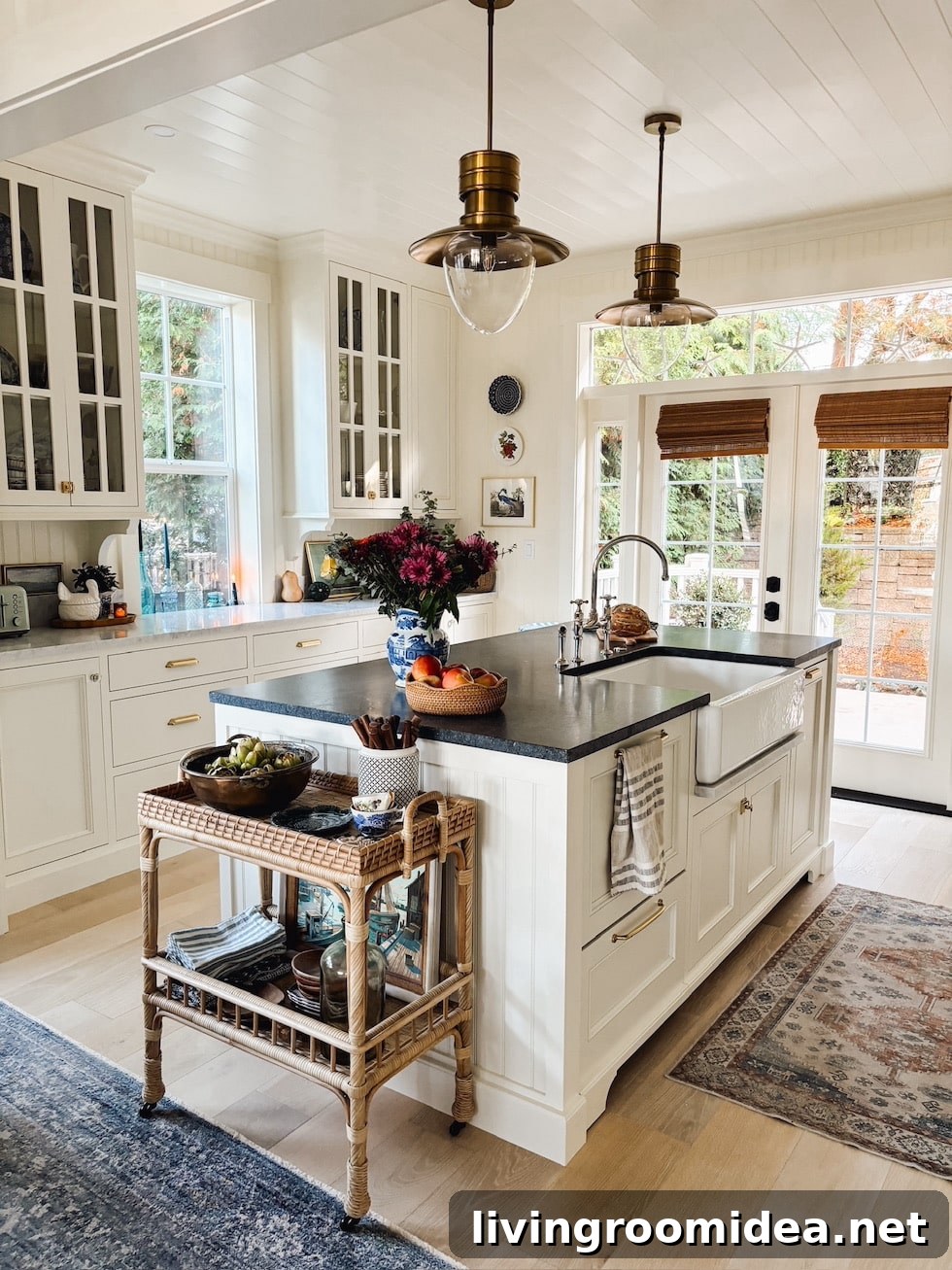
Welcome to our Coastal Cottage Kitchen Reveal. After months of planning and a nine-month renovation, we’re excited to share the finished kitchen and dining area. It feels “done enough” to finally invite you in for a proper tour.
We moved to this small coastal cottage on a Washington island two years ago and immediately fell in love. The house is cozy and just right for us as empty nesters, and it’s within walking distance to the beach. Over the last two years we planned updates and then added a tiny cottage for my parents while reworking our main floor to make everything function better for our family.
In the redesign we relocated the kitchen into the former dining room. That swap allowed us to add more cabinetry, counter space, and better traffic flow between the main areas without changing exterior walls. The result feels brighter and more functional while staying within the original footprint.
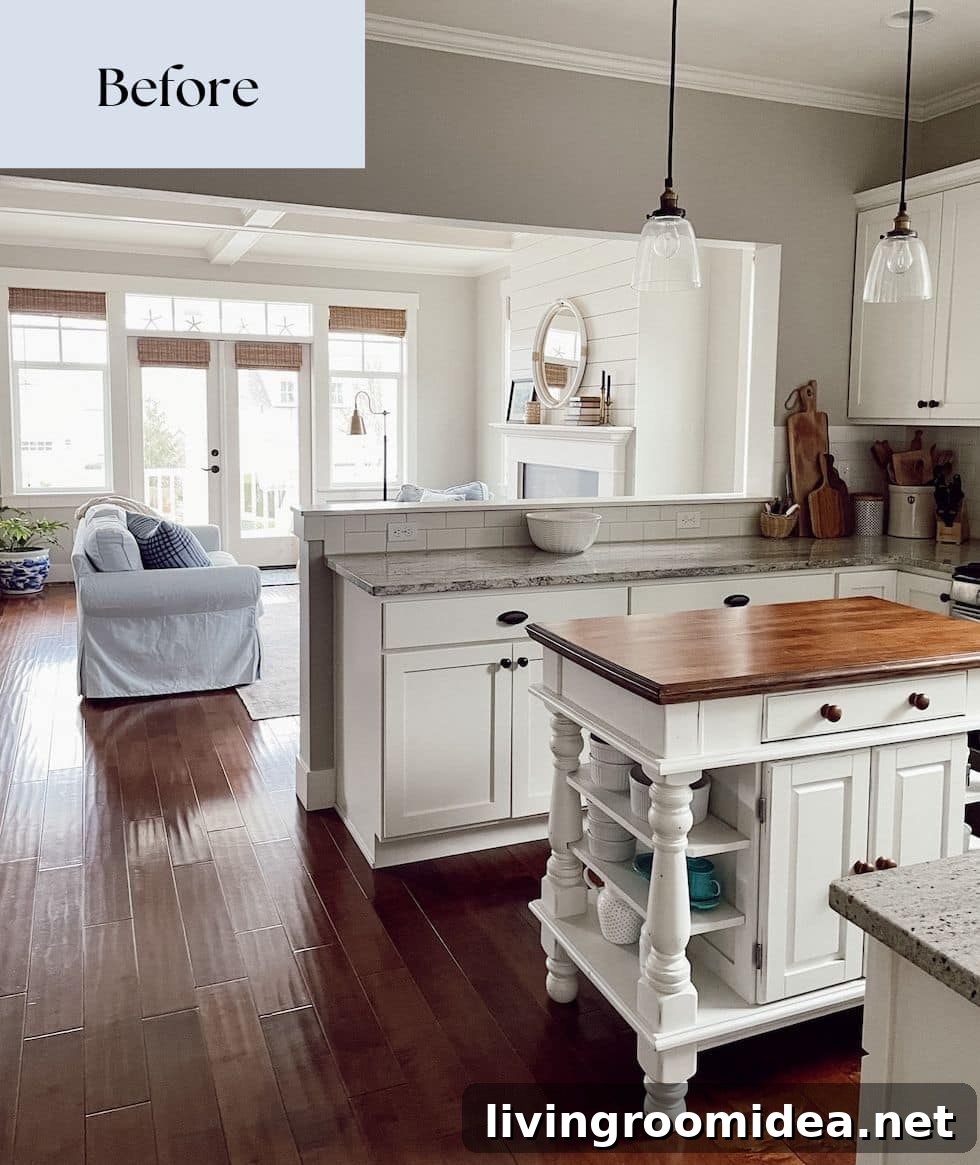
Below you’ll find after photos with a few before views so you can see the transformation. This post is part one; I’ll share more details and photos in upcoming posts. A full source list appears at the end.
Below is a short video of our kitchen, then scroll down for all the photos and details!
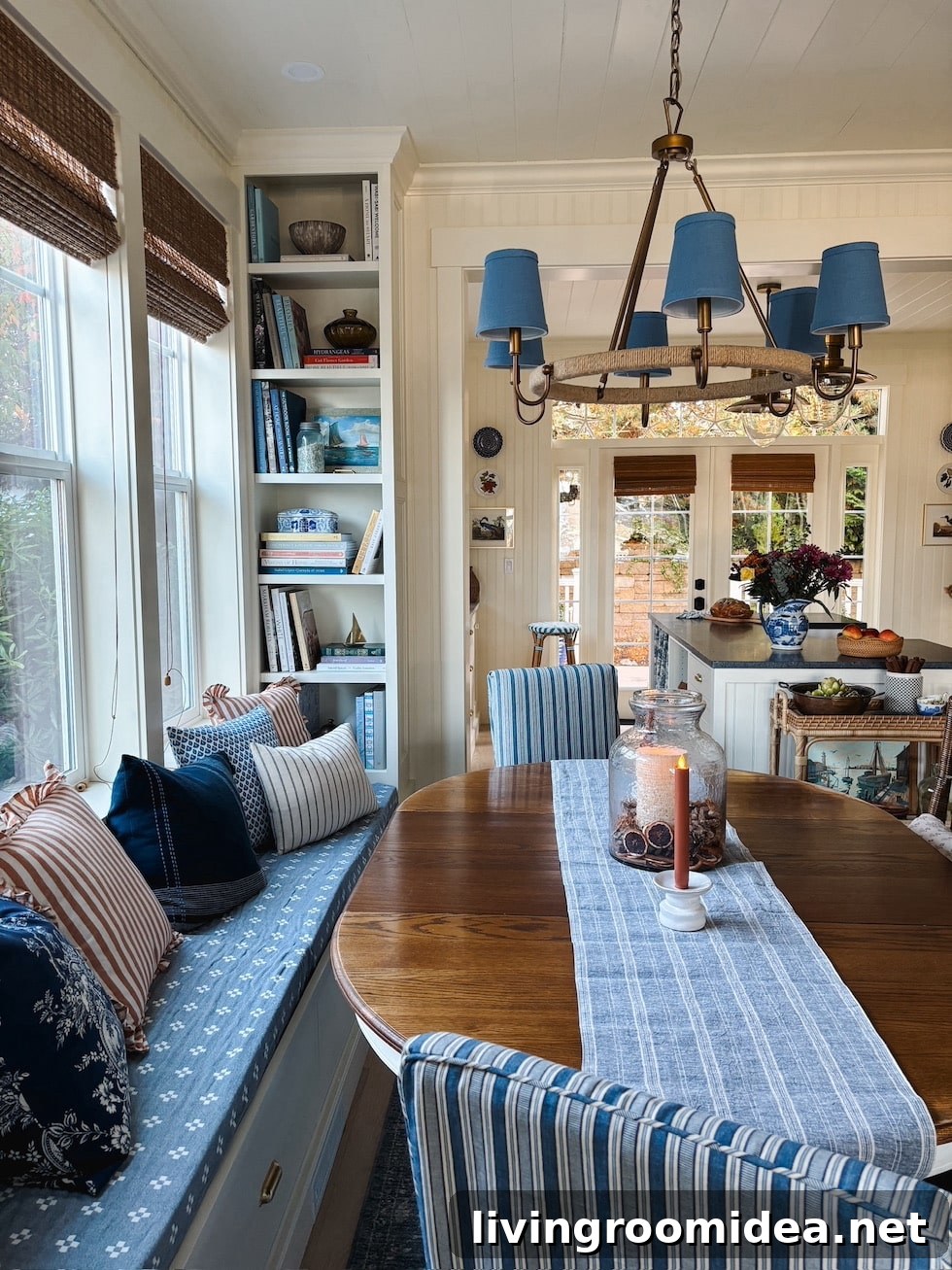
We kept all work inside the existing footprint. By moving the kitchen into the former dining room we opened up better sight lines and added practical storage. We also raised two low headers and slightly widened the openings between rooms to let in more light and improve flow while keeping each area cozy.
We installed French doors and a transom on the back wall to access a new deck, which brought in much more natural light than the two small windows that used to be there. The side window that once belonged to the dining room remains in place and the counters run across it—typical of older homes where windows sit a little low.
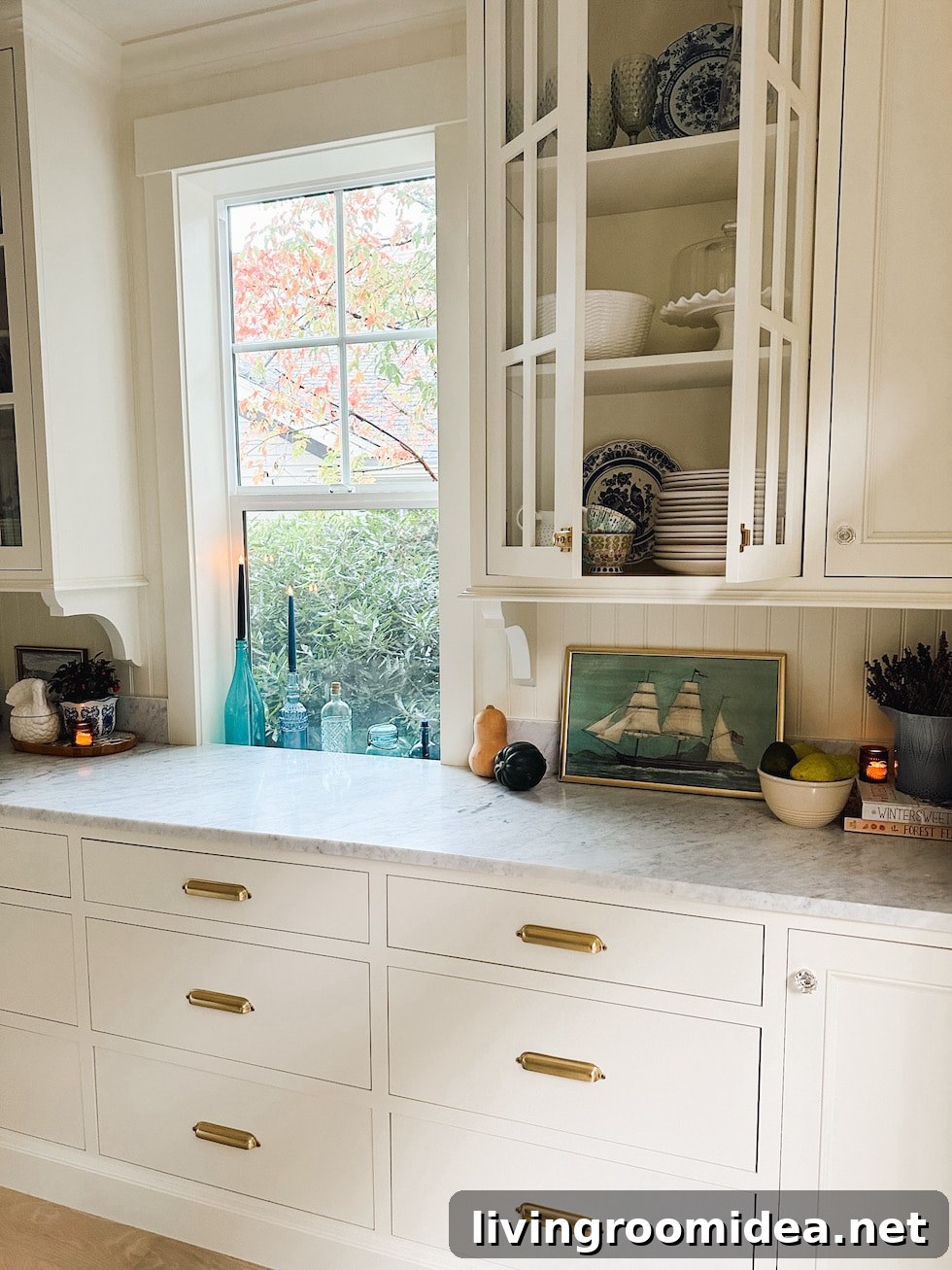
Removing the previous peninsulas freed up floor space in the kitchen, dining and living rooms. The new layout feels more open and comfortable for everyday life and gatherings without increasing square footage.
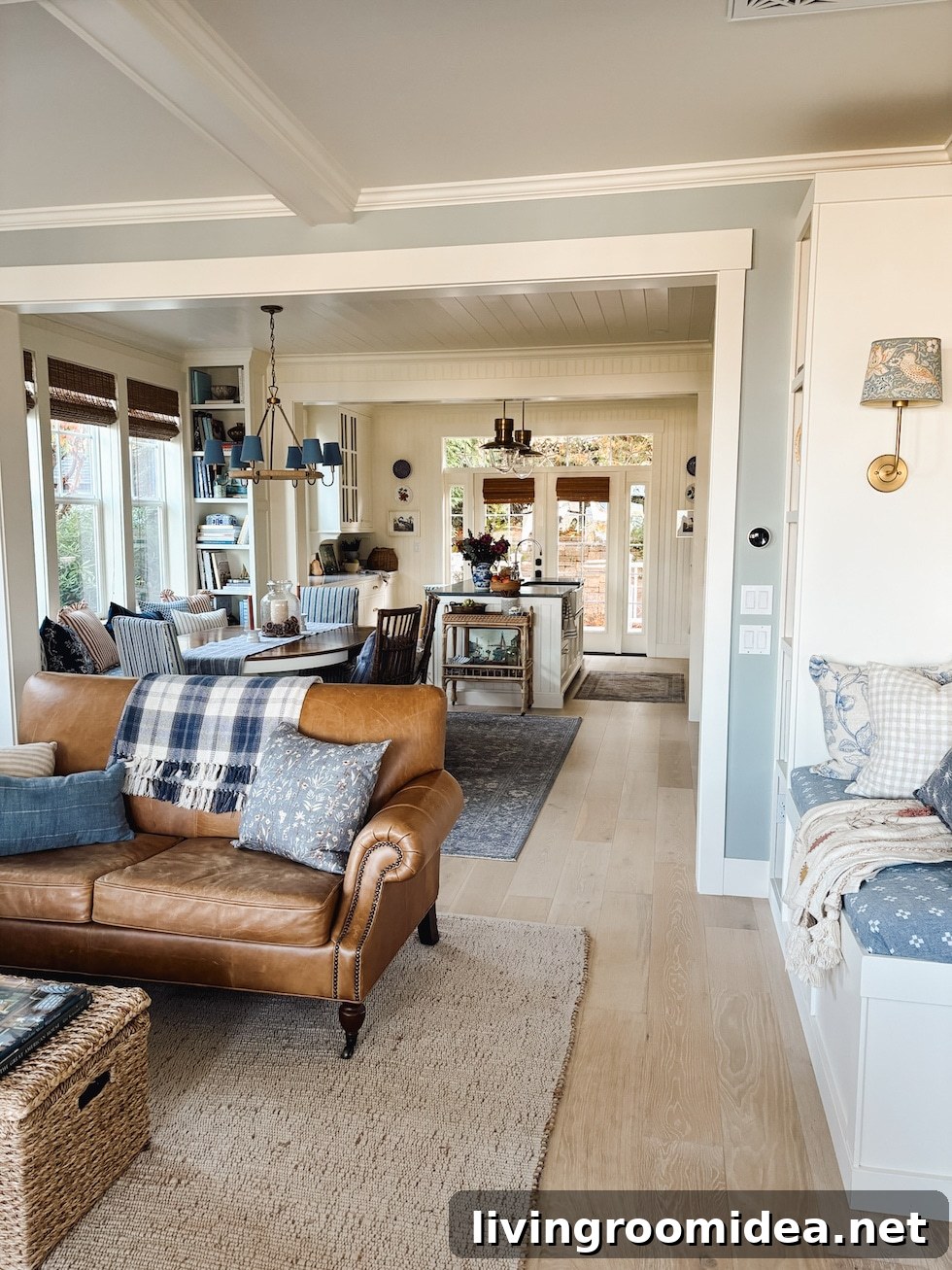
We expect to host many family gatherings—three adult children, a grandchild on the way, and lots of extended family—so creating flexible, welcoming spaces was important. The new plan gives us more storage and comfortable room for people to gather while remaining a cozy 1900-square-foot home.
From the kitchen sink and island you can enjoy views of the water through windows in the dining and living rooms. Placing the sink to take advantage of those views also encourages conversation across the island and at the dining nook. We even built a small cubby with room for a stool so someone can sit and chat while we cook.
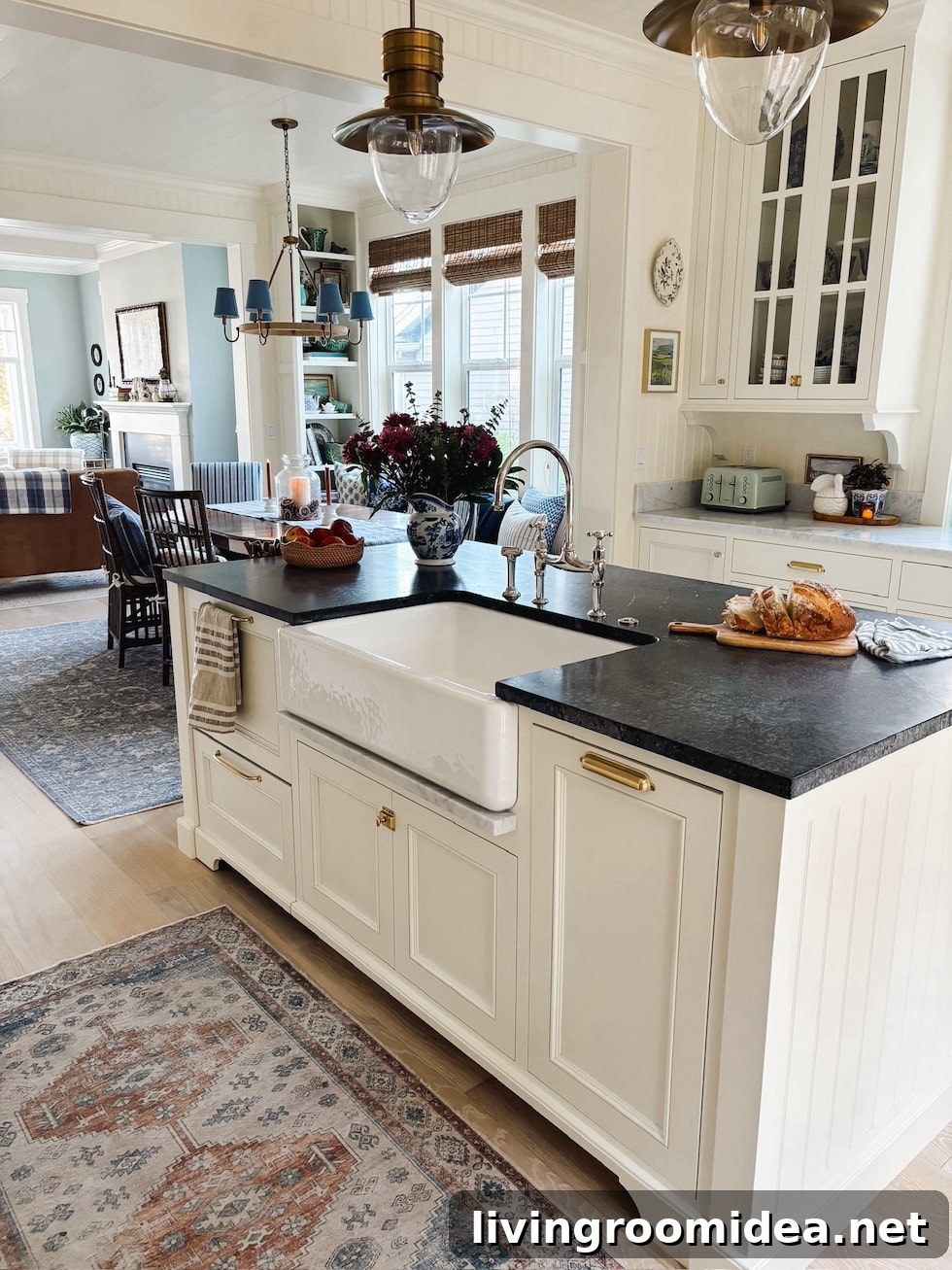
Because the main floor is compact and open, every wall was designed to be attractive from multiple viewpoints while maximizing storage. Appliances are integrated with cabinetry panels so they don’t dominate the sight lines; the range is the one bold focal point in the room and reveals itself as you approach the kitchen.
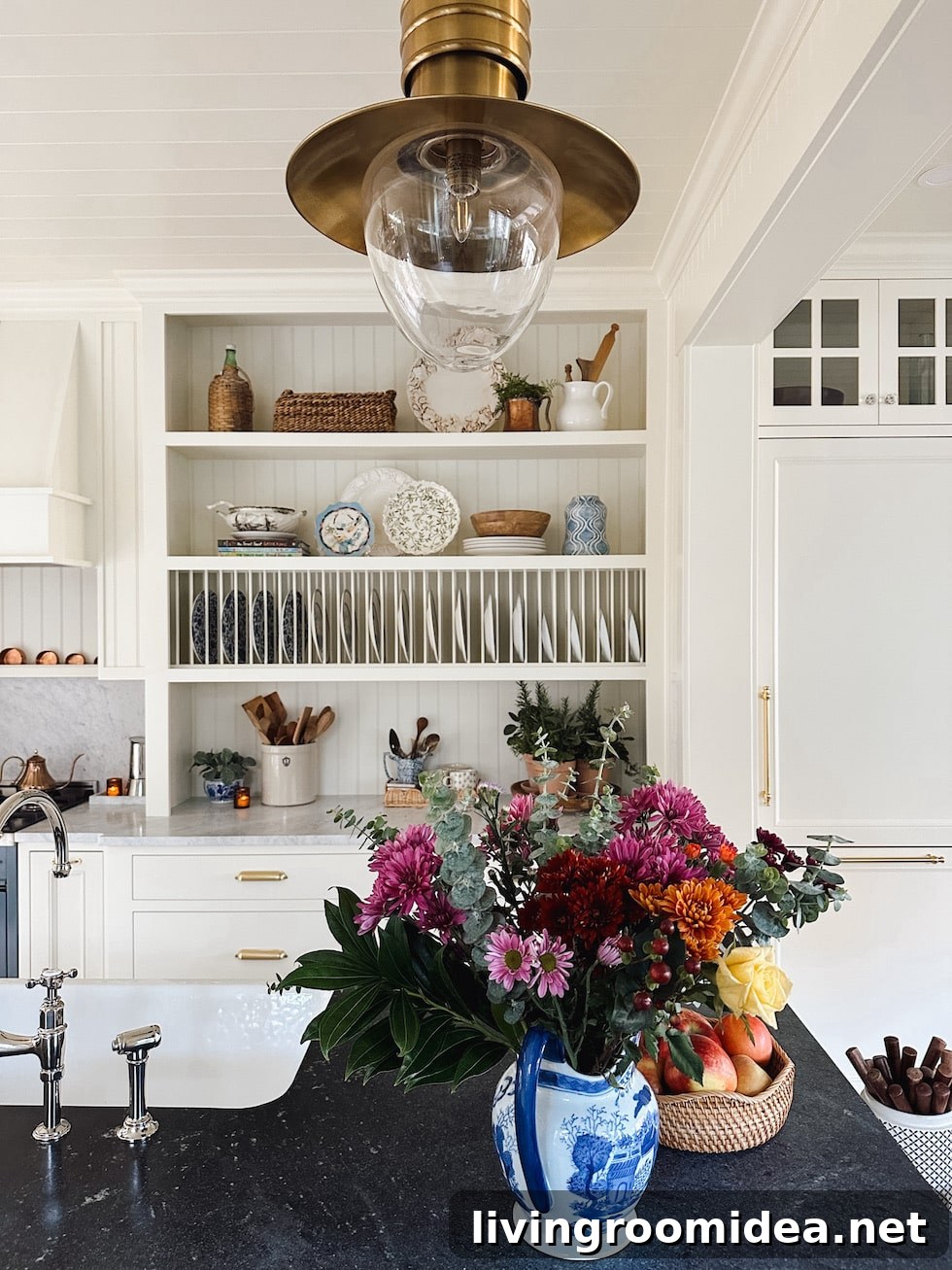
Instead of a buffet or china cabinet, we added a custom plate rack, display shelves, and glass-front cabinets to combine function with a display-worthy aesthetic. We also squeezed in small book nooks where the relocated windows allowed.
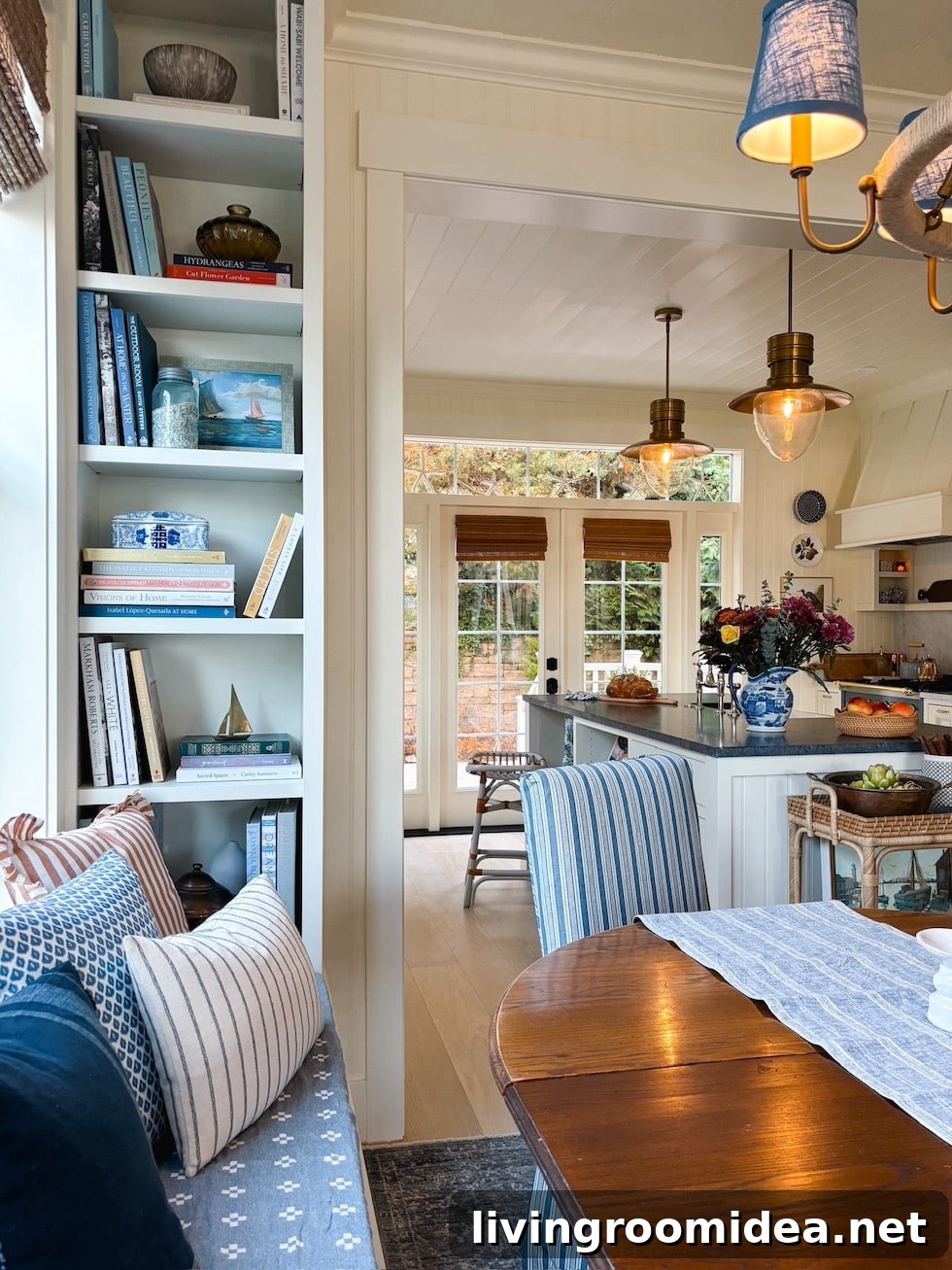
The dining bench currently has a temporary no-sew cushion that we made; it’s comfortable and provides under-bench storage in drawers. I’ll share details and a tutorial for the cushion in a future post.
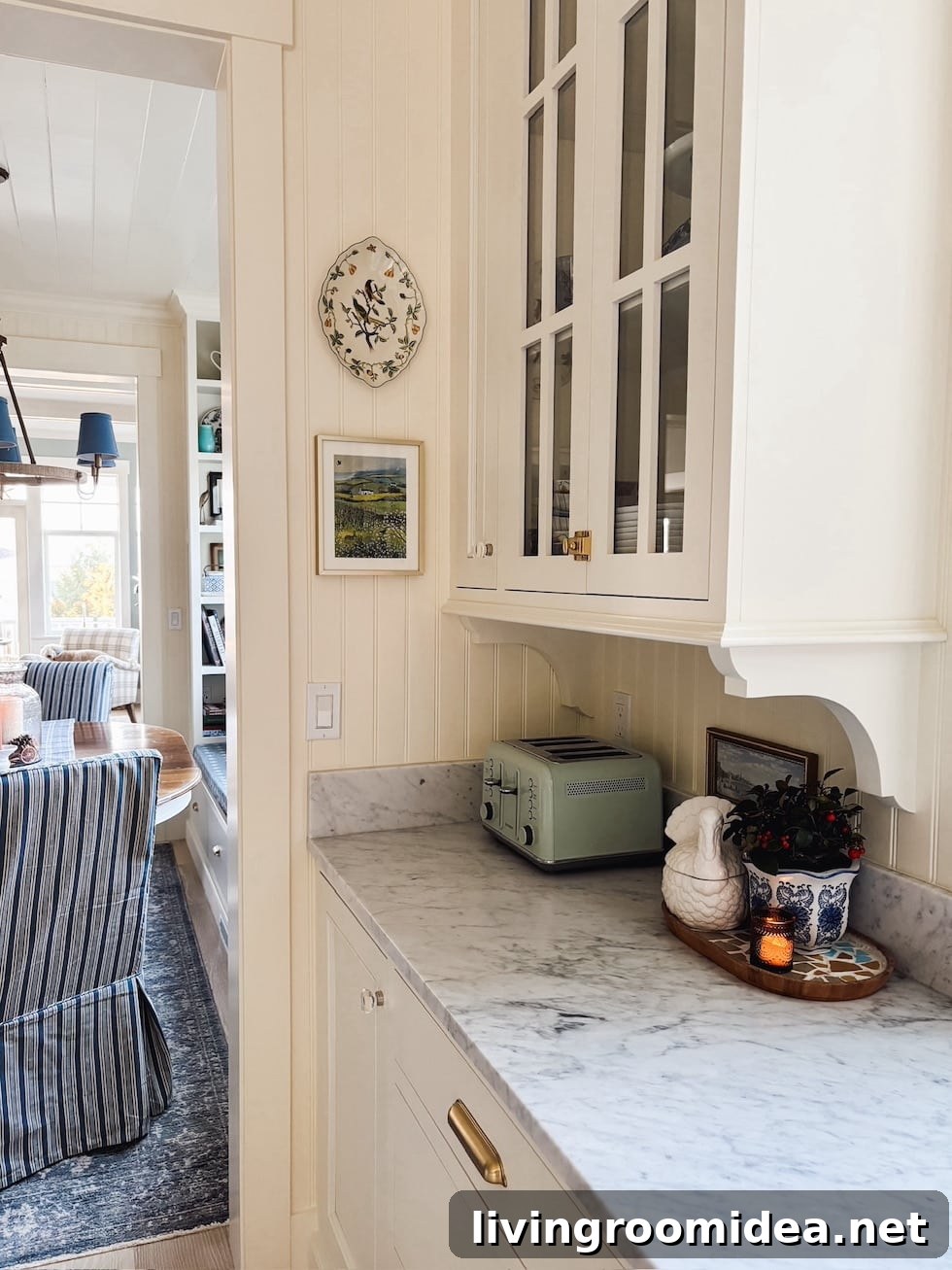
With many doors and openings to plan around, we maximized every wall for storage and presentation. The two glass cabinets flanking the window were intentionally chosen to create an attractive view from the front entry, keeping appliances out of sight and daily clutter minimized.
Long, unobstructed counter space provides an ideal buffet area and a place for family to help prep food. Having a generous secondary workspace outside the main cooking triangle makes hosting much easier.
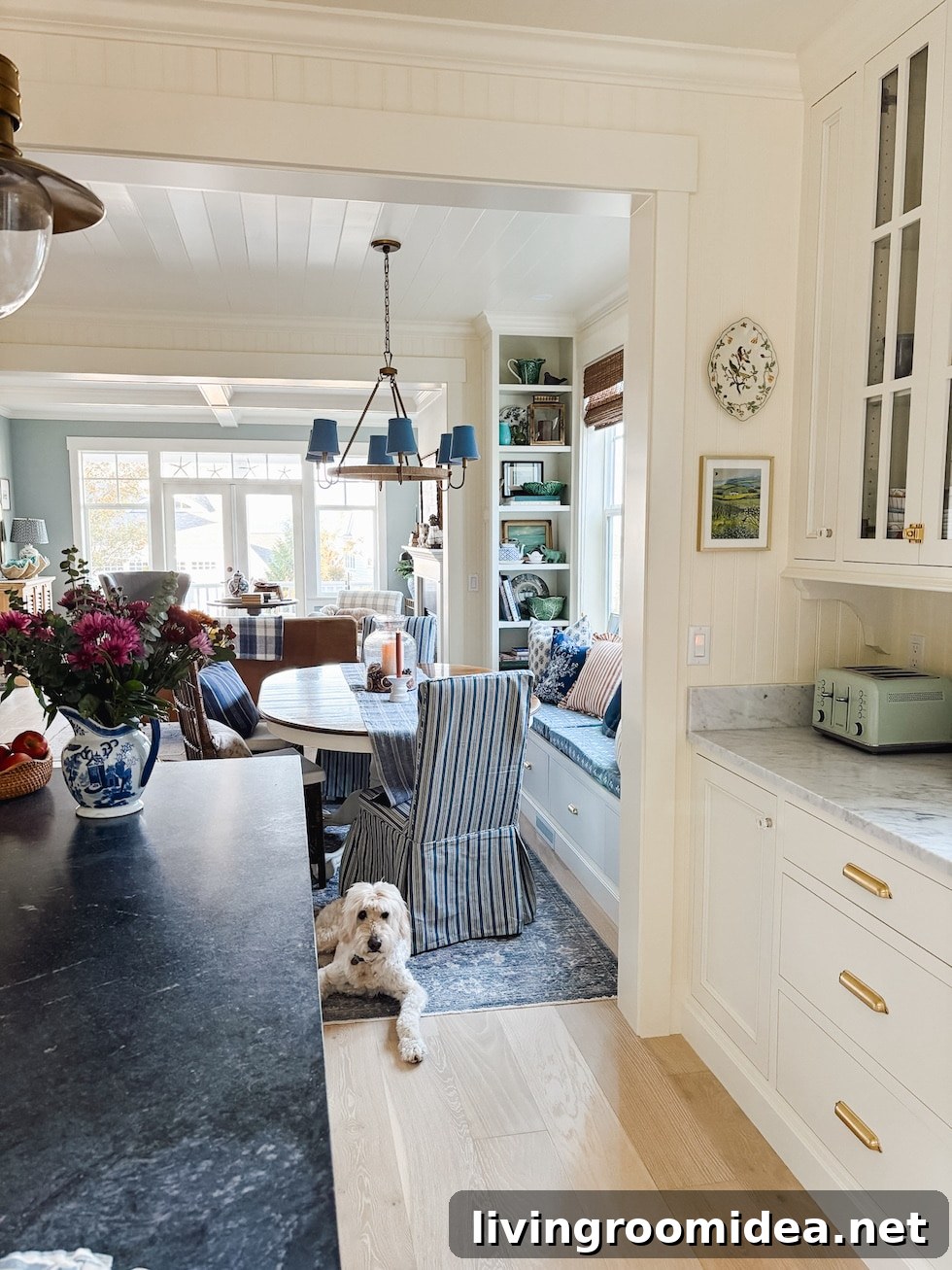
The dining nook seats the same number of people as our former dining room but leaves more circulation space. There’s room to add a second table when needed, and the area flows easily into the living room for relaxed gatherings.
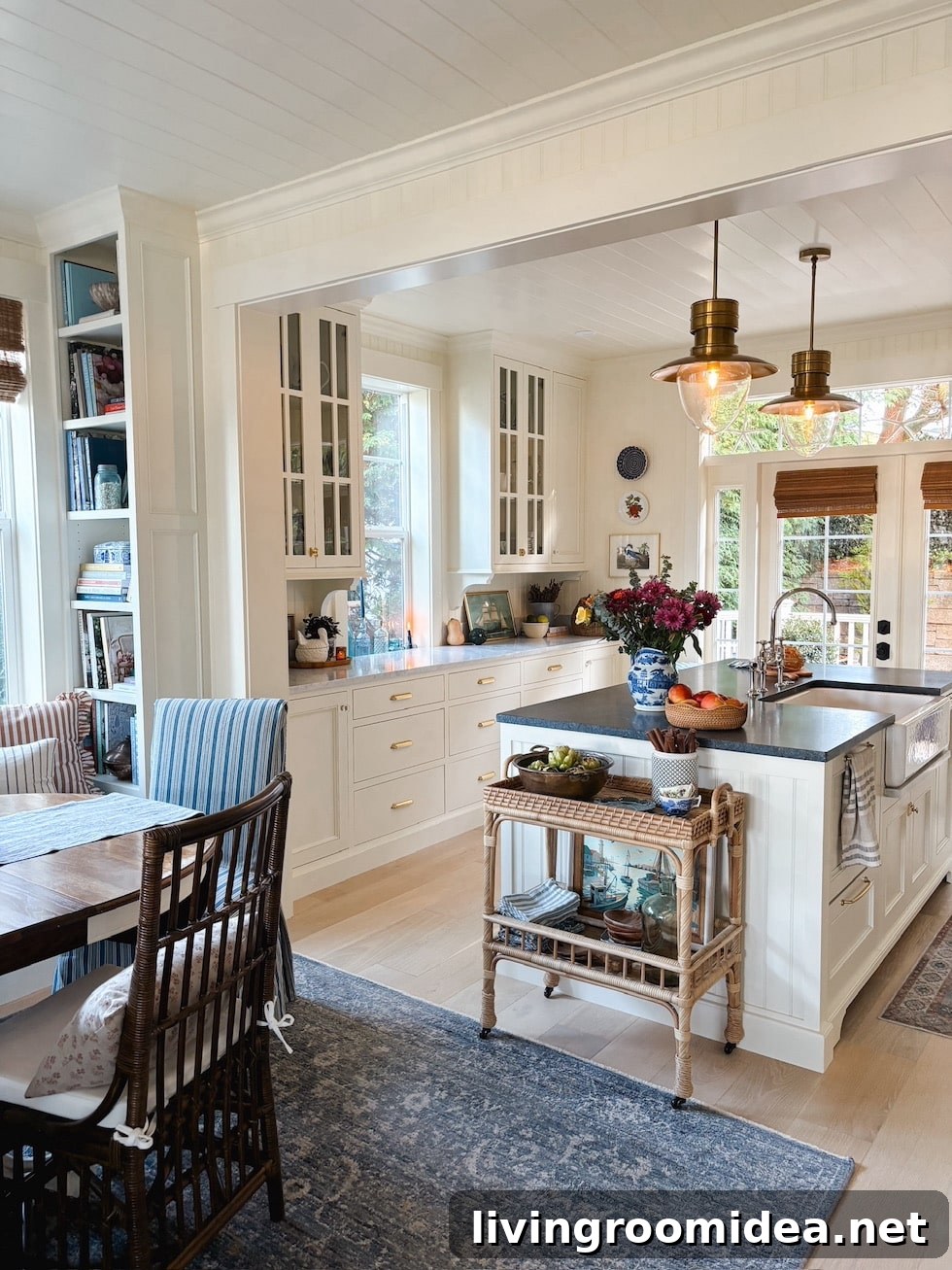
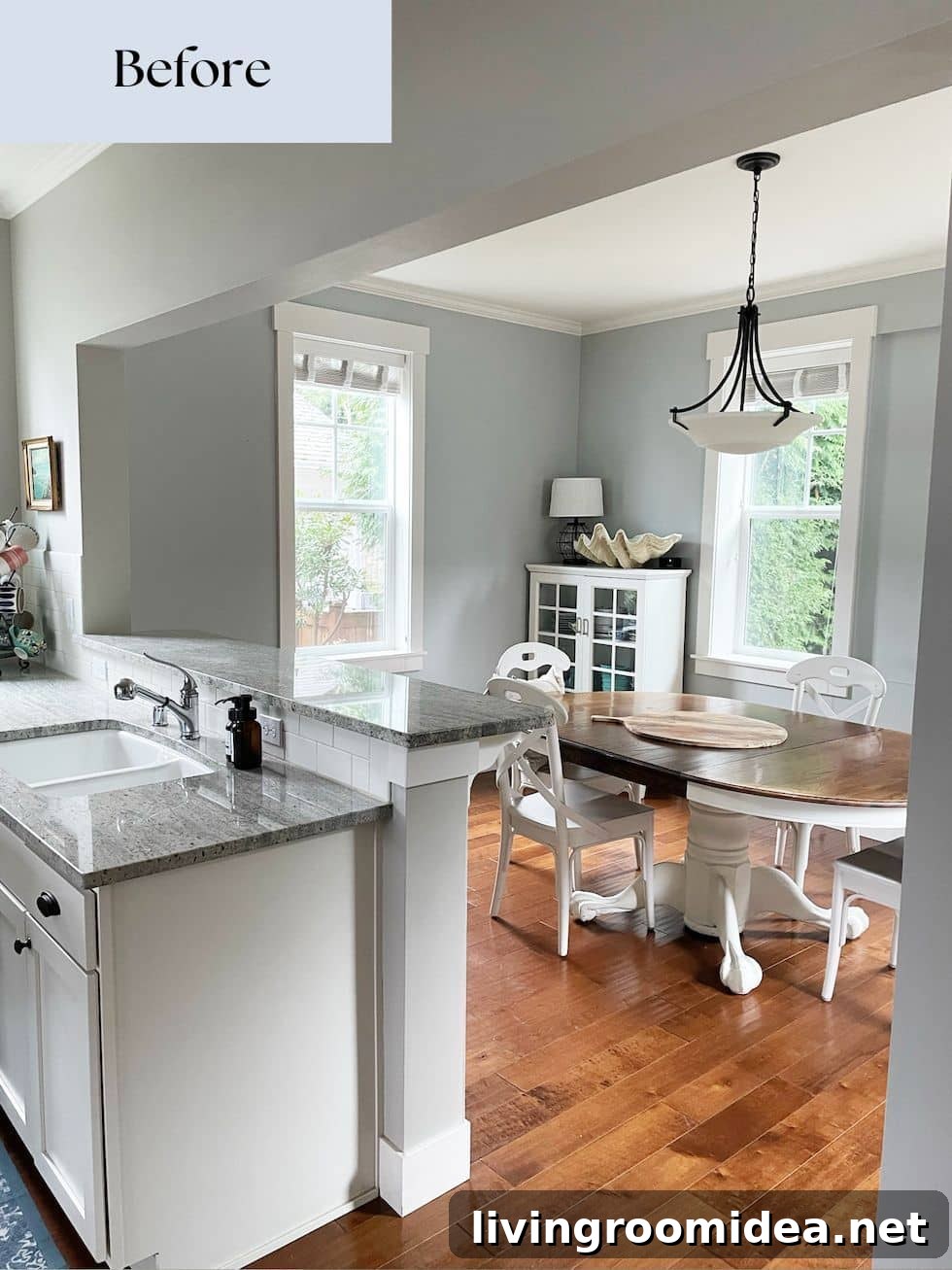
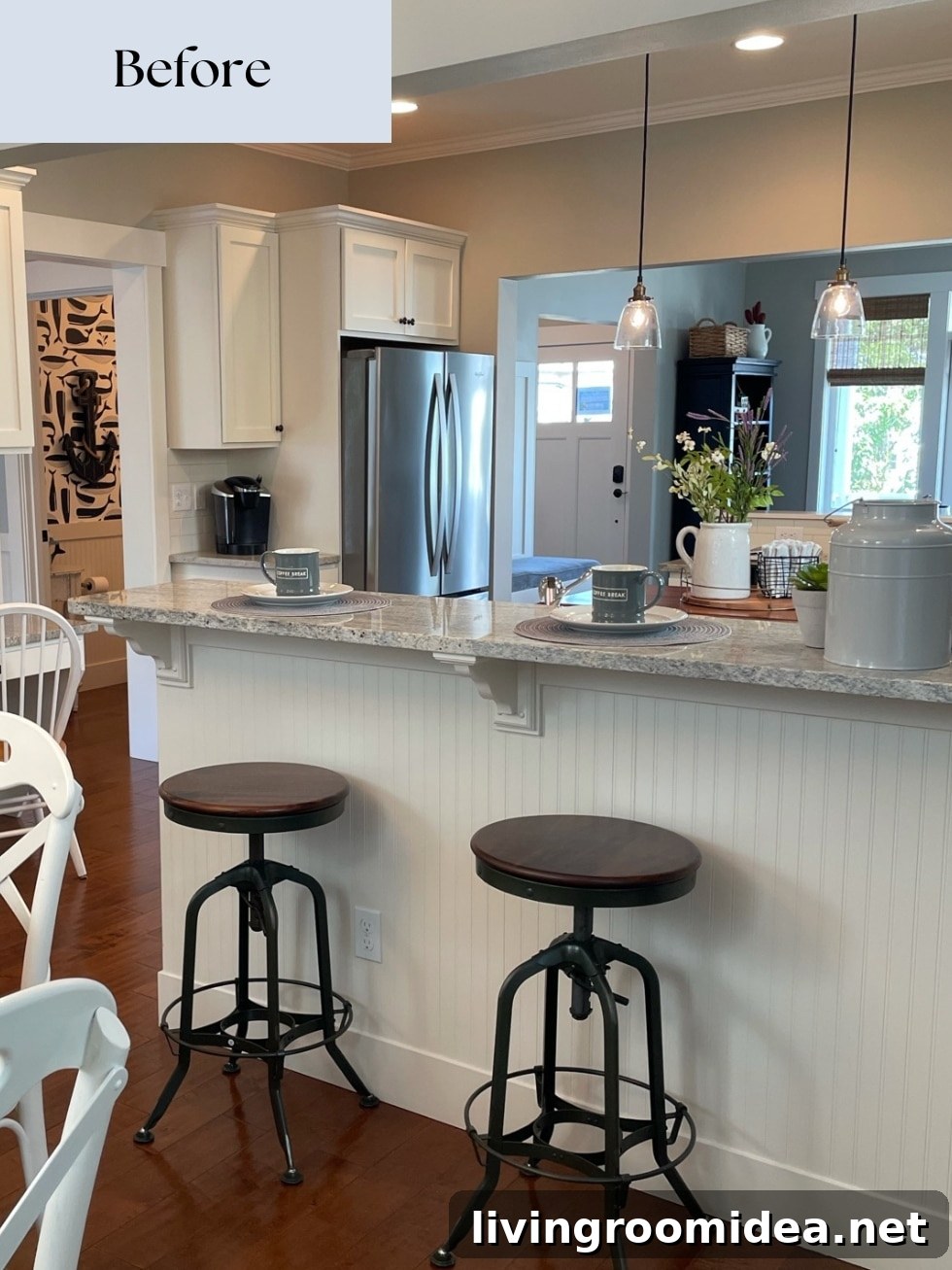
The living and dining rooms now connect in a way that makes traffic and socializing effortless. Furniture can be rearranged for conversation clusters and gatherings without feeling cramped.
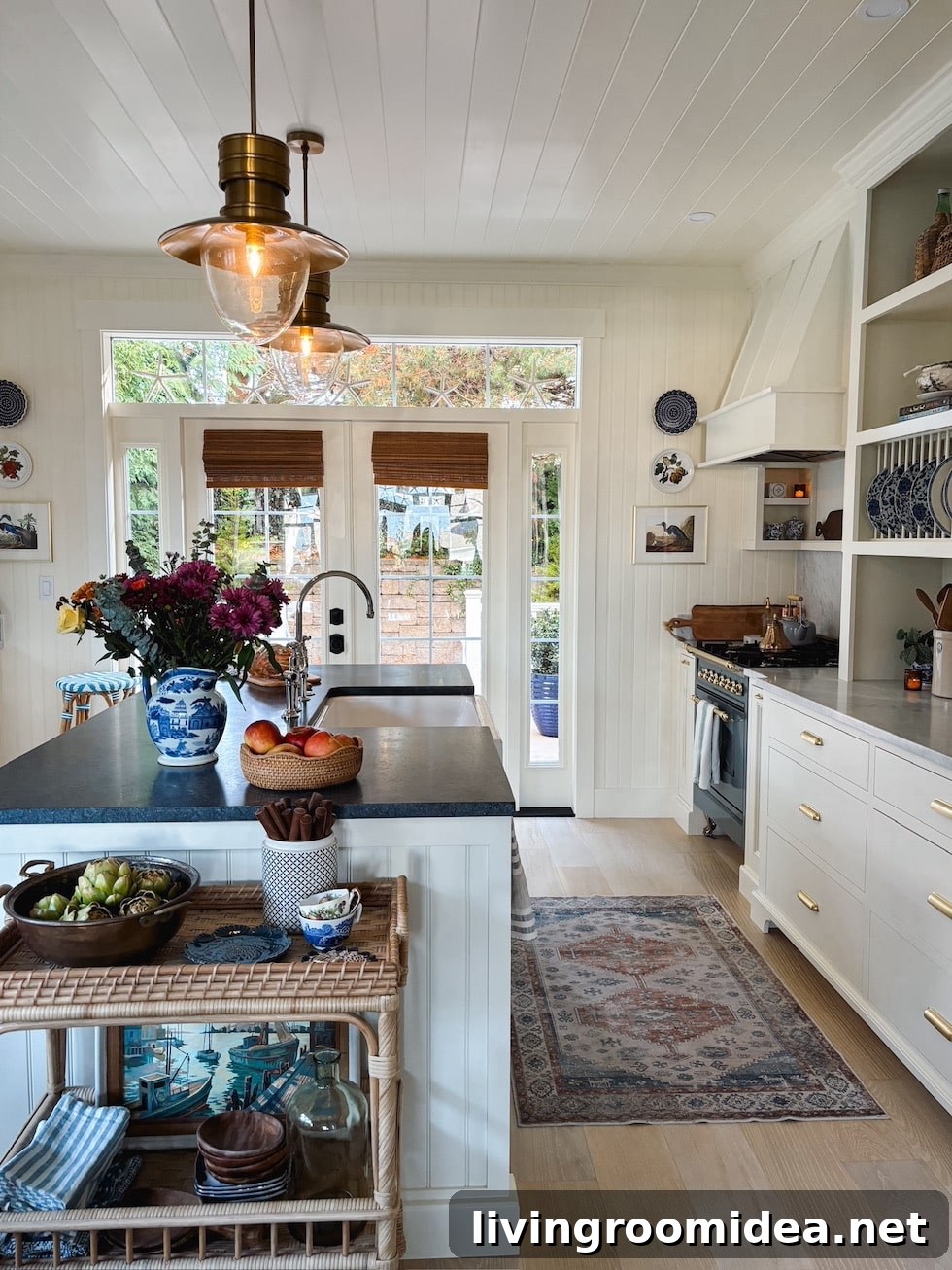
The kitchen is a joy to work in: multiple people can cook and prep simultaneously without bumping into each other. The expanded counters—honed Carrara on the perimeter and honed soapstone on the island—offer plenty of workspace. We left the soapstone un-oiled to retain its beautiful blue-green tone.
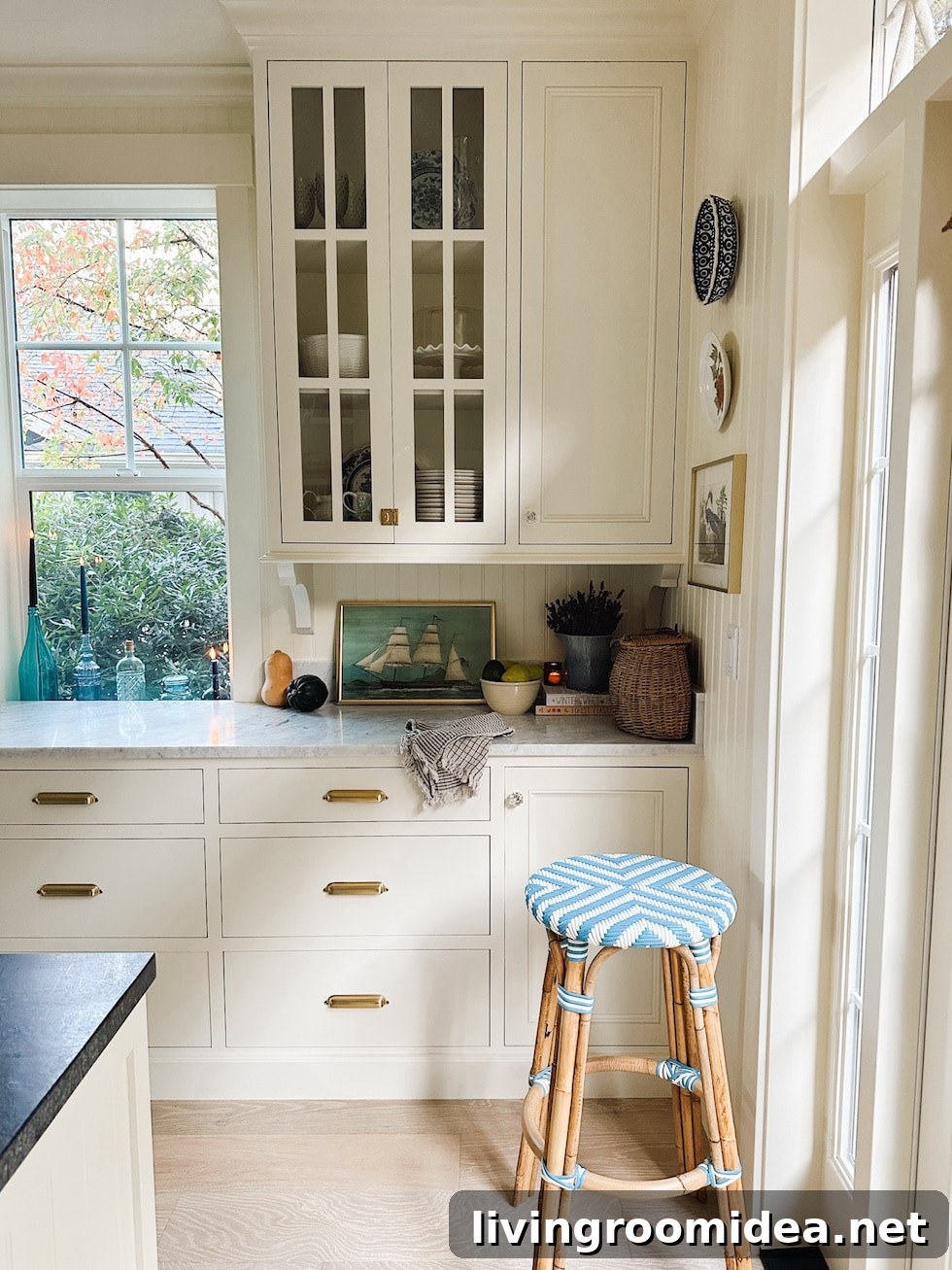
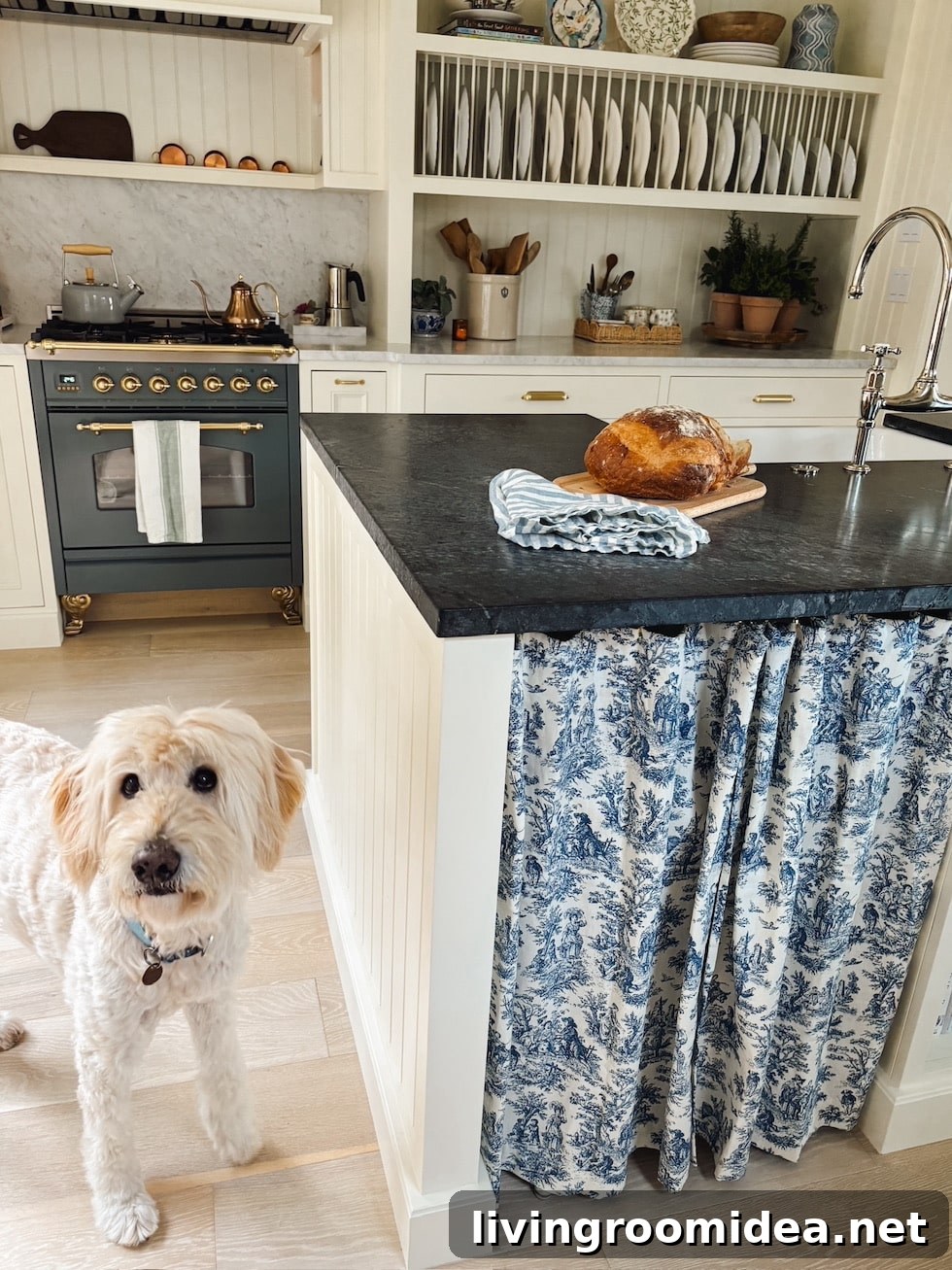
Our range, affectionately named Beatrix, sits as a special focal point in the kitchen. We also included practical touches like a small cubby with a cafe curtain that recalls our previous English Tudor kitchen. It’s a favorite spot for breakfast with a view to the backyard.
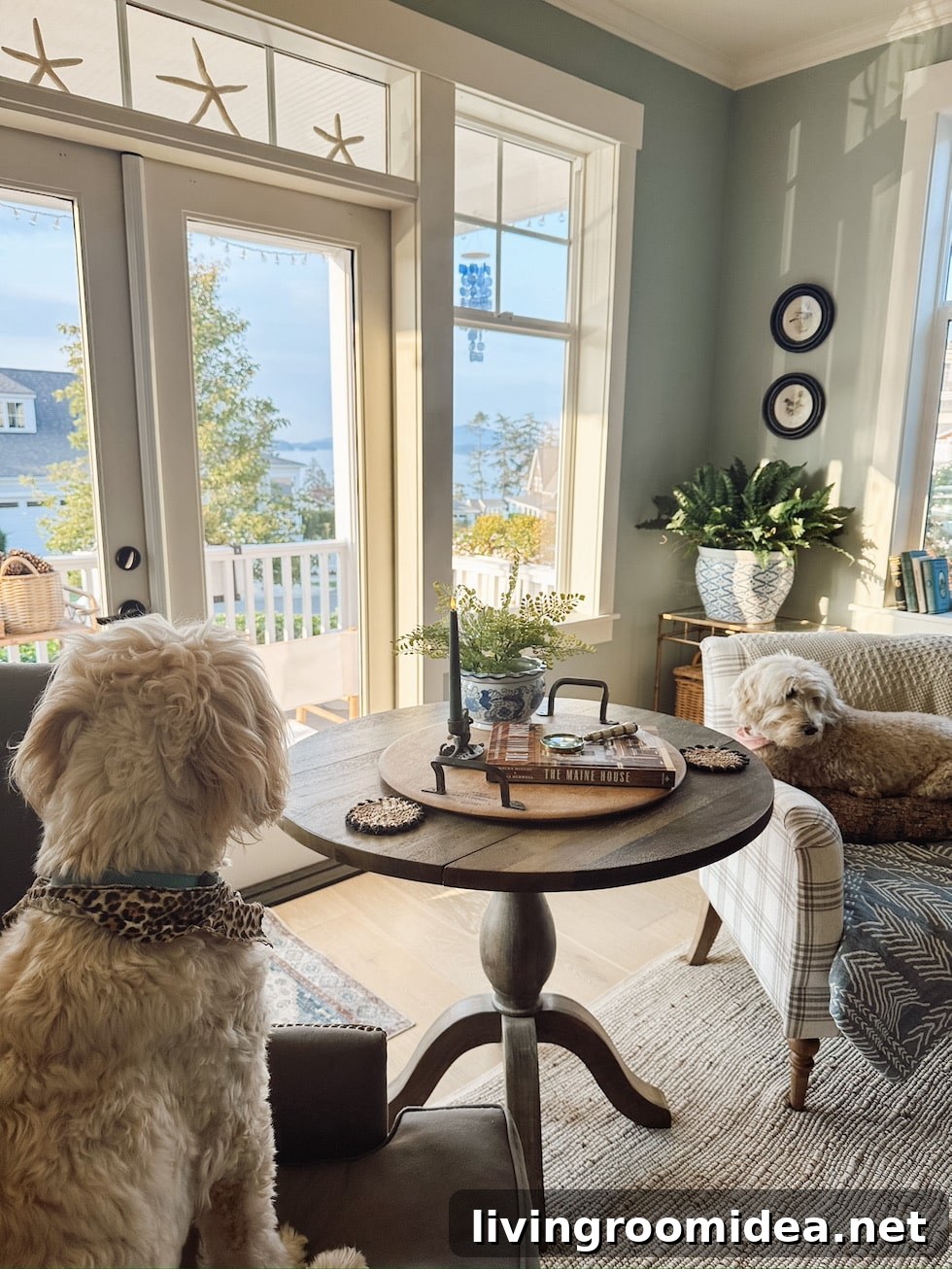
Jack (and Lily) are happy to have the house back together. New hardwood—European white oak—runs throughout the home, replacing older carpet and creating a brighter, beachy feel that ties the rooms together.
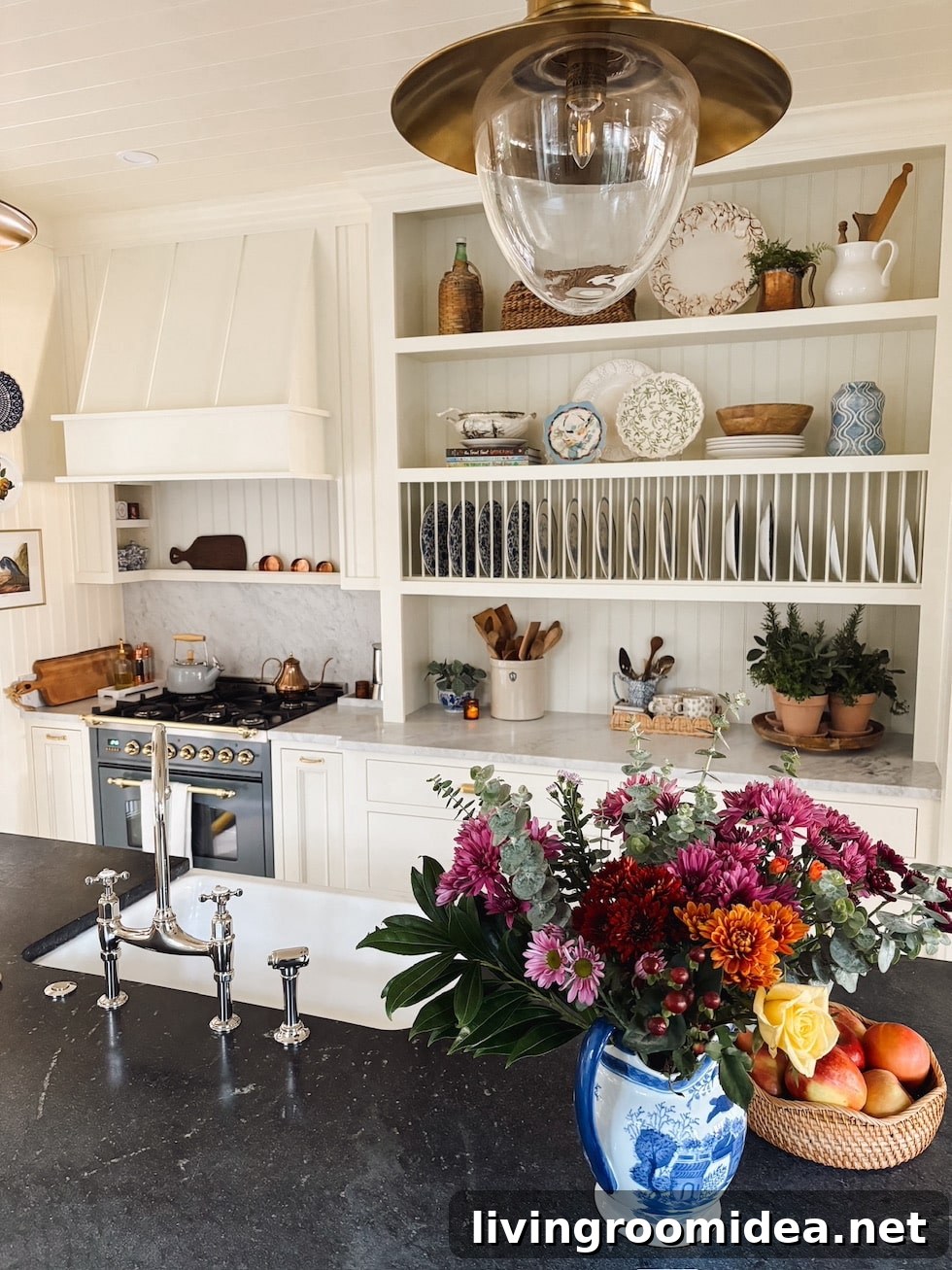
The faucet was my first purchase for this kitchen—I’ve missed the Rohl style since our English Tudor. I sourced it through deVOL, but a similar model is available elsewhere.
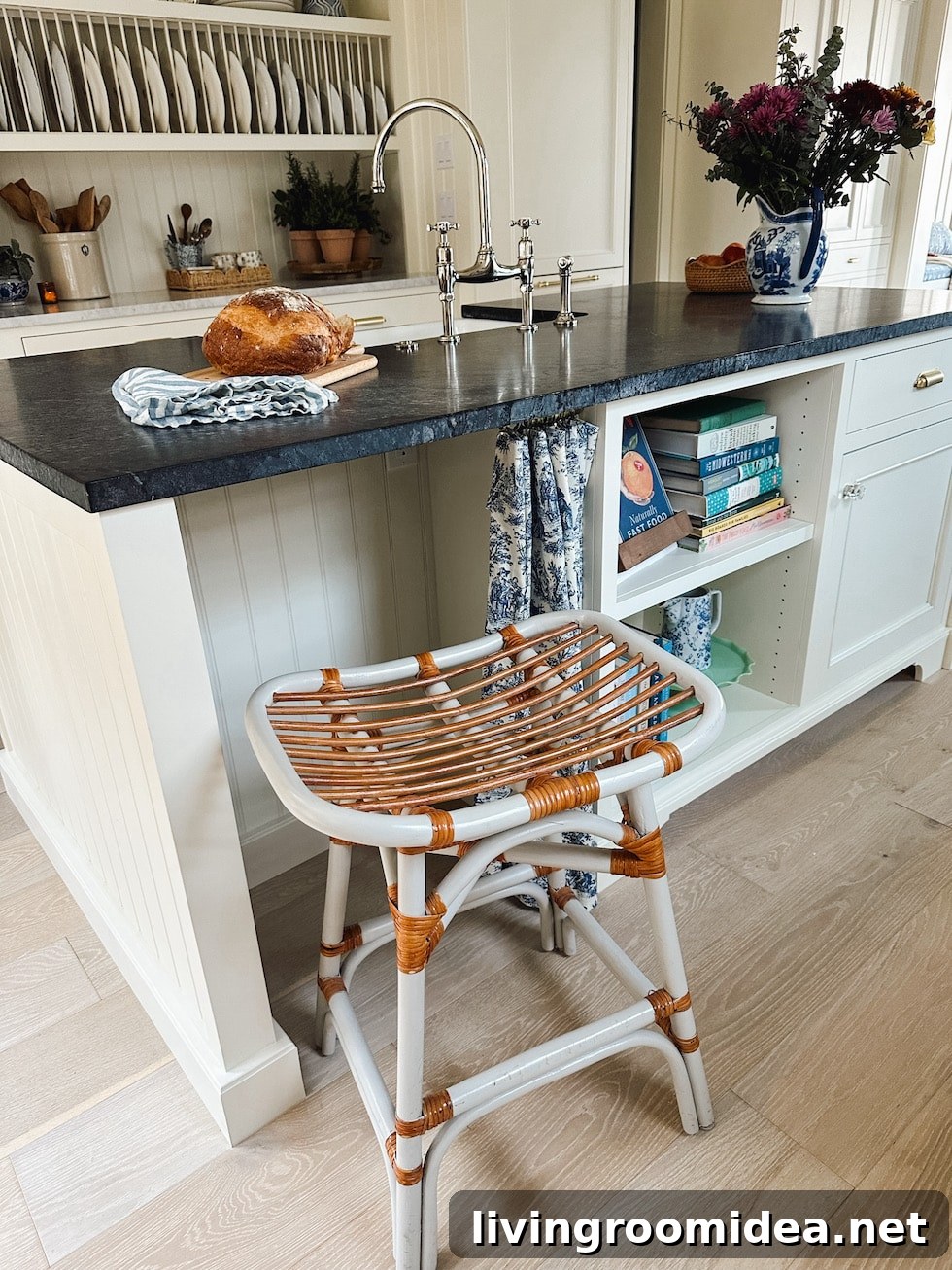
Cookbook shelves nod to the English Tudor kitchen we loved. Inset cabinetry and baseboard molding carry that heritage look into this coastal cottage.
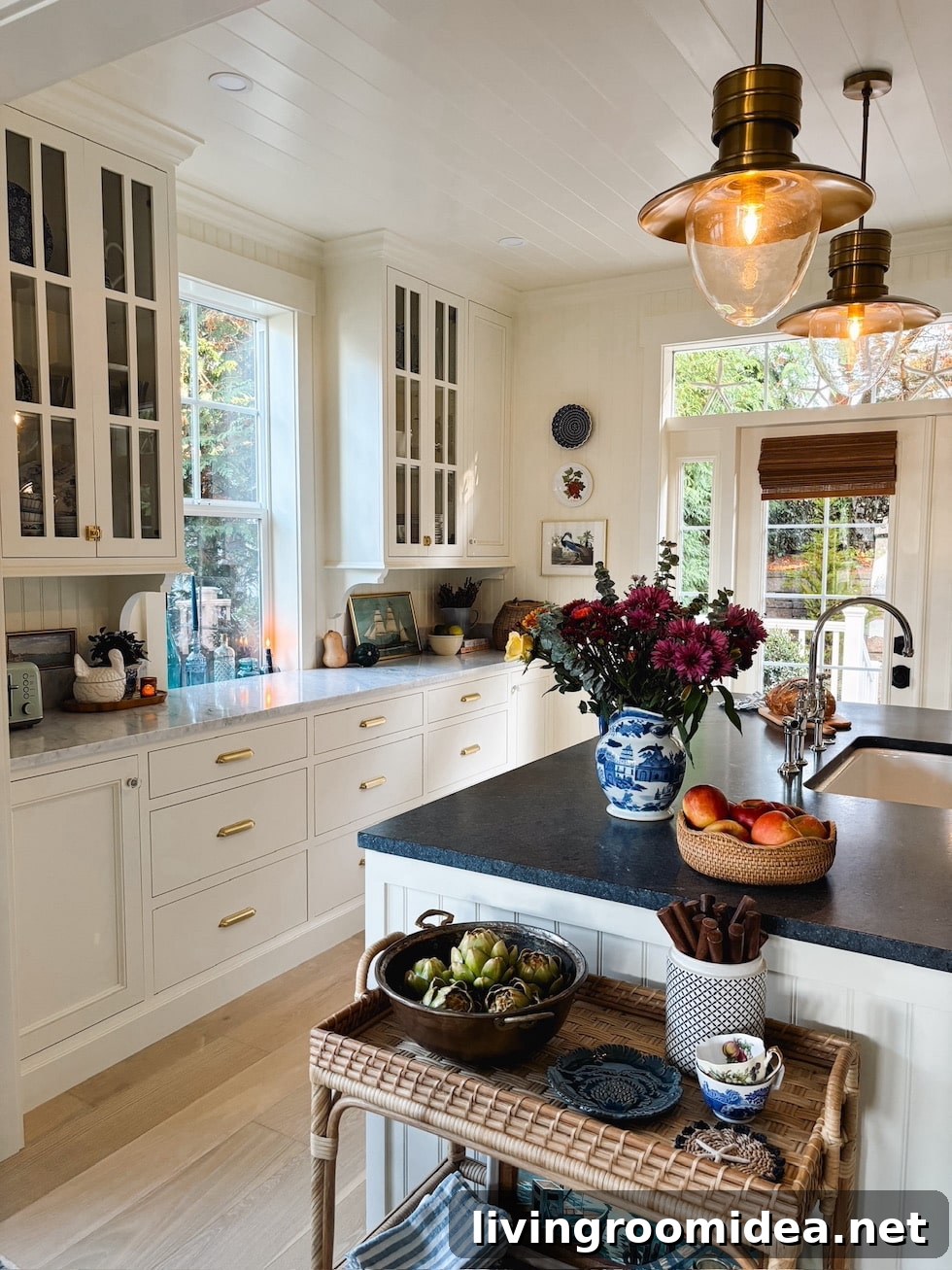
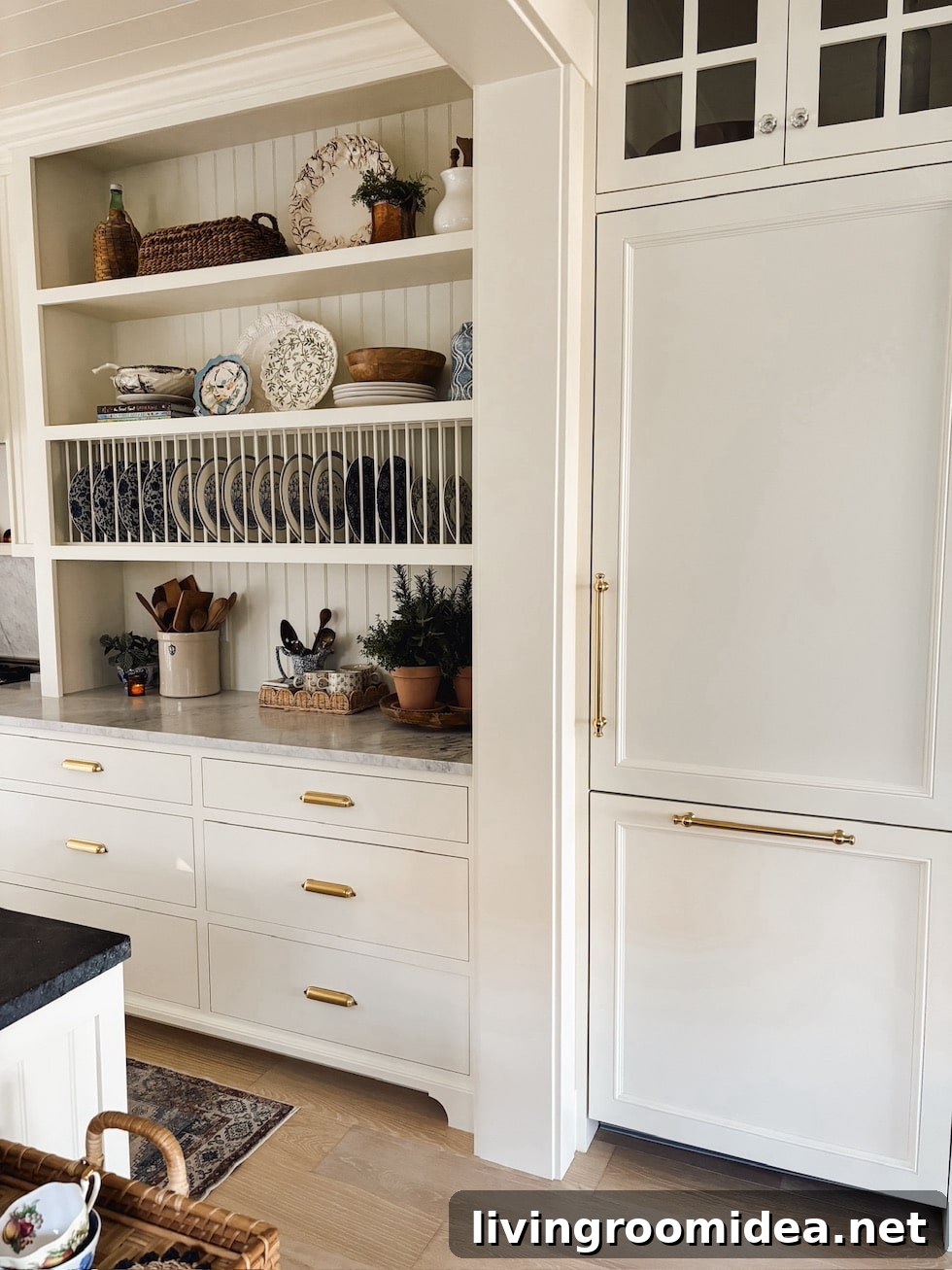
We treated the kitchen and dining as one coherent layout to take advantage of every wall and sightline. Built-in cabinetry on the dining side houses our coffee station and pantry; the cabinet doors slide back so the space can be left open during gatherings or closed for a neater look.
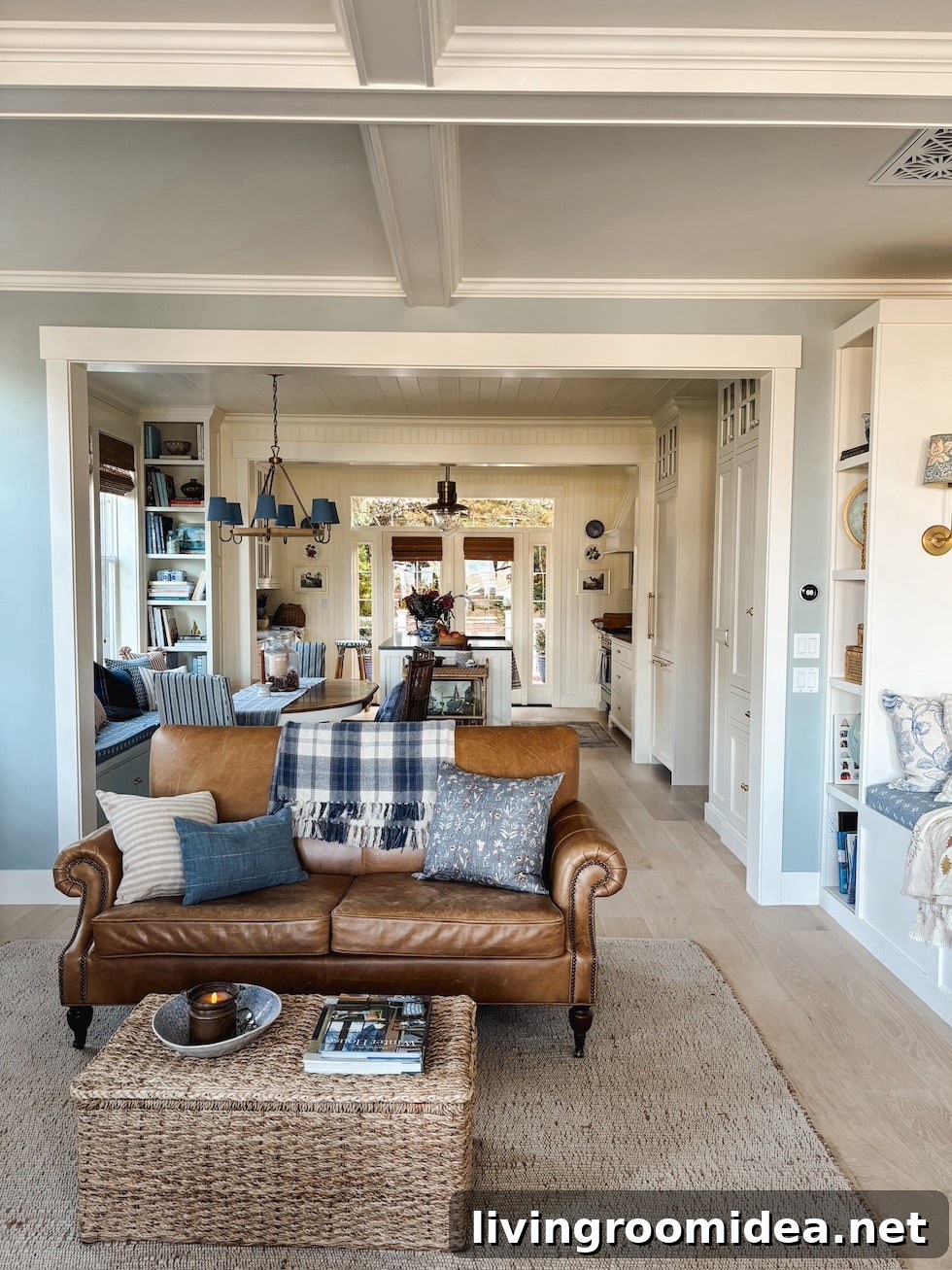
The French doors to the backyard changed the exterior as well—new decks, gates, and garden areas were added with the renovation. I’m looking forward to sharing a backyard tour once the plantings fill in.
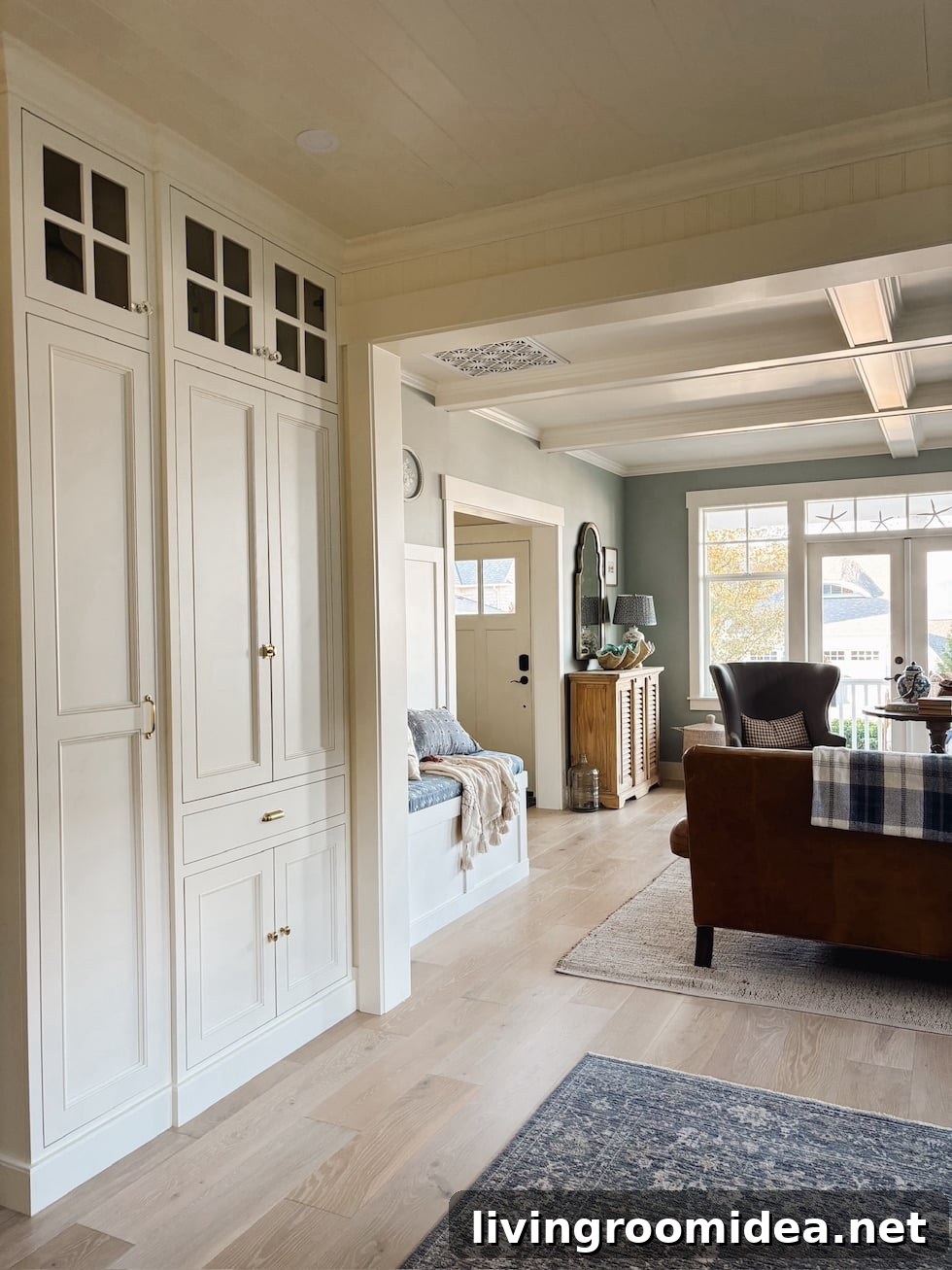
Windows moved from the original dining room now brighten the new dining area, bringing in side views of water and garden. The bench provides seating with generous storage drawers beneath.
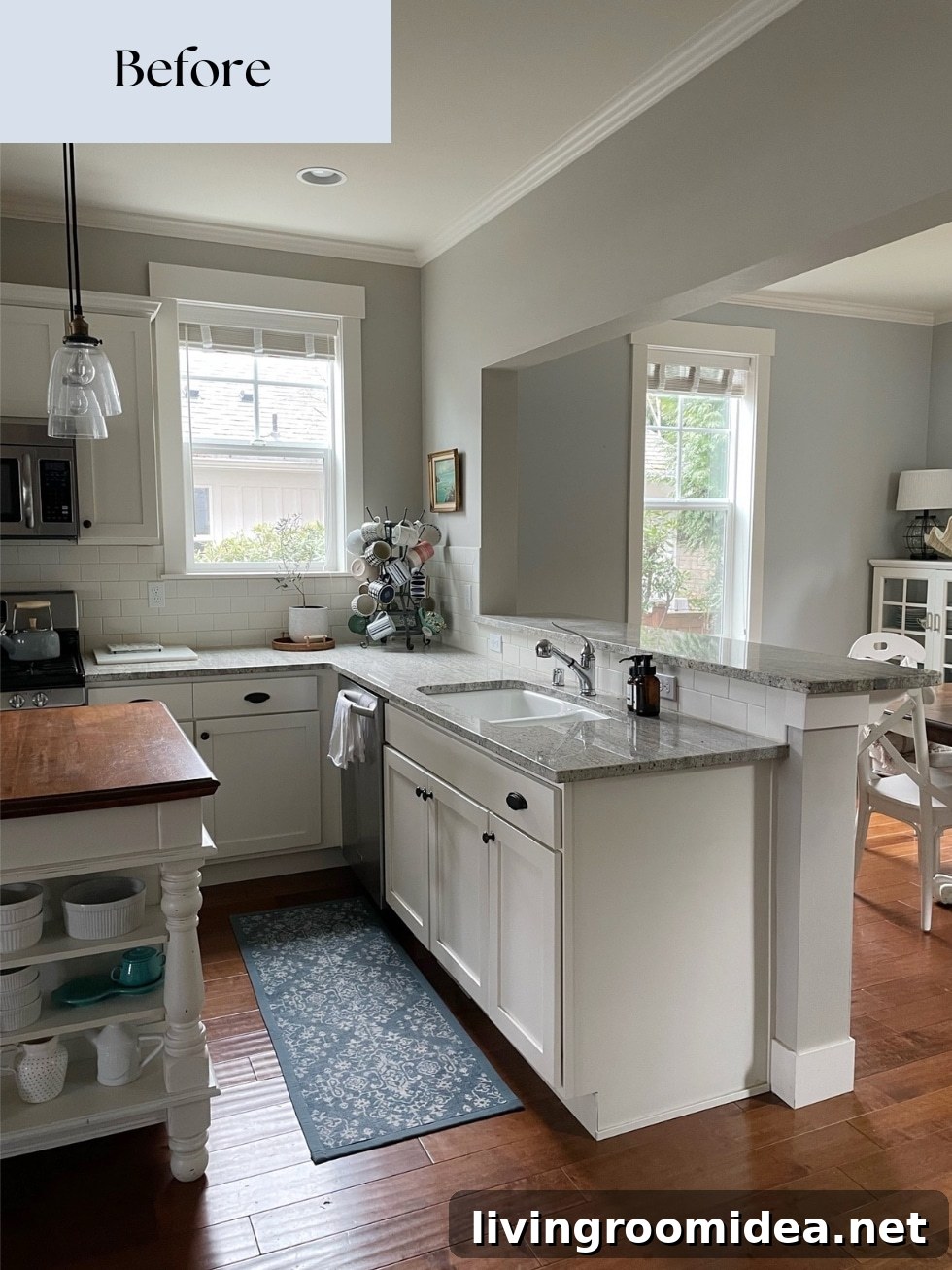
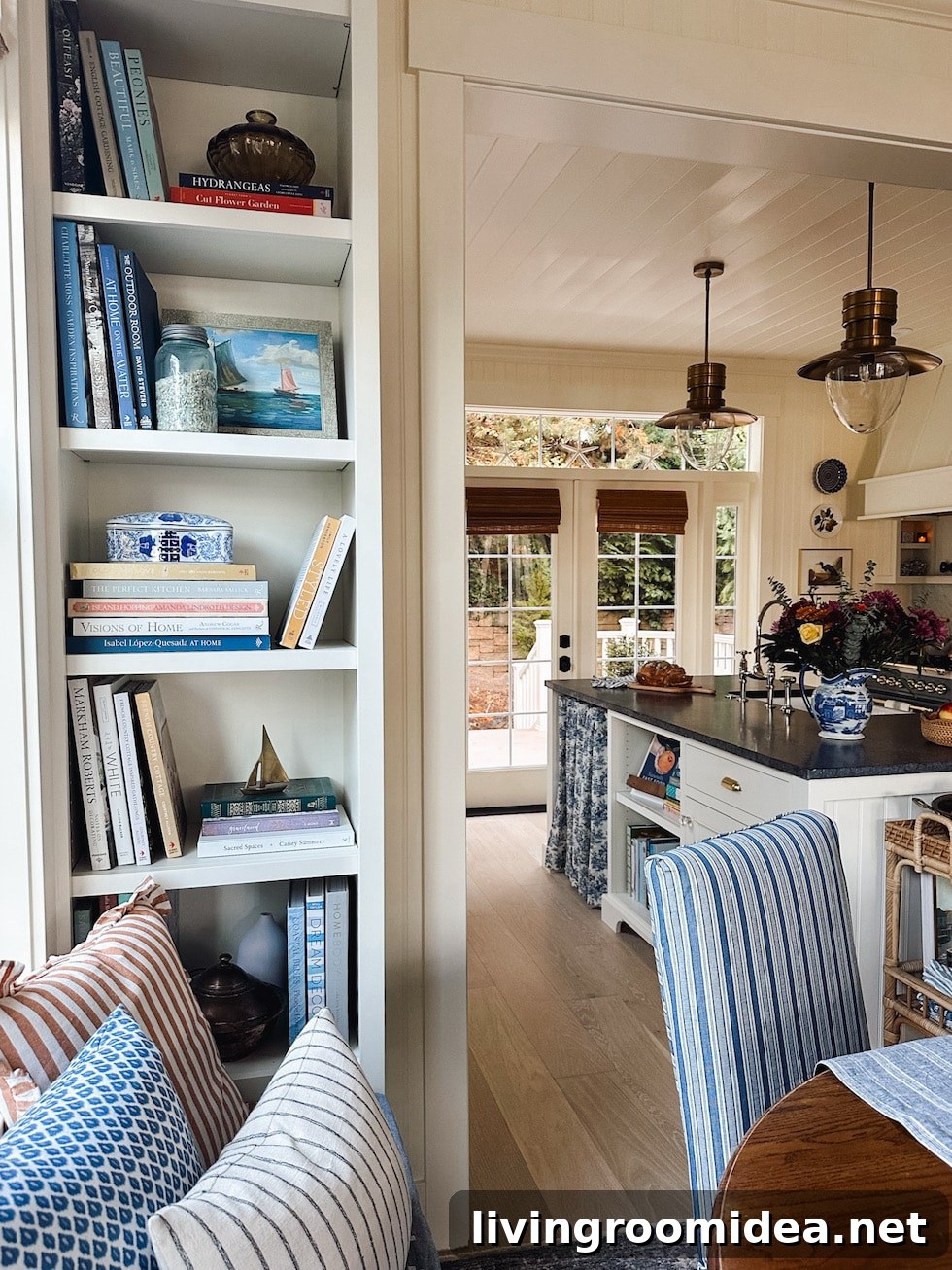
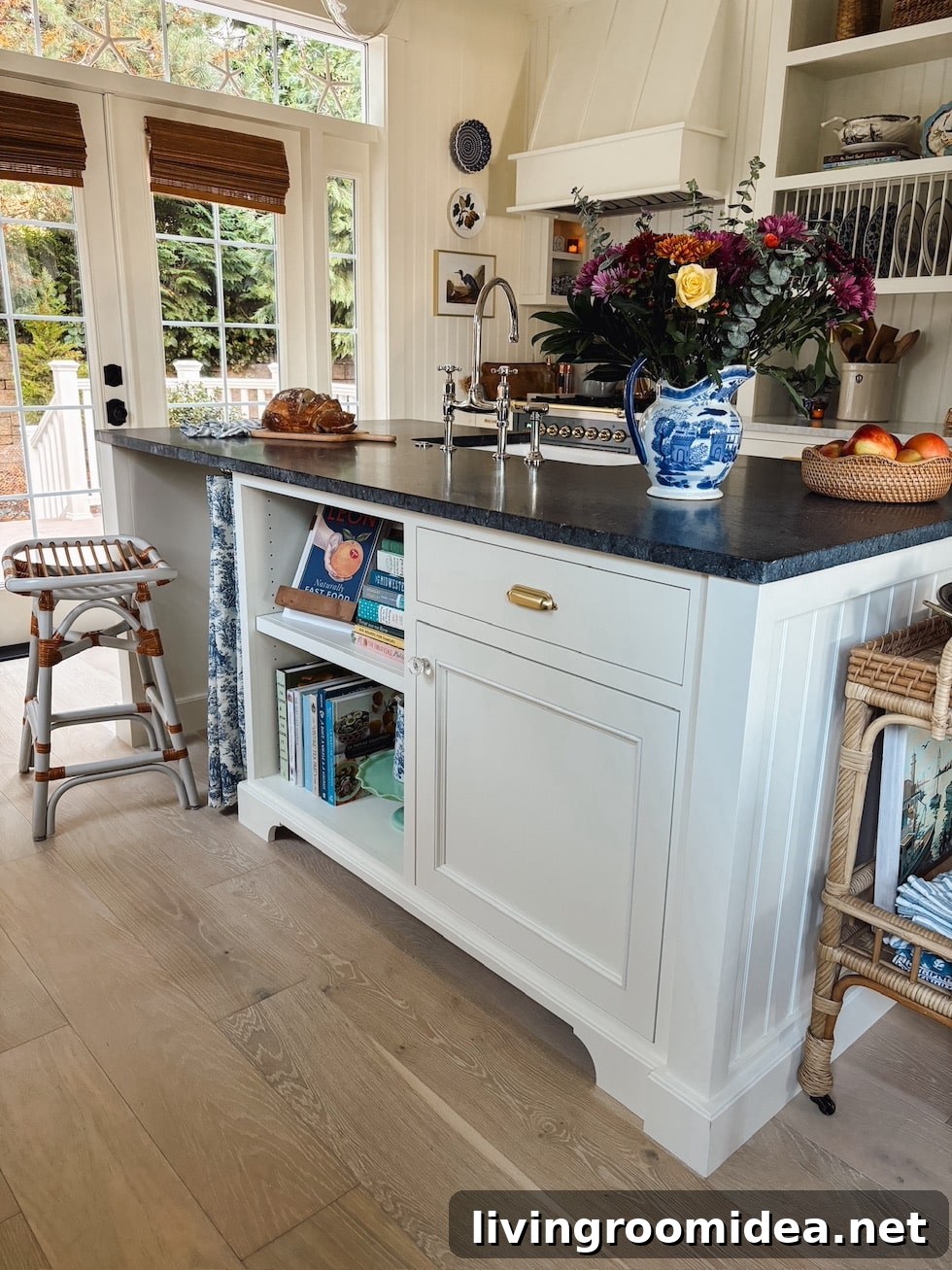
Replacing carpeting and mismatched floors with European white oak throughout made the house feel lighter and more cohesive. We also used tongue-and-groove beadboard on walls and V-groove on the dining ceiling to enhance the cottage character.
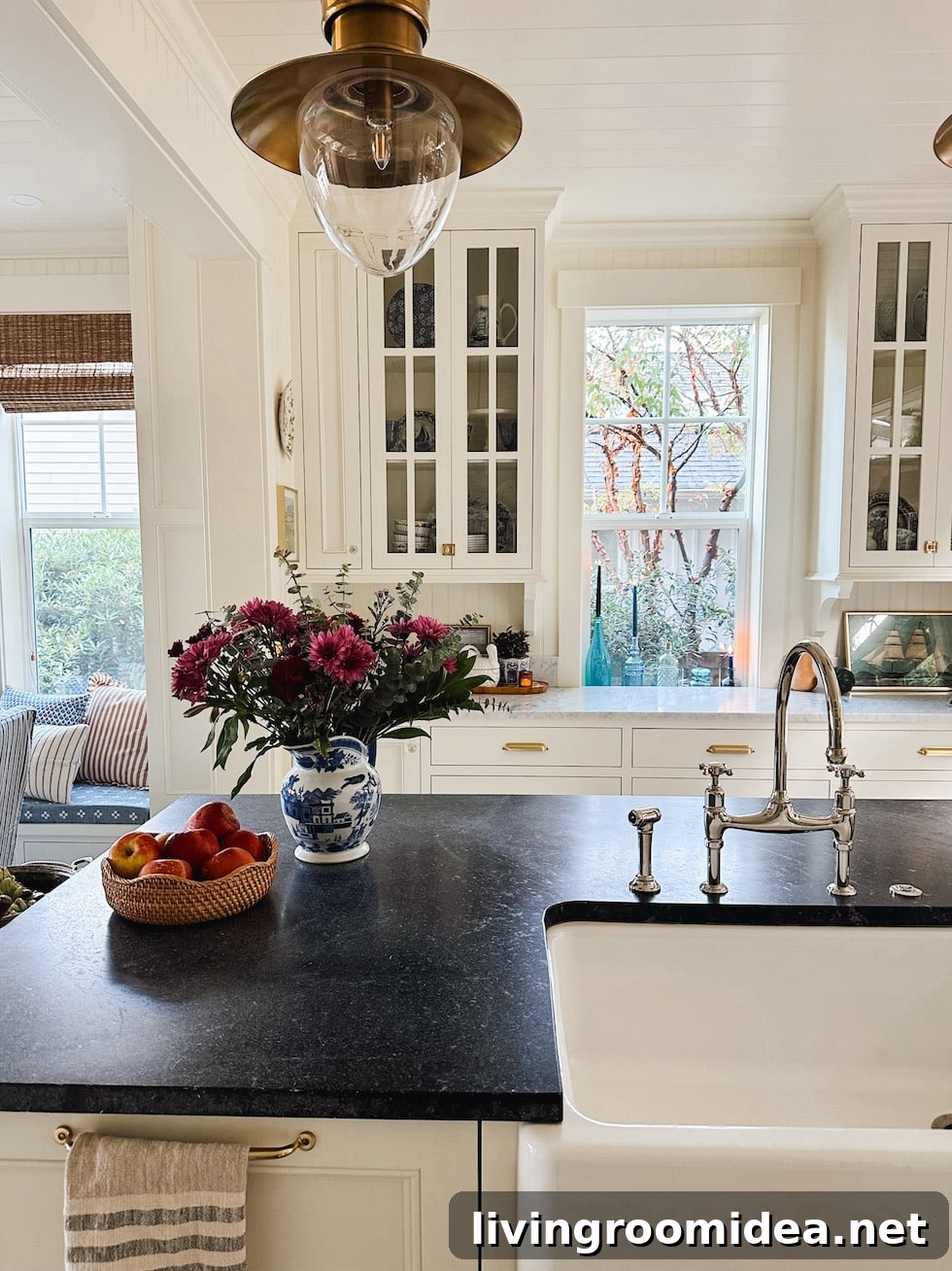
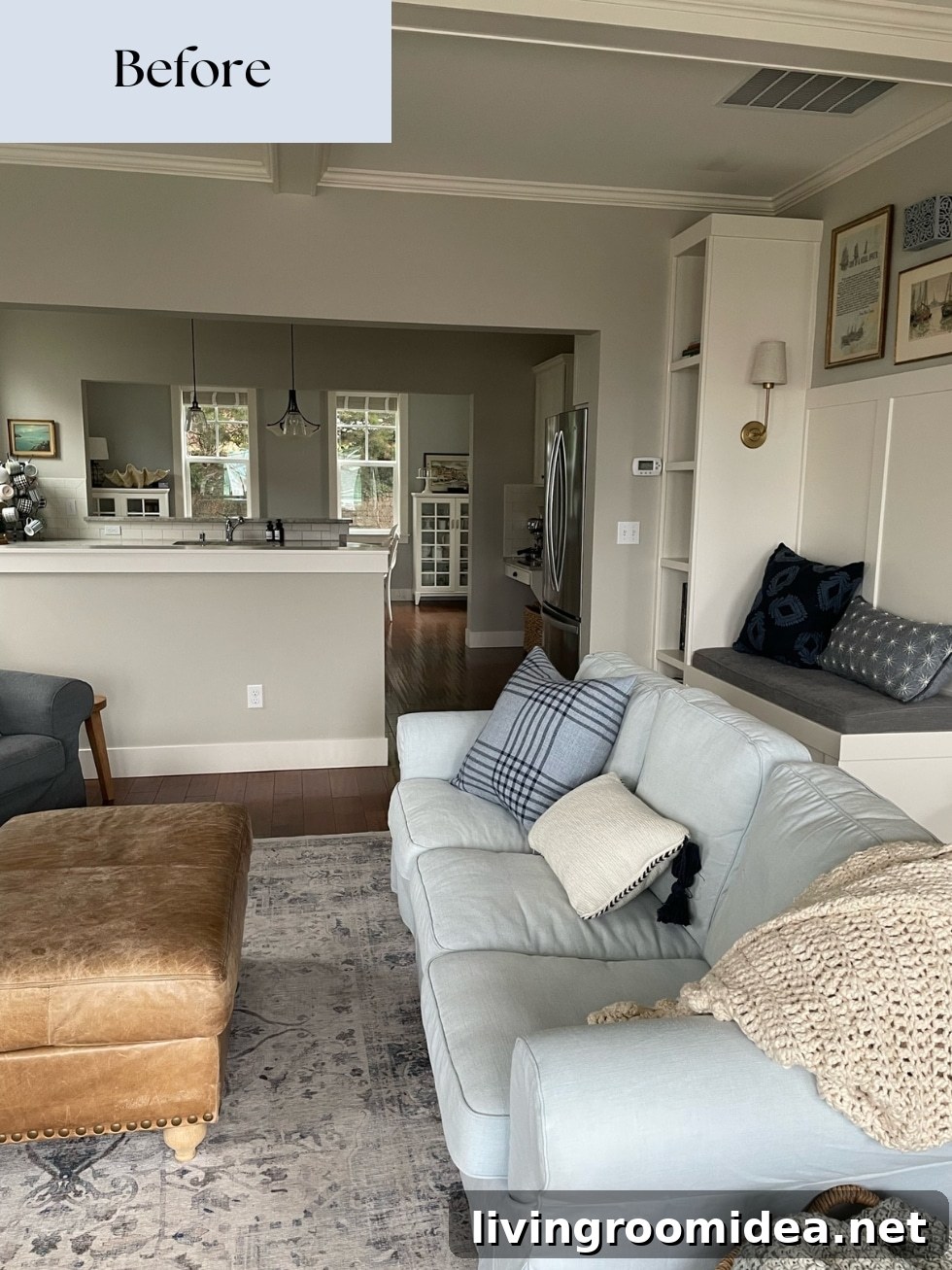
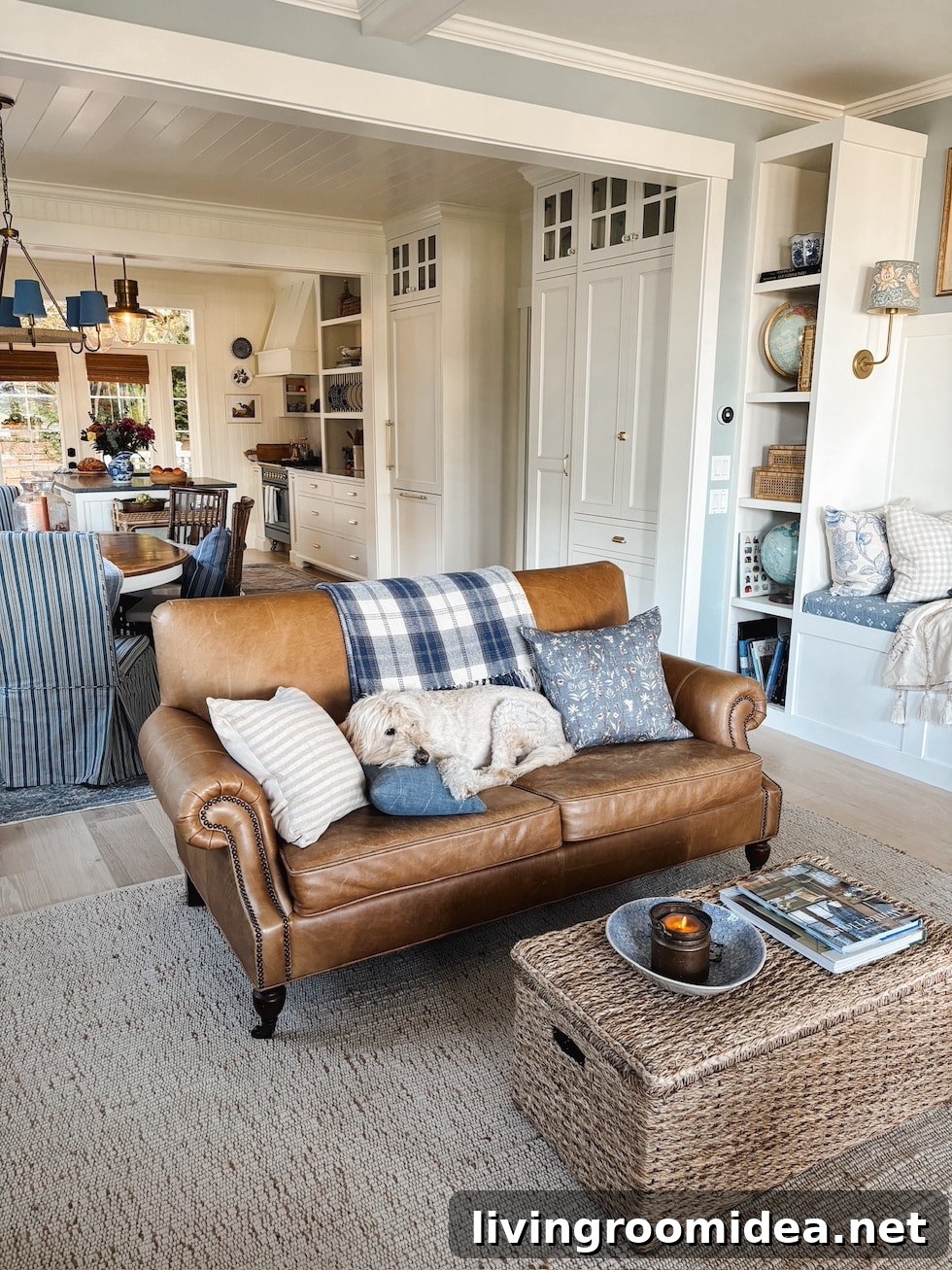
The main floor plan includes the kitchen, dining nook, living room, small entry with staircase, mudroom, and powder room. Through the mudroom you can access the Tiny Cottage addition; I’ll share those spaces in future posts.
Thanks for joining this first look at our coastal cottage kitchen reveal. I can’t wait to share more details, organization tips, and sources in upcoming posts.

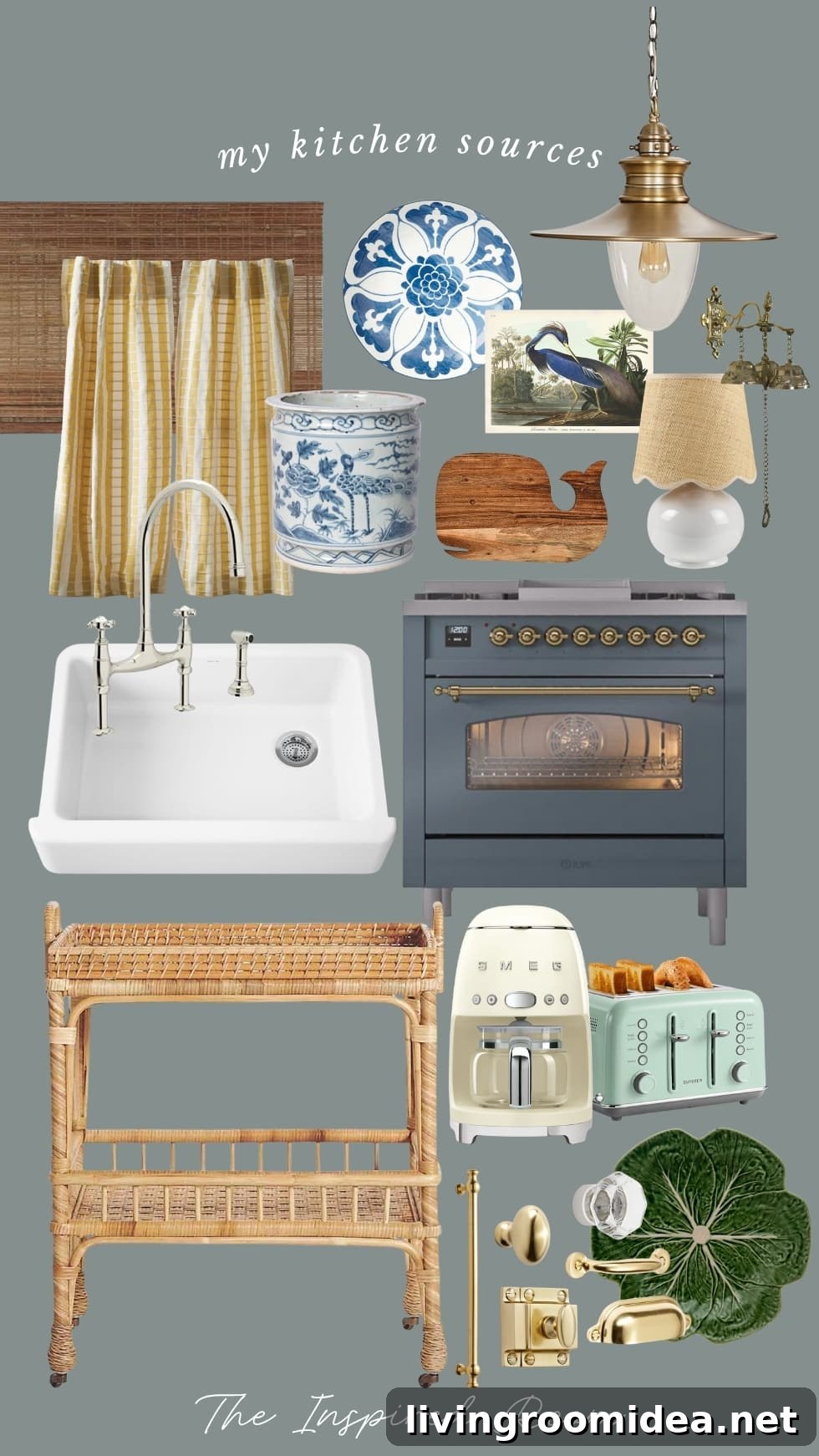
COASTAL COTTAGE KITCHEN SOURCES:
Blue range stove (30-inch Blue Gray / Grey) // Rattan tray // Blue plate on wall // Gold picture frame // Heron art print // Marble tray // Amber votive holder with battery votives // Jadeite cake plate // Kitchen hardware // Rattan serving cart // Brass pendant light // Blue and white toile curtain // Rattan and white stool // Blue and white rattan bar stools // Bamboo blinds on French doors // Farmhouse sink // Nickel faucet // Washable rug // Toaster // Hot water kettle // Copper kettle // Marble tray by range // Footed resin marble tray // Stoneware utensil crock // Scalloped rattan tray // Cookbooks // Round rattan scalloped basket // Striped towel // Wood board // Blue and white pot // Cabinet and wall paint: Classic Light Buff (Sherwin Williams) // Countertops: soapstone island and Carrara marble perimeter // Flooring: real European white oak engineered // Tongue-and-groove beadboard and V-groove ceiling
DINING NOOK SOURCES:
Patterned rug // Blue striped slipcovers // Parsons dining chairs // Rattan dining chairs // Jute wrapped chandelier // Reversible throw blanket // Blue and white striped table runner // Centerpiece details // Rust colored battery tapers // Favorite design books // V-groove dining ceiling
LIVING ROOM SOURCES:
Leather sofa armchair // Blue plaid throw // Jute + cotton rug // Wicker trunk // Brass wall sconce with patterned lampshade // Striped pillow cover // Wall paint: Beach Glass (Benjamin Moore) // Trim paint: Classic Light Buff (Sherwin Williams)
- Look back at our before/after kitchen floor plans in earlier posts.
- See more of the kitchen remodel and Tiny Cottage progress in other posts.
- Peek at the kitchen organization—I’ll share more soon.
Be sure to subscribe to my emails so you won’t miss future kitchen updates. I send one or two emails a week with decorating tips, favorite finds, and links to new posts.