
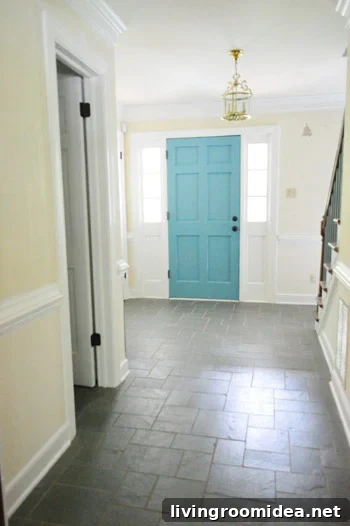
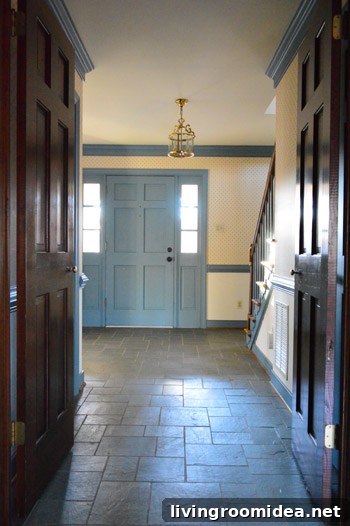
Alternate post title: Paint Me Like One Of Your French Girls. Much like Rose once begged Jack, the dusty blue back of our front door was begging for a fresh coat of paint (okay, Rose said “draw me like one of your French girls,” but close enough).
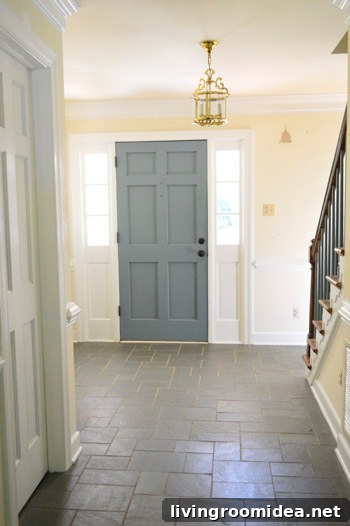
Our color of choice? The same cheerful teal used on the exterior of the door.
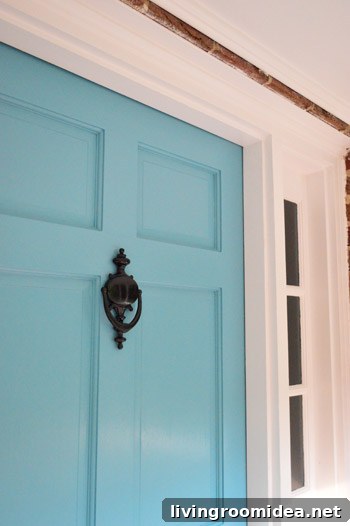
There’s no rule that says the inside of a front door must match the outside. In our previous homes we painted the exterior bright and kept the interior white. This time, though, we have sidelights and want them to stand out. Carrying the teal to the interior back of the door ties the door-and-window combo into a playful focal point in an otherwise neutral foyer. We were inspired by images like these:
- White sidelights plus a colored door for a crisp contrast and instant curb appeal.
- Dark floors and light walls that make a colored door sing.
- Subtler painted doors combined with coordinating wall accents for a layered look.
- Charming combinations that feel both current and timeless.
You get the idea: white sidelights + a colored door = instant personality. And yes, the painting process felt a little romantic—picture me and the door, studying every panel and brushstroke. At one point there was condensation on the sidelights and I ran my hand through it like that very dramatic moment in a movie.

Here are some practical painting tips for anyone planning to paint an interior-facing exterior door:
- If your door is very glossy (sealed wood or high-gloss paint), use a liquid deglosser before priming and painting. Our door had a chalky, matte surface, so we painted directly with the same self-priming quart we used on the exterior (Benjamin Moore’s MooreGlo in Blue Lake with a Soft Gloss finish).
- Start painting in the morning if possible. Keeping the door cracked open all day gives the paint time to dry before you need to close and lock it at night.
- I prefer an angled brush to work the paint into panels and details. Foam rollers are great for larger flat areas if you prefer a smoother finish.
- My door-painting order: paint the frames of each raised rectangle first, then paint the inside of each frame. Next, paint the flat planks around and between the panels, working with the grain—top to bottom for vertical planks and left to right for horizontal ones. Finish by running the brush top to bottom on the remaining vertical sections for a consistent look.
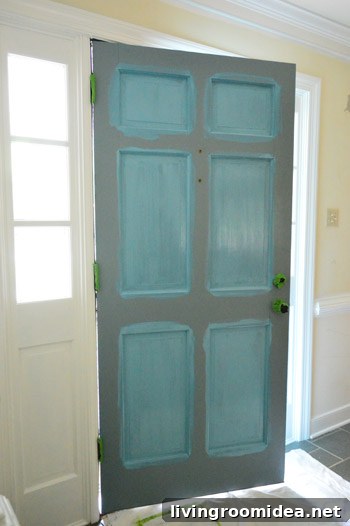
- Let the first coat dry for an hour or two (longer in high humidity), then repeat the same process for a second coat. Allow the door to cure for the rest of the day before closing it tightly.
- I usually remove hardware to avoid taping, but sometimes time or circumstances make taping easier. Remove hardware when you can for the cleanest edges, but carefully taped hardware can work in a pinch.
Once the paint dried, the back of the door looked great. It’s a bold contrast with the yellow walls and the brass fixture, but we’re still working on the rest of the foyer. With more paint, trim work, and decor pieces in progress, the space will come together and feel cohesive. This is part of the design process: pieces that feel odd at first often fall into place as the project advances.
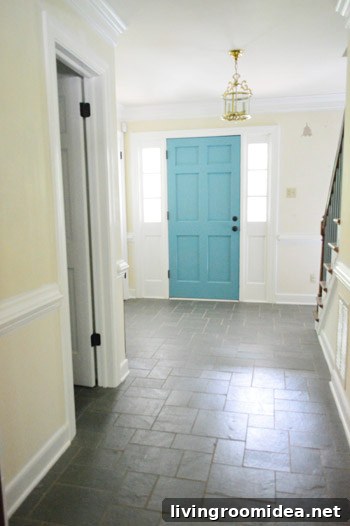
The transformation is already a welcome change from the “before” photo. The updated color makes the space feel brighter and, oddly enough, raises the perceived height of the ceiling.
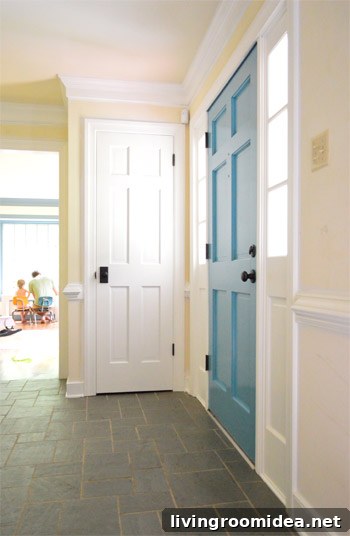
My favorite after shot is the one that includes family in the background—the new dark hardware and hinges also add a nice finishing touch.
Next up: more painting. We’re choosing a wall color (we’ve narrowed options with swatches) and still need to paint the half-bath vanity and the stair spindles in that same blue. There are several other rooms lined up for blue trim and wallpaper, so our paintbrushes will stay busy for a while.
The wall color we ultimately picked for this room is Edgecomb Gray—an understated neutral that will balance the bold door color and other accents.
As strange as it sounds, all the work we put into this house makes it feel more loved. Projects that challenge you tend to create a stronger connection to the space, and all the painting is part of that process. It’s hard work, but it’s worth it.
I’ll never let go. I’ll never let go…
Psst— Want to know where we got something in our house? Click the button below.