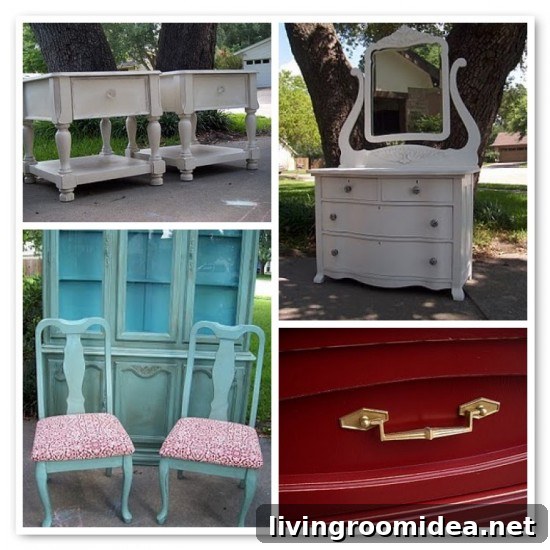
How To Paint Furniture
IIf you follow The Inspired Room, you know I’m not a furniture-painting expert — but I keep trying anyway. I love painted furniture, even if the process makes me nervous. Mostly that’s because I haven’t yet learned the best preparation methods and techniques to get a professional look. I have big ideas for how pieces will turn out, but without the right know-how I often end up redoing or fixing mistakes.
Case in point
One time I tried priming the inside of a cabinet and it was a complete disaster. The primer peeled off like a sunburn and the finish failed entirely. It was an expensive and frustrating lesson in preparation and product choice.
My dining room is in the middle of a top-to-bottom refresh — we’re still early in the process — and I plan to repaint the armoire and table, repaint the walls and add a new light fixture. I’ve attempted painting pieces before without reading instructions, thinking I could “wing it.” The table experiment proved that wasn’t the best plan.
I tried a whitewash on the table to let the wood grain show through. In my head it seemed simple: paint, wipe, enjoy. In reality the finish looked awful and I had to remove most of the paint. I’ll be trying again, but this time I’ll follow proper surface-preparation steps and technique guidance first.
I own a hand sander, but it’s awkward and hard to use well, which made the job more difficult than it needed to be.
One bathroom cabinet turned out okay despite my rule-breaking and inexperience, though I’m not satisfied with the distressing I added later. The brown glaze I used feels heavy and I want to revisit it to refine the look. I liked it for about 30 seconds, then wanted to improve it.
A painted chair I completed during last year’s Spring project looked cute at first, but now I notice the finish is somewhat rough and “crunchy.” I expected a smooth, hand-friendly finish and learned that technique and product choice really matter.
Another piece needed specialty paint to transform it well, and while it turned out nicely, I don’t want to rely on rare or costly paints every time. I also prefer variety — I don’t want every piece to match perfectly. A mix of treatments gives more character to a room.

Mandie’s work
Given these trials, you’re probably ready for the “how to” portion. I’ve found a resource from someone who truly knows furniture painting and breaks the process down into clear, usable steps for beginners and DIYers like me.
Recently I purchased an ebook from Altar’d Funky Chic Furniture that covers everything from choosing pieces to paint, to the tools, supplies and step-by-step techniques needed to achieve professional-looking results. After reading it I picked up several practical tips I’ll use right away.
The book helped me understand why some of my finishes turned out “crunchy” and what to change. It explained the types of sanders that make surface prep easier, how to properly prime and paint ornate pieces, and how to achieve different styles without every piece matching exactly. The information is organized into small, digestible sections that are perfect for someone who learns as they go.
Mandie from Altar’d Furniture has professional experience painting furniture, so she knows both the right techniques and how to teach them in a way that’s accessible. Her methods address common mistakes and offer solutions I can actually implement in my own projects.
If you’re planning painting projects this season and want a reliable guide, this ebook is an affordable way to learn — it’s offered for $10 and includes practical tips that helped me avoid repeating earlier mistakes.
So, what painting projects are on your list this summer?
The Inspired Room is an affiliate of this ebook. I only recommend products I personally use and find helpful. I shared this post for Works for Me Wednesday — though in my case, my earlier painting fails led me to find a resource that actually does work, so that’s a win.