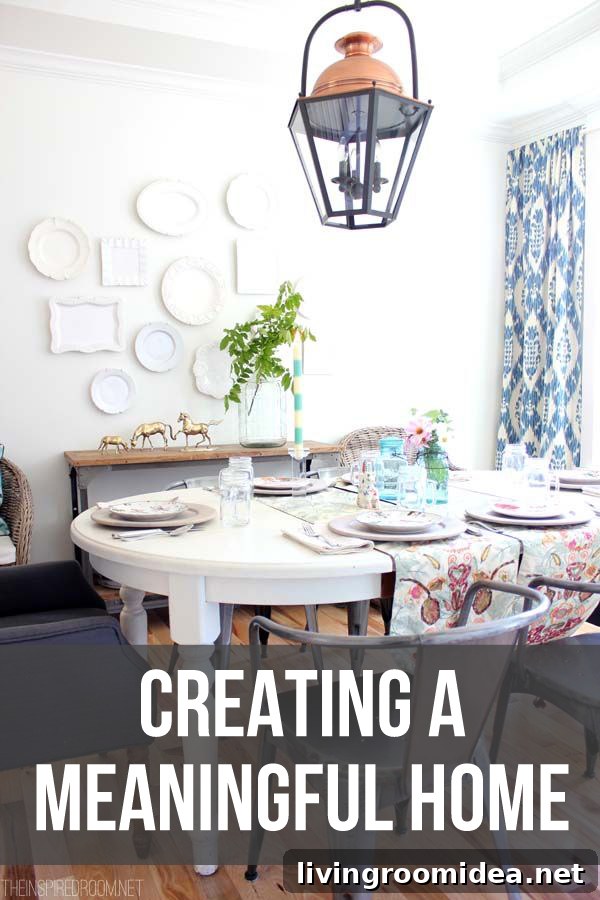
For as long as I can remember, I have been deeply passionate about creating a meaningful home. Over the years that passion inspired me to transform several houses into warm, livable spaces for our family. What began as a personal interest grew into a service helping others shape homes that reflect their lives, and later evolved into a blog I launched in 2007. That blog changed my life and my home in countless ways and remains the driving force behind everything I write. Designing a home with intention continues to be a subject I love exploring.
I believe a meaningful home is built from simple, thoughtful choices: pieces that tell a story, arrangements that encourage togetherness, and spaces that feel comfortable and lived-in. It’s not about perfection or keeping up with trends; it’s about selecting what feels true to your family and arranging it in ways that foster daily life and memory-making.
Practical changes often make the biggest difference. Small edits—like swapping a lamp for softer light, clearing a table so it can be used, or adding a cozy throw—can instantly change how a room feels. Function and beauty should go hand in hand: storage that’s attractive, seating that invites conversation, and surfaces that accommodate real use.
Personal touches are essential. Photographs, inherited objects, handmade items, or pieces collected on trips add layers of meaning and make a house feel like home. Mix these sentimental items with practical pieces to create a balanced, welcoming environment. When every object has a place and a purpose, the home runs more smoothly and feels more intentional.
Comfort matters. Cozy textiles, soft lighting, and an arrangement that supports how your family lives help a room feel restful and inviting. Don’t be afraid of imperfection—scuffs, mismatched dishes, and well-worn furniture tell the story of a life being lived, and that authenticity often makes a space more beautiful than anything pristine or staged.
Keep routines in mind when planning a room. Think about who uses the space and how: a corner for reading, a dedicated homework spot, or a family command center near the entry. Designing with purpose makes everyday tasks easier and helps each room serve the family well.
Creating a meaningful home is an ongoing process. Tastes and needs change, so allow your home to evolve. Edit and refresh regularly—rotate accessories, reassess storage, and remove items that no longer serve you. These small updates keep your spaces feeling current and relevant without requiring a total overhaul.
Above all, a meaningful home is one where people feel comfortable being themselves. It is a collection of belongings and spaces arranged to support life, connection, and rest. Focus on what makes you and your family feel most at home, and the rest will follow.
*Lantern Source: Pottery Barn