Kitchen Remodel
Nine months ago I began a kitchen remodel. Nine months later we are finally finished and thrilled to share the completed space. You’ve followed the progress along the way, and now it’s time for the final reveal. Below I’ll walk through the key changes, the design thinking behind them, and the features that make this kitchen both beautiful and functional.
Our builder-grade kitchen was serviceable but lacked personality and a layout tailored to our family. We wanted a kitchen that felt like ours—more practical for cooking and entertaining, more charming, and achieved on a sensible budget. After three years of living with the original layout and a few small updates, we were ready to make more significant changes that would truly suit our daily life.
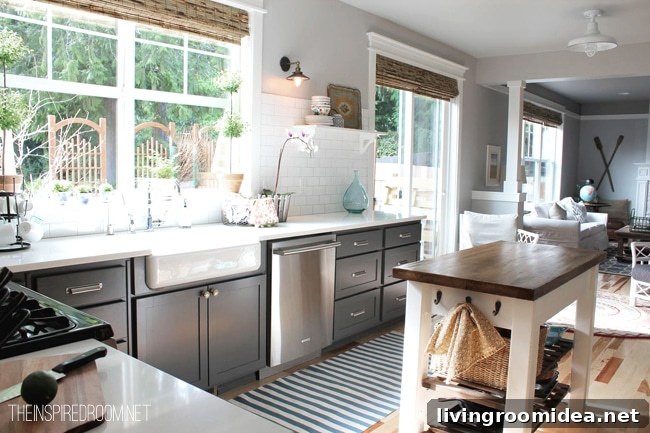
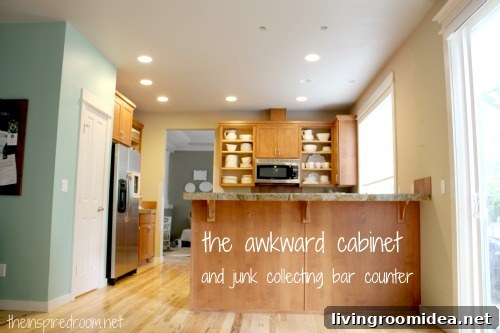
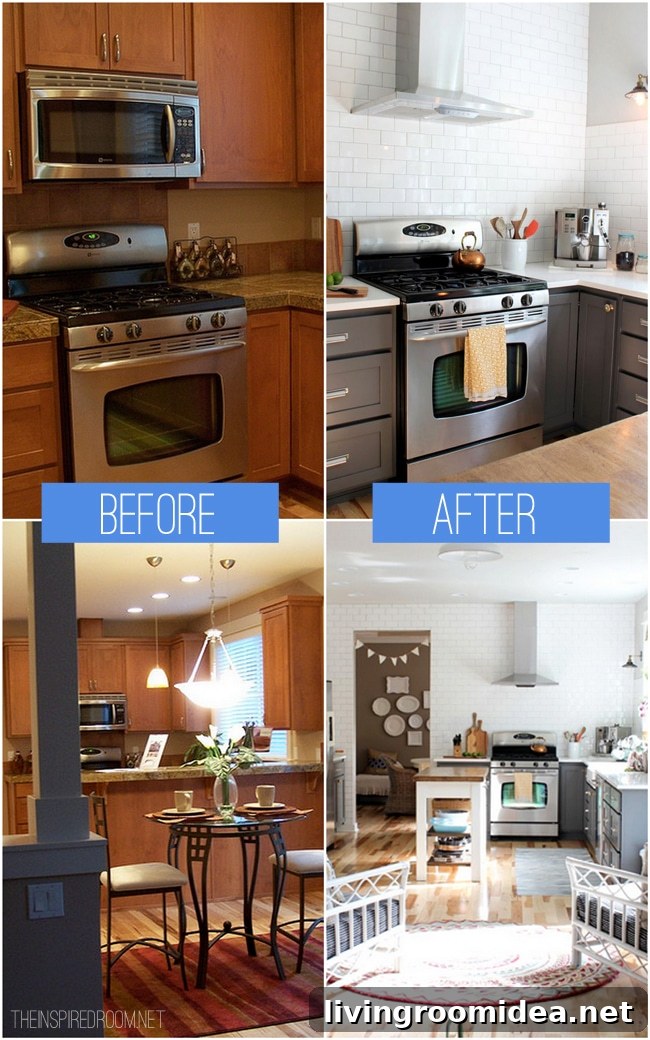
Prior to the remodel, an awkward breakfast counter and differing floor surfaces visually divided the kitchen and family room into three small sections. With two daughters who love to cook and a household that entertains often, we wanted a more open, flexible space without expanding the footprint.
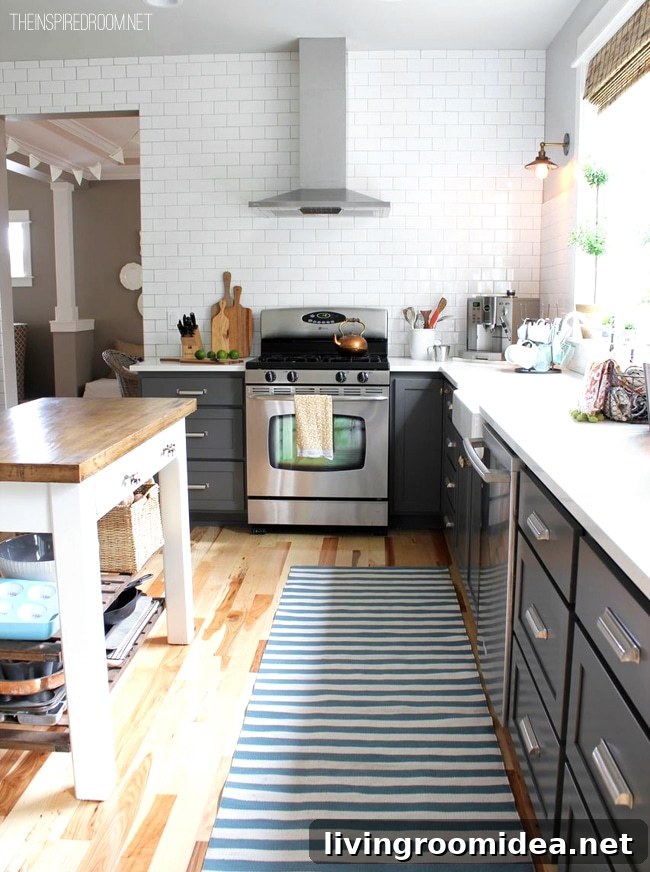
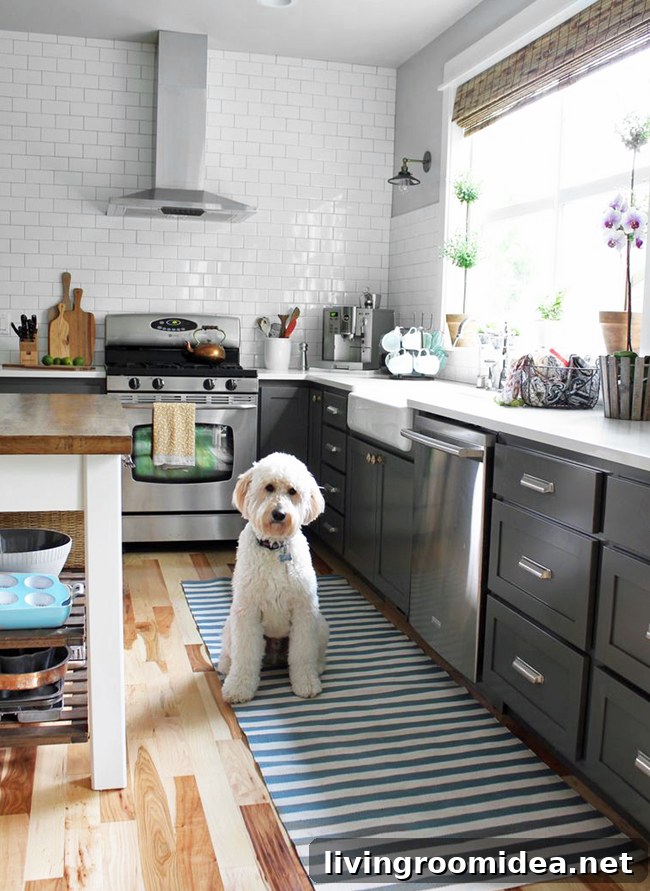
Removing the breakfast bar transformed the room immediately. The space opened up, traffic flows naturally, and there’s room for multiple cooks and guests. In addition to better circulation, the remodel gained storage: we added two banks of drawers and relocated the existing dishwasher next to the sink. What had been a small cabinet footprint became practical counter and storage space—an unexpected win from rethinking the layout.
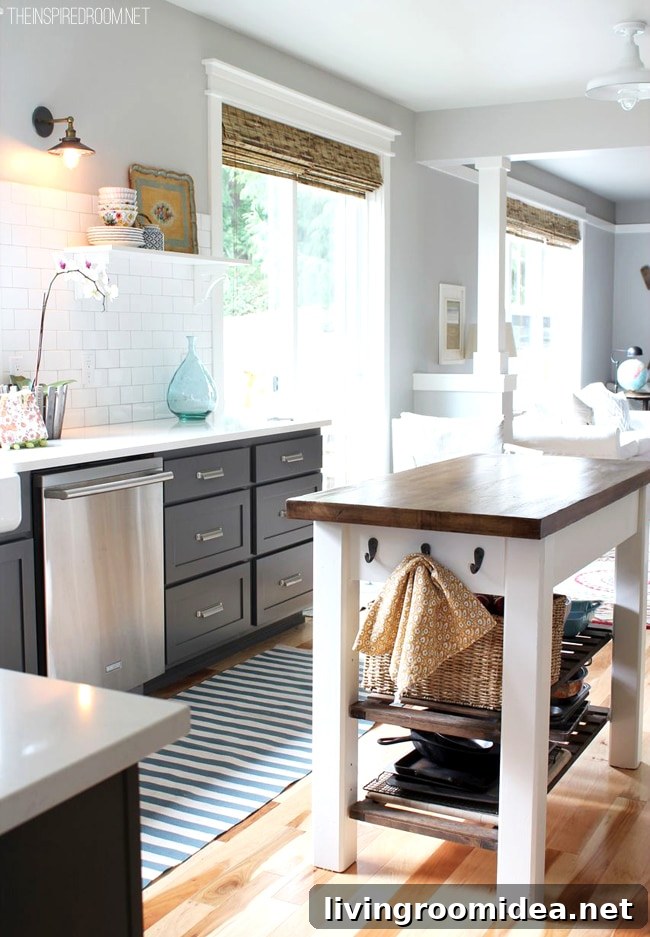
All other cabinets are original; we refreshed them with paint to modernize the palette without replacing everything. The before-and-after photos show how much wider and more cohesive the room feels after simplifying the layout and updating finishes.
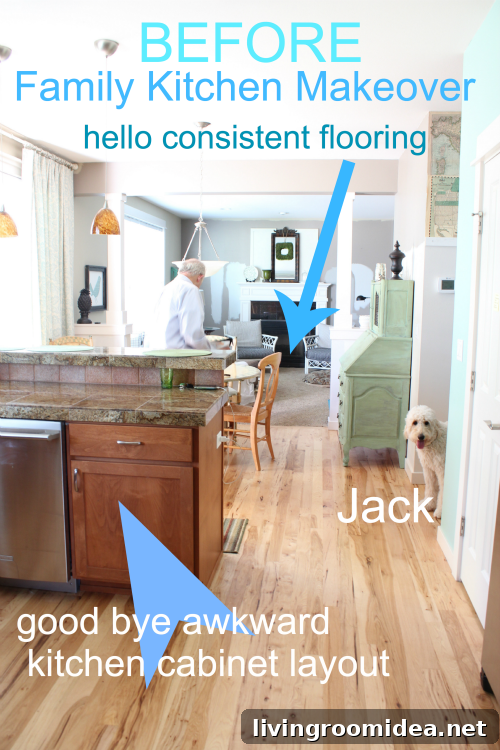
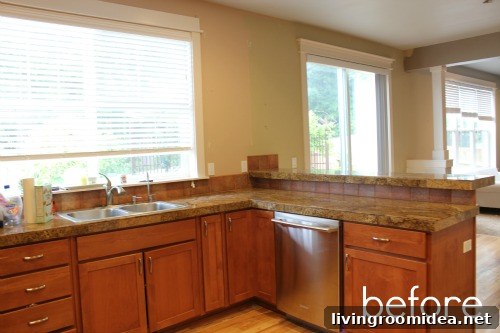
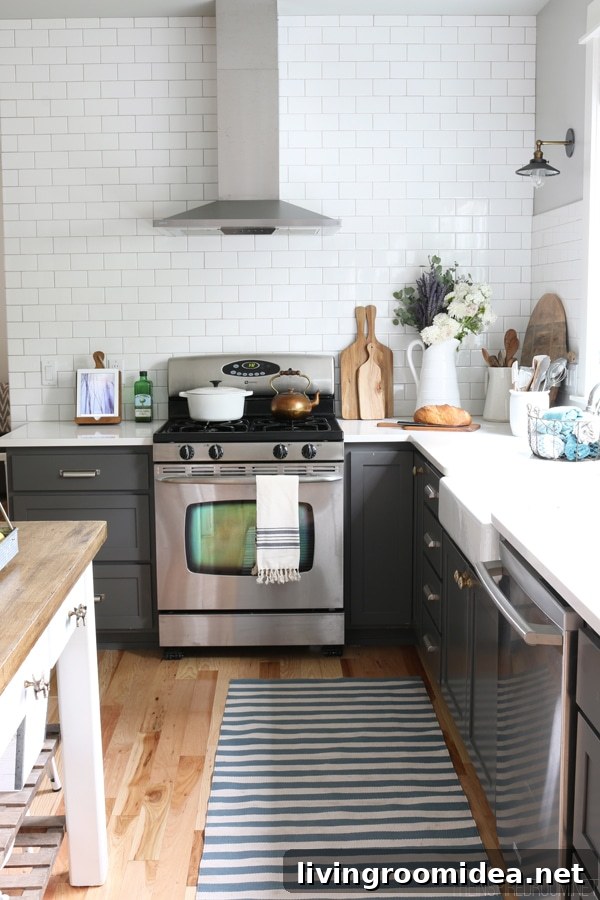
We also removed a few upper cabinets around the stove area. As someone who is 5’2″, many upper shelves were impractical for everyday use. Removing them allowed the space to breathe, increased the perceived counter area, and reduced visual clutter. With new drawers for everyday dishes, those upper cabinets were unnecessary.
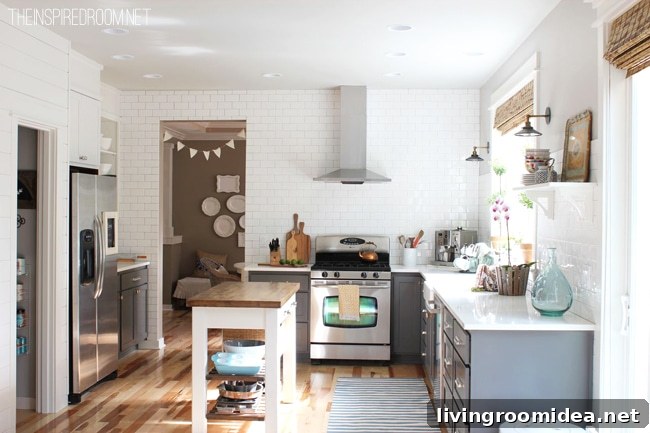
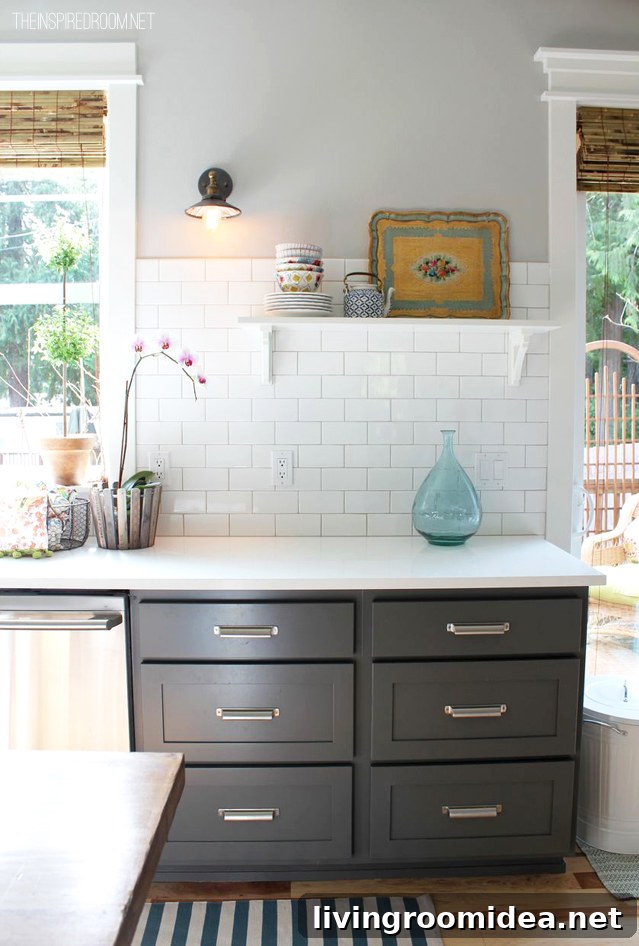
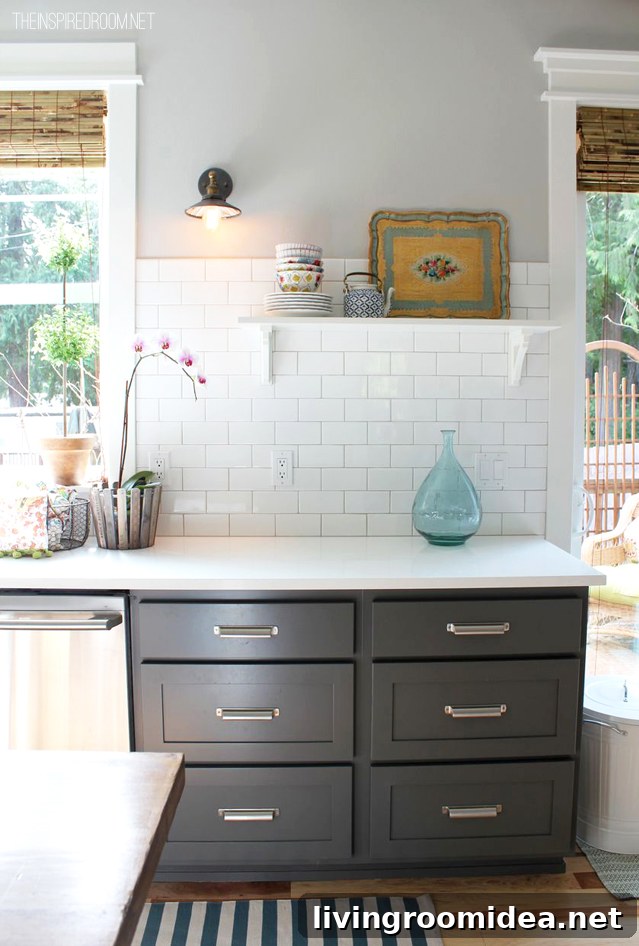
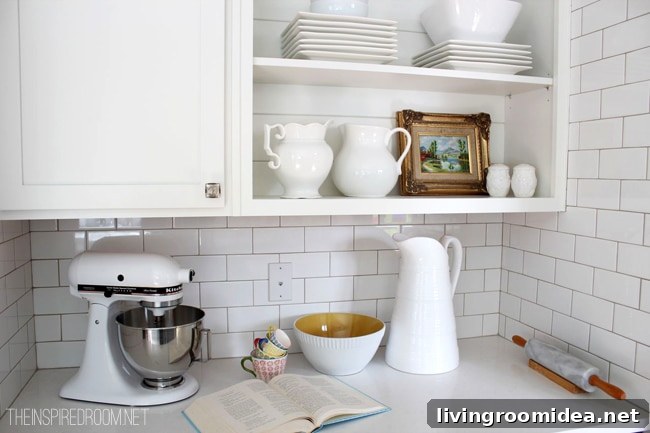
The backsplash is classic subway tile set with gray grout to add subtle architectural interest and durability. Subway tile is timeless and complements the mix of materials in the room—white counters, wood floors, and painted cabinetry—so it feels familiar yet fresh.
We chose a two-tone cabinet scheme: white upper cabinets and charcoal gray lowers. The contrast creates depth and keeps the room from feeling washed out. The neutral palette also makes it easy to swap accent colors in rugs and accessories over time.
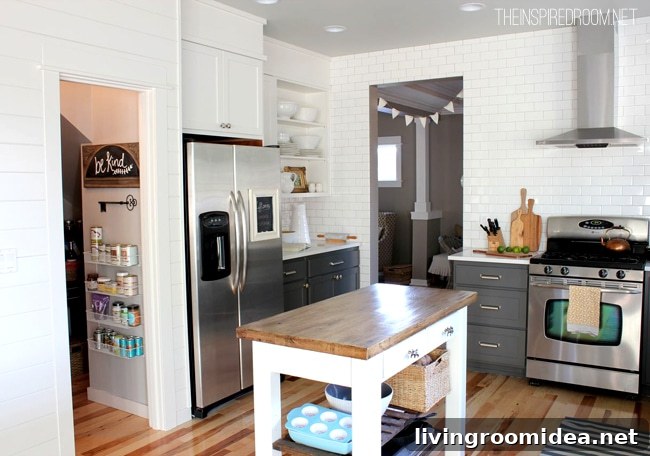
Small architectural details made a big impact without major expense. We boxed in the space above the upper cabinets and added tongue-and-groove paneling to a connecting wall and behind open shelving. Those simple additions created a custom feel and added warmth and texture.
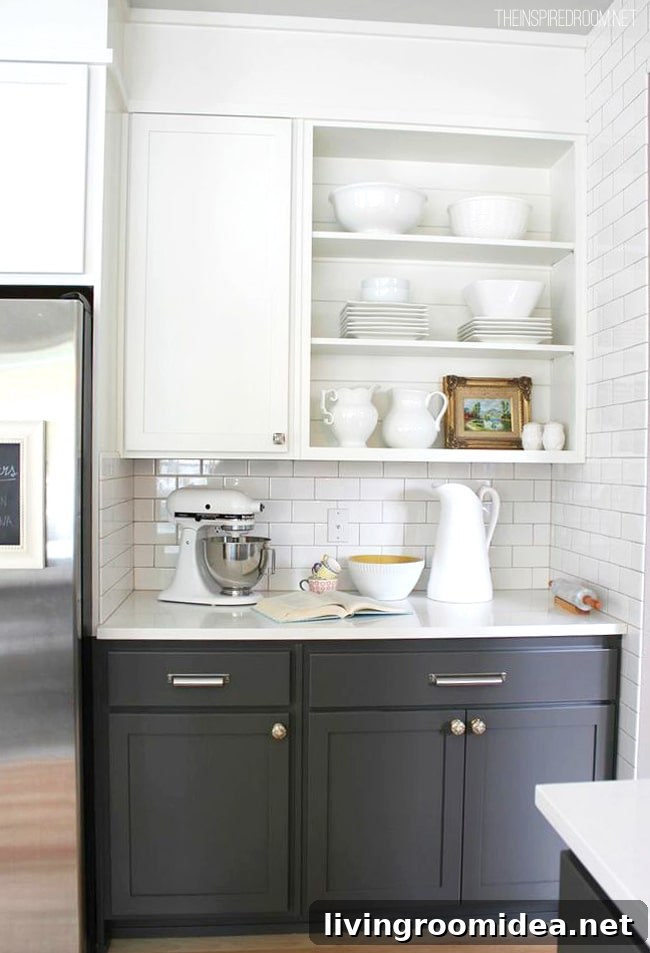
Open shelving over the baking center, painted white and backed with vertical paneling and subway tile, gives easy access to everyday items while letting the space feel open. Removing cabinet doors is a budget-friendly update that refreshes the room immediately.
Most appliances remained the same; we added a new range hood but otherwise left functional pieces in place to keep the budget in check. Small touches, like the DIY framed chalkboard on the refrigerator, stayed because they work for our family.
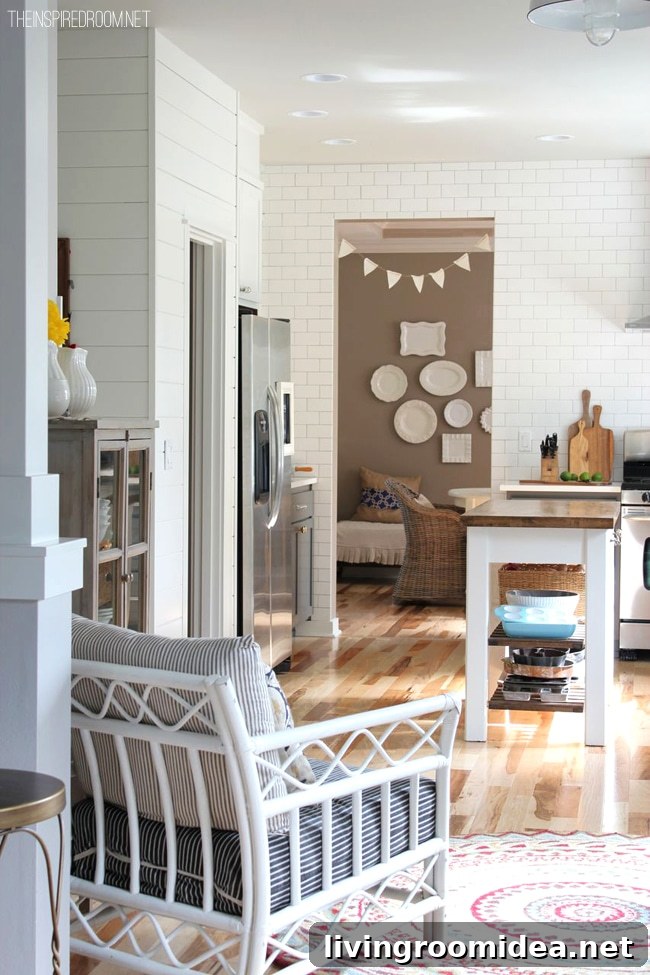
Lighting updates included a vintage-industrial pendant in a soft jadite green for the little hall and a fresh white fixture over the kitchen area. These choices add personality without overwhelming sight lines or circulation in the space.
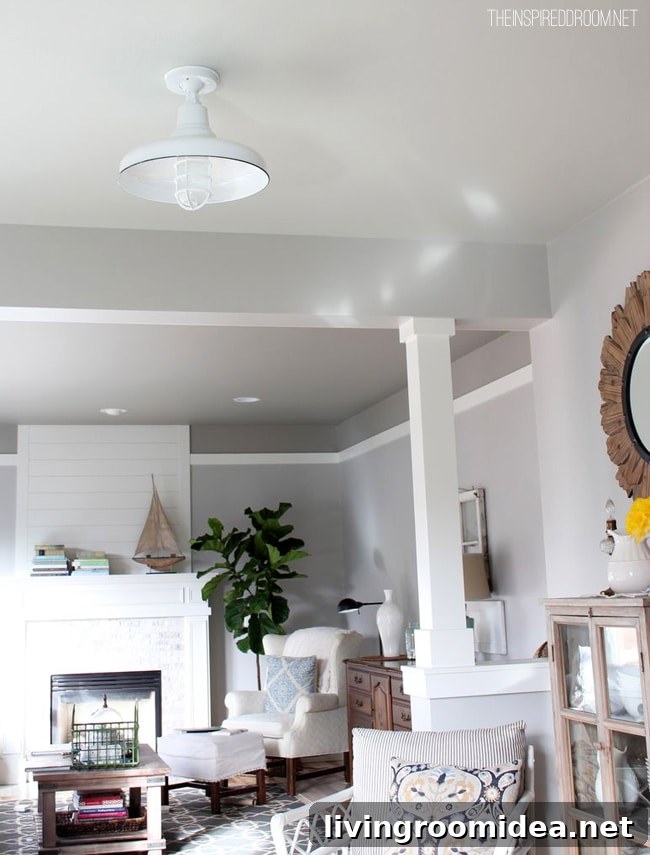
We removed the kitchen table and replaced it with a small conversation area that opens to the family room. The setup is great for chatting with friends while doing dishes and keeps the space flexible. Lightweight, comfortable chairs make it easy to adapt the area as needed.
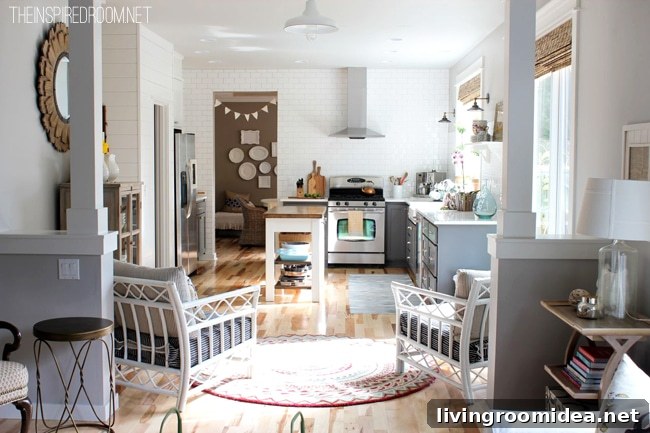
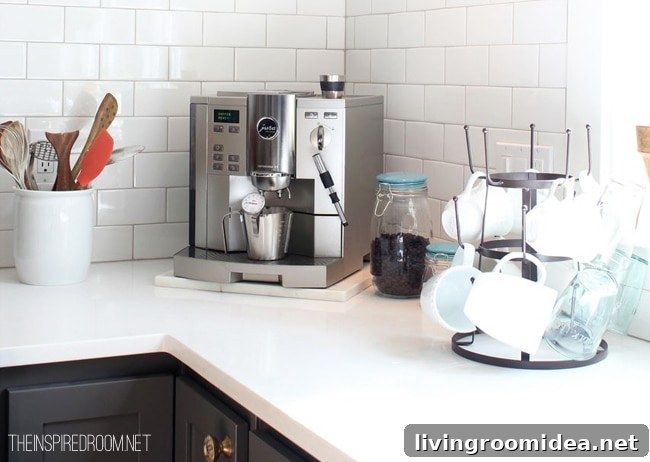
For countertops we selected a white quartz—Caeserstone Organic White—which brightens the room and contrasts nicely with the Hickory wood floors. To keep a bit of the warmth from our previous home, we added a single wood counter on the small island. The island was a DIY project and gives the room a working, lived-in feel.
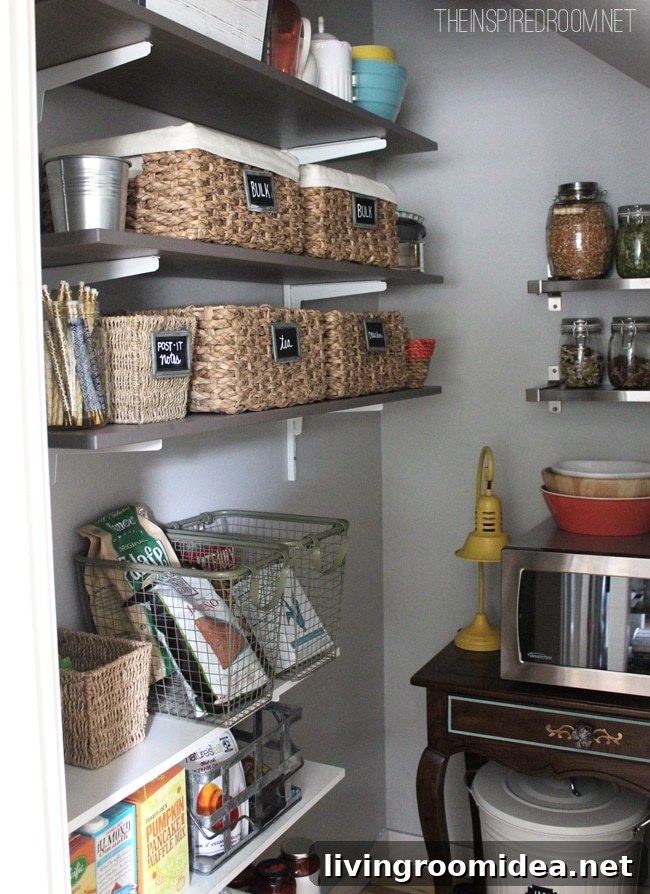
Functionality guided many decisions. We converted the pantry to an open, framed space and moved the microwave into it, which improved work flow and freed up kitchen real estate. Open pantry shelving keeps everyday items accessible and motivates us to stay organized.
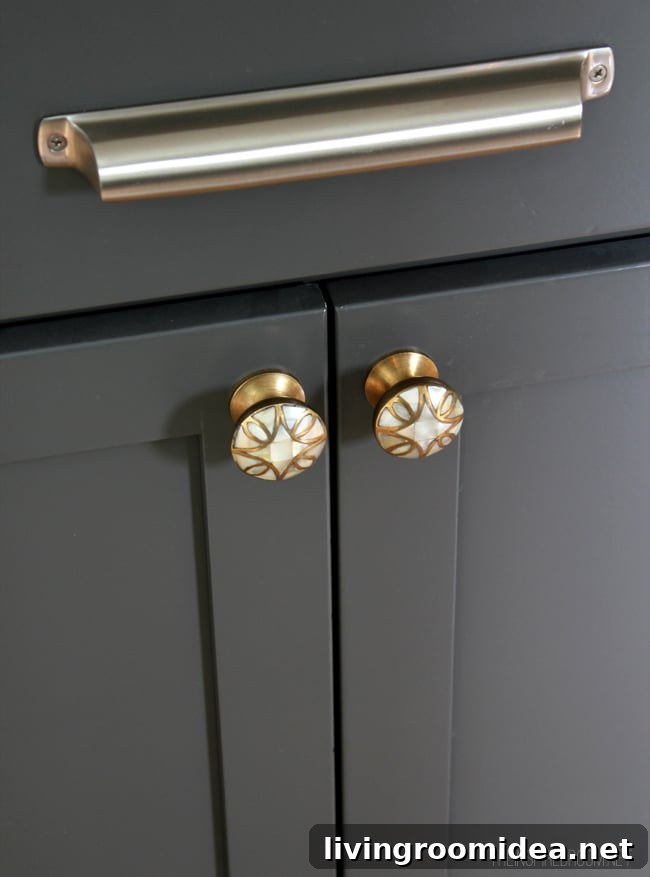
Hardware and lighting act as the jewelry of the room. New bin pulls and knobs in a traditional-modern style, along with warm sconces and Edison bulbs, add personality and finish the space. These are relatively small investments that elevate the overall design.
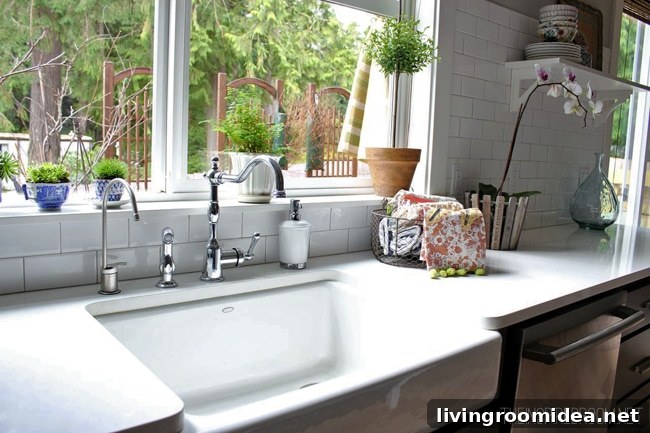
Throughout the process we prioritized real life: easy access to everyday items, comfortable seating, and durable finishes. Our apron-front Kohler sink with a single basin is a favorite feature; it’s practical and inviting. Little personal touches—teacup gardens on the windowsill, practical dog food storage, and well-loved furnishings—keep the kitchen grounded in family life.
Our kitchen is now a working, welcoming space where we cook, entertain, and live. It’s not precious—it’s used every day, which is the real measure of a successful remodel. We’ll continue to tweak details over time, but for now we’re enjoying a kitchen that fits our family and our routines.
It’s done—for now. I love how it feels, and I know I’ll keep adjusting small details as we live in the space. That ongoing process is part of the joy of having a home.