
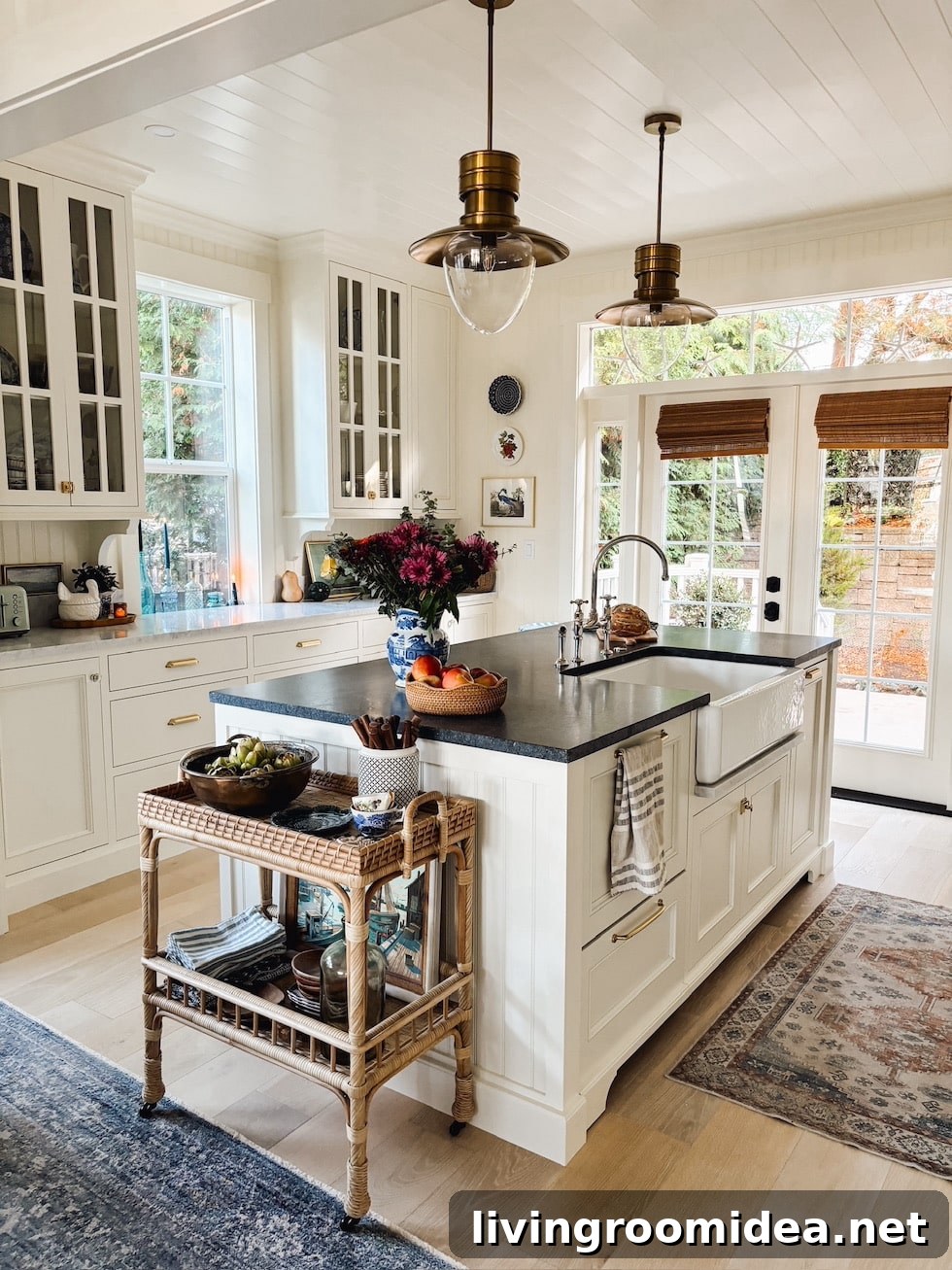
Welcome to our Coastal Cottage Kitchen reveal. After months of planning and a nine-month renovation, we’re finally ready to share the finished kitchen and dining area. It feels “done enough” to invite you in and show how we transformed this small island cottage into a cozy, functional space perfect for family gatherings and everyday life.
Two years ago we moved into what we hope will be our forever home: a charming coastal cottage in Washington. Its size is perfect for us as empty nesters and it’s within walking distance to the beach. Since moving in, we added a tiny cottage to the back of the house for my parents and updated the 750-square-foot main floor to accommodate the addition. In the redesign we swapped the original kitchen and dining room locations, which gave us better natural light, more cabinetry, improved traffic flow, and additional storage—without increasing the home’s footprint.
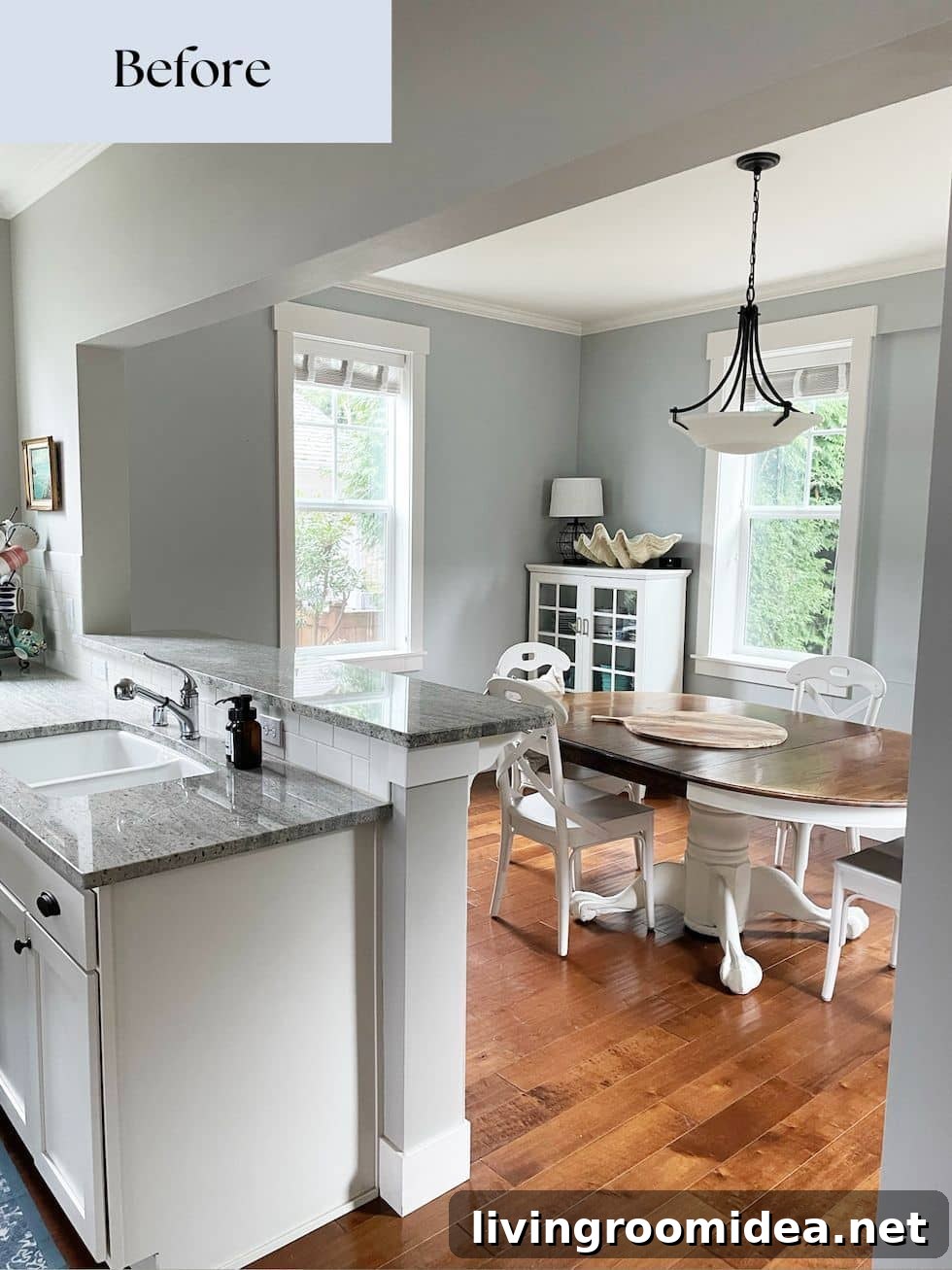
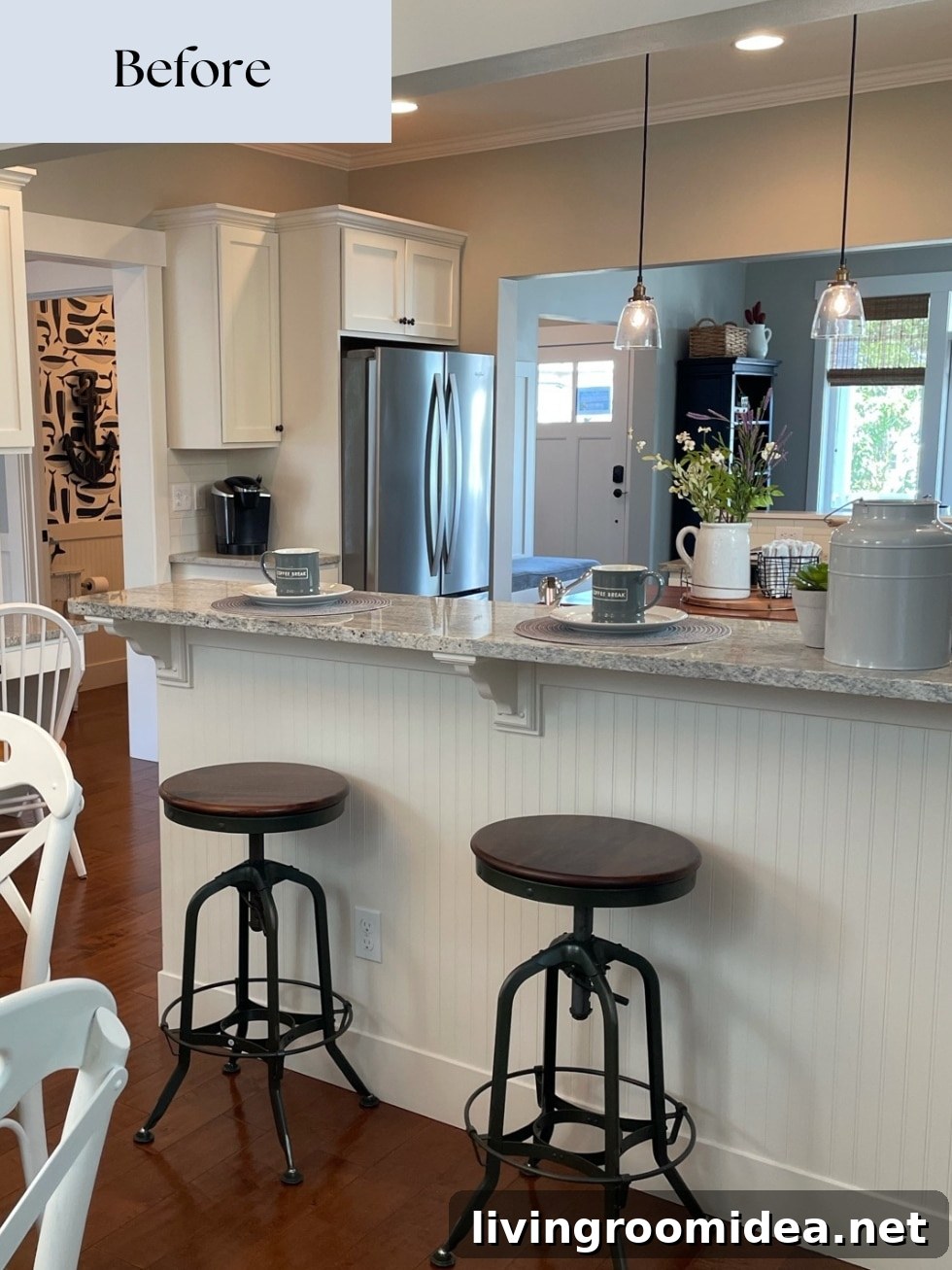
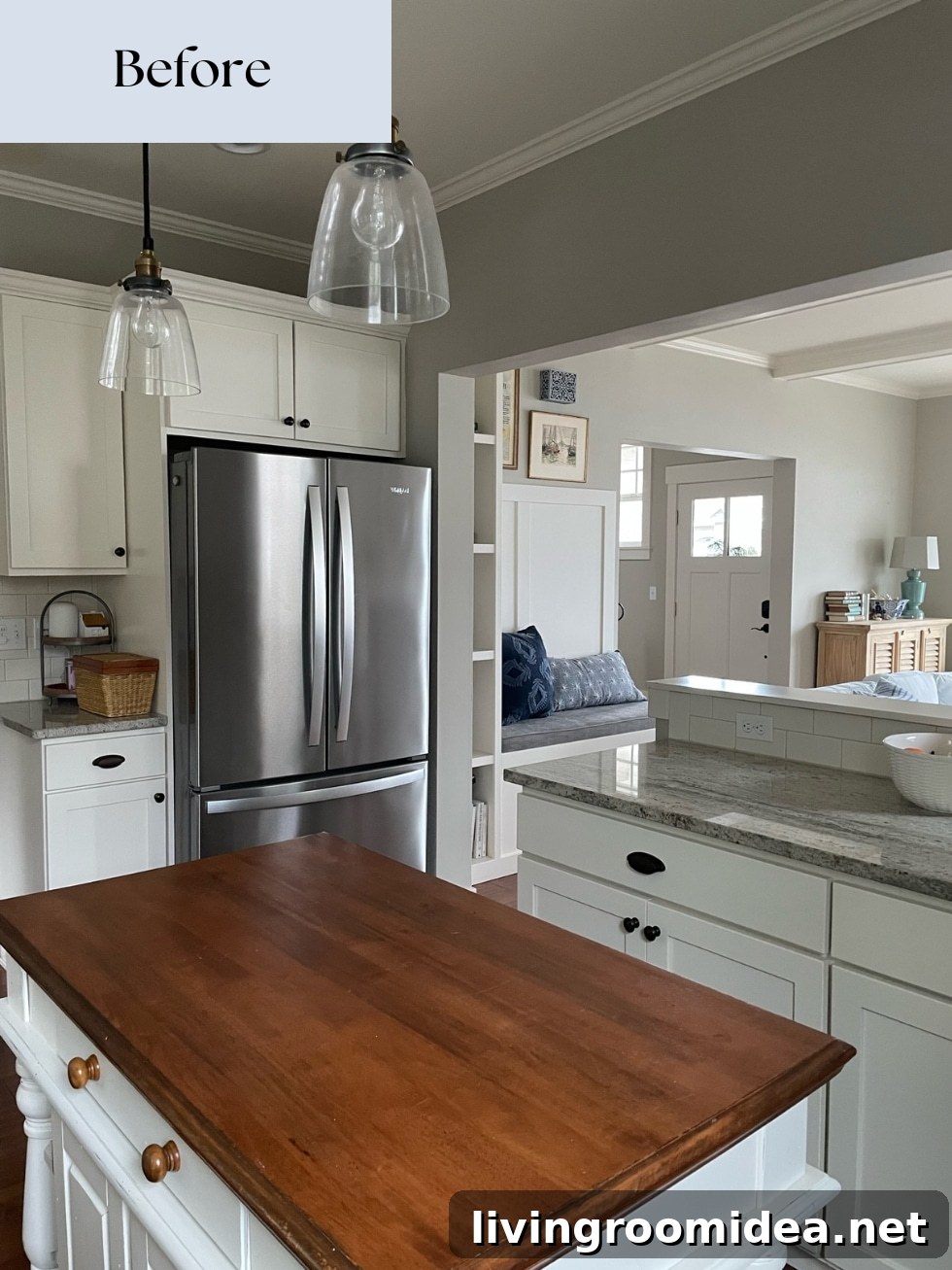
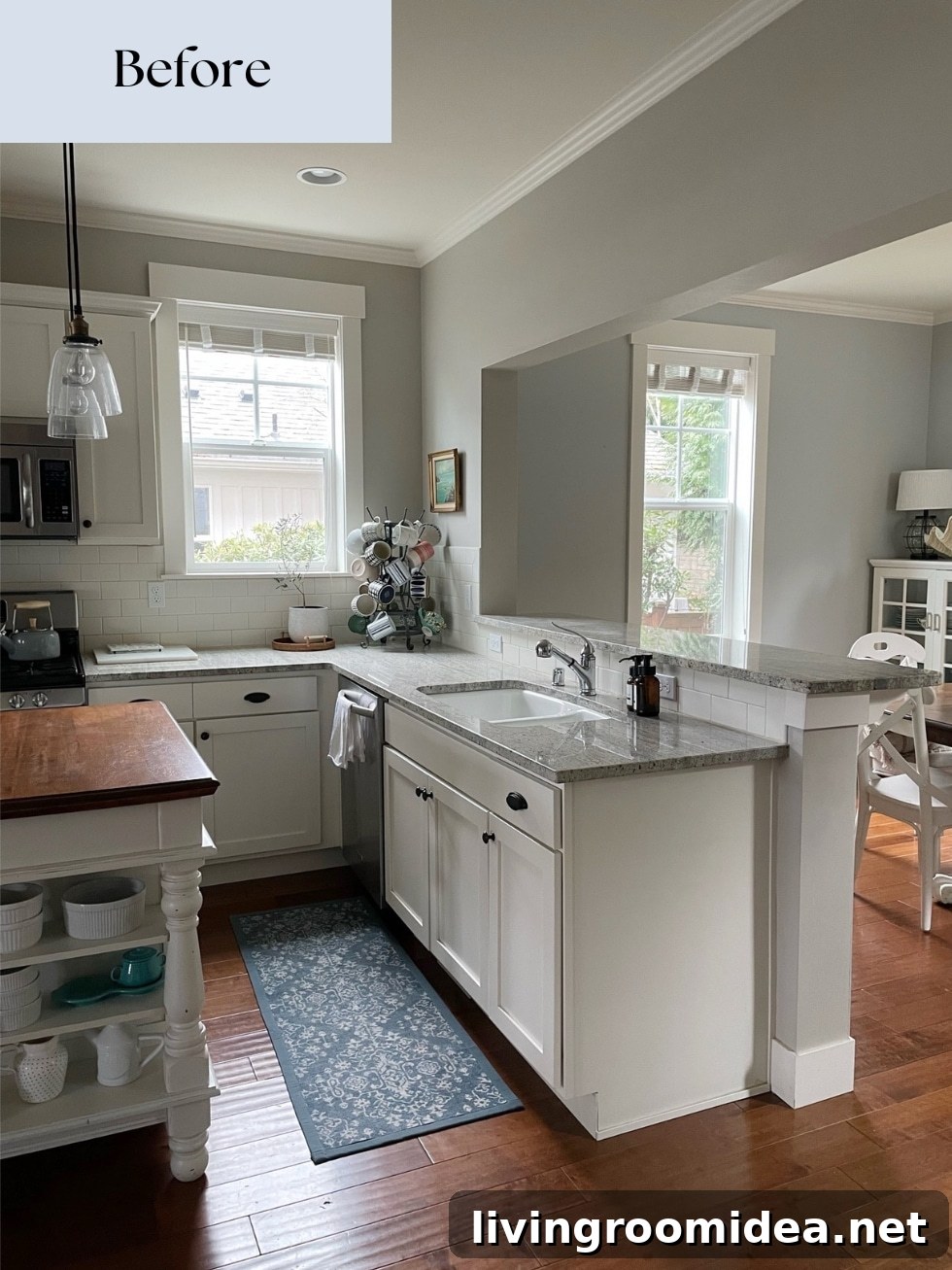
Below you’ll find after photos alongside a few before shots so you can see the transformation. This post is part one of the kitchen reveal series; I’ll share more details and room-by-room photos in future posts. A full source list appears at the end of this article.
Below is a short video of our kitchen, then scroll down for all the photos and details!
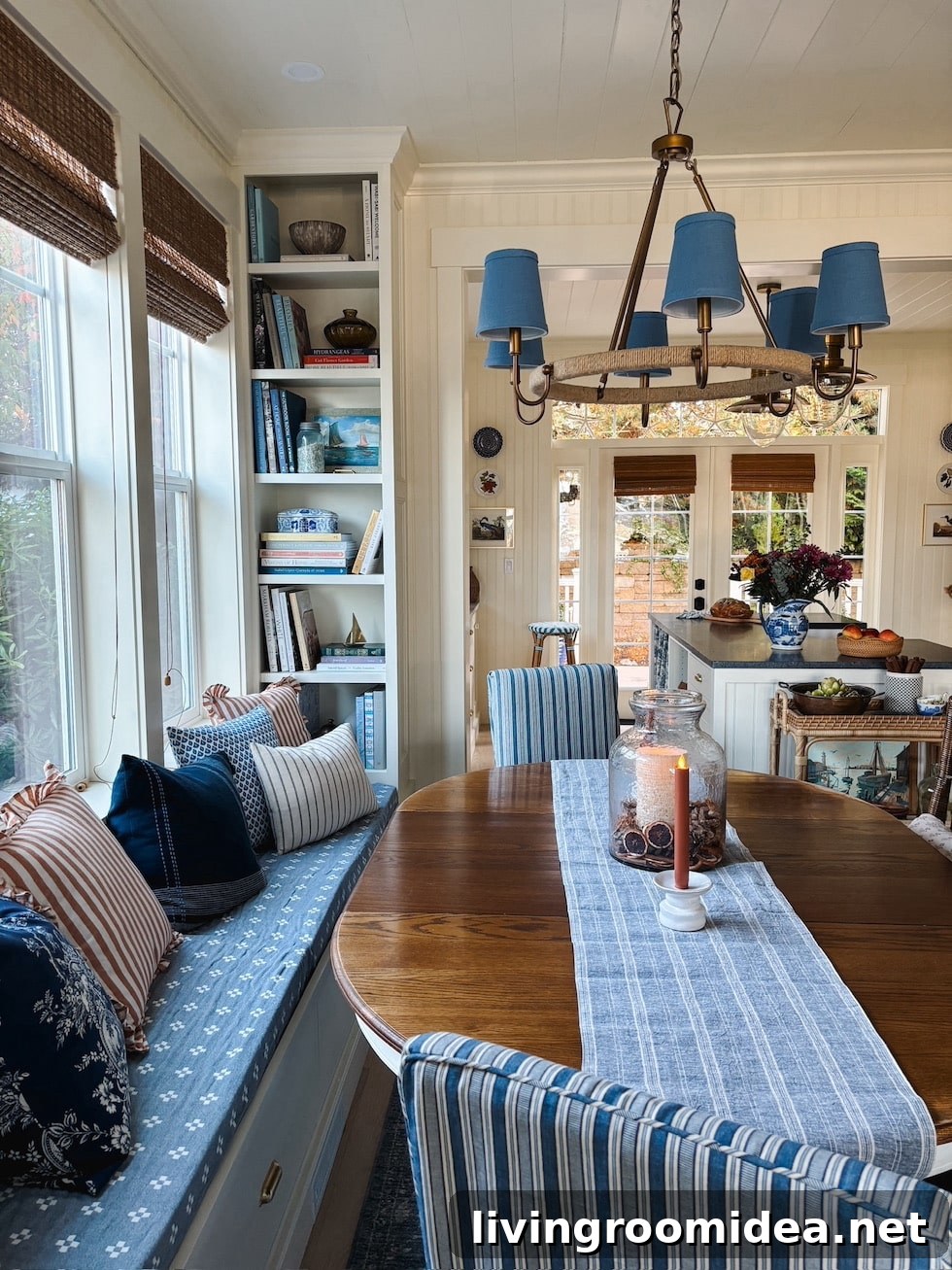
We didn’t move any exterior walls; all changes were made within the existing footprint. By placing the new kitchen within the former dining room, we gained counter and cabinet space and created a layout that welcomes light and improves circulation among the main floor rooms, including the living room, dining nook, and kitchen. The mudroom, powder room, and entry were also considered in the redesign and will be featured in later posts.
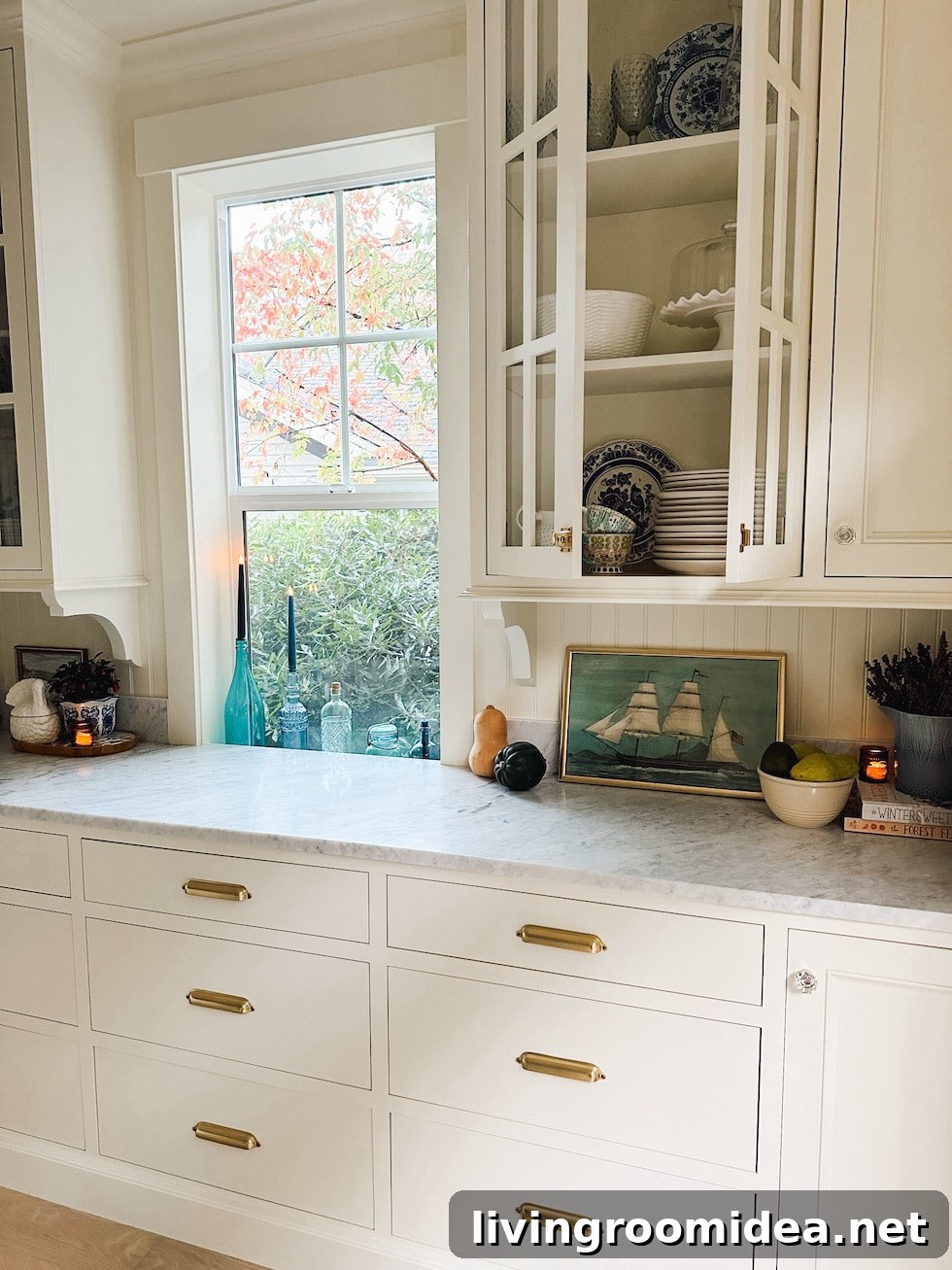
One major change was adding French doors and sidelights to the back wall, replacing two old windows. This brought significantly more light into the space and created direct access to the new deck and backyard. A side window from the original dining room remained in place, and we simply ran counters beneath it.
We also raised the low headers between rooms to improve sightlines, increase the flow of light, and make the spaces feel more connected. Openings were widened slightly while maintaining a sense of separation for warmth and coziness.
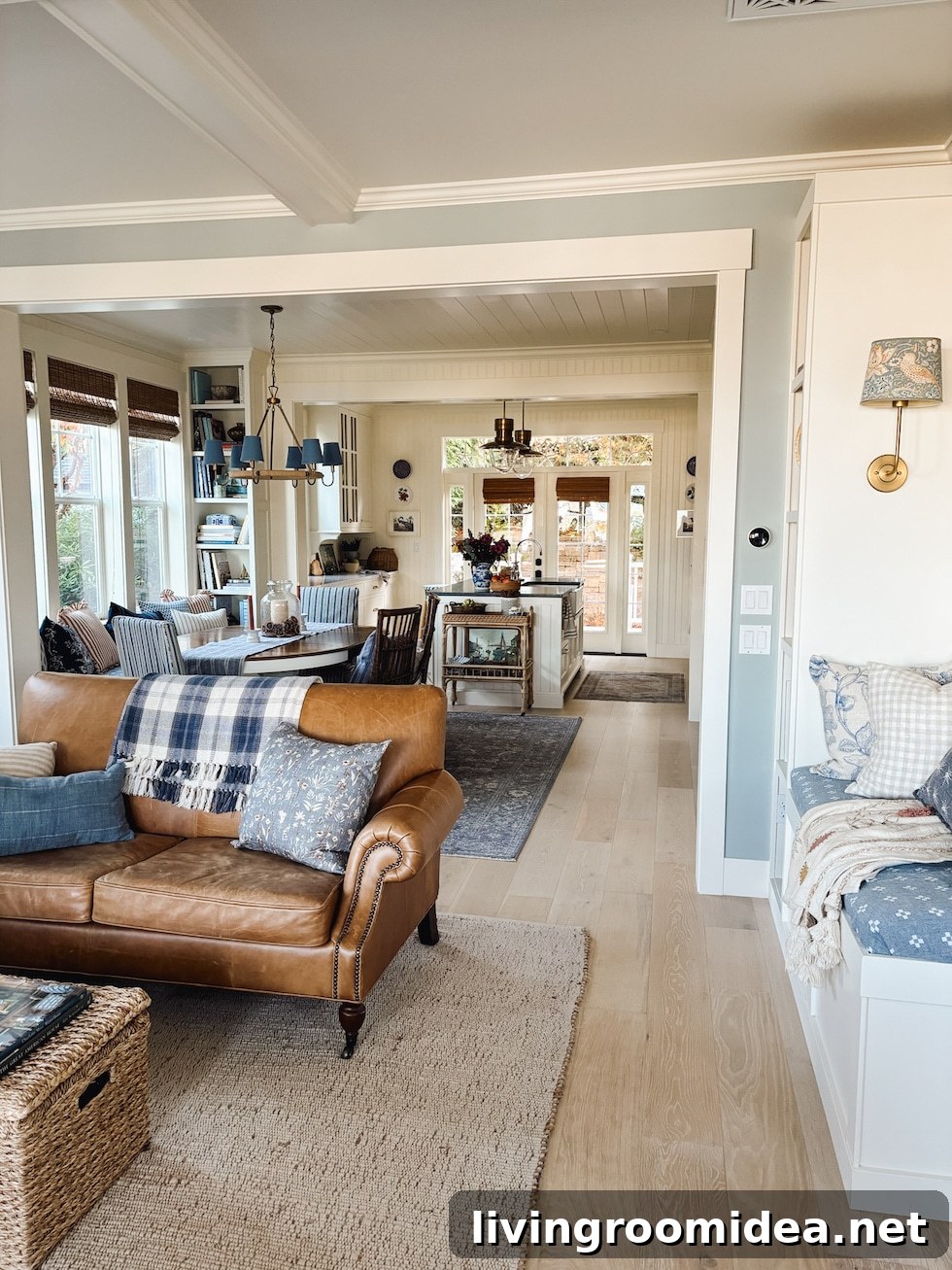
Swapping the rooms allowed us to remove two bulky peninsulas that previously crowded the kitchen, dining, and living areas. The new plan opens up circulation and creates a more spacious, comfortable layout for entertaining and daily life—all without adding square footage.
We have a growing family who live nearby, and a grandchild on the way, so hosting holidays and gatherings was a priority. The new layout provides more room for people to gather, ample storage, and comfortable zones for everyday routines.
From the kitchen sink and island you can enjoy water views framed by the dining and living room windows. We were pleasantly surprised to discover a side view of the water from the dining nook. The sink placement allows for conversation across the island and a welcoming spot to sit at the little cubby we created for a stool.
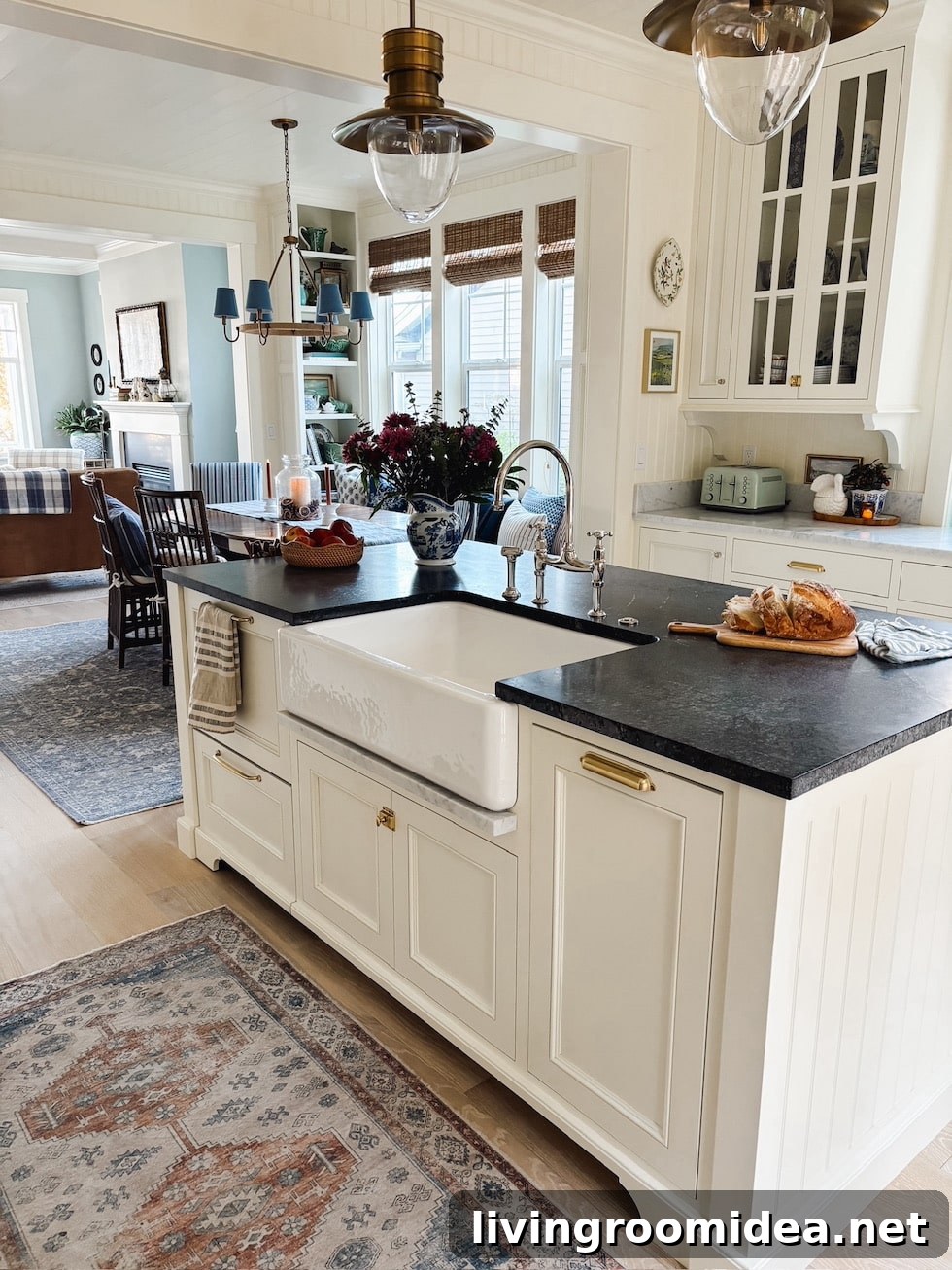
Because the main floor is compact and open, we made each wall attractive from every angle while maximizing storage. Appliances are panel-ready and integrated into the cabinetry wherever possible so they don’t become focal points. Our range—a showpiece we affectionately call Beatrix—remains a standout but is positioned to welcome attention when approaching the kitchen rather than dominate the entire space.
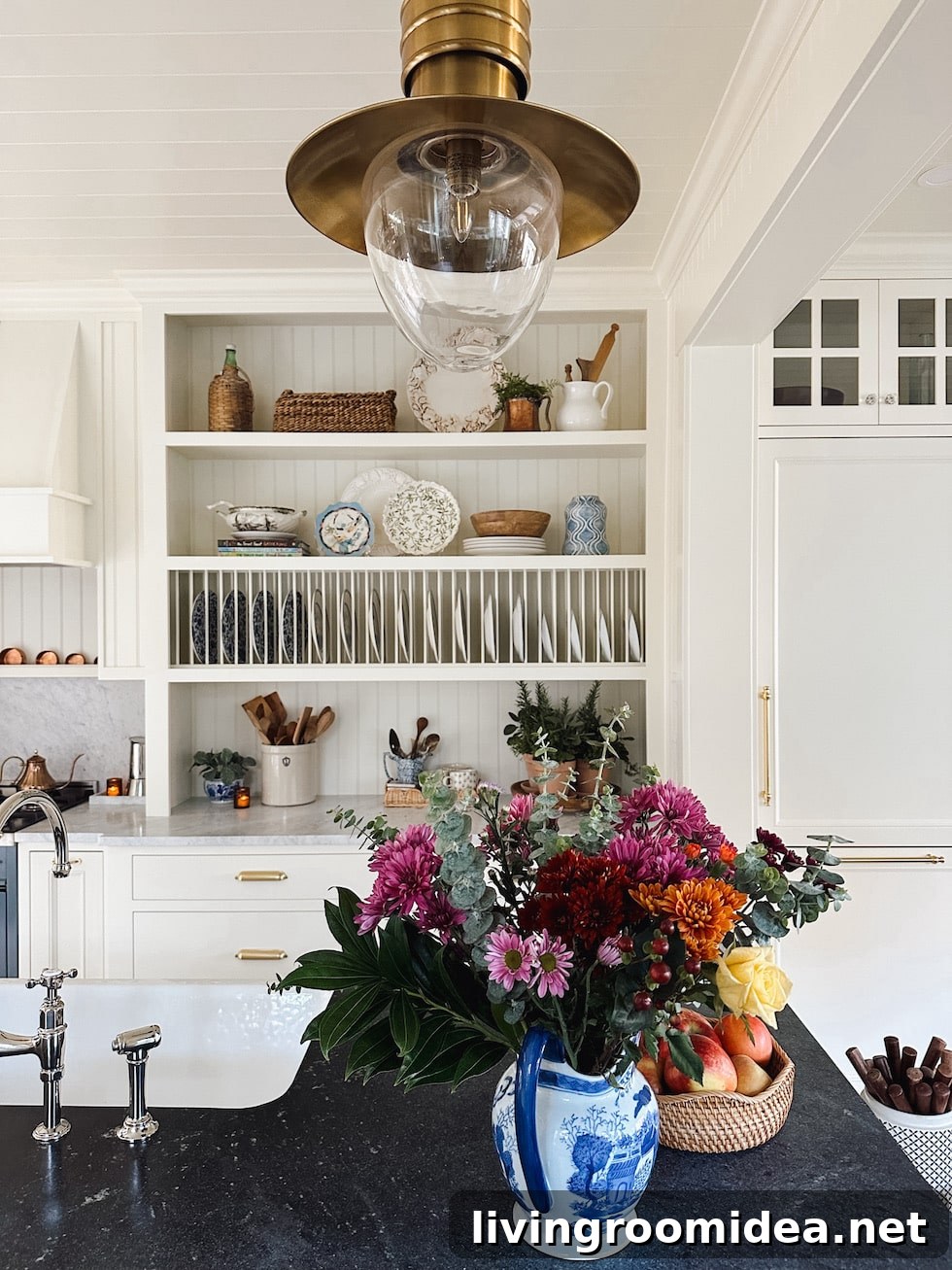
To compensate for the lack of traditional buffets or china cabinets, we added a custom plate rack, display shelves, and glass-front cabinets that function as beautiful storage seen from the front entry. Long, unobstructed counters give us space for buffet-style serving and family prep away from the main cooking triangle.
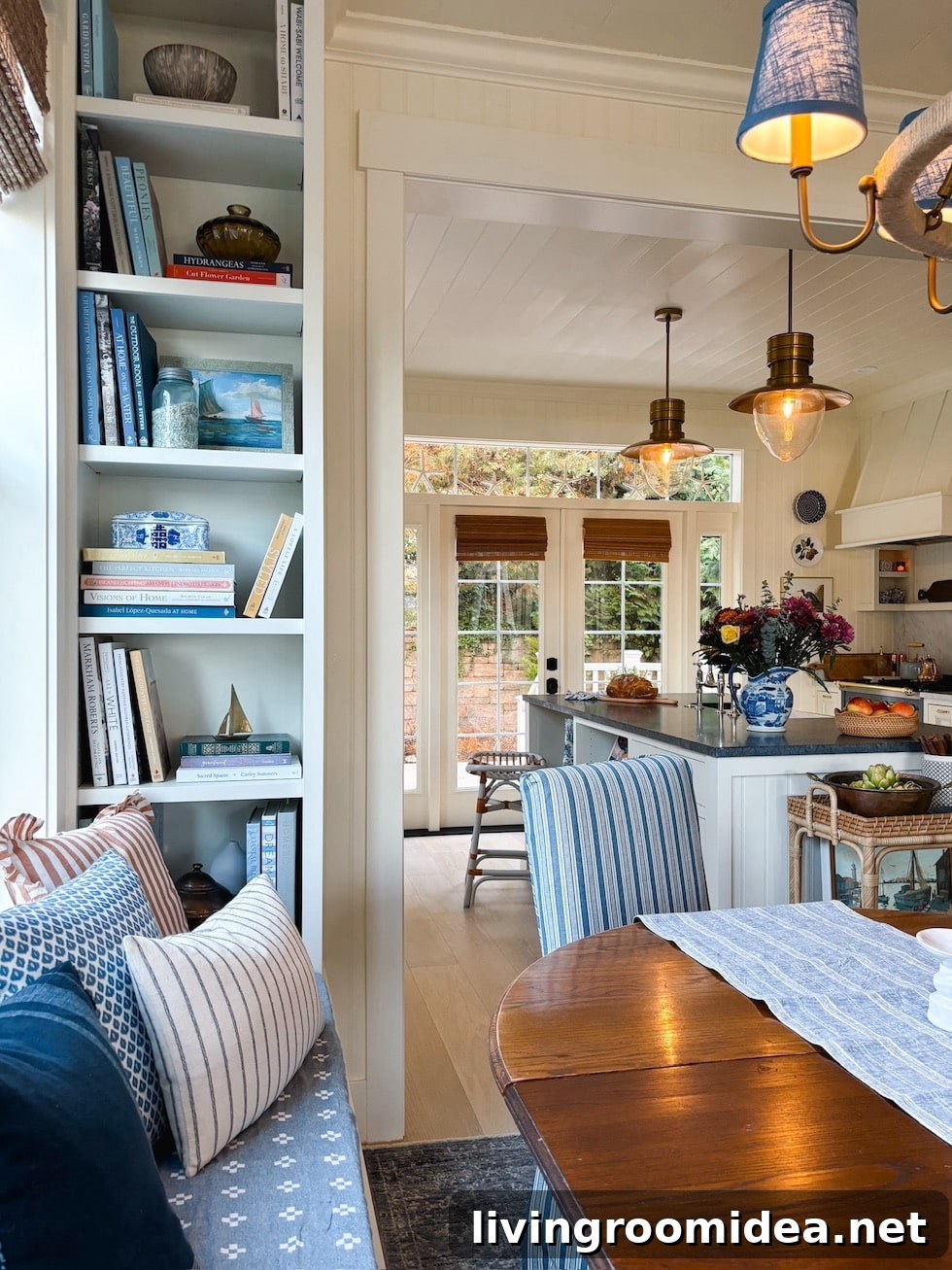
A small nook for books and a DIY no-sew banquette cushion provide function and charm. The temporary cushion is easy to make, and I’ll share instructions in a future post when we update it with an upholstered version next year.
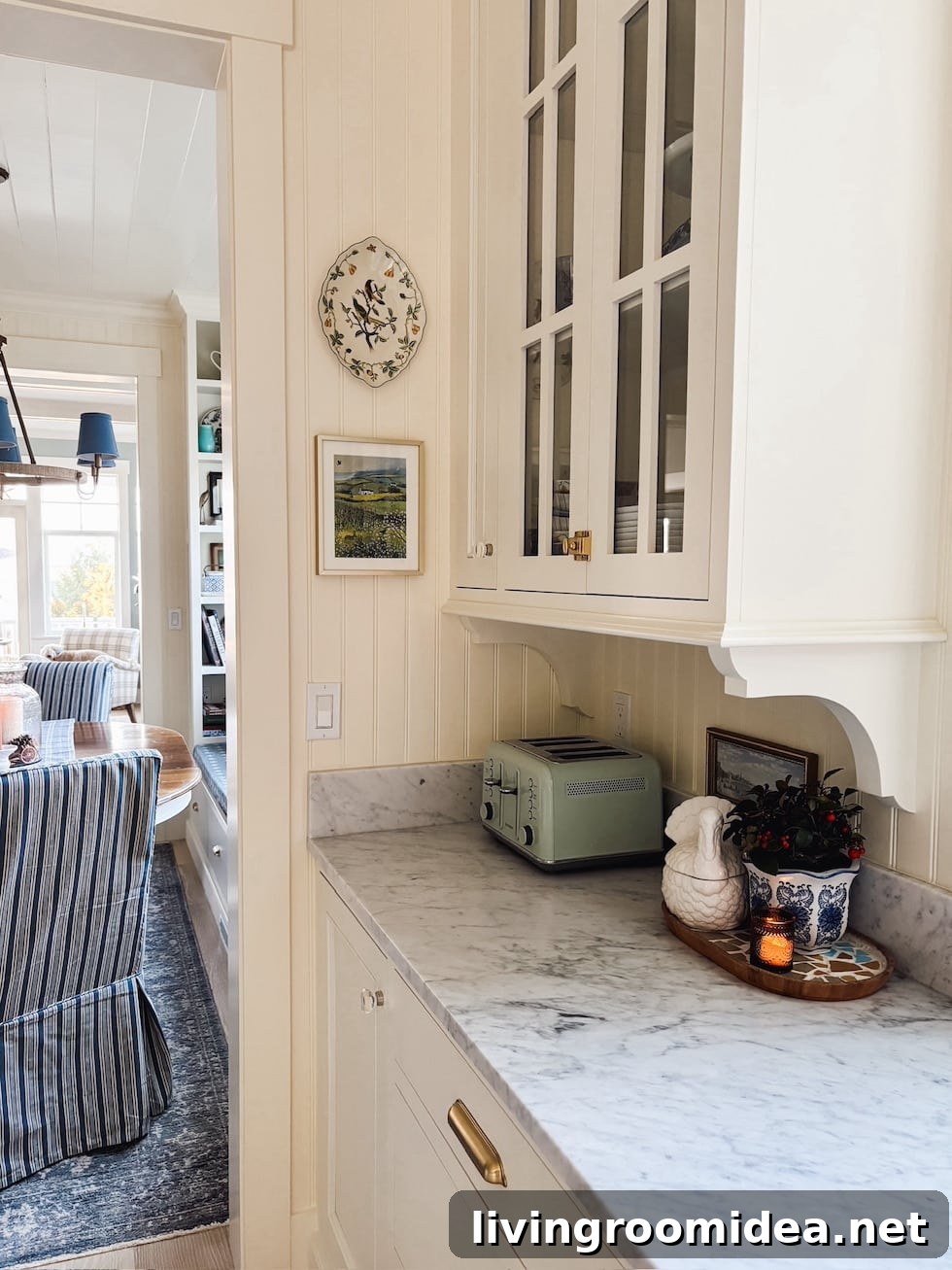
Because there are many doors, windows, and openings, we carefully planned storage on every available wall and chose visually appealing glass cabinets to keep views tidy from the entry. The long counters outside the primary cooking area are perfect for staging meals during gatherings, and we appreciate all the drawer storage for everyday convenience.
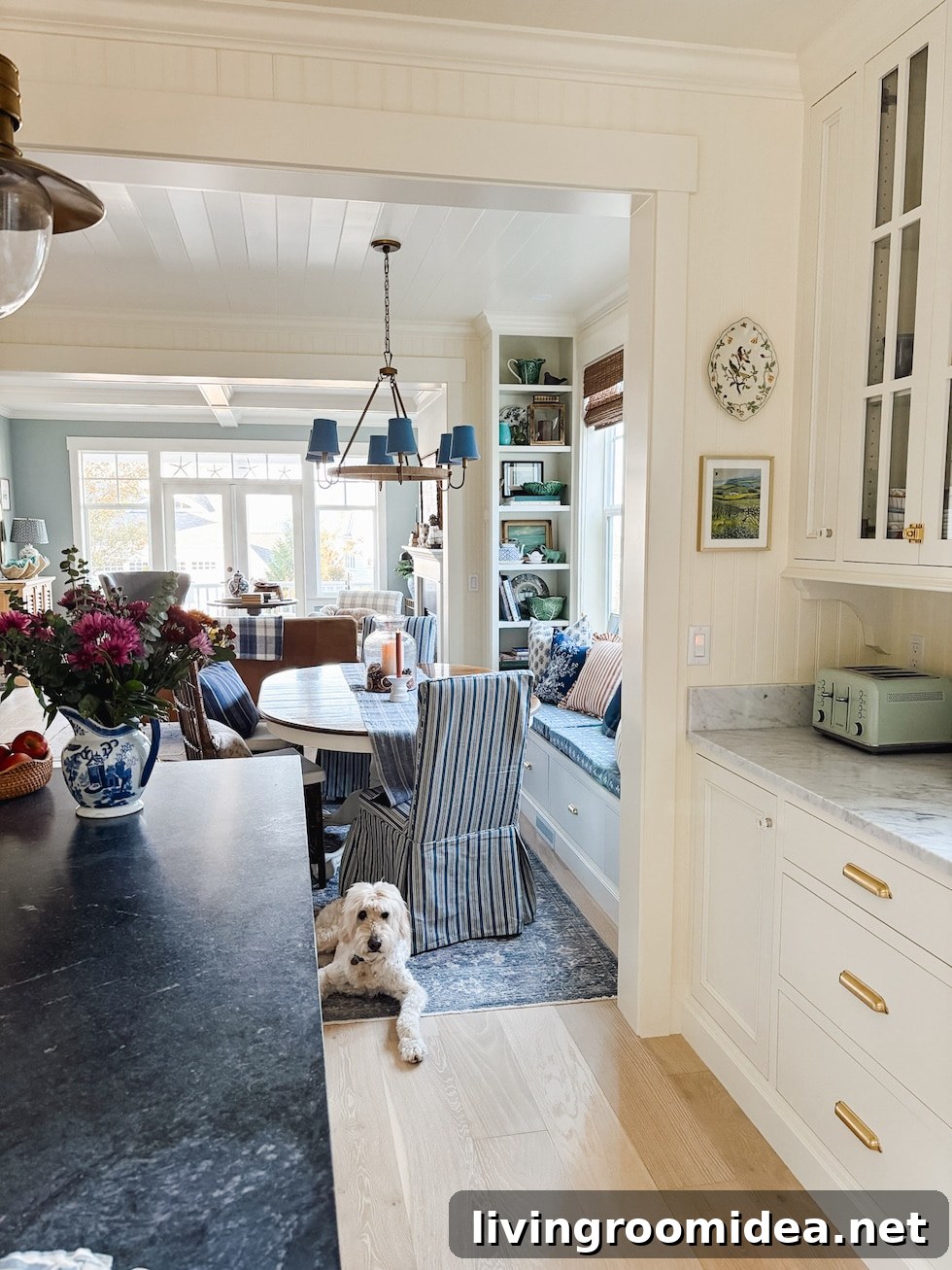
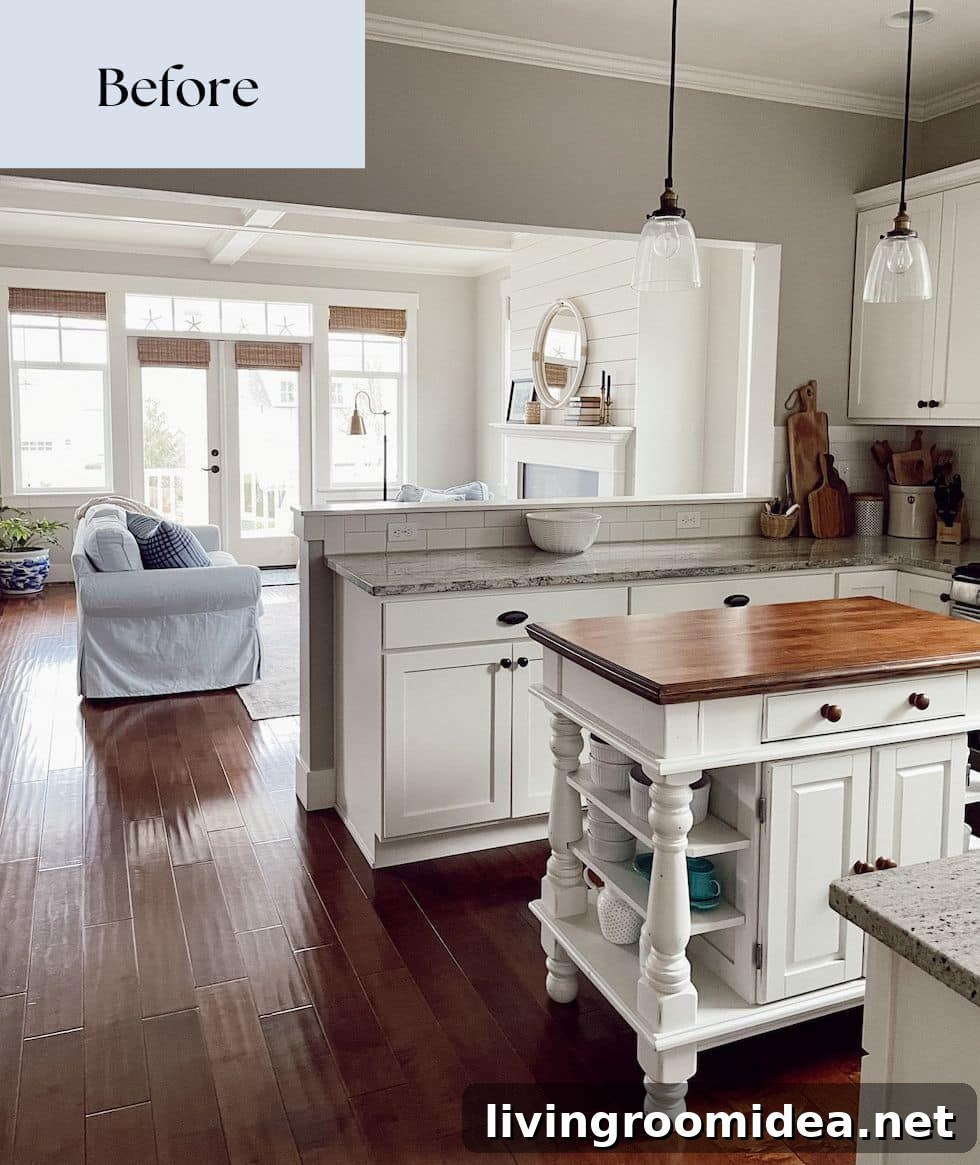
The dining nook seats the same number of people as our former dining room but leaves more floor space for traffic and for adding extra seating when needed. It’s easier now to flow from one space to another—and to grab coffee from the dedicated coffee cabinet without crowding the kitchen.
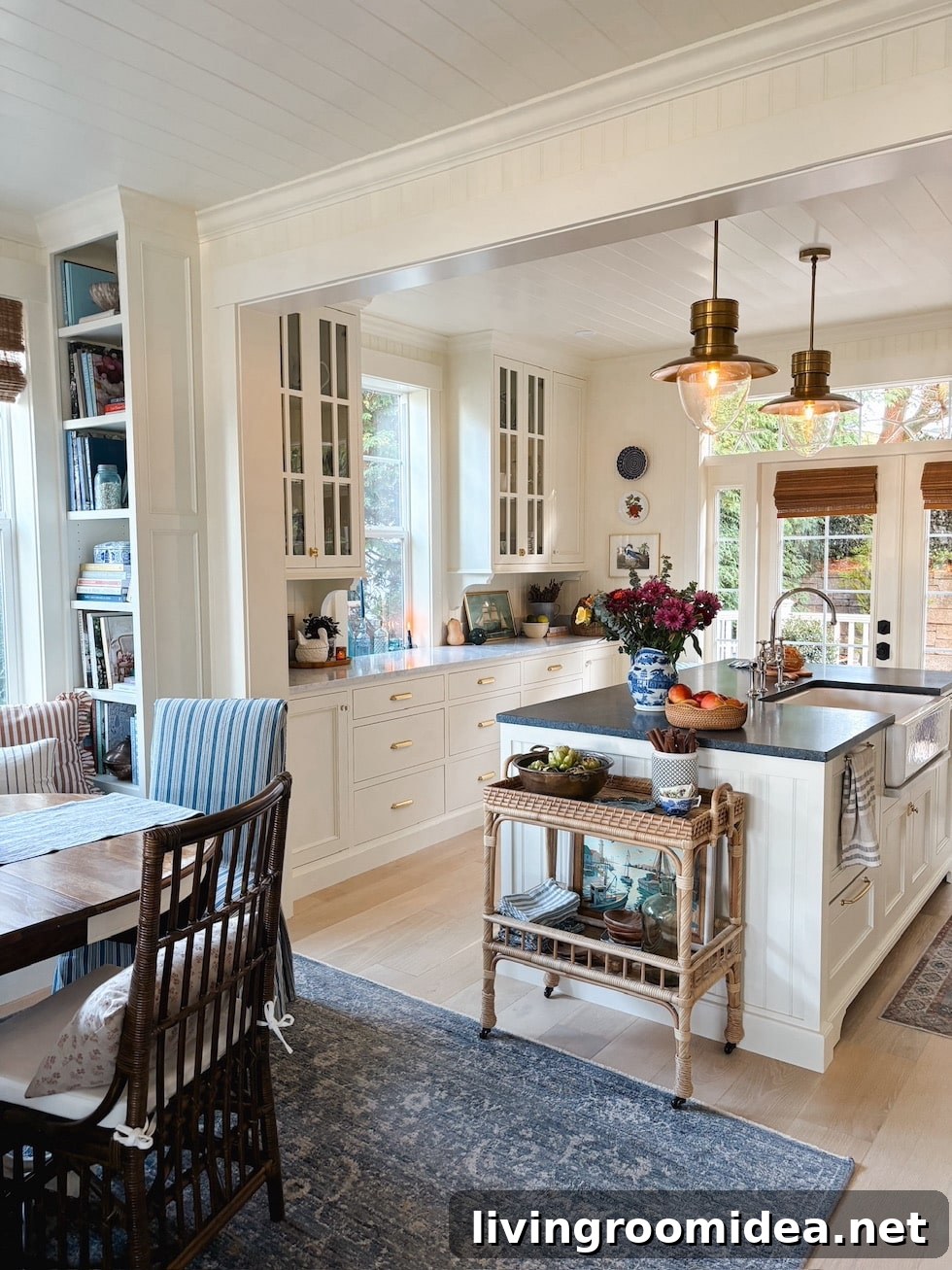
The living room and dining room now connect in a way that encourages easy movement and flexible furniture arrangements. It’s simple to create additional conversation areas by turning a chair or pulling up seating from another room.
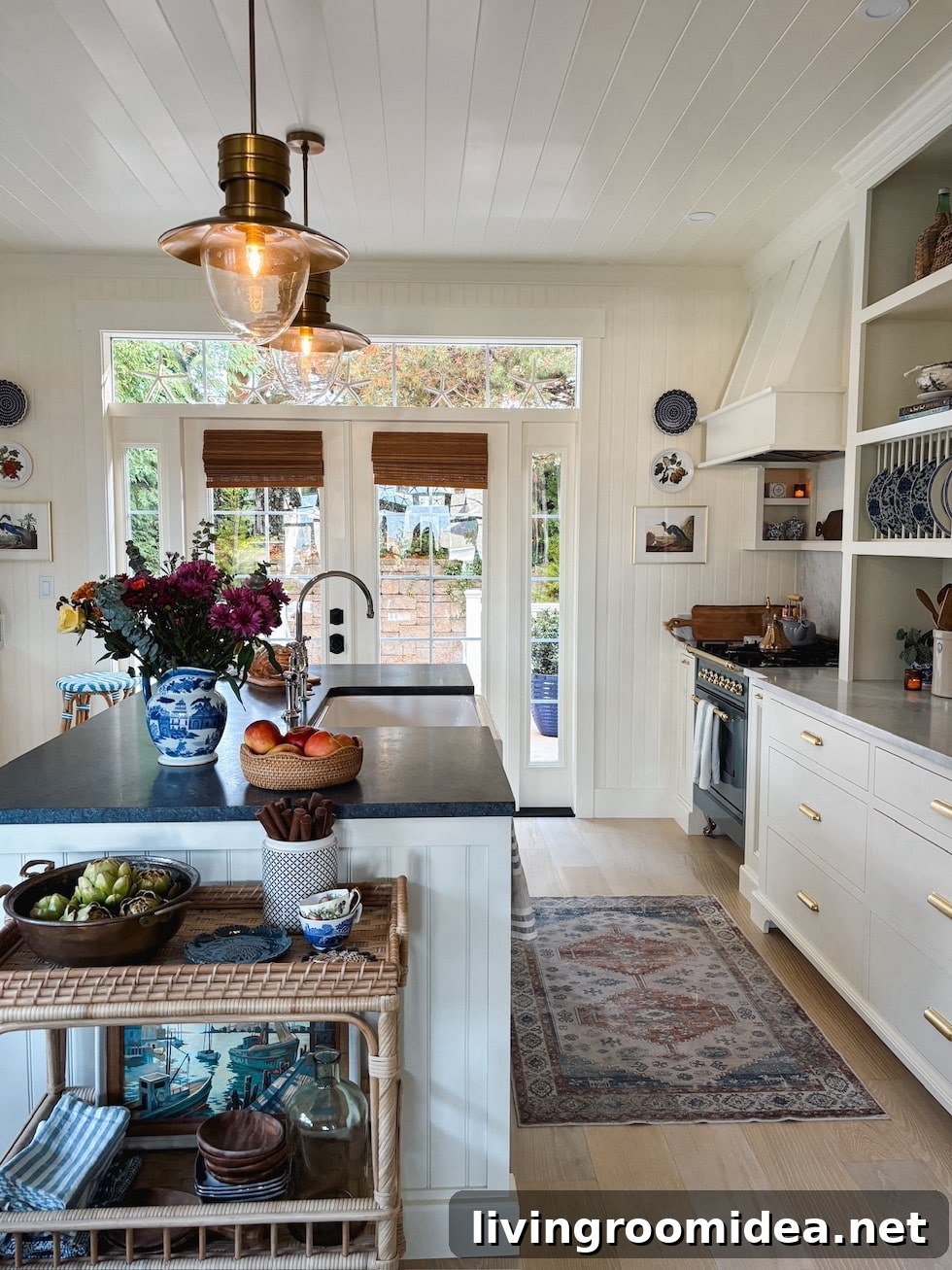
The kitchen is now a joy to work in. Multiple people can cook, wash, and prep without getting in each other’s way. The expanded counter space makes hosting potlucks and holidays effortless.
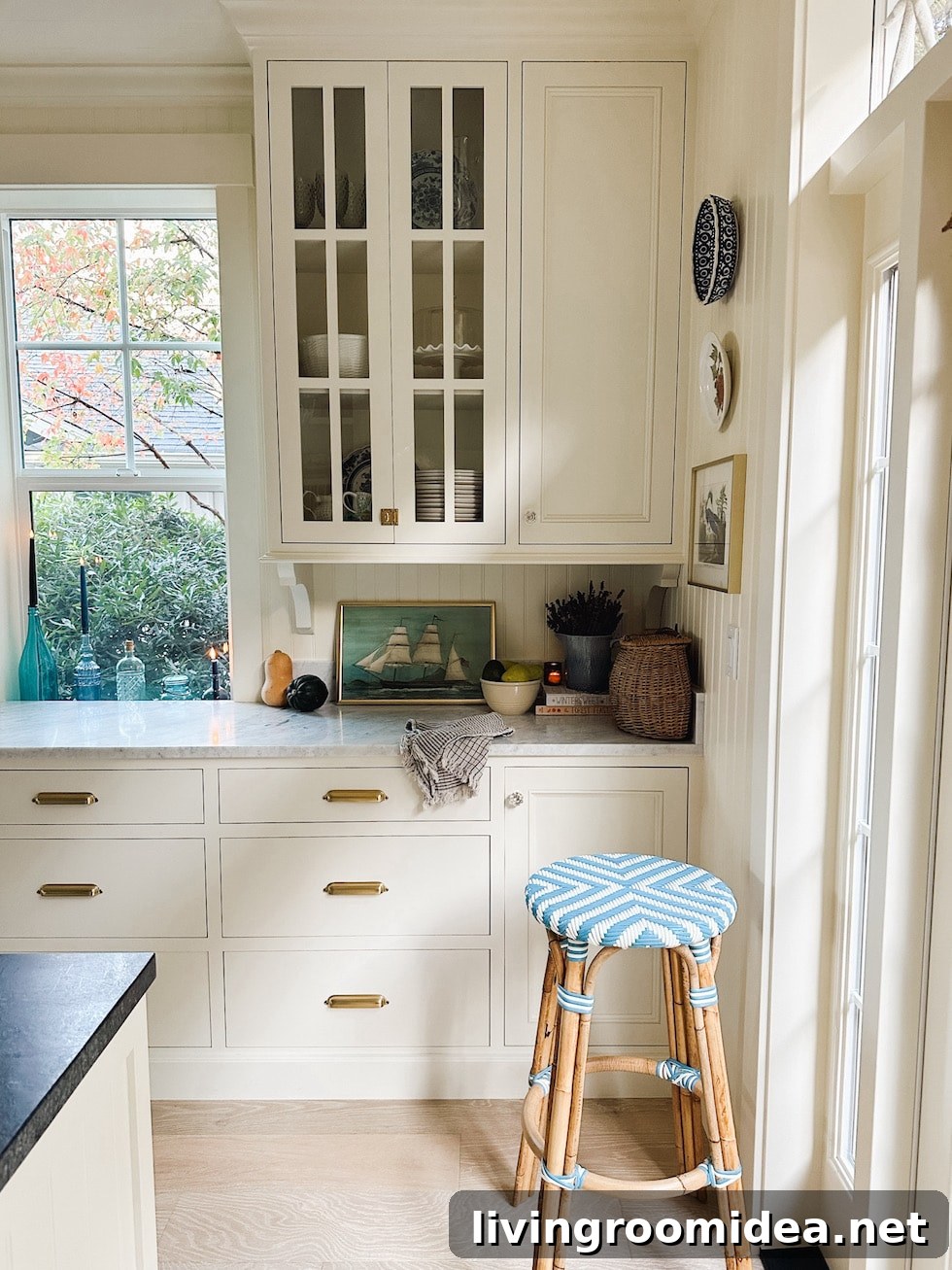
Perimeter counters are honed Carrara marble while the island is honed soapstone. We left the soapstone un-oiled to preserve its beautiful blue-green hue. We love both surfaces and will share more about them in future posts.
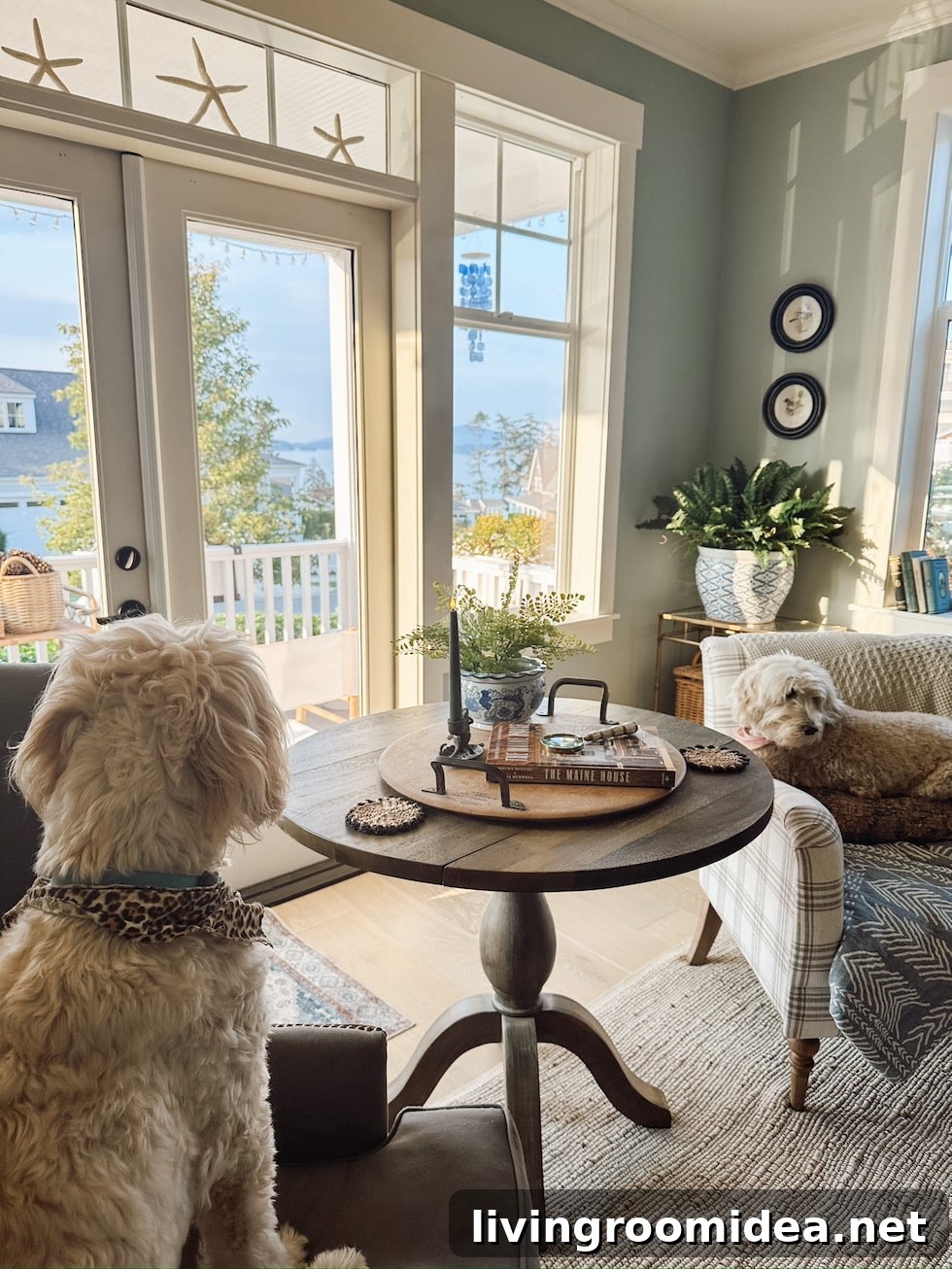
Jack (and Lily) are happy to have the house whole again after construction.
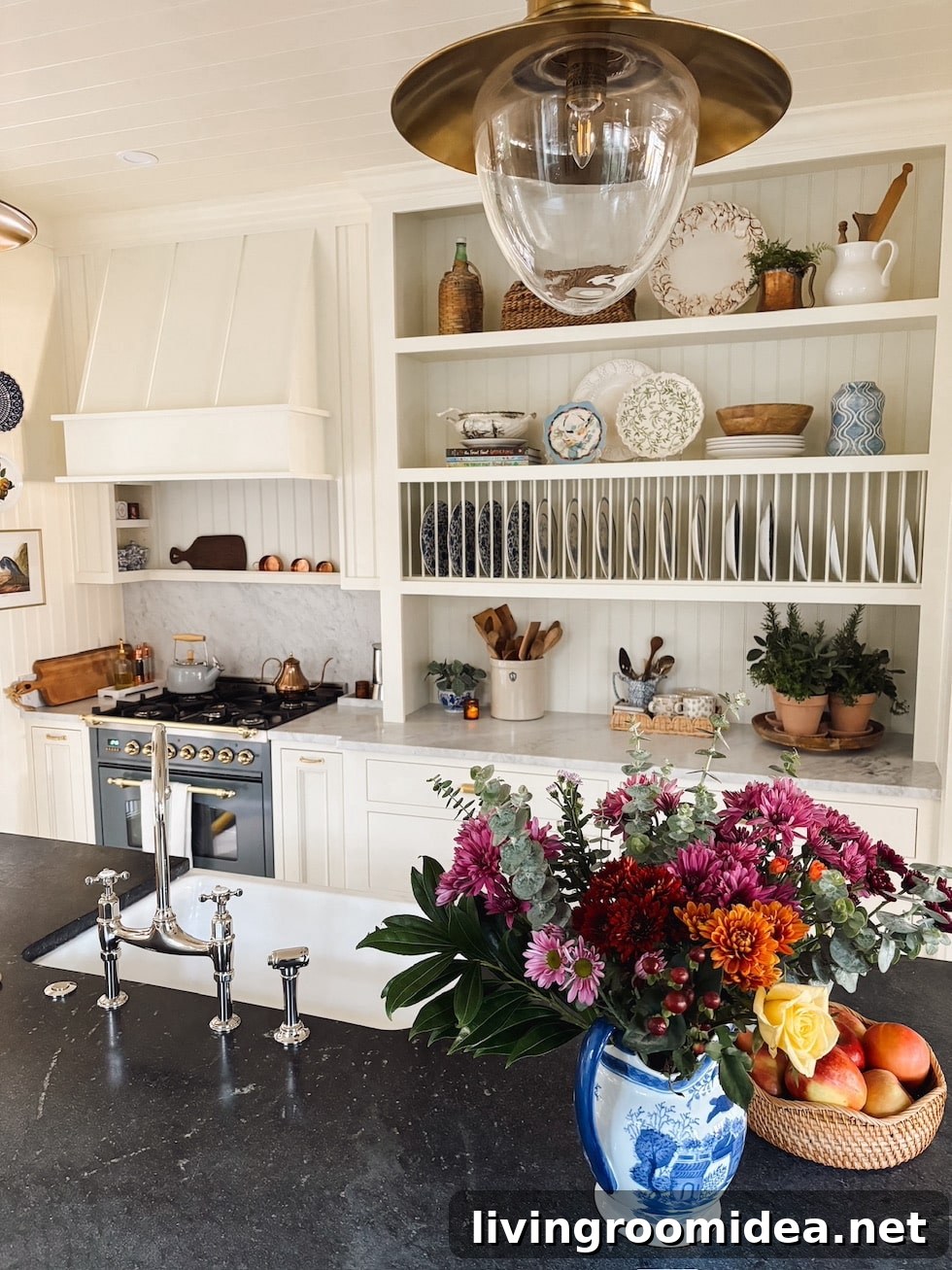
The faucet was my first purchase for this kitchen—I’ve loved this style since our English Tudor kitchen. I sourced mine through a specialty vendor, but similar options are available from several suppliers.
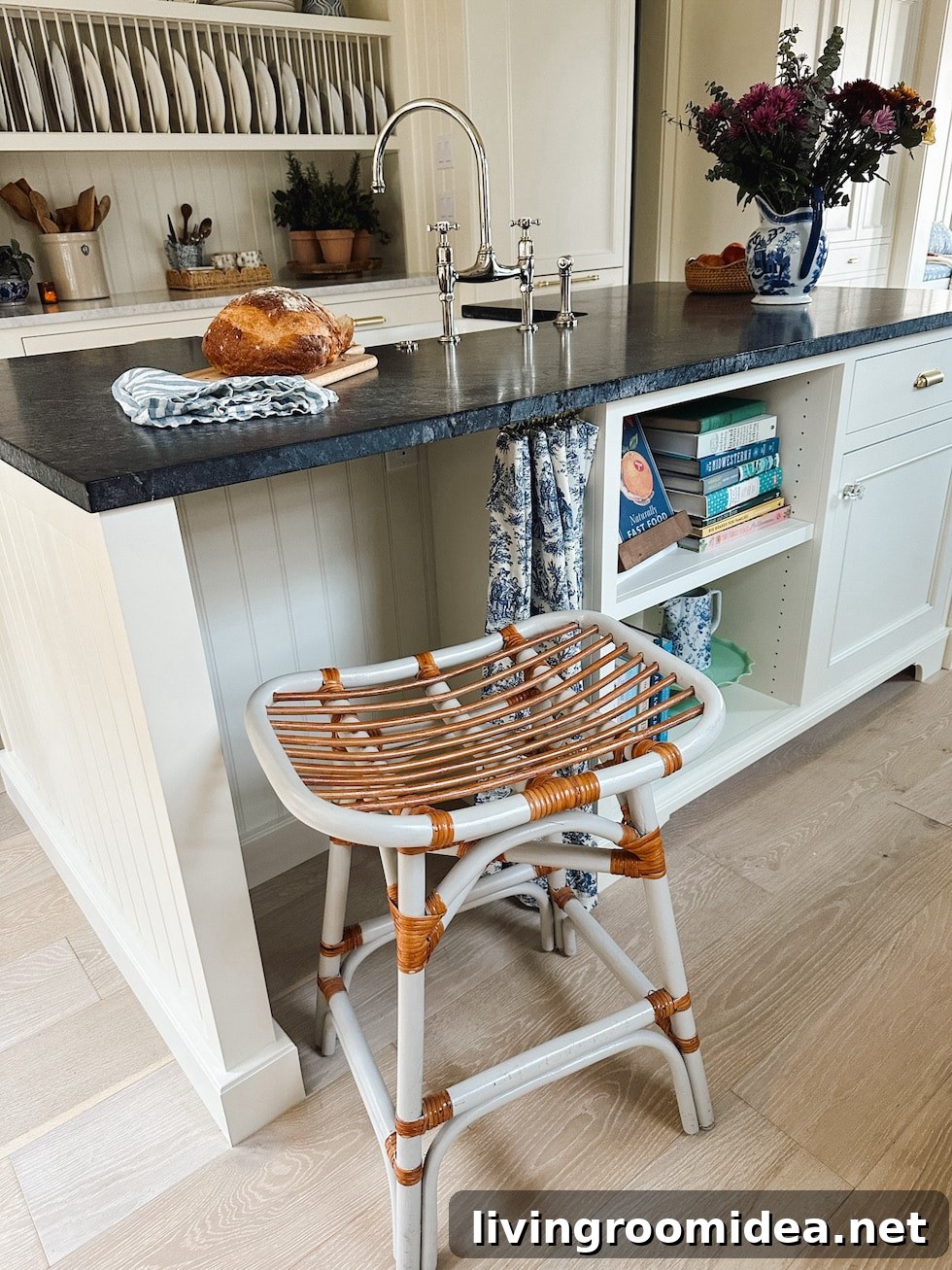
A small cubby houses a stool and a removable toile cafe curtain that nods to our previous English Tudor kitchen. The curtain slides on a tension rod and can be swapped seasonally or removed entirely. It’s a favorite spot for breakfast with a view to the backyard.
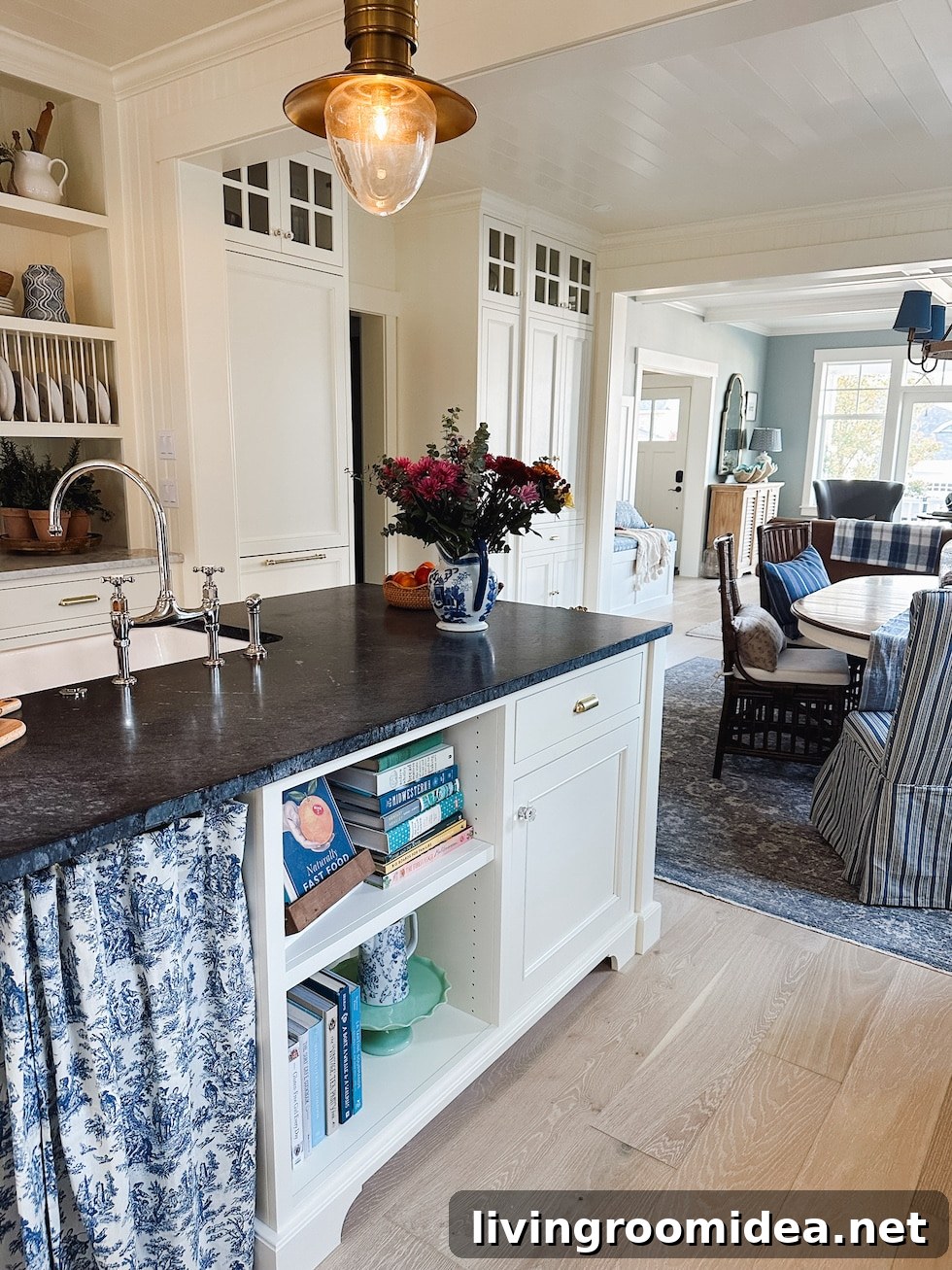
Cookbook shelves are another sentimental touch inspired by our earlier kitchen. We repeated similar baseboard moldings and inset cabinetry to keep the classic character throughout the space.
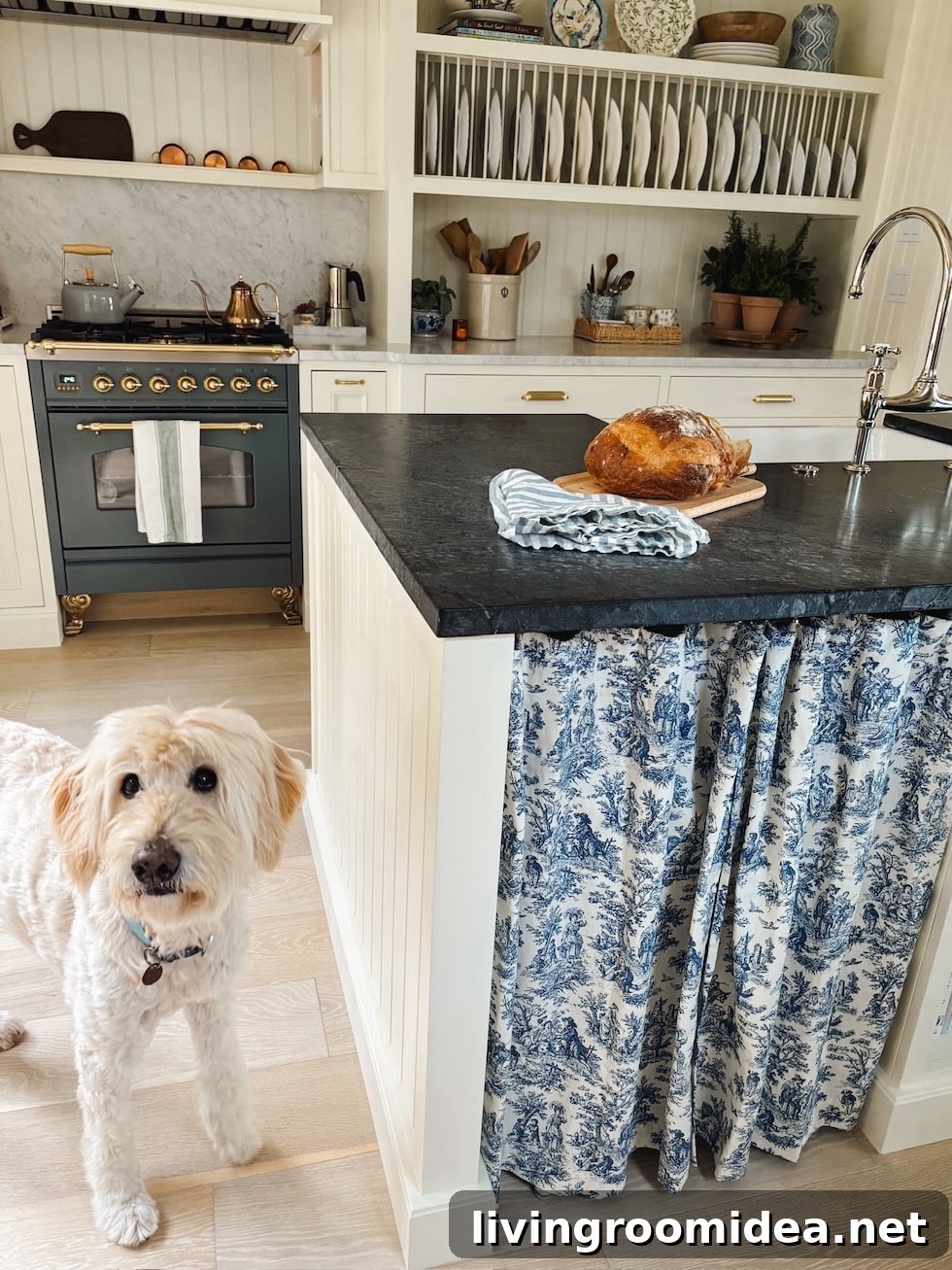
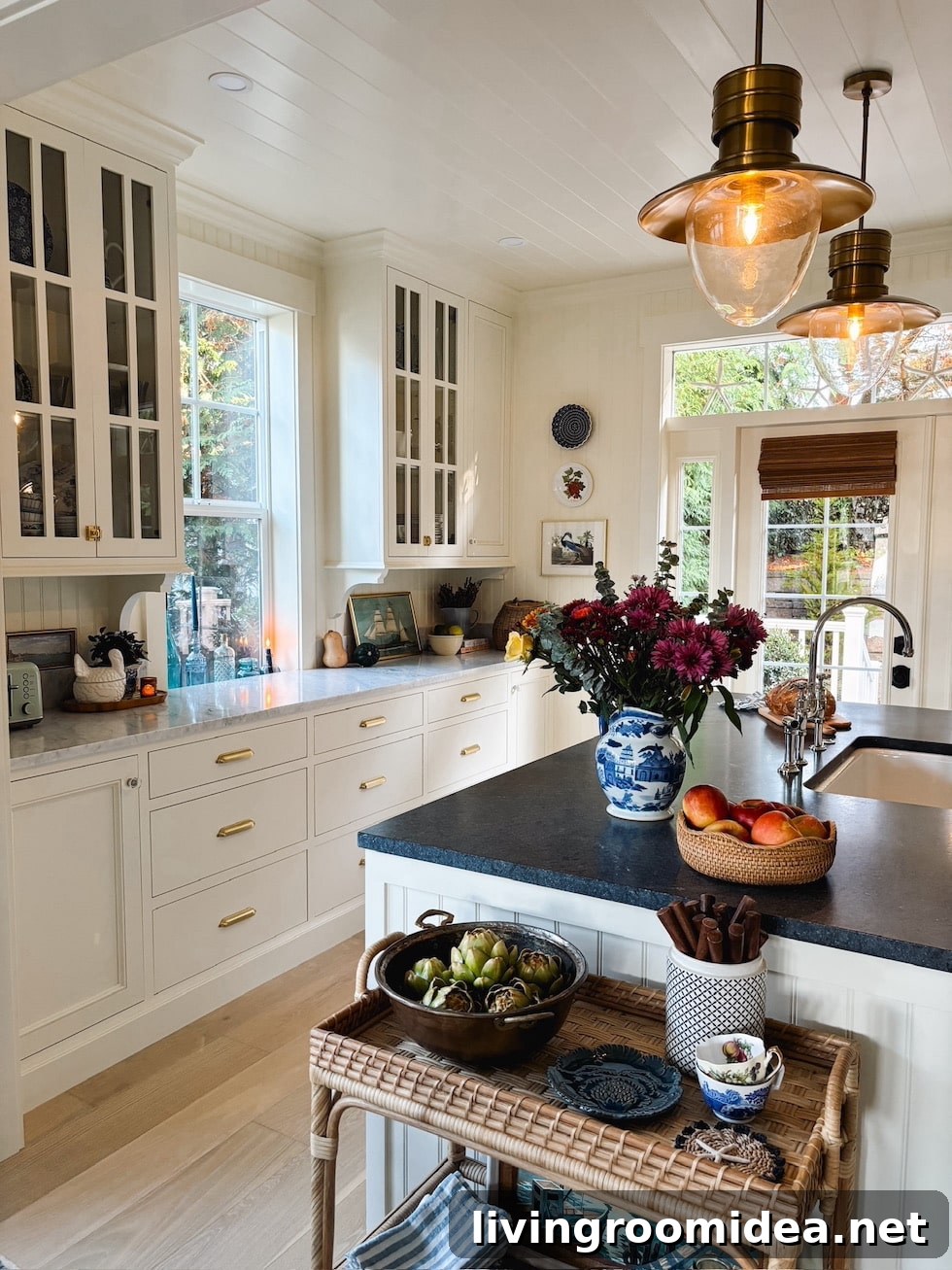
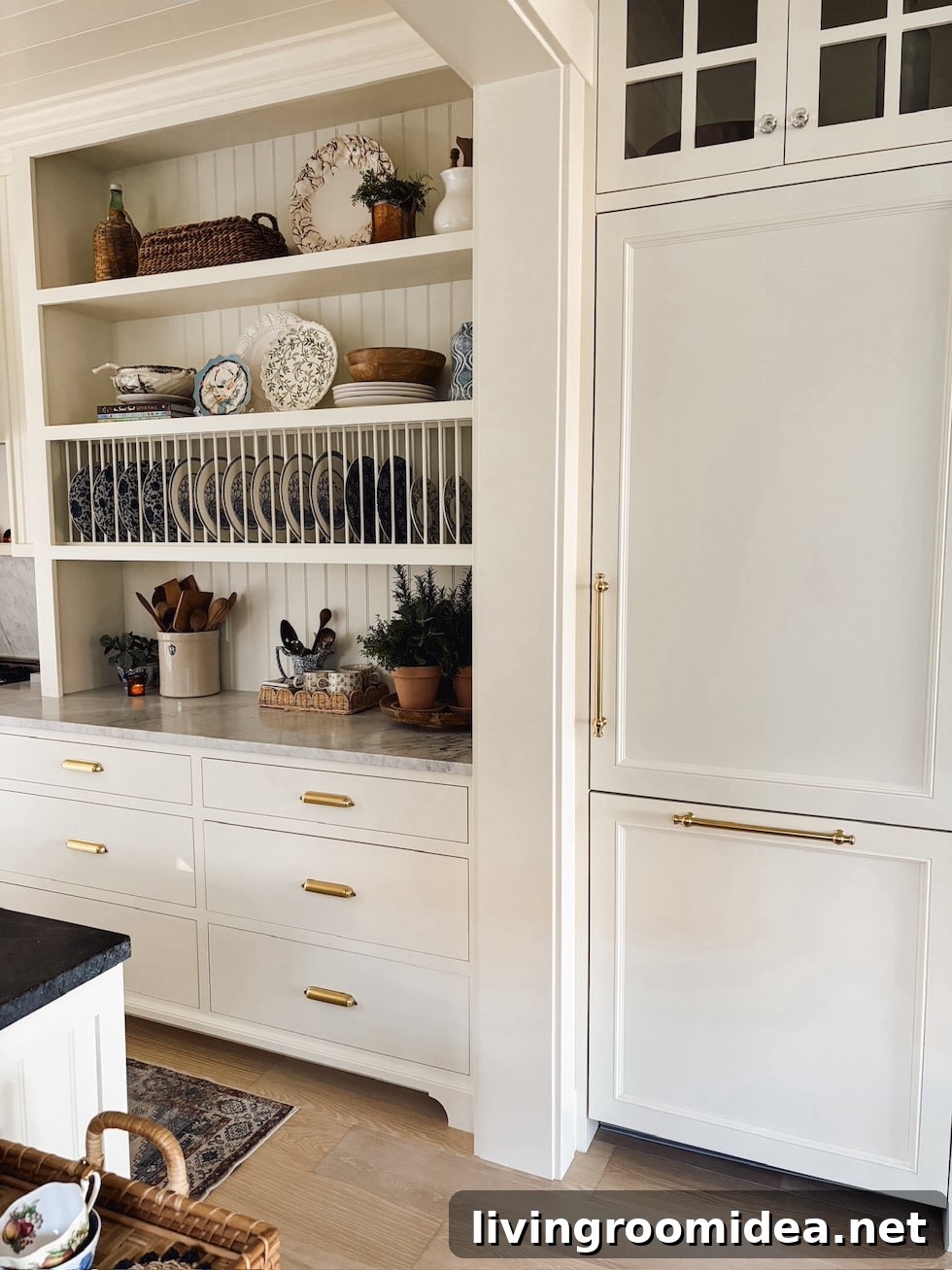
We treated the kitchen and dining areas as one cohesive zone for layout and storage planning so every wall contributes to function and sightlines.
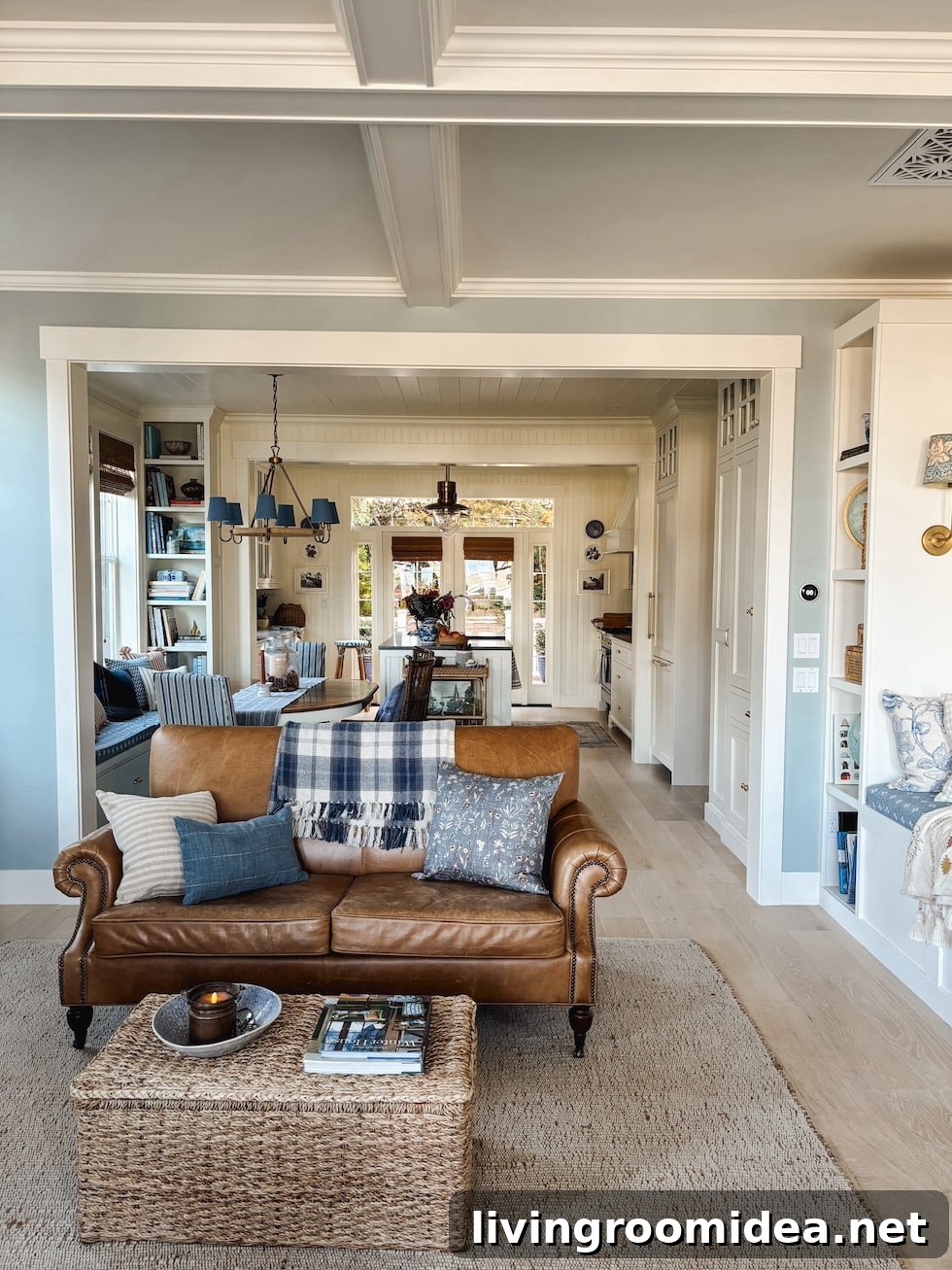
The home remains cozy, but the improved flow makes daily life and entertaining much easier. We enjoy living in every room and love the character that remains in this updated cottage.
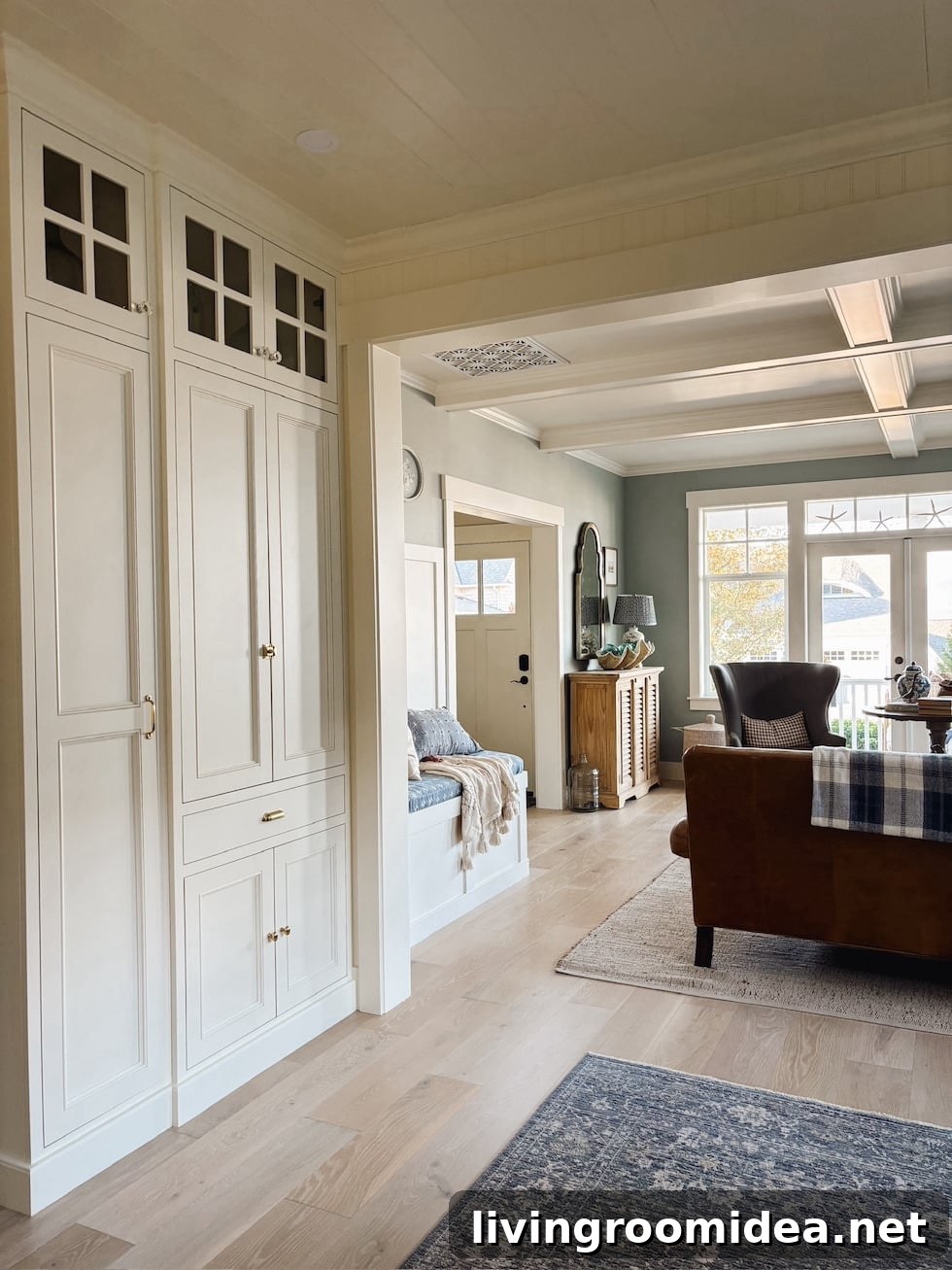
Built-in cabinetry in the dining area houses our coffee station and pantry cabinets. The cabinet doors slide back so the space can be open during gatherings or closed for a cleaner look. I’ll share the interiors of these cabinets in a future post.
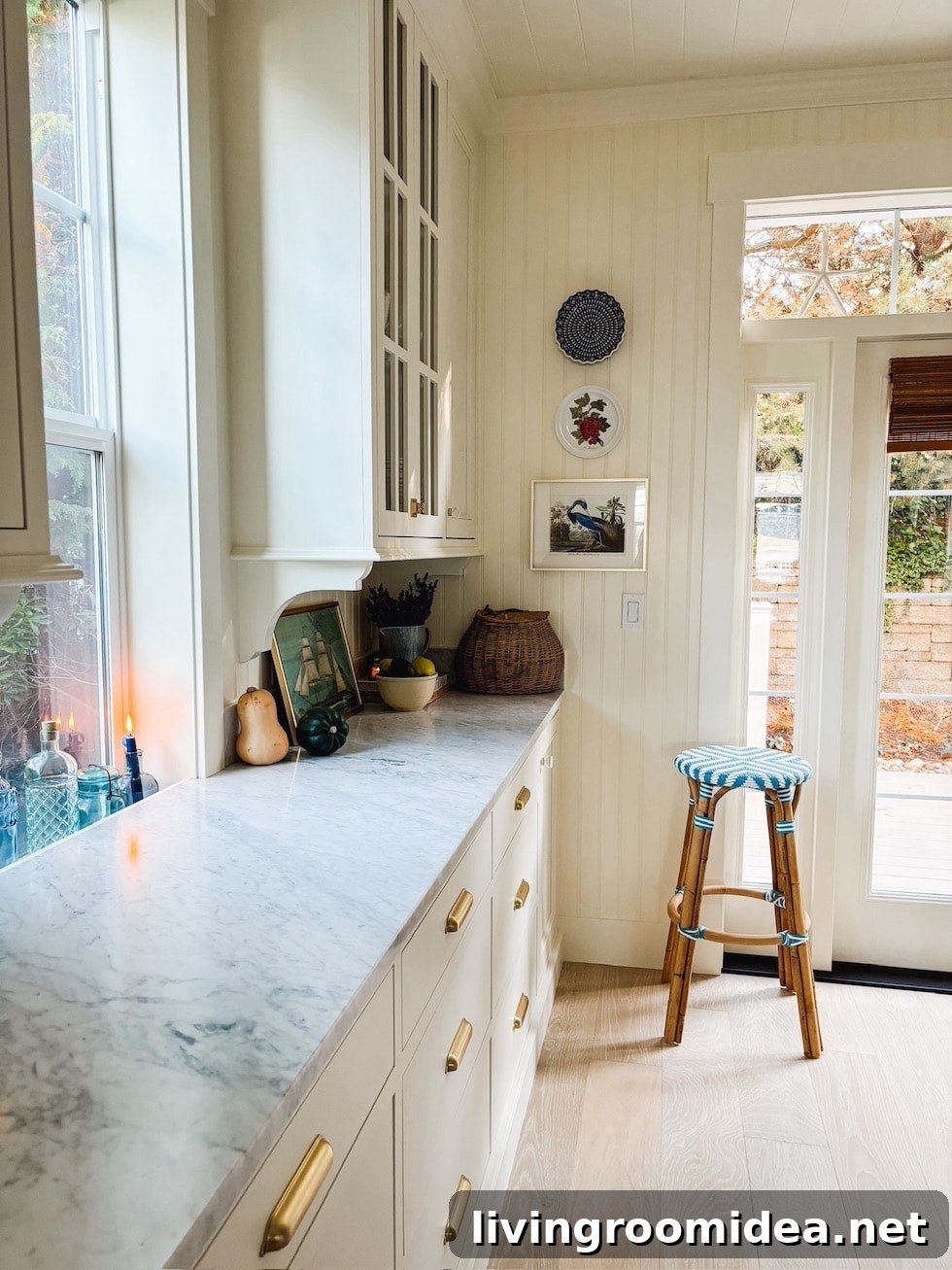
The French doors to the backyard dramatically changed the back of the house. New decks, gates, and garden areas were added with the renovation, and I look forward to sharing a backyard tour once the plants fill in this season.
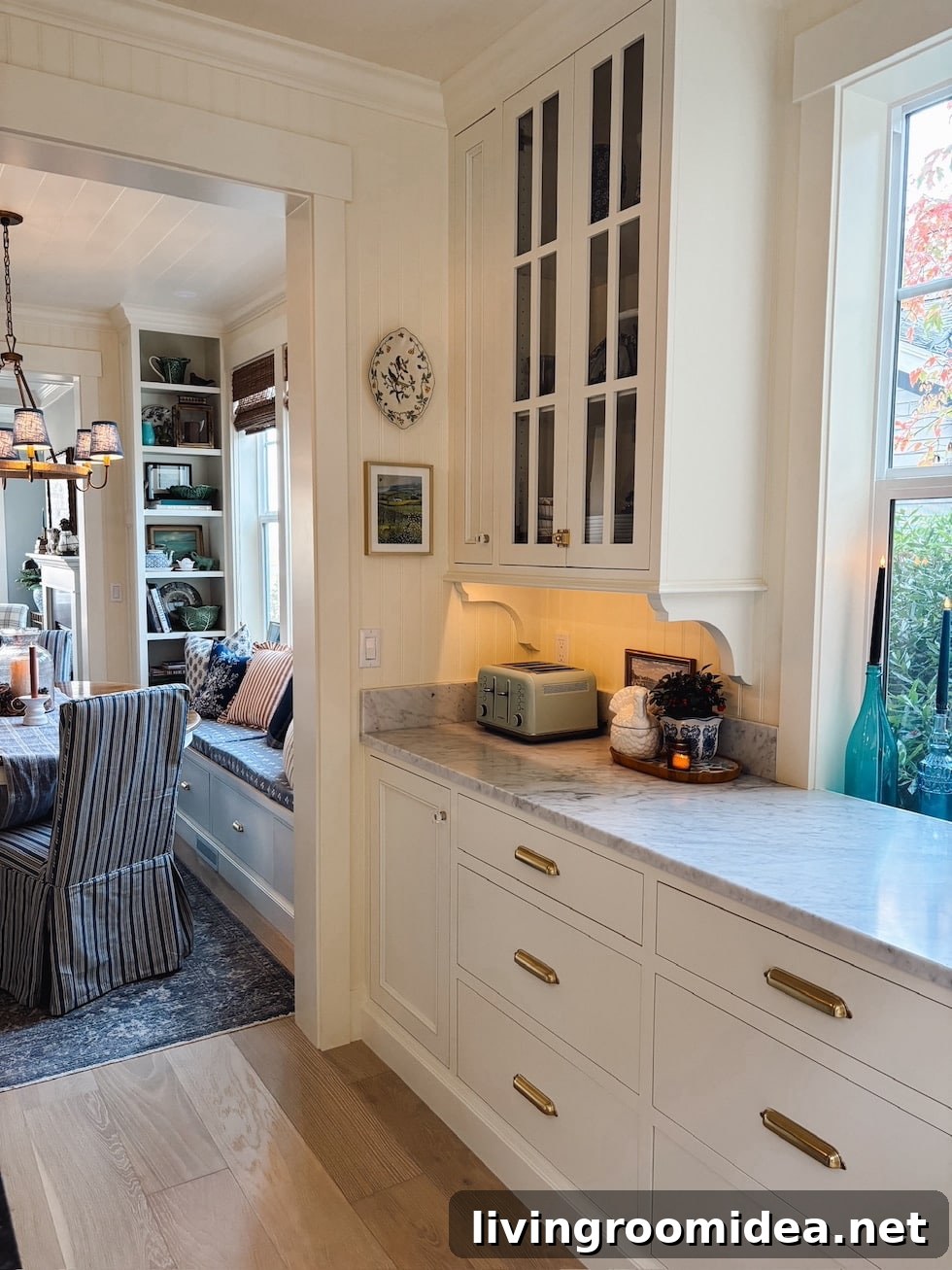
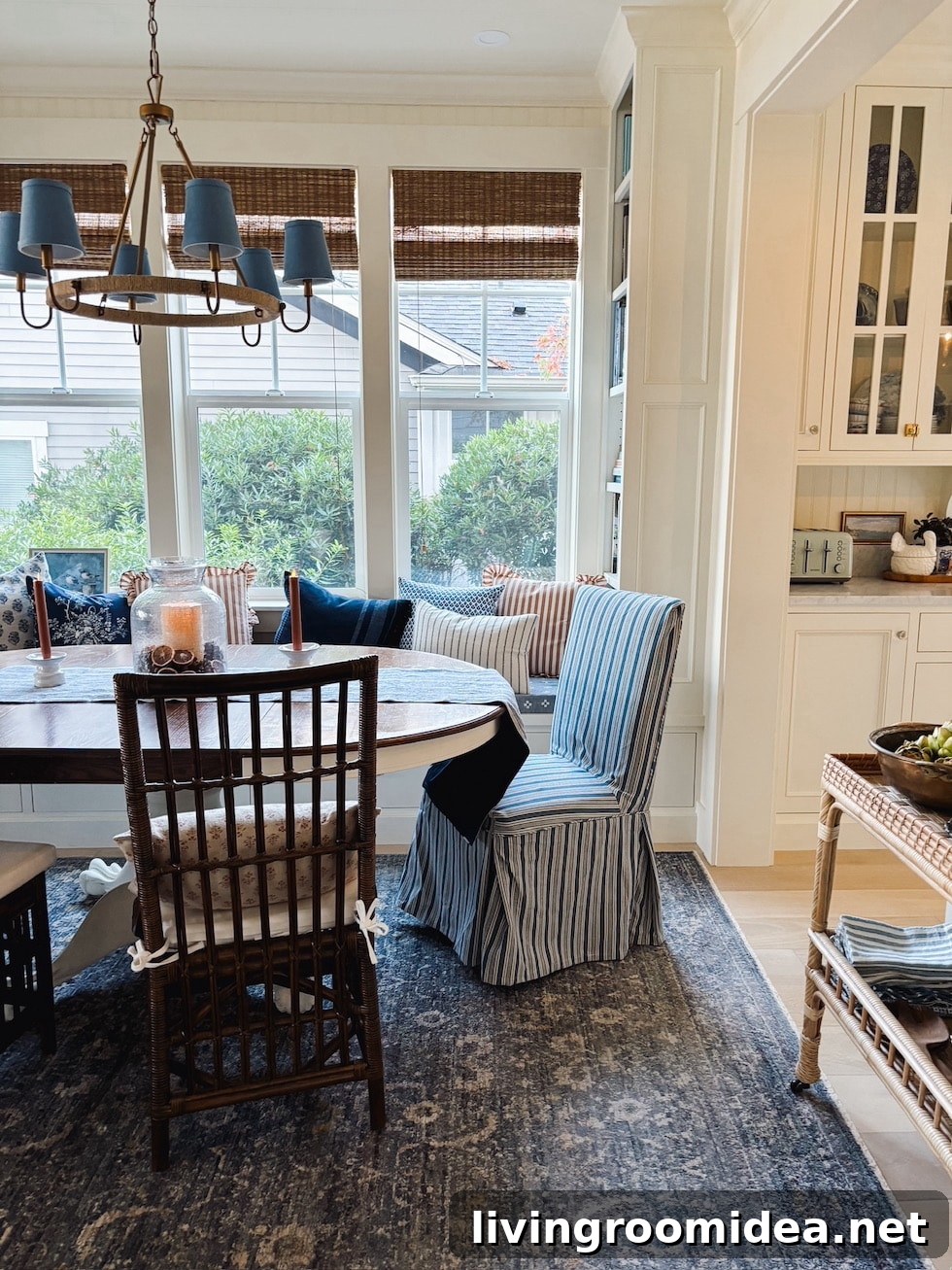
Windows that used to be in the original dining room now brighten the new dining nook. Where the old sink once sat there was only a small window, and that area was quite dark; the new arrangement floods the room with light and offers leafy views and a surprise glimpse of water off to the side.
The dining bench provides seating and generous drawer storage underneath. The DIY no-sew bench cushion holds up well for now—details coming in a future post.
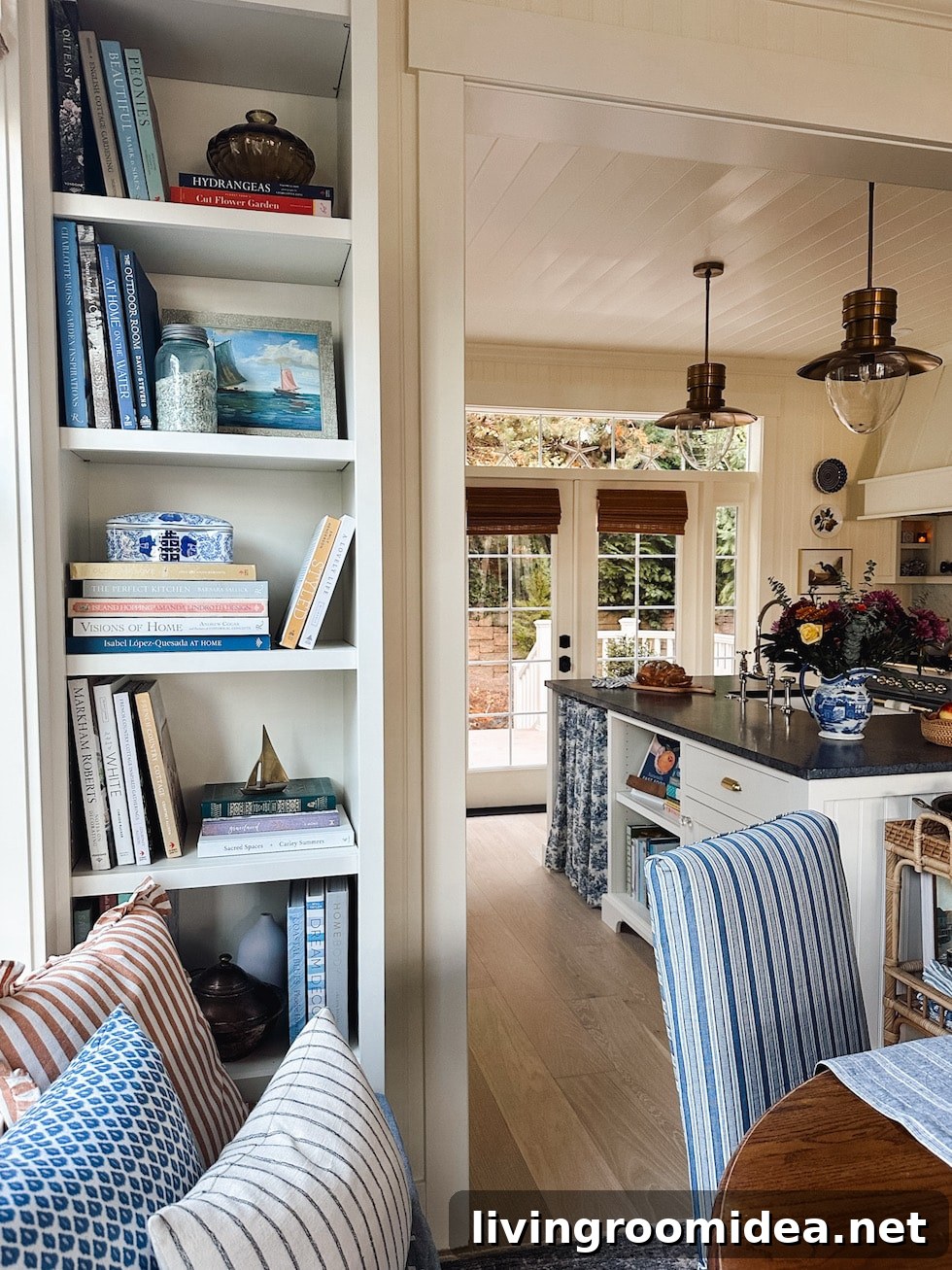
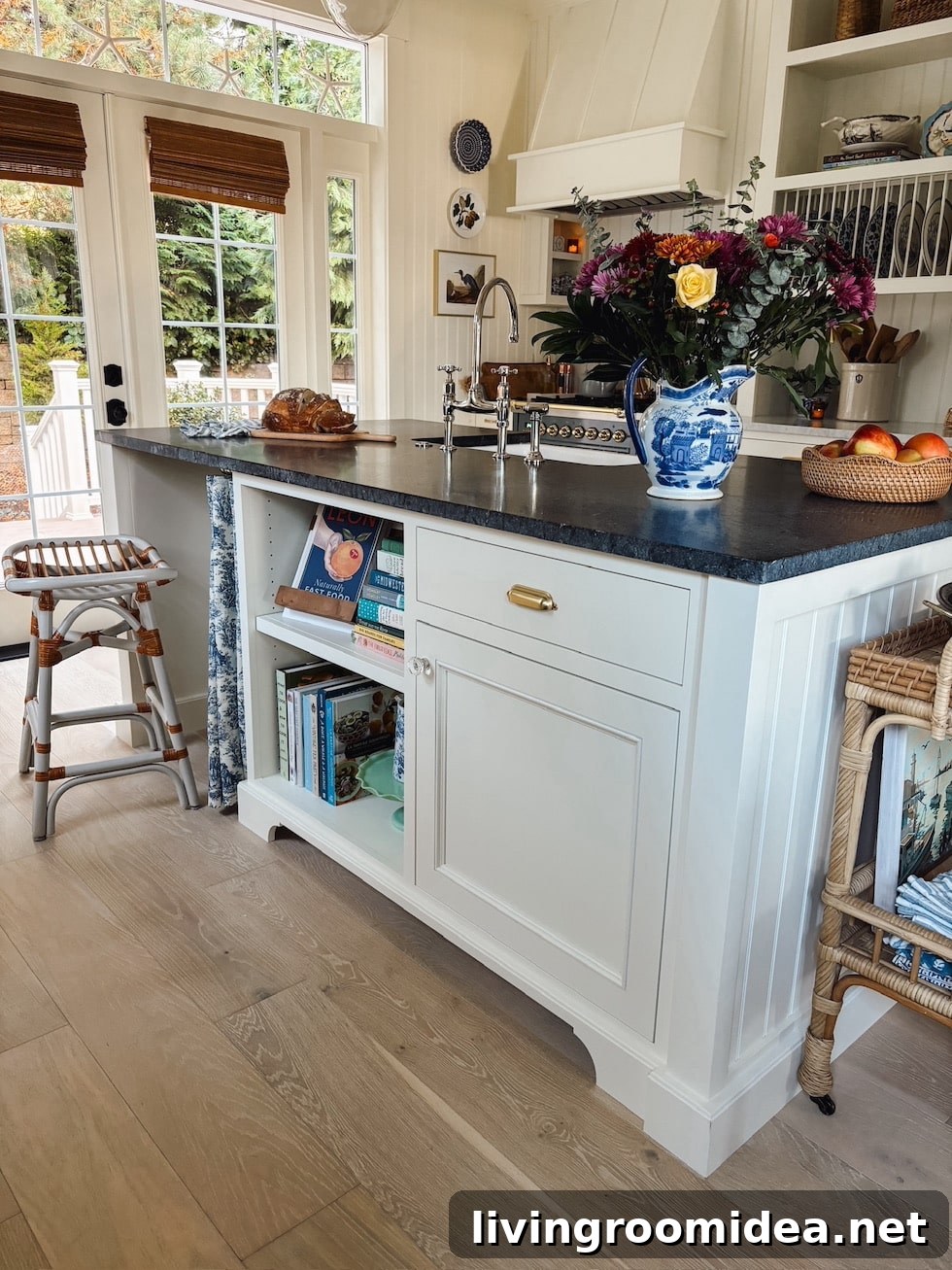
We installed new European white oak flooring throughout since the existing floors and upstairs carpet couldn’t be matched. The lighter wood gives the house a beachy, airy feel that ties all the spaces together.
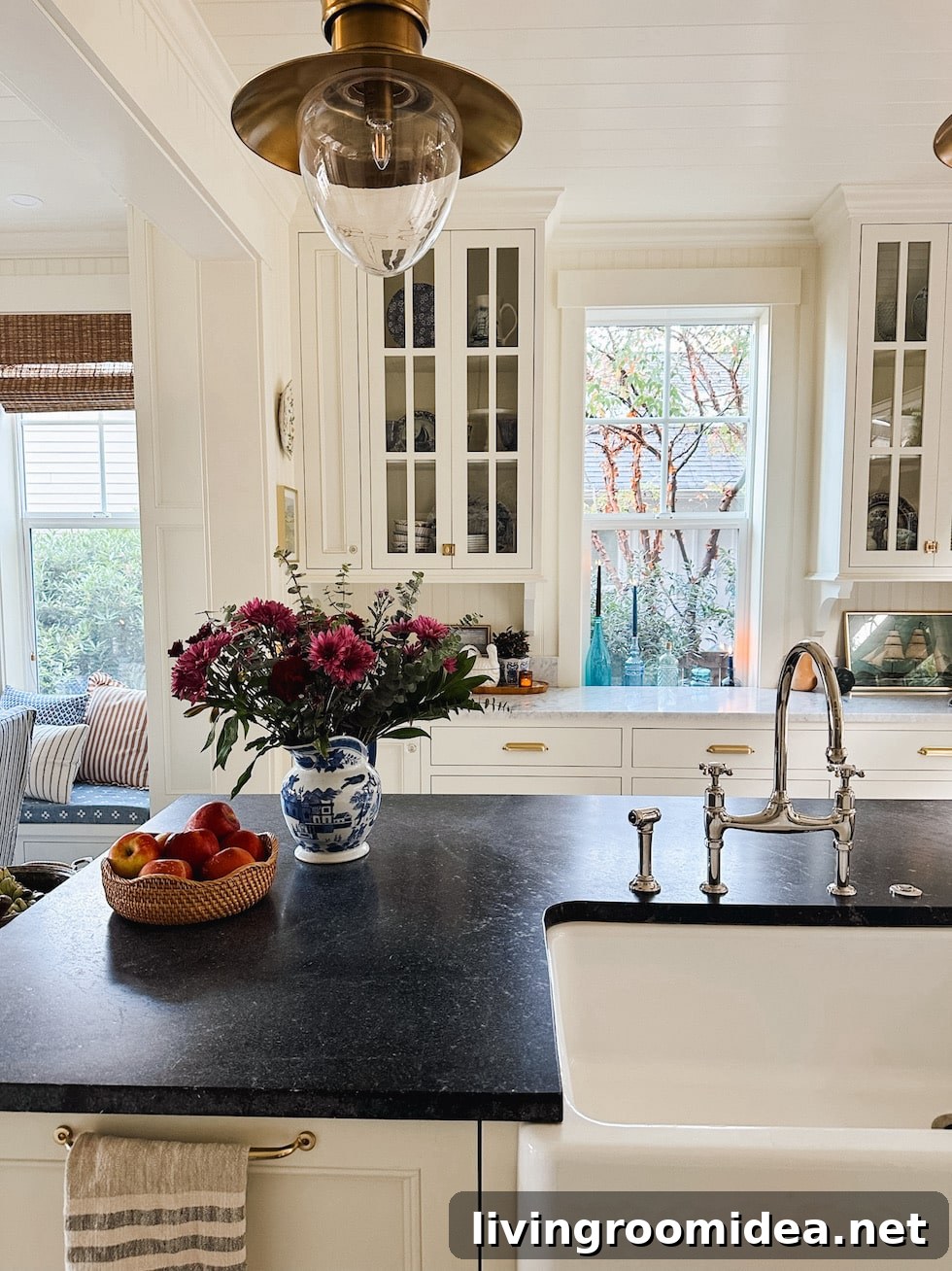
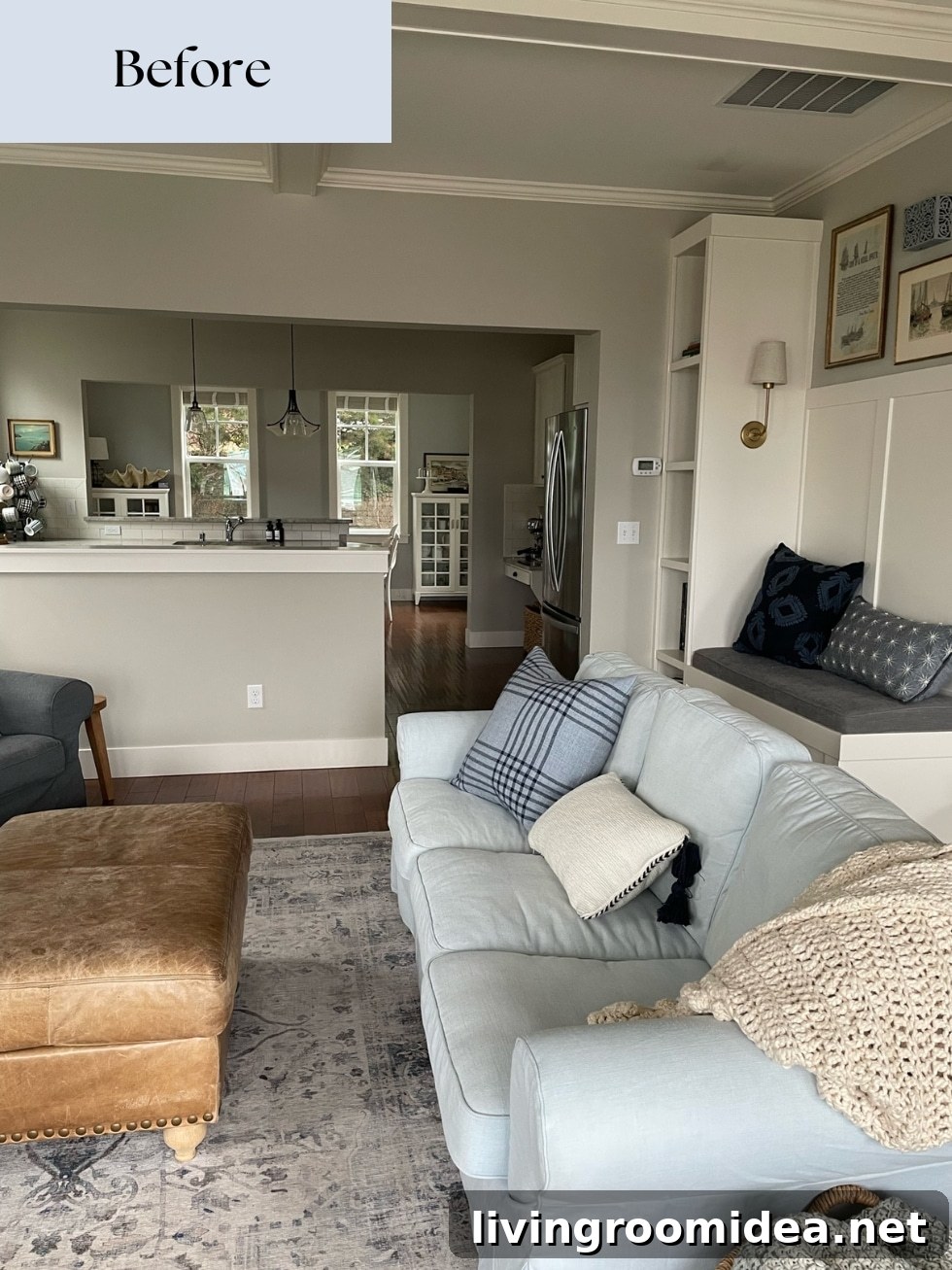
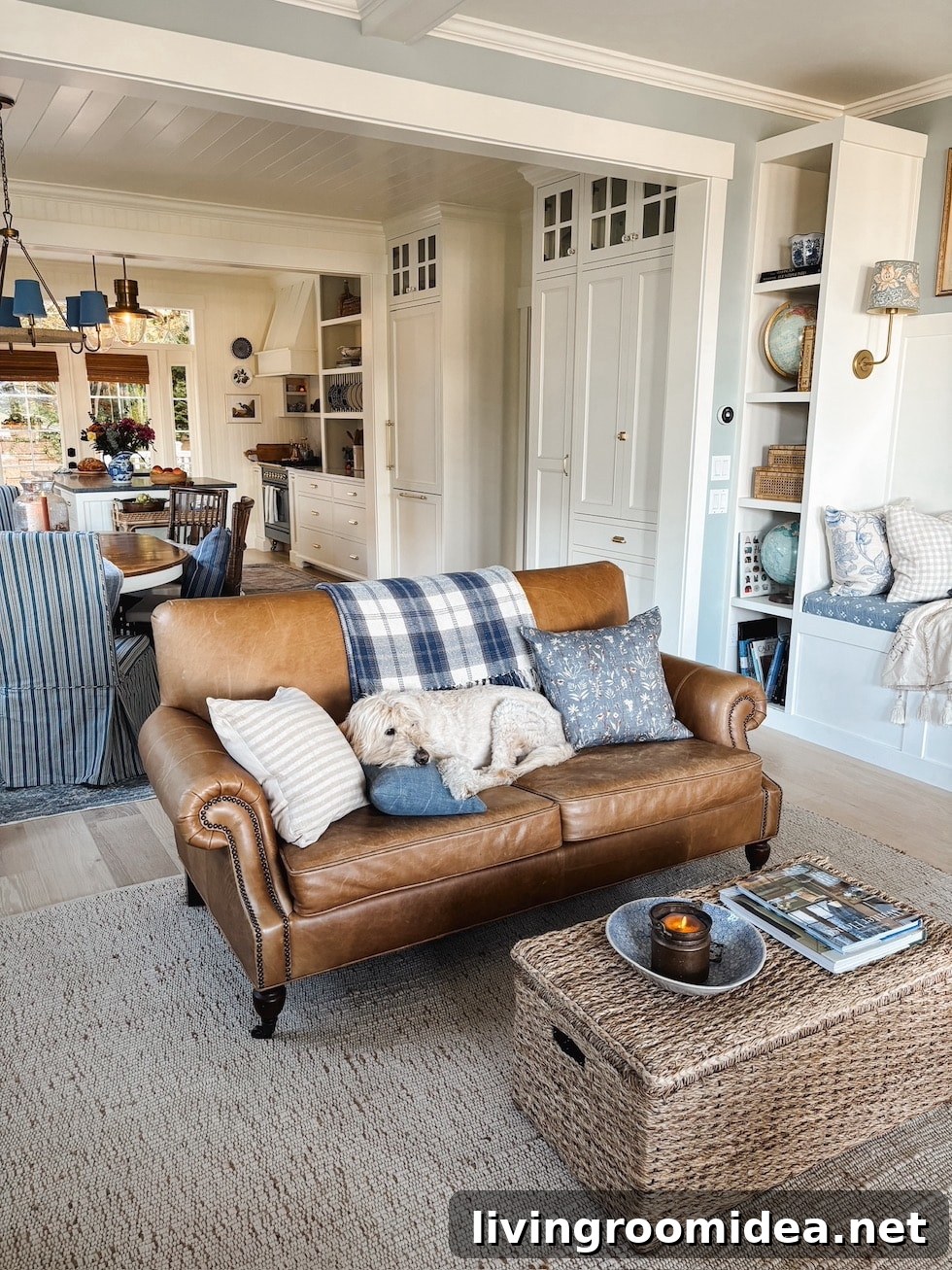
The main floor plan is more open and functional now; the small entry, staircase, mudroom, and powder room (accessed between the cabinet banks) remain part of the layout. The mudroom connects to the tiny cottage addition, which I’ll cover in a later post.
Thank you for stopping by our coastal cottage kitchen reveal. I’m excited to share more room tours, organization details, and sourcing notes in upcoming posts. Stay tuned!

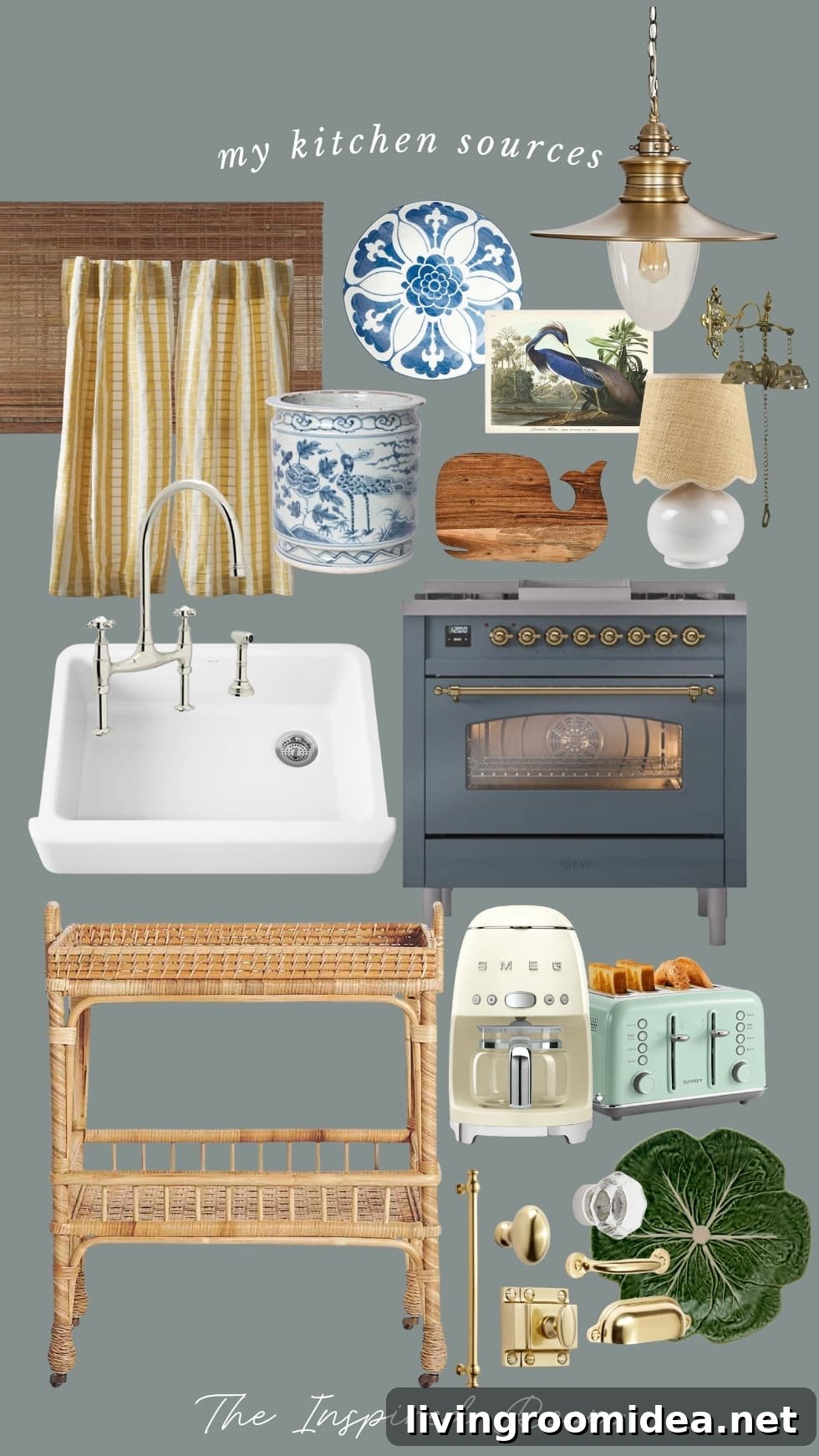
COASTAL COTTAGE KITCHEN SOURCES:
Blue range stove (30″ blue gray/grey). Farmhouse sink. Nickel faucet. Soapstone island and Carrara marble perimeter counters. European white oak hardwood floors. Tongue-and-groove beadboard walls and V-groove ceiling. Cabinet and wall paint: Classic Light Buff (Sherwin-Williams). Living room wall color: Beach Glass (Benjamin Moore).
Dining nook sources: Patterned rug, blue striped slipcovers, Parsons chairs, rattan dining chairs, jute-wrapped chandelier, reversible throw bench fabric, blue and white striped table runner, centerpiece details, battery-operated taper candles.
Living room sources: Leather sofa/armchair, blue plaid throw, jute + cotton rug, wicker trunk, brass wall sconce, striped pillow cover.
- Look back at our before/after kitchen floor plans and renovation posts for design context and planning details.
- See additional remodel posts and updates, including the tiny cottage addition and organization solutions.
- More kitchen organization scenes and storage solutions will be shared in future posts.
Subscribe to receive future kitchen updates, decorating tips, and curated home finds delivered to your inbox.