
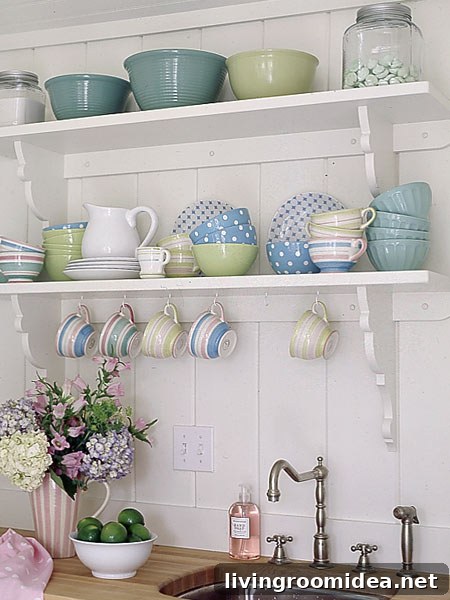
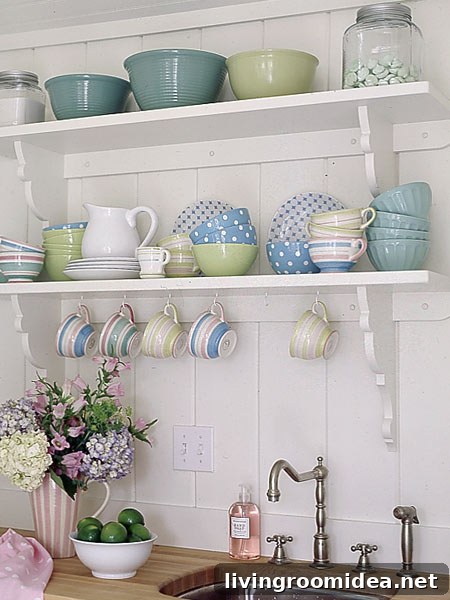
If you like the look of open shelving for everyday dishes or pantry items but worry you’ll be constantly fussing to keep them looking staged, here’s good news: after a simple initial setup, your shelves can stay tidy without daily effort. You can use your items every day and they’ll still look great next week. You also don’t need expensive dishes or elaborate organizers to achieve a polished look.
How is that possible? Follow a few straightforward steps to arrange your shelves once, and daily staging becomes unnecessary. Your open cabinets can look photo-ready in a real-life, relaxed way with minimal upkeep.
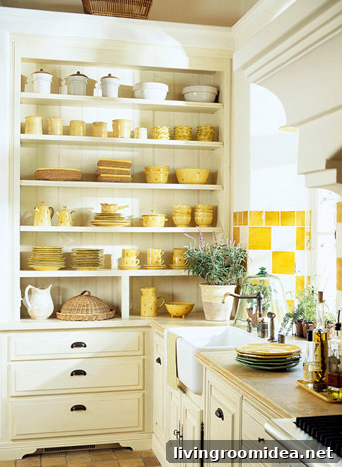
Four simple open shelving tips
1 Group like things together. An eclectic mix can be charming, but for a clean, organized look group similar items on the same shelf. Put plates together, stack bowls, and keep mugs and serving dishes on their own shelves. For pantry items, store baking supplies together in matching jars or containers.
2 Display only what you find attractive. Choose dishes or containers you enjoy seeing every day. For example, an all-white dish collection reads as tidy and cohesive without constant arranging. It’s not about perfection in positioning but about coordination—whether your dishes are white, patterned, colorful, or clear, they should work with the room’s look and be pleasing to you when grouped together.
If you have odd pieces that disrupt the look, store them in a closed cabinet. If most of your collection feels mismatched and you dislike it, either replace pieces over time with items you love or keep the less-attractive items out of sight.
Life is too short to use dishes you don’t love. You can enjoy attractive everyday dishes without spending a fortune.
I collect inexpensive white dishes—often thrifted or bought on sale—and focus on interesting shapes and sizes rather than brand names. You can build a similar collection in any color you prefer by adding pieces gradually as you find good deals.
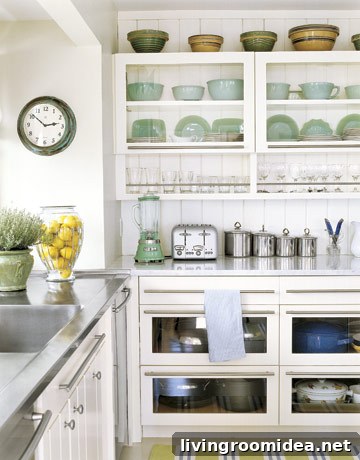
3 Stage your shelves once. Add a few decorative elements—such as plates attached to the back of a shelf with sticky tack or placed on plate stands—and then pile everyday dishes in front. If your daily dishes are in the dishwasher, the decorative pieces remain, so the shelf still looks finished. This creates a consistently polished look with almost no daily work.
For pantry items, use baskets or matching canisters to hide packaging and create a cohesive display. Affordable baskets can contain items you don’t want on display and still keep the shelf attractive. This approach keeps things looking tidy without constant fussing.
One day of staging can give you years of attractive, effortless shelves. Open cabinets have been a go-to in every house I’ve had—they look good without taking hours to maintain.
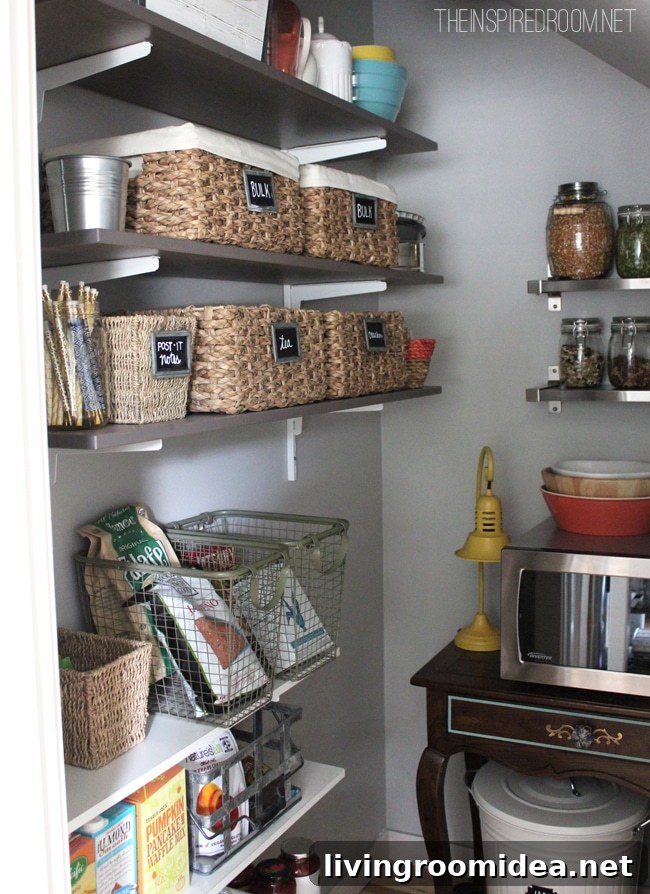
4 Use open shelves for items that stay neat or fit in containers. Store flour, sugar, grains and similar pantry staples in attractive jars, and use baskets for smaller items. Reserve open island shelves for metal or glass baking tins and jars that maintain a tidy, functional look even while the kitchen is in use.
The trick is grouping items by use. Keep a snack basket for grab-and-go items, a baking basket with vanilla, baking powder and chocolate chips, or a baking tools basket with cutters and piping supplies. When you need something, take the whole basket to your workspace and return it when finished. This keeps everything organized and quick to access.
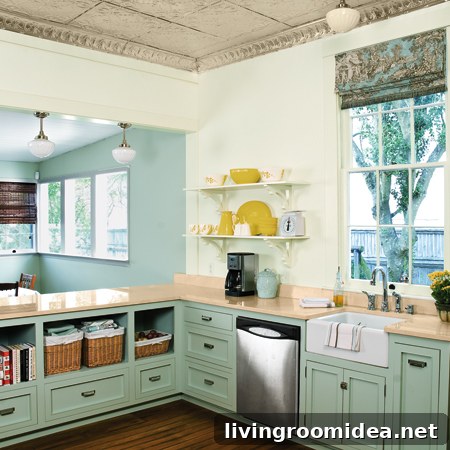
This Old House
Of course, keep closed cabinets for anything messy or unattractive—open shelving isn’t for everything.
Do you have a small kitchen?
If your kitchen is small, store infrequently used appliances in the basement, garage, or an extra closet. I’ve kept extra items on basement shelves to free up kitchen space for pretty, everyday things. Label or note where you put occasional-use items so you can find them easily. Prioritize cabinet space for the items you use daily and make them look nice.
Even one small shelf filled with attractive, frequently used items can give you the benefits of open shelving without extra hassle. Open storage turns everyday objects into decor, but if you prefer closed storage, that’s perfectly fine—do what makes you happiest.

Related posts: Keeping Things Simple with Real Life Accessories · Pantries · The Inspired Room’s kitchen reveal