
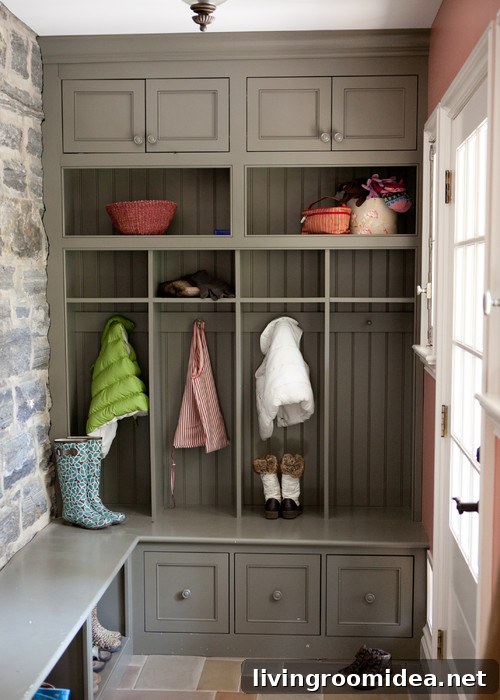
I have a crush on mudrooms.
Which one is your favorite?
Mudrooms are one of those simple design spaces that can make everyday life feel a little more organized, welcoming, and intentional. They act as a buffer between the outdoors and your home, offering storage, seating, and a place to drop shoes, coats, and bags. Well-designed mudrooms can be compact and efficient or spacious and luxurious — either way, they bring practical beauty to a home.
In these images you’ll notice a range of traditional entries and mudroom approaches: classic built-in cubbies with hooks and storage benches, warm wood tones paired with white trim, tiled floors designed to handle wet weather, and thoughtful lighting that creates an inviting arrival. Many of the spaces use a combination of closed cabinetry and open shelving to keep clutter hidden while still providing easy access to everyday items.
When planning a mudroom, consider three core priorities: functional storage, durable materials, and a comfortable place to sit. Functional storage includes hooks at a reachable height, cubbies for shoes, drawers or cabinets for seasonal gear, and vertical storage for umbrellas or sports equipment. Durable materials mean tile, vinyl, or sealed wood floors that withstand moisture and mud; paint and finishes that resist scuffs; and cabinetry that can take daily wear. A comfortable bench or seat with easy-to-clean upholstery makes putting on and taking off shoes much simpler and adds a welcoming touch.
Optimizing a small entry often means working vertically and using multi-purpose elements. Install pegboards, wall-mounted baskets, or slim cabinets to maximize narrow walls. Add baskets or labeled bins inside cubbies for smaller items like gloves, hats, and dog leashes. If space is tight, a fold-down seat or a slim console with hooks above can provide function without overwhelming the room. Lighting is also essential — a bright overhead fixture or layered wall sconces help the space feel open and safe.
Aesthetically, traditional entries tend to lean on timeless details: beadboard or shiplap, classic molding, neutral color palettes with a pop of contrast, and hardware that complements the home’s style. Mixing materials — for example, combining painted cabinetry with natural wood shelves or a stone-tiled floor — adds visual interest while keeping the design grounded and practical.
Whether you prefer a finely tailored, symmetrical layout or a more relaxed, eclectic approach, the best mudroom fits your routine. Think about where you and your family naturally drop things, what needs to be visible for quick access, and what should be hidden away. Small design choices like a tray for keys, a shelf for incoming mail, or a designated spot for sports gear can transform how smoothly your household runs.
Explore image ideas above and consider which features would make your daily comings and goings easier and more pleasant.