
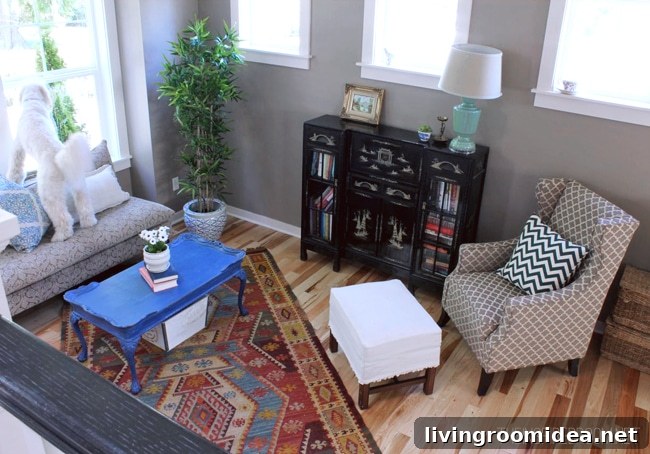
Today my living room is eclectic. Tomorrow it might be all white. The next day it could double as the dining area. Around here things are always changing, but one constant is that the room is never static. A little over a year ago I realized the living room wasn’t living up to its potential. It wasn’t a room we used or enjoyed; mostly it served as a passage from the front door to the dining room and kitchen. It felt like wasted space, so I decided to make some changes.
My goal was to transform the space into a welcoming gathering area. Located between the entry and dining room, it already sits where guests tend to pause or socialize when arriving or leaving. Instead of forcing it to function as a separate formal living room we rarely used, I wanted it to feel like an extension of the entry and a flexible space that could support entertaining. Because the room is open to the dining area, I prioritized furniture that could be moved and used for extra seating or an additional table during sit-down dinners.
I was clear that this space shouldn’t become a messy craft room or a catchall—after all, it’s the first thing guests see when they enter and the first view from the top of the stairs. We’ve lived with this area for four years and I had plenty of time to think it through.
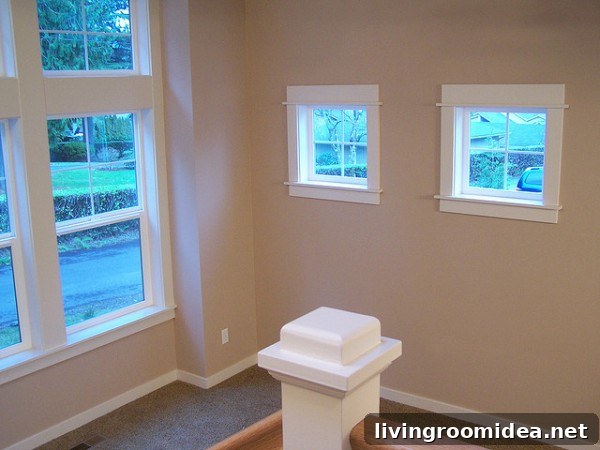
When we moved in the room had what I called “swine” walls—the lighting often turned them a pinkish, awkward tone—along with tan carpet I wasn’t fond of. On the plus side, it has great windows that bring in lots of light and a nice vaulted ceiling that gives the room a pleasant sense of space.
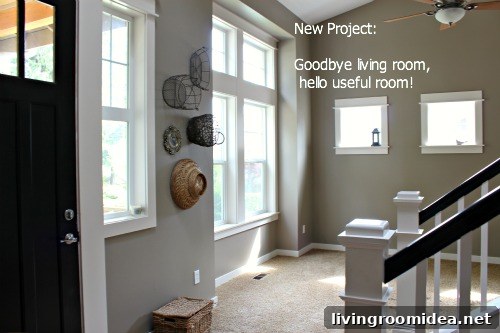
Last spring we emptied the room so we could get a true sense of the space. Leaving it bare confirmed that we wanted fewer pieces and a more open layout. If you ever feel stuck deciding how to use a room, try removing everything; it makes it much easier to decide what belongs back.
The first major change was replacing the worn carpet with Hickory hardwood floors from Mohawk, installed by Lowe’s. The new floors completely transformed the room and made a big impact on how much we enjoy being in the space.
Shortly after installing the living room and dining room floors we started a kitchen remodel, so plans for further living room updates were put on hold.
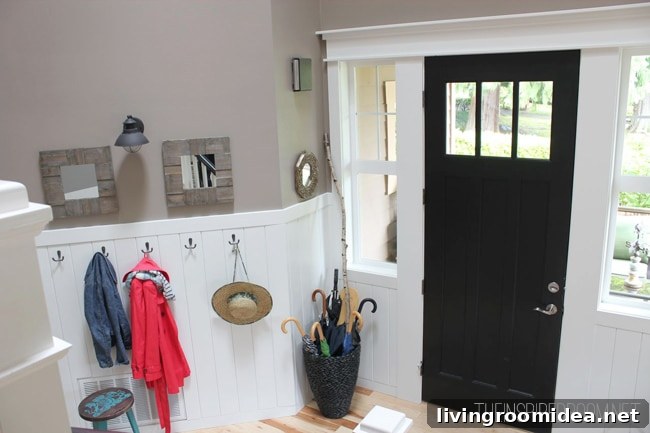
After adding hooks and wainscoting beside the front door in the entry, the need to use the living room for extra entry storage felt less urgent. Still, we liked the idea of keeping the living room as a casual gathering spot instead of a formal parlor. As rooms gain function and style, adjacent spaces naturally adapt, and that’s what happened here.
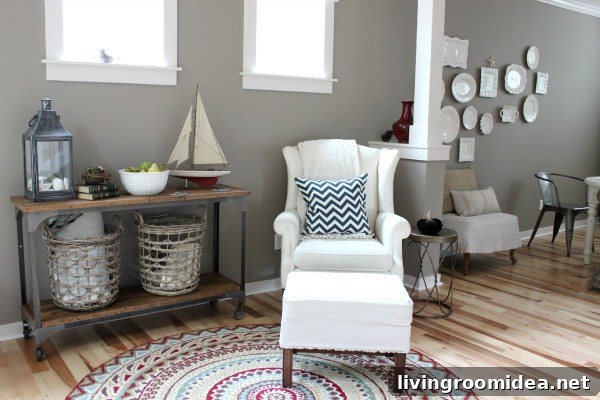
At one point we added a cart and a round rug that felt fresh and different. The cart eventually moved into the dining room where it worked better, and the rug found a new home in the kitchen conversation area after the remodel. The furniture shuffle is constant here—always moving pieces to where they function best.
It can be entertaining and a little chaotic; we joke about tripping over furniture during late-night walks through the house.
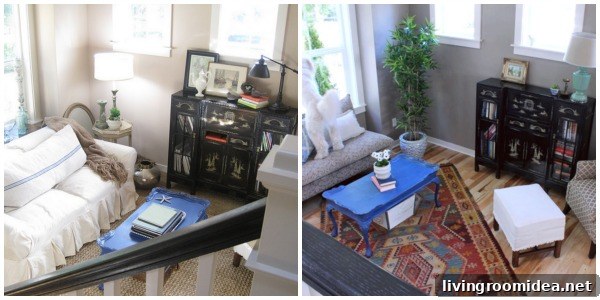
Our black and gold antique chinoiserie cabinet has been in and out of the living room and entry more than a dozen times. When the cart moved to the dining room, the cabinet returned. Comparing past and present photos, you can see the difference removing the larger sofa made. Replacing it with a smaller settee opened the space, giving a more casual, eclectic sitting area instead of a formal living room. I also brought a blue table in from the garage and added a patterned indoor/outdoor Kilim rug on the diagonal to introduce color and break the boxy feel.
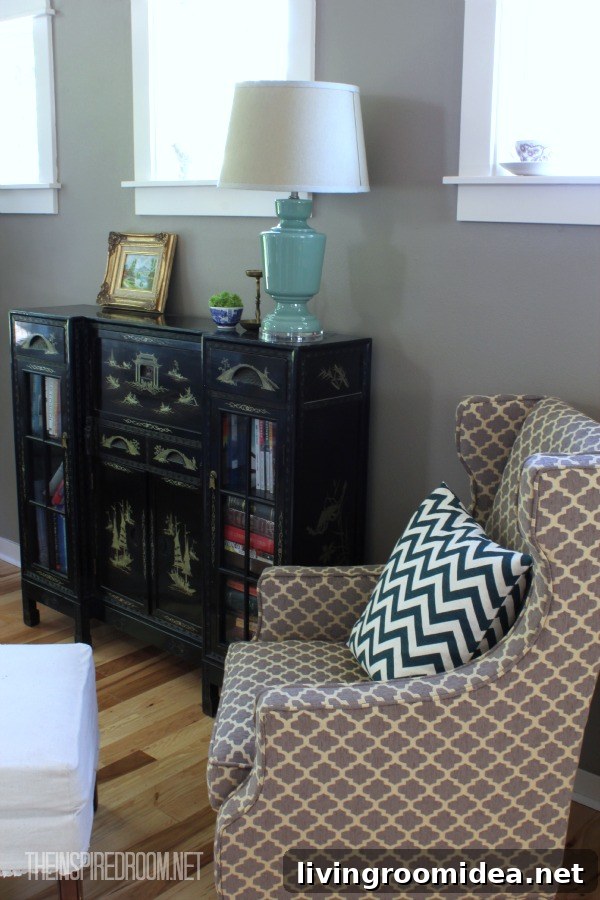
A sea-green lamp from Target brightened a dark bookcase, and a new patterned chair increased the eclectic mix. The chair will stay until the next idea strikes; the white wingback was moved to the family room on a whim. Even though the living room makeover started the house-wide updates, it was really the new wood floors that made us fall back in love with the room. That one change changed how the space felt, regardless of furniture.
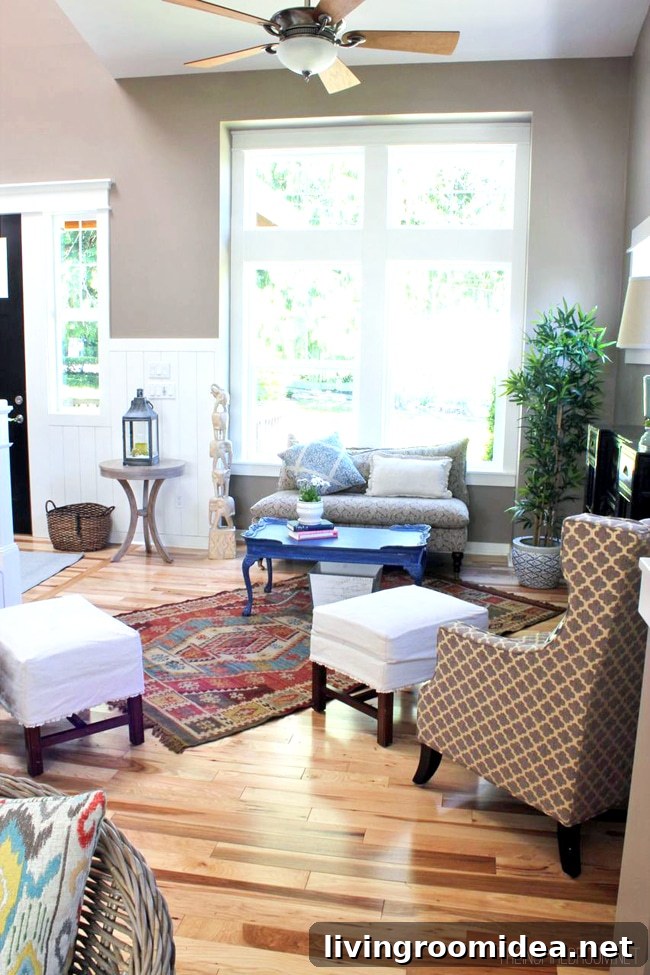
Next on the list is framing the large window with stationary curtains to soften the view without blocking the light. I’m also considering blinds for privacy, replacing the ceiling fan with a round or orbed light fixture, and possibly adding white planks to the ceiling for added texture.
The furniture here will likely continue to shift and evolve, and that’s part of the fun. I like owning rugs and pieces that can move from room to room, giving us freedom to adapt our style and layout as needed. This flexibility makes the house feel more alive and functional.
I’m already thinking about pulling up the rugs for summer and moving the living room rug to the kitchen again in the fall—after all, change keeps things interesting.
Is your house always evolving?