
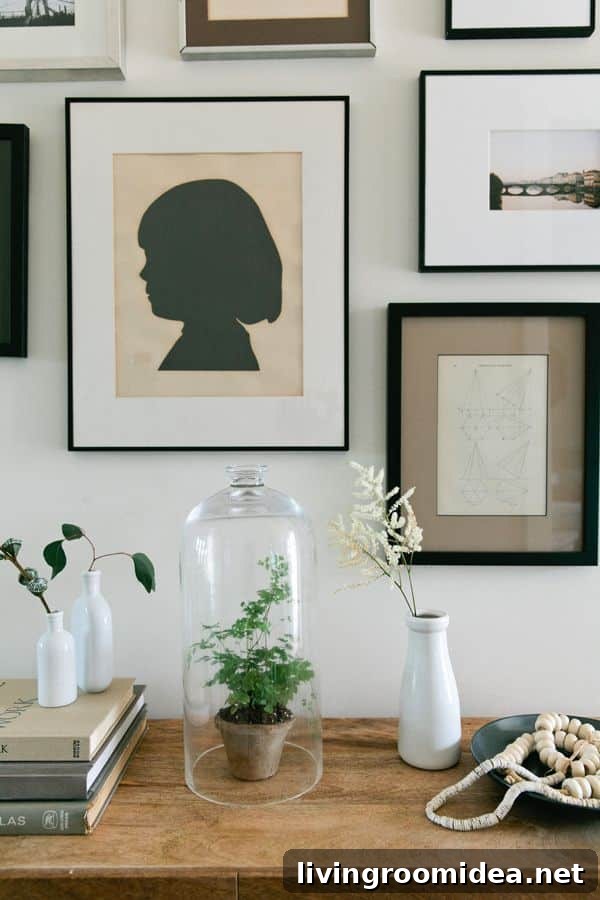
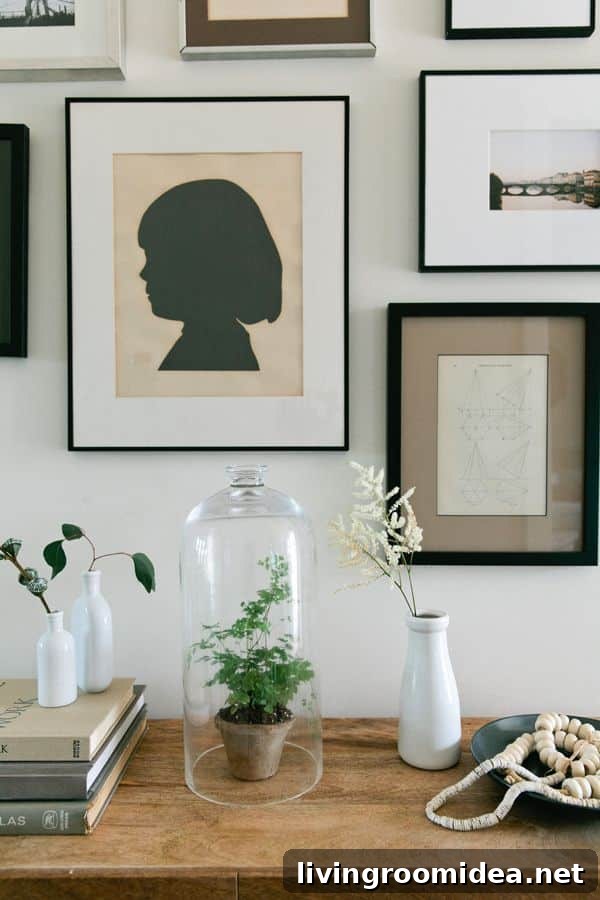
 A simple color palette (styling by Ginny Branch, Photo by Ali Harper)
Our home should be a place of comfort and joy. When surfaces are cluttered, it becomes harder to appreciate the things we love or to display them in ways that inspire us every day. With a few thoughtful choices, you can show off beloved items without creating visual chaos.
Empty surfaces can sometimes be soothing in a busy home, but you don’t have to sacrifice personality to achieve that calm. Displaying treasured items thoughtfully keeps a space both functional and beautiful.
I don’t believe in rigid decorating rules — it is your home, after all — but a few practical guidelines can help you create spaces that feel effortless and inviting.
Here are five simple guidelines to help you design inspired, livable vignettes:
1. Make a Statement
Begin with a statement piece to anchor any vignette. Choose something eye-catching — an intriguing shape, a bold color, a repeating motif, or an oversized object — so the eye knows where to settle. A standout clock, a large letter, or a distinctive artwork can give the grouping purpose and focus.
A vignette can tell a meaningful story through varied materials, but simply piling up lots of small objects won’t always read as intentional. Without a focal piece or a unifying color scheme, a collection of items can look like clutter rather than a curated display.
Highlight pretties you use every day in a purposeful way. Shelves can showcase favorite mugs, console tables can display a set of vases, and kitchen counters can feature a beautiful cluster of wooden utensils ready for use. When arranging on a console or mantel, layer items from back to front and vary heights to add depth. Repeating a color several times also creates harmony and visual satisfaction.
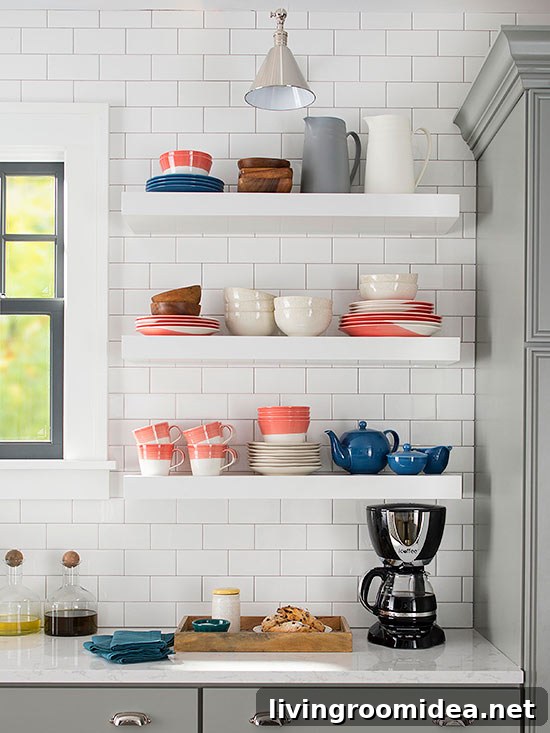 Repeat an accent color three times for visual impact
2. Be Realistic
Design vignettes that work for everyday life. If items are stacked or balanced in a way that makes them likely to fall, or if they create obstacles when you walk by, rethink the setup. Styling should be beautiful but also practical for those who live in the space.
Home styling should feel personal and livable, not like a product display in a store. Arrange things so you can reach and use them comfortably without worrying that something will topple or get damaged. Staged looks have their place, but real-life styling should avoid tripping hazards or precarious piles that don’t withstand daily use.
Consider the function of each surface. Work surfaces such as kitchen islands and counters benefit from fewer objects, leaving space to prepare meals. Keep only a few useful, attractive items on these areas so they stay functional and welcoming. For surfaces that are purely decorative, such as open shelving, feel free to be more expressive with styling.
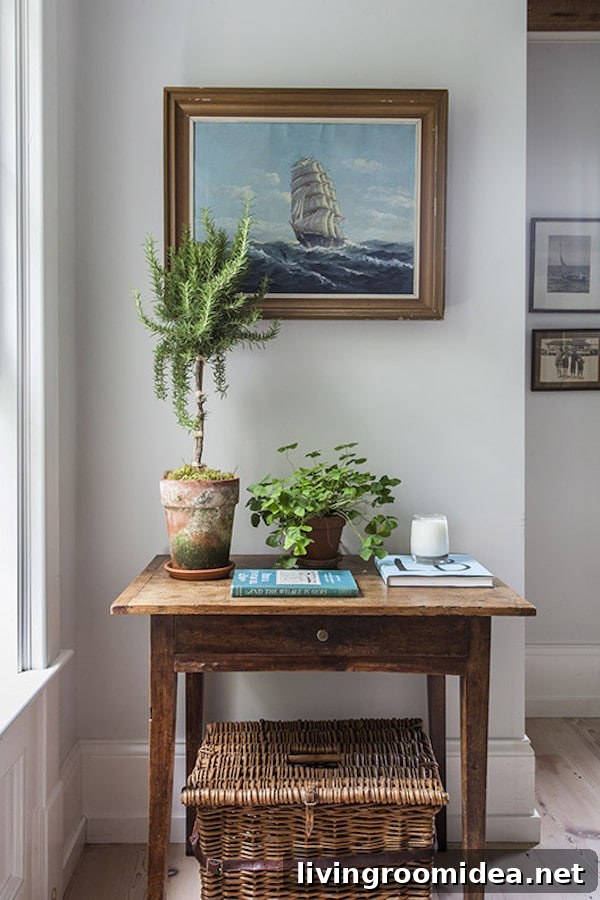 Books, plants and a candle suggest everyday warmth; basket beneath the table adds texture
3. Keep It Effortless
I prefer vignettes that look like they grew naturally from living in the home. The most appealing arrangements feel simple and unforced — items placed because they’re used and loved, not because they’ve been styled into a perfect tableau.
An effortless look allows a vignette to evolve as you live in the space. A favorite hardcover left on a table or a white pitcher put back on a shelf can create a charming, authentic display without fuss. You’ll naturally keep out what you enjoy and tuck away what you don’t, so the composition remains personal and usable.
Choose items that stand on their own and don’t require constant tweaking. Imperfections in spacing or composition add to the sense of warmth and authenticity, making the vignette feel like a lived-in part of your home.
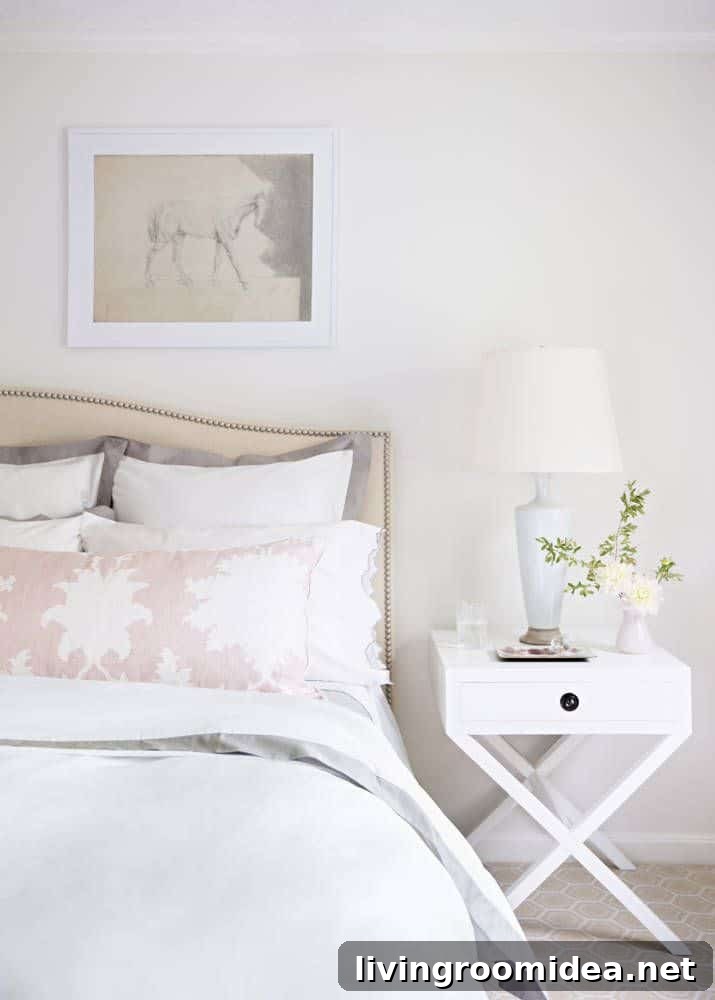 Simplify surfaces for a calm, restful look
4. Always Simplify
After arranging your tabletop or shelf, try removing a few items — often less truly is more. Repetition and commonality among pieces bring cohesion; a group of similar objects or a consistent color palette looks intentional and pleasing. When unsure, stick with simple collections like a row of blue bottles or a tidy stack of colorful books.
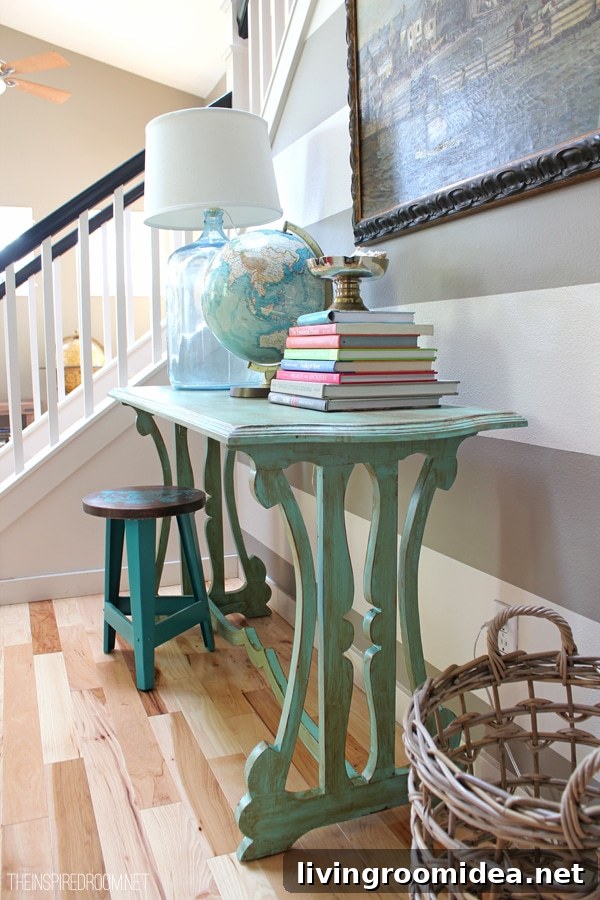
Display collections with restraint to make them sing
5. Use What You Have
Look around your home for items that can be repurposed into fresh arrangements. Constantly buying seasonal accessories can lead to excess and storage headaches. Instead, recycle and reimagine pieces you already own so they work across seasons. Plants and natural elements add an organic, ever-appropriate touch that feels effortless and never overdone.
Think about colors and patterns that can be mixed and enjoyed year-round. A few well-chosen items thoughtfully arranged will keep your home feeling curated without becoming cluttered.
Enjoy putting together vignettes that reflect your life and tastes. Styling should be a joyful, everyday activity that helps your home feel like the sanctuary you want it to be.