
You know the houses you see on blogs, Instagram, or in your neighborhood that look completely flawless? I’ve come to think that “perfect” is often a misleading ideal, especially when it comes to our own homes.
What does perfect mean to you?
Is a house perfect because you spent a lot on it? Because it has every feature on your wishlist, the exact layout you wanted, or the style you’ve always imagined? Is location the deciding factor? Or is perfection judged by how well everything photographs for social media or how well every element functions?
I found this straightforward definition of perfect online:
perfect: having all the required or desirable elements, qualities, or characteristics; as good as it is possible to be.
To me, the phrase “having all the required or desirable elements” makes perfection a very personal measurement. What feels required or desirable depends on your priorities, your season of life, and the standards you choose to follow. As Martha might say, that’s actually a good thing.
If you set very few limits on what counts as desirable, it’s easy to compare your home to other people’s and feel you fall short. But if you set expectations based on your own priorities—what your family needs now—then “perfect” can look very different.
Two years ago we bought our house in Seattle during a hectic market. We knew we’d have to compromise. Choosing the right neighborhood lowered our expectations for the house itself, but that trade-off was intentional and worthwhile.
We were fortunate to find an older, well-built home that feels welcoming. Very few of the houses we looked at had that warm, lived-in feeling, and that feeling ended up being one of our main criteria—more important than size or a particular style. A house that feels right is hard to put a price on.
The house didn’t tick every box on my dream list, but because it felt right, we knew we could make it our own over time.
Making it our own isn’t about achieving design perfection. It’s about shaping a home that feels right for our family in this season of life.
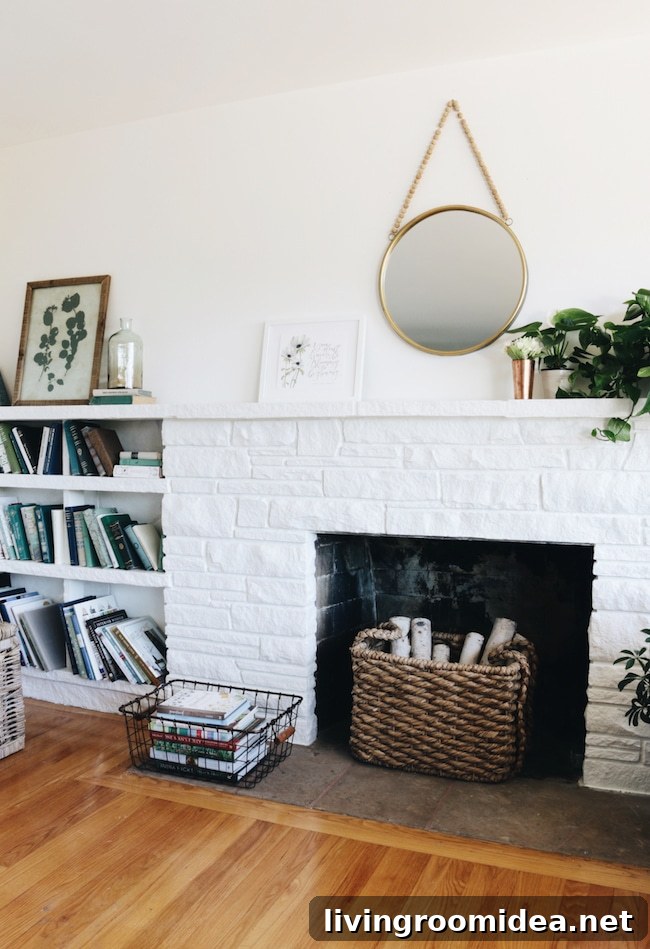
I’ve been drawn to simplicity lately—both in decorating and in life. This house responds well to restraint, and simple choices feel best for our family right now.
Instead of measuring success by comparisons or trends, we’re using simplicity as a guiding standard for decisions. That helps us be content with what we can do or what we’re willing to invest in during this season.
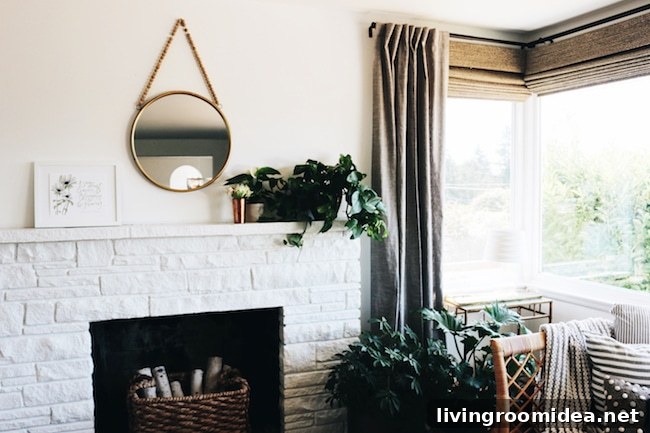
So what does all of this have to do with painting our stone fireplace white?
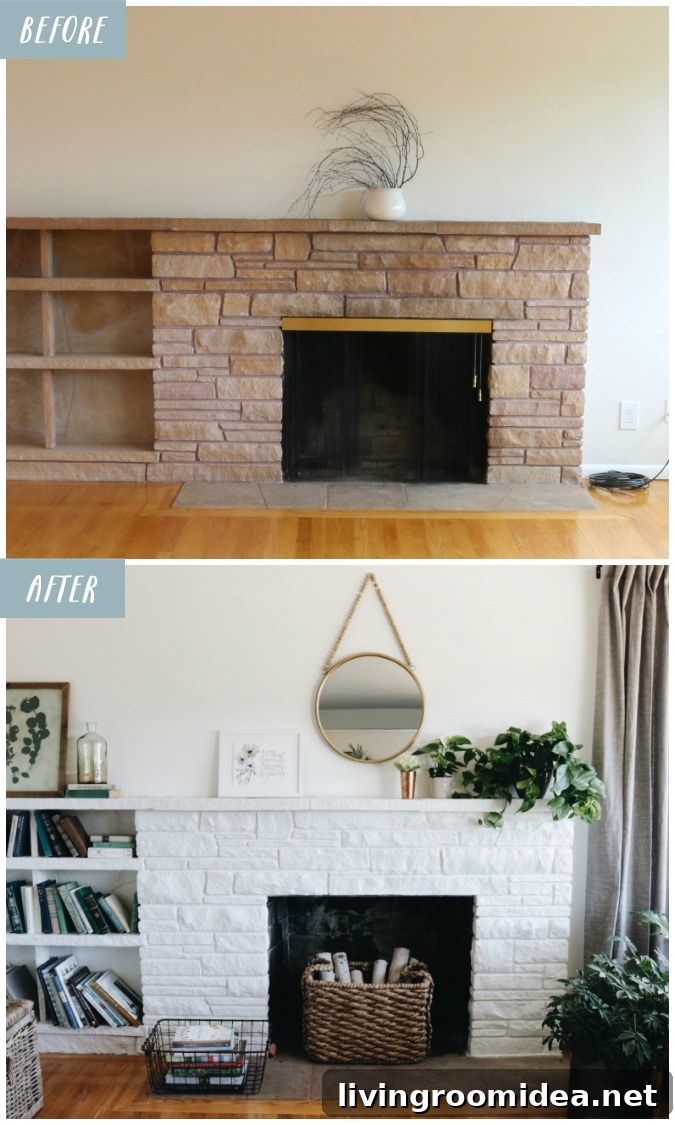
When we first moved in we painted the fireplace gray. At the time I wasn’t sure about white stone, and gray felt like the right, simple choice. It wasn’t my ultimate dream solution, but it worked for the season we were in.
I had planned that someday we might replace the stone entirely, but I also gave myself permission to make a smaller change later if I wanted a fresh look.
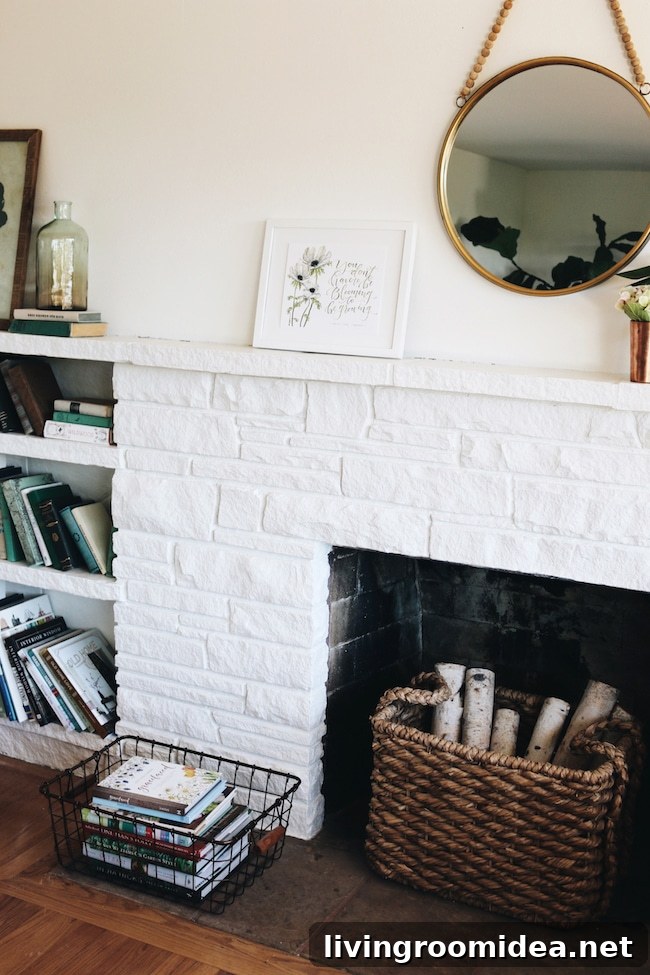
Recently I felt the urge to refresh the living room and initially thought we should rebuild the fireplace. But using simplicity as my guide, I realized the easiest and most sensible update was simply to paint the stone white. If I didn’t like it, a future remodel would still be an option.
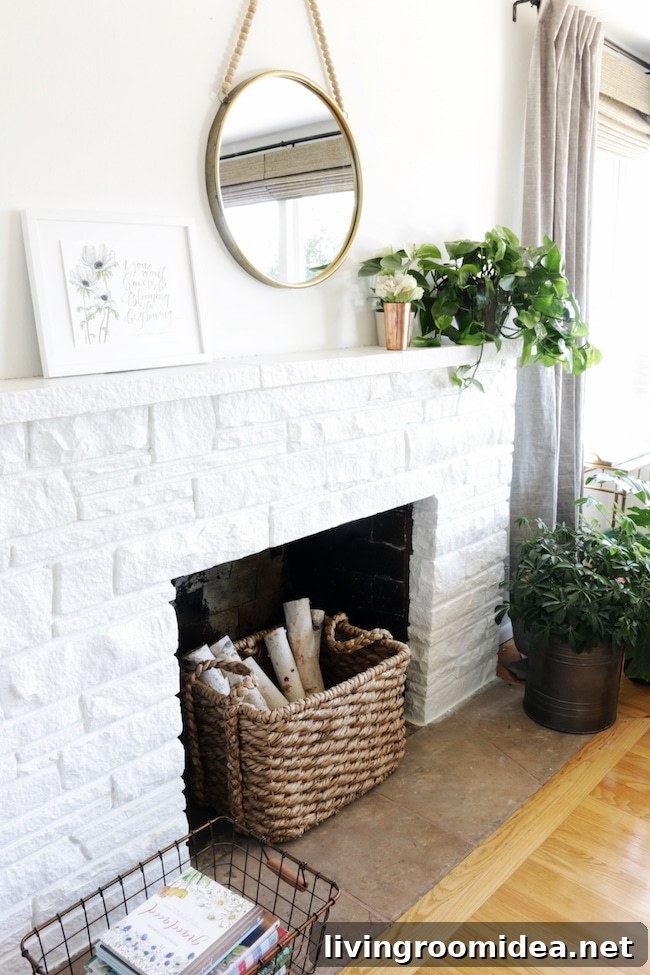
So we painted it white.
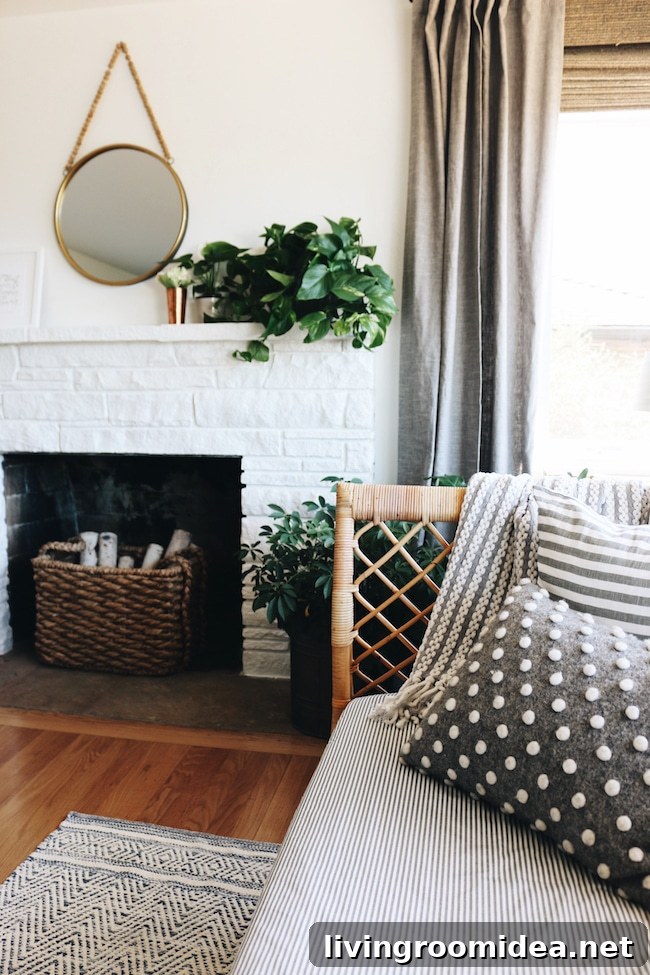
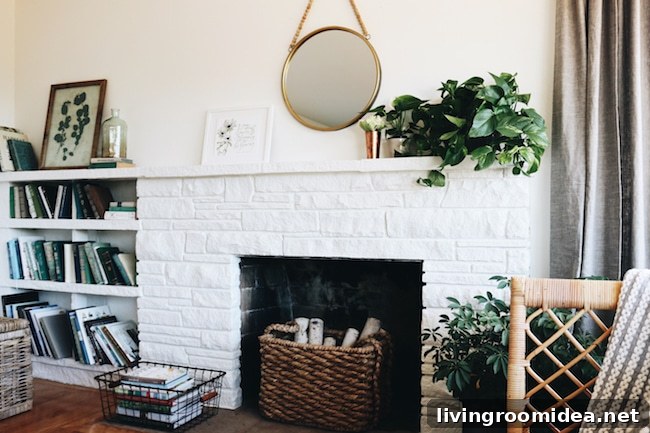
And I’m happy with the result. I like the light, clean backdrop it provides. It feels fresh and simple, and it has made me more excited about seasonal decorating. All it took was paint.
I’m also comfortable leaving it as is for a while. In this season of our life, simple feels almost perfect.
For comparison, here’s what the fireplace looked like when we moved in:
Do you ever find yourself craving a life of greater simplicity? How does that shape the way you design your home?
Sources:
Fireplace and wall paint color – Simply White Benjamin Moore
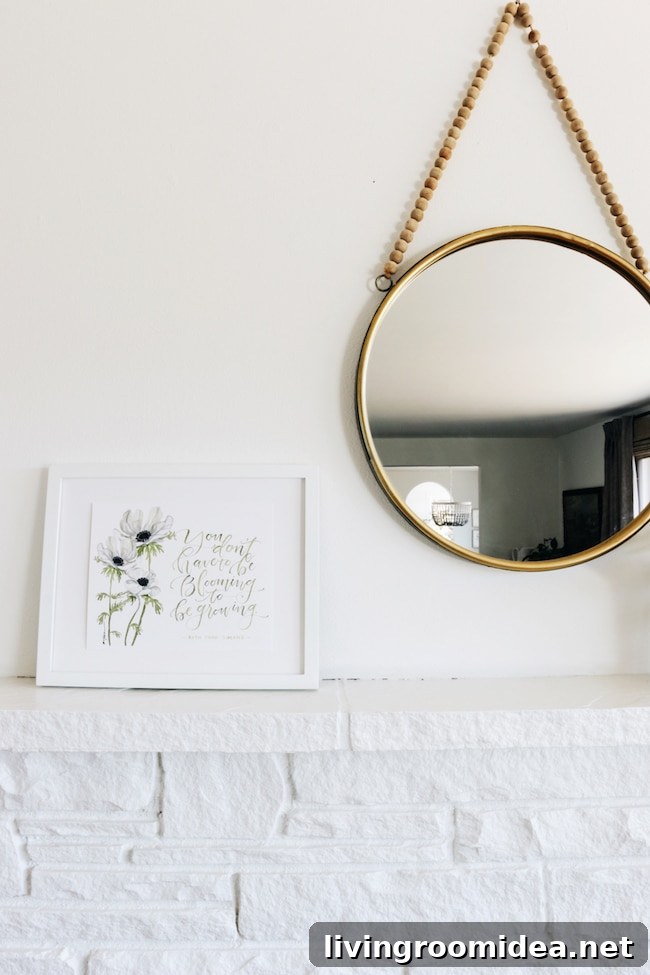
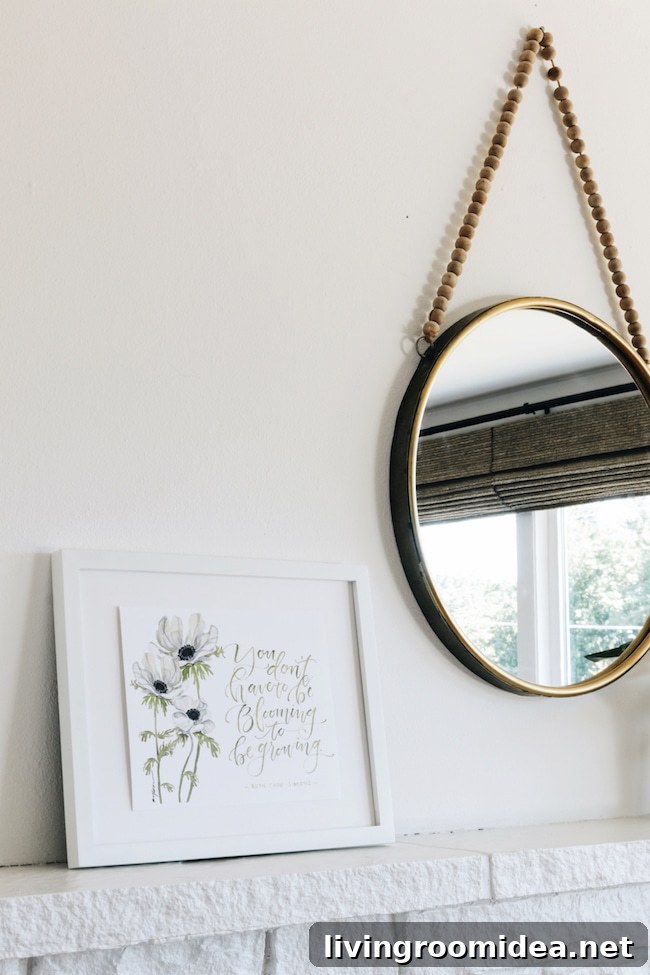
Watercolor quote artwork on mantel – GraceLaced
Woven Shades
Rattan daybed, pillows, baskets and other styling pieces were chosen to complement the simple, warm feeling of the room.
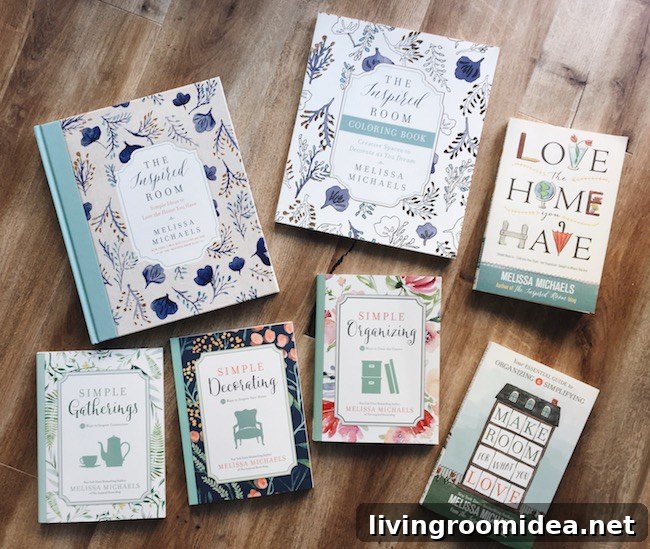
Get inspired by my bestselling books! Browse the shop for more details.