
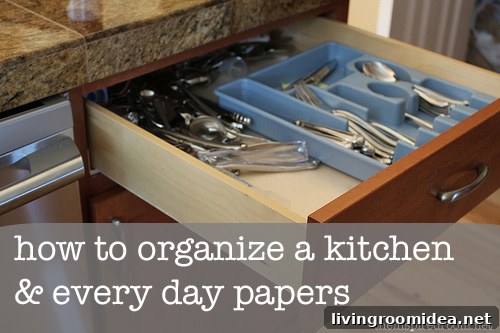
I’m not obsessively organized. I don’t alphabetize my spice rack or buy elaborate organizers for every drawer. My silverware drawer is a jumble and my single utensil tray dates back to a past decorating phase. Still, I use a few simple systems that make daily life smoother. I care more about function than perfection, and those practical choices are what keep our kitchen working efficiently.
Many readers asked, after seeing a post about my morning routine, how I manage to unload the dishwasher in two minutes. Today I’ll explain. I’ve mentioned some kitchen organizing ideas before, but I also developed a new system for keeping papers off the counter that I’m excited to share. It’s a small change that made a big difference.
When I arranged the kitchen, I placed tools and supplies where we actually use them. That approach rests on two main concepts.
1) Divide the kitchen into activity zones.
I group items by the tasks that happen in the kitchen. Baking supplies are kept together, cooking tools in another area, and everyday dishes on open shelves so they’re easy to grab and put away. Organizing by activity keeps most needed items within a step or two, which speeds up meal prep and cleanup.
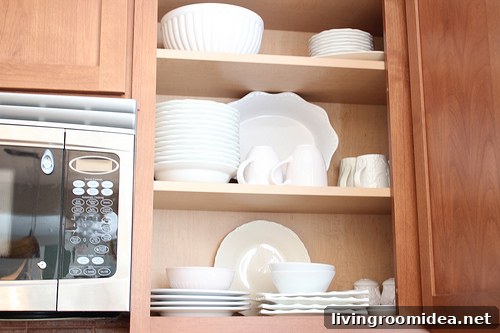
Everyday dishes are on open shelves for quick access. (Yes, our microwave handle is broken and the microwave is temperamental, but it still serves a purpose.)
2) Keep the most-used, frequently washed items near the sink and dishwasher.
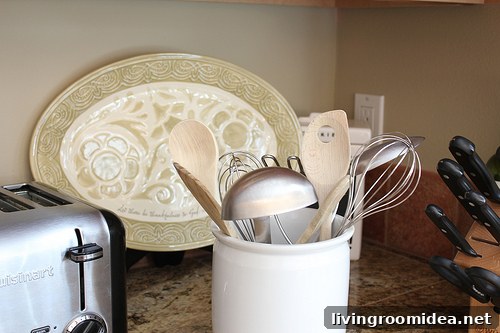
All cooking spoons and spatulas live together, pots and pans are in one place, baking dishes are grouped, and storage containers are kept together. Items that are washed often are easy to reach, which prevents overloading cabinets with things we rarely use. I don’t strive for perfect presentation—utensils may be tossed in a drawer—but they’re consistently where I expect them to be, which avoids frustration and saves time.
Using those two guidelines—planning zones and keeping everyday items close to the sink—means unloading the dishwasher is quick. When everything has an obvious place, putting dishes away becomes a two-minute task.
Now, I know some of you are thinking this is easy to recommend when you have a newer kitchen with standard cabinets. I get it—I’ve lived in older homes with limited storage and had to be creative with door hooks and basement storage. Even so, the zone concept still applies: place the most-used items as close as you can to where they are used. Make the best of your layout and create systems that fit your space.
Here are a few clever storage ideas I use to keep extras out of the main work zone.
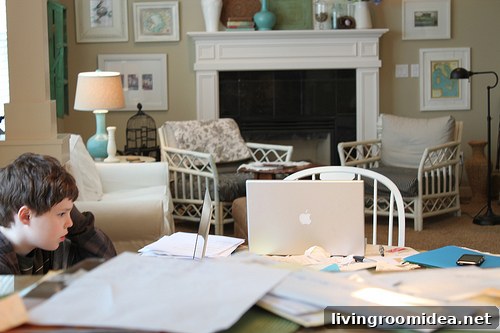
The weak link in my system used to be paper clutter on counters and the kitchen table.
After moving into this house, papers that were in process tended to accumulate on counters: bills to pay, receipts, mail for the kids, and lists. I have file cabinets elsewhere for long-term storage, but those in-process papers needed a nearby, consistent home so they wouldn’t be scattered and forgotten.
How the problem played out at our house:
I’d spread papers across the table to work on them, then get called away. My husband would clear space and move papers to the bar or shove piles aside. My organized piles became a mixed up mess and important things were misplaced or overlooked.
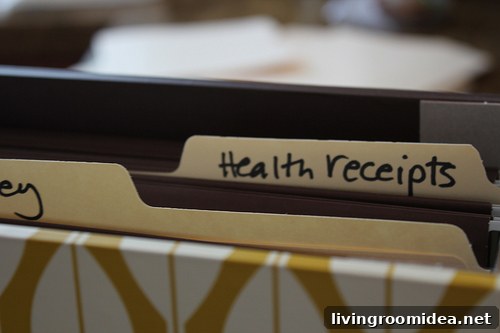
This week I decided enough was enough and designed a simple paper solution.
I analyzed why papers ended up on the counter and what types always appeared. I realized the issue wasn’t long-term storage; it was managing the papers that were actively being handled and needed attention soon. Applying the same principles I use for kitchen supplies made the solution clear: group related items and keep the ones I use most within easy reach.
I sorted the in-process papers into about seven categories based on frequent activities: bills to pay, church receipts, business receipts, HSA/insurance receipts, and mail or paperwork for each child. Then I put a small file box on the counter so those categories have an obvious, dedicated place.
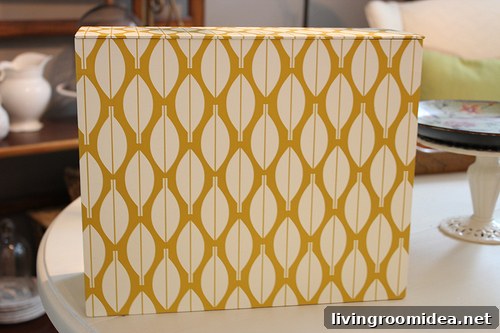
My kitchen paper clutter solution:
I bought a compact file box and created folders that match the paper categories I frequently handle. The box sits on the counter and holds in-process papers until I can file or complete them. It took five minutes to set up and instantly stopped piles from forming. I even added one folder for my husband so if he finds a stray receipt he knows where it belongs—no more searching the house for misplaced papers.
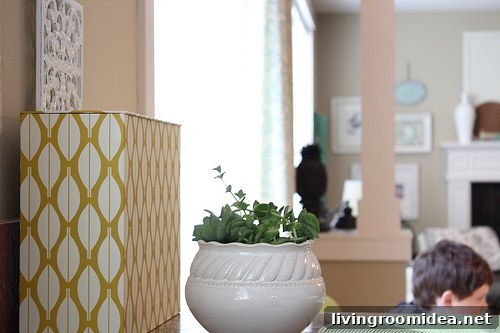
I love simple systems that actually get used. Loading the dishwasher at night and unloading it in the morning, keeping drawers and cabinets organized by activity, and using a small in-process file box on the counter have reduced daily friction and helped keep our home in order.
What is your biggest kitchen housekeeping or organization challenge?