
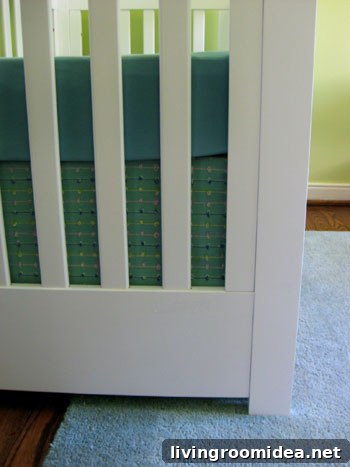
Some of you may remember that we planned a DIY crib skirt to hide the gap beneath the mattress and the storage drawer below. We’re back with a clear, step-by-step guide to make a fitted, removable, and washable crib skirt—no sewing required. I used iron-on hem tape, scissors, a tape measure, and an iron. In about forty minutes I had a finished custom skirt. Here’s how I did it:
Start by measuring the vertical distance from the bottom of the mattress to the top of the drawer; this measurement should be consistent around the crib. Next measure the horizontal lengths of each visible side of the crib. I made a three-sided skirt since the back of our crib is never seen, so I measured two shorter side panels and one longer front panel. Add three inches to each measurement to allow for hems and overlap. For example, a 12″ height becomes 15″, and a 30″ side length becomes 33″.
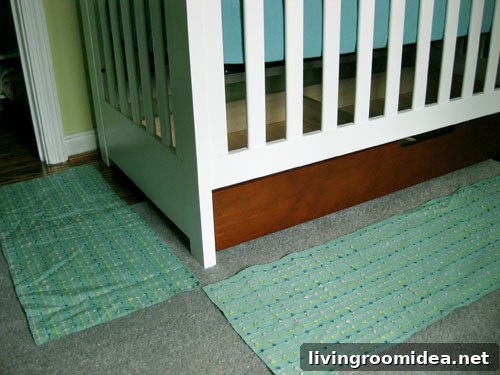
Cut fabric panels to your adjusted dimensions. For the side mentioned above, I cut a 15″ x 33″ piece. Repeat the same approach for the other sides, keeping the fabric grain and pattern direction consistent if your fabric has a print or stripe. Cutting all panels in the same direction prevents mismatched patterns when assembled.
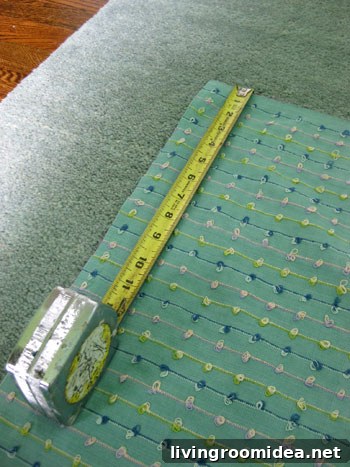
After cutting, I had three panels: two equal-width side panels and one longer front panel. If your fabric has a directional print, make sure every panel is cut with the pattern running the same way so the finished skirt looks cohesive.
Gather an iron, scissors, and a heavy-duty iron-on hem tape such as Heat N’ Bond Ultra Hold. To create neat hems without sewing, cut strips of hem tape to the length of each panel edge and iron them onto the back of the fabric, as close to the edge as possible. Keep the clear adhesive film facing the fabric and the paper backing facing up—avoid letting the iron touch the adhesive side.
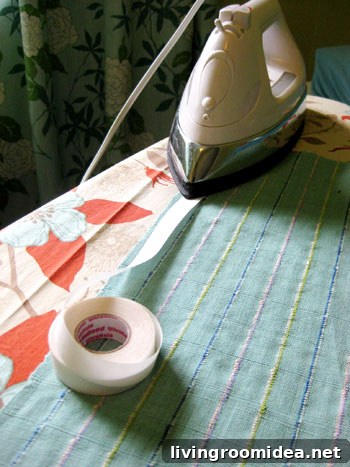
After pressing the hem tape, let it cool briefly, then peel away the paper backing to reveal a sticky strip resembling clear double-sided tape.
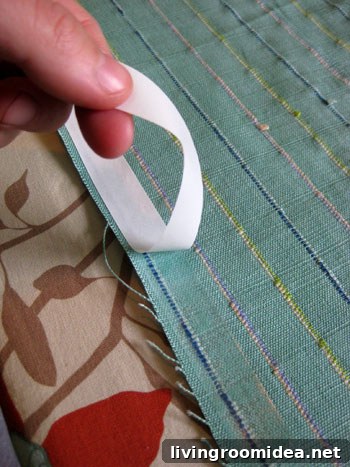
Fold the fabric over the adhesive strip so the raw edge is enclosed, then iron the fold to secure the hem. This creates a smooth, finished edge without puckers or pinching that sometimes happen when sewing.
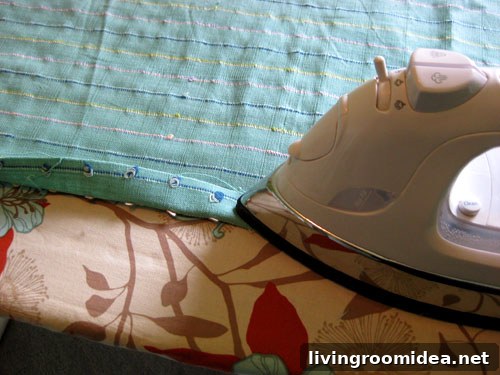
Repeat this hemming process for all four edges of the side panels and for the top and bottom edges of the front panel. I left the two vertical edges of the front panel unhemmed because they would be joined to the already-hemmed side panels.
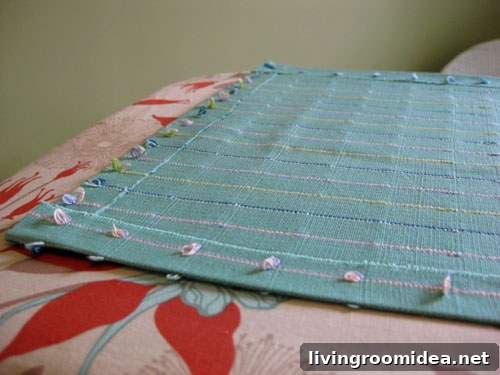
To join panels, place a hemmed edge of a side panel next to the unhemmed vertical edge of the front panel. Apply another strip of hem tape along the side panel’s hem and peel off the backing to expose the adhesive. Align the two edges and press them together with the iron to create a clean seam.
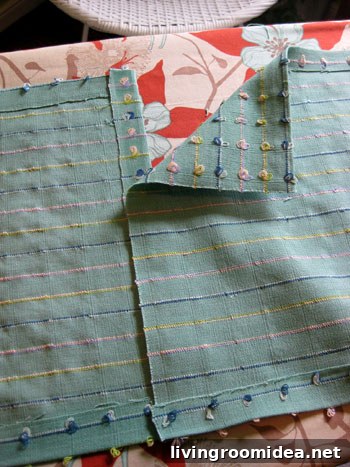
When you flip the fabric to the front side, you’ll see a neat, finished seam. Repeat the process to attach the other side panel (or panels) until you have one long, hemmed band ready to fit around the crib.
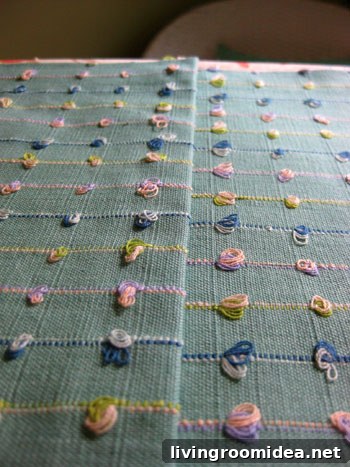
If you have enough fabric, you can cut one continuous long strip and hem it, but using panels lets you complete the project with less yardage—useful if you only have one to one and a half yards of fabric.
To secure the fitted skirt to the base of the crib, we used Velcro so the skirt is easy to remove and wash. Iron-on hem adhesive like Heat N’ Bond is washable and durable, but for extra security you may want to tack the Velcro on the fabric with a few stitches so it won’t come off in the wash.
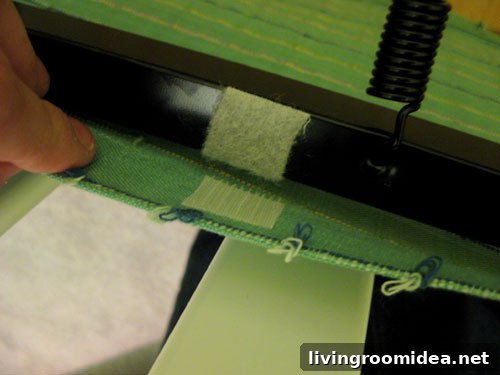
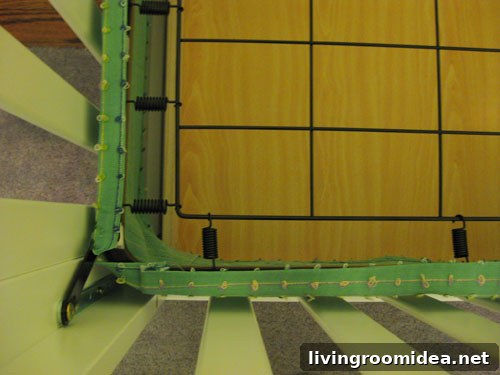
Our crib mattress is currently on a higher setting, so the skirt hides the drawer. Later, when we lower the mattress, the gap will close and the skirt will no longer be needed. We attached several small square pieces of Velcro around the top of the crib frame—three or four per side—to hold the skirt in place.
With the mattress back in place, the crib looked polished, fitted, and neat—exactly the result we wanted.
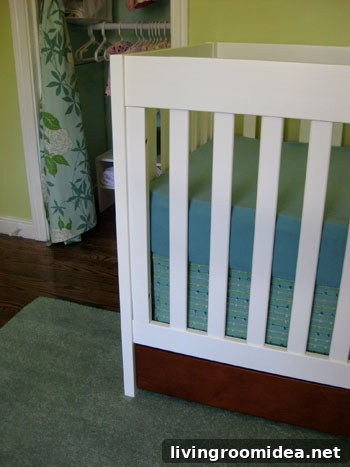
We chose colors that coordinate without matching perfectly so the skirt complements other textiles in the room without competing with the curtains.
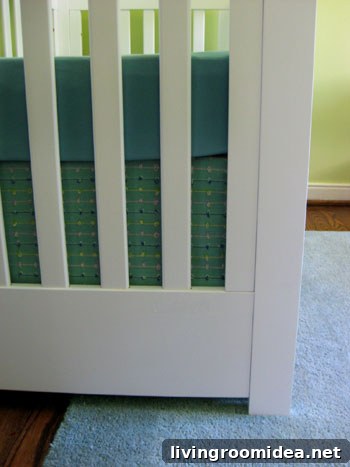
This project gave us a washable, removable crib skirt without bringing out a sewing machine or spending much money. The entire project took under an hour. I used about one and a half yards of fabric, which cost roughly $14. The result is a neat, custom skirt that’s easy to remove and clean.
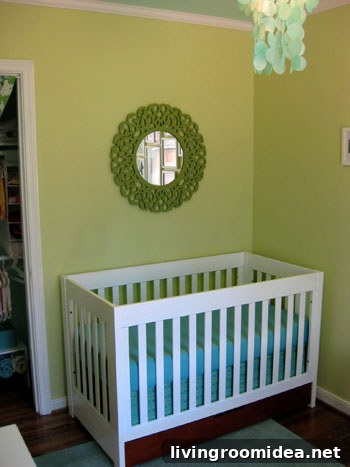
That’s one simple way to make a custom crib skirt—quick, affordable, and effective. Whether you want a short fitted skirt like ours or a full floor-length version for extra storage access, this no-sew technique makes either option achievable in a short time.