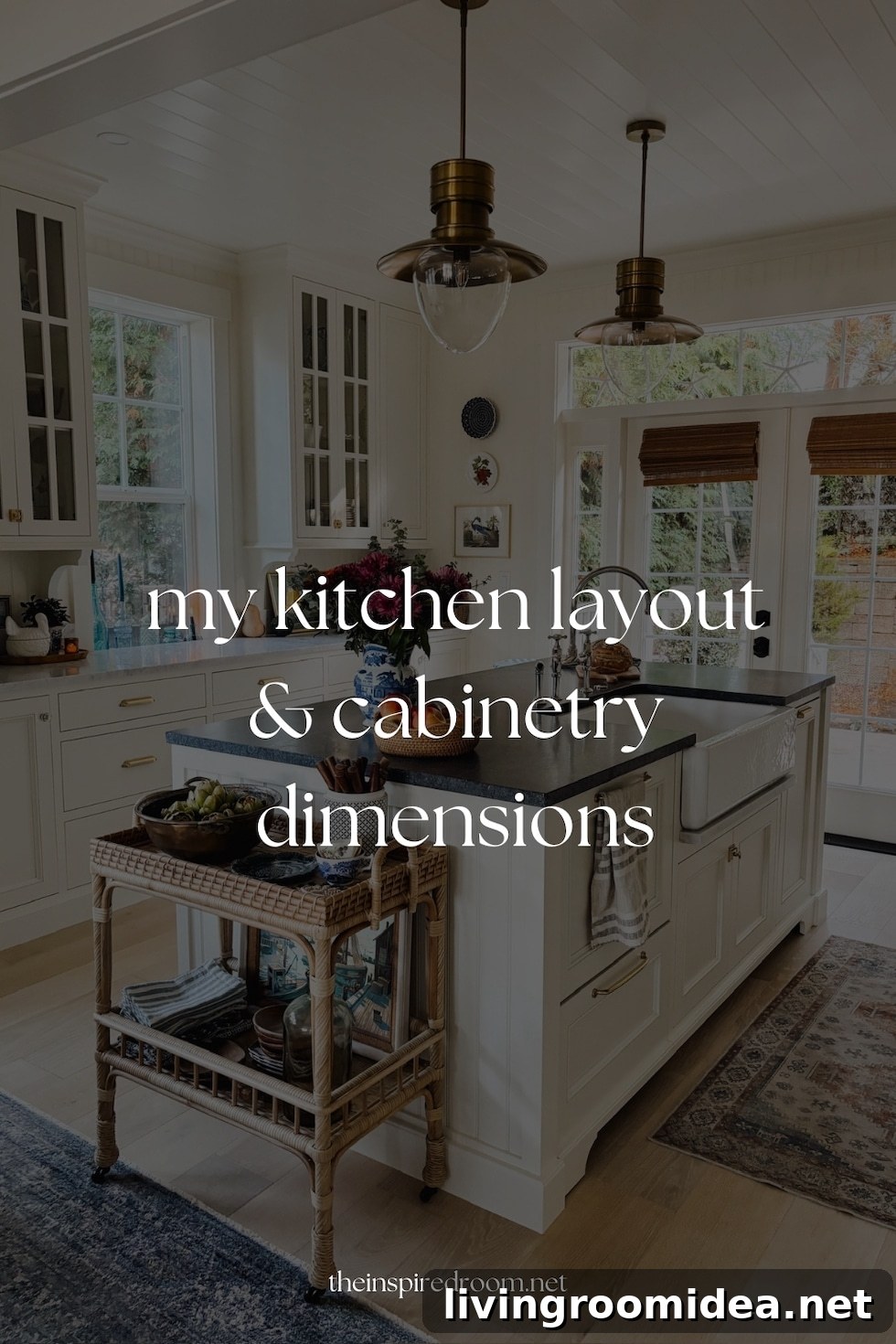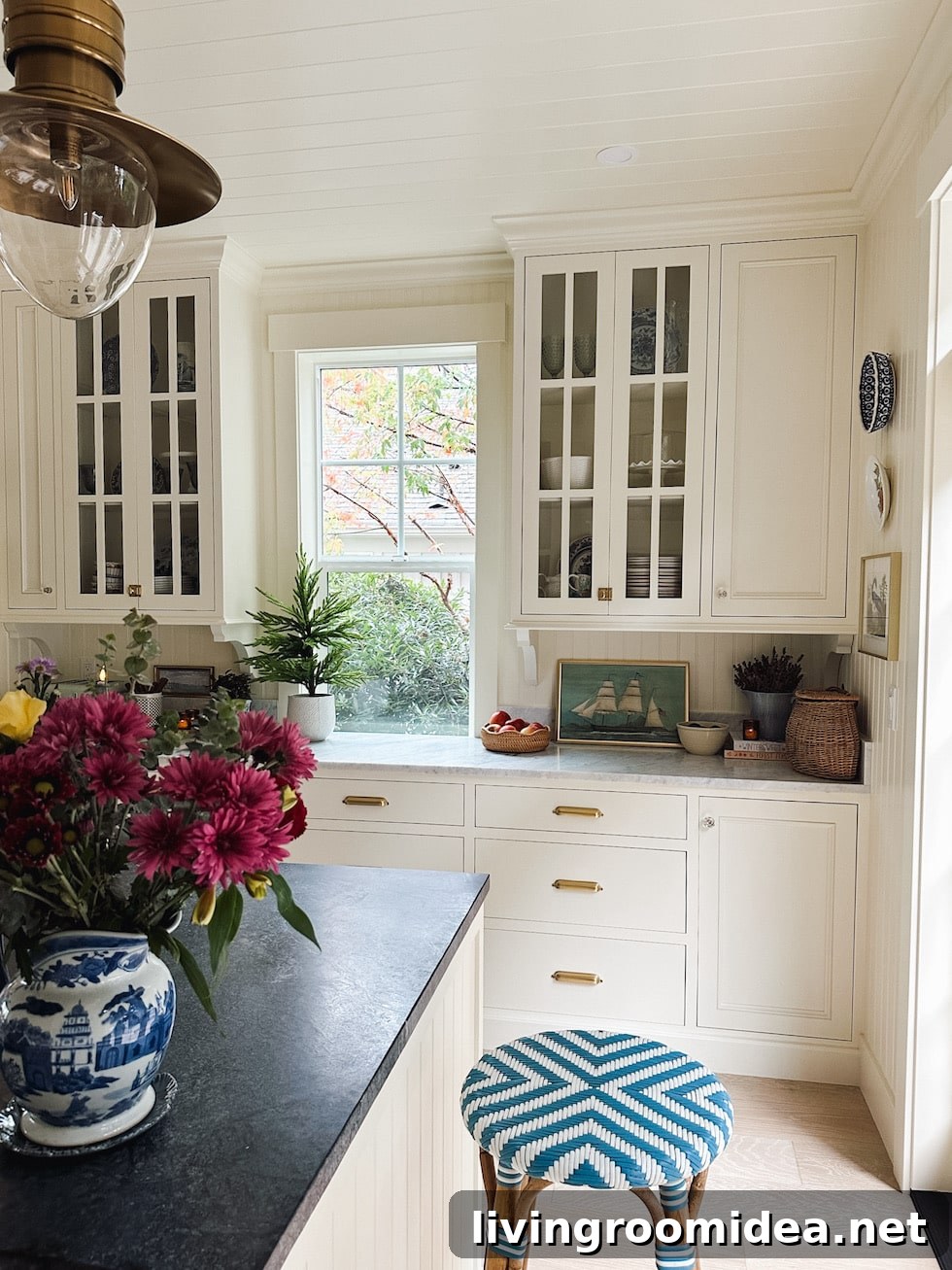
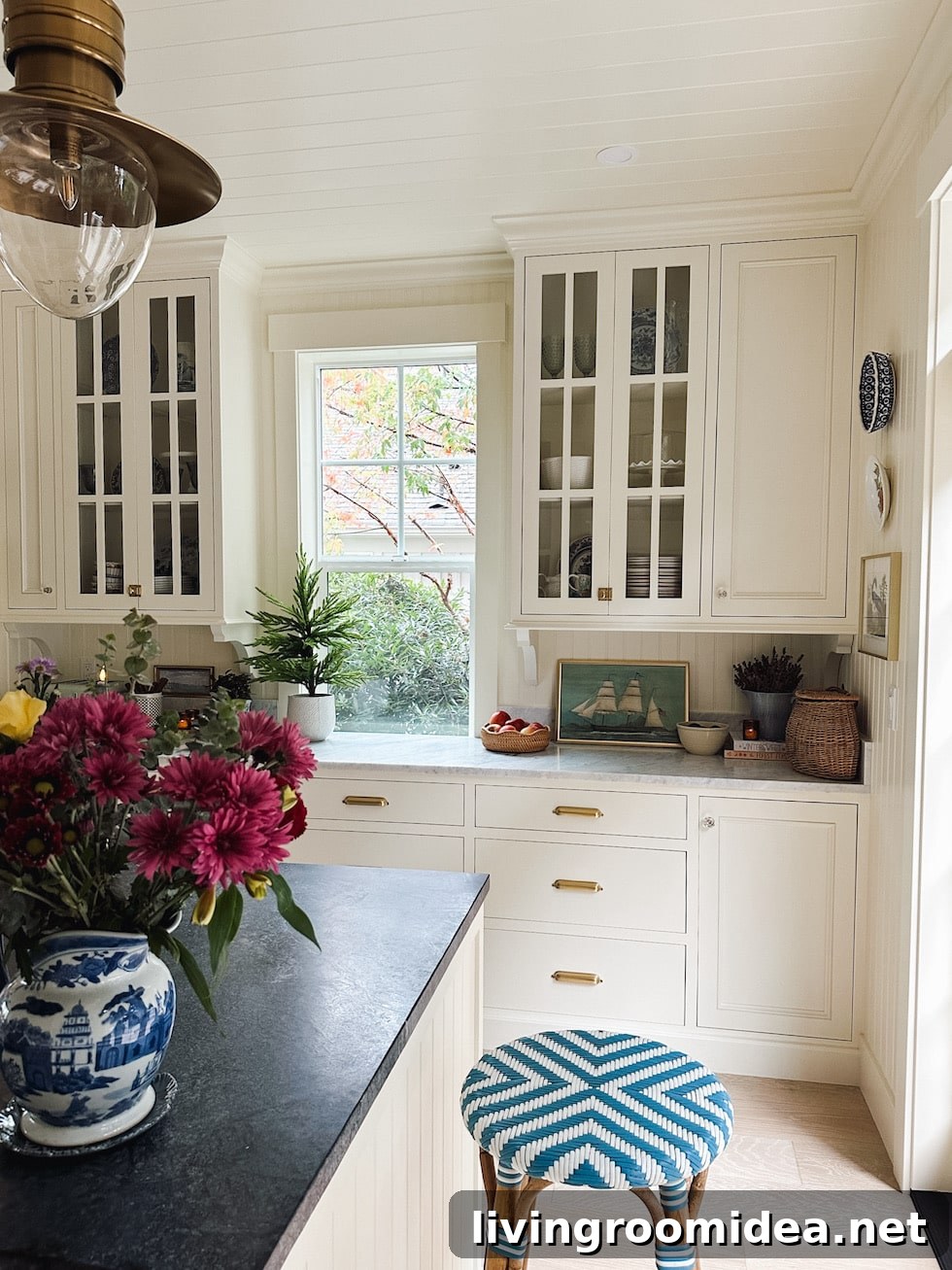
Planning a kitchen renovation or relocating a kitchen within existing walls can make it hard to picture how measurements and floor plans will translate to real life. We went through that process moving our kitchen into what had been the dining room, and I want to share the dimensions and decisions we used so you can compare the numbers with the photos of our finished space.
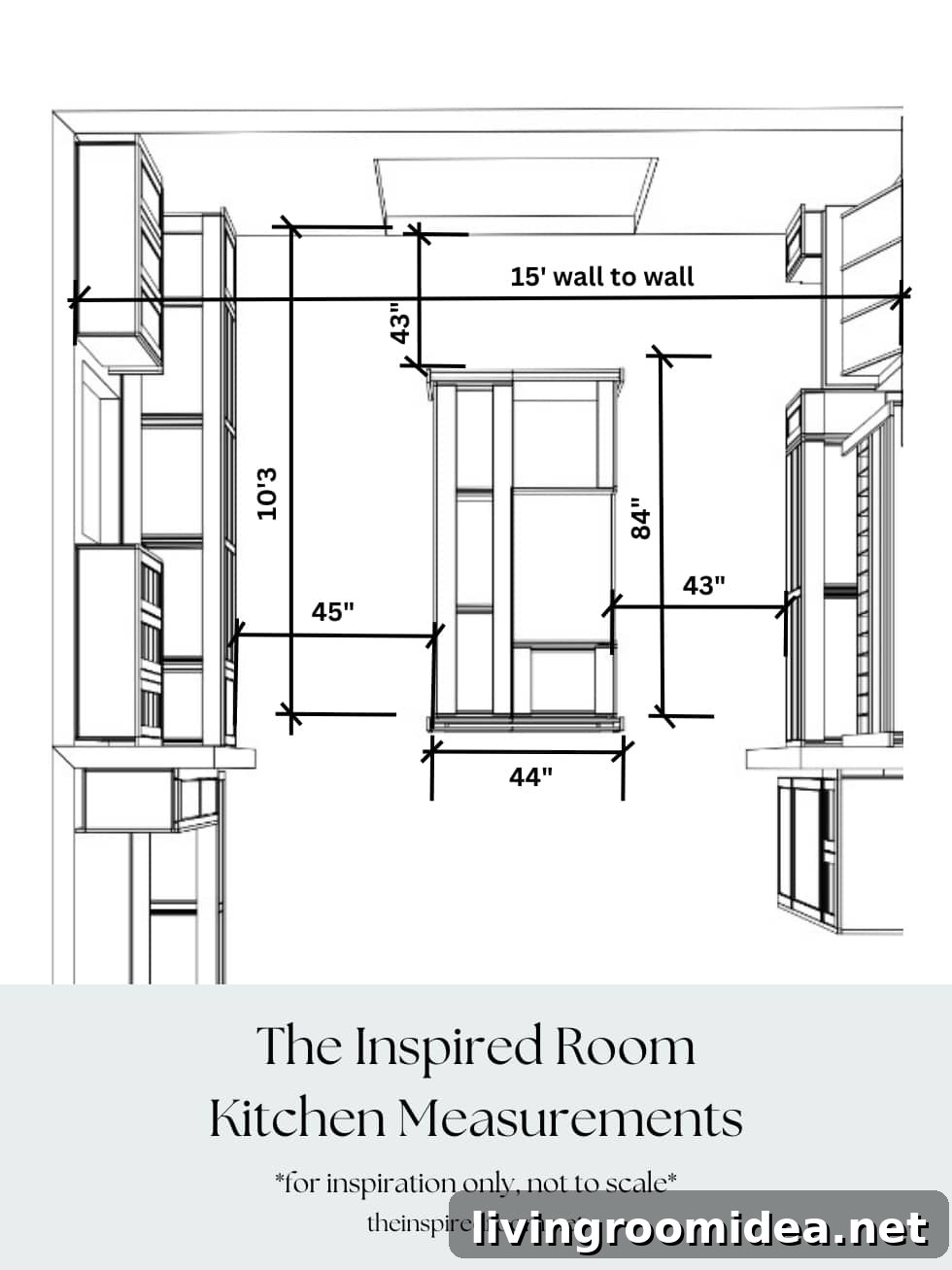
Below I share the dimensions and cabinet details we used on paper, along with photos of the finished kitchen so you can see how the plans translated into reality.
A quick disclaimer: consult your cabinet company or a kitchen designer to confirm your layout and choices. These measurements are approximate and my sketches were for inspiration rather than construction drawings. Some details changed during the project (we swapped the dishwasher and trash drawer, for example), but the overall plan and photos should give you a clear idea of how we fit a functional kitchen into this existing space.
Everyone has a different sense of the ideal kitchen size. We worked within fixed walls but still arrived at a layout that feels comfortable, welcoming, and efficient for our family—big enough to gather in, but not so large that it feels empty or awkward.
I’ll also explain why we chose this layout and how those choices supported the flow of our main floor.
Since the renovation reveal I’ve heard from many readers who used our kitchen as inspiration. I’ve designed several kitchens over the years and it’s always rewarding to know my designs help others envision their own spaces.
Our kitchen layout and space planning
One priority was maximizing efficiency across the main floor, not just inside the kitchen.
Our main floor is compact and open, so the kitchen’s placement and layout would influence the flow and function of adjacent rooms. We moved the kitchen to the back of the house where the dining room had been to improve traffic and sight lines while still working within the existing walls.
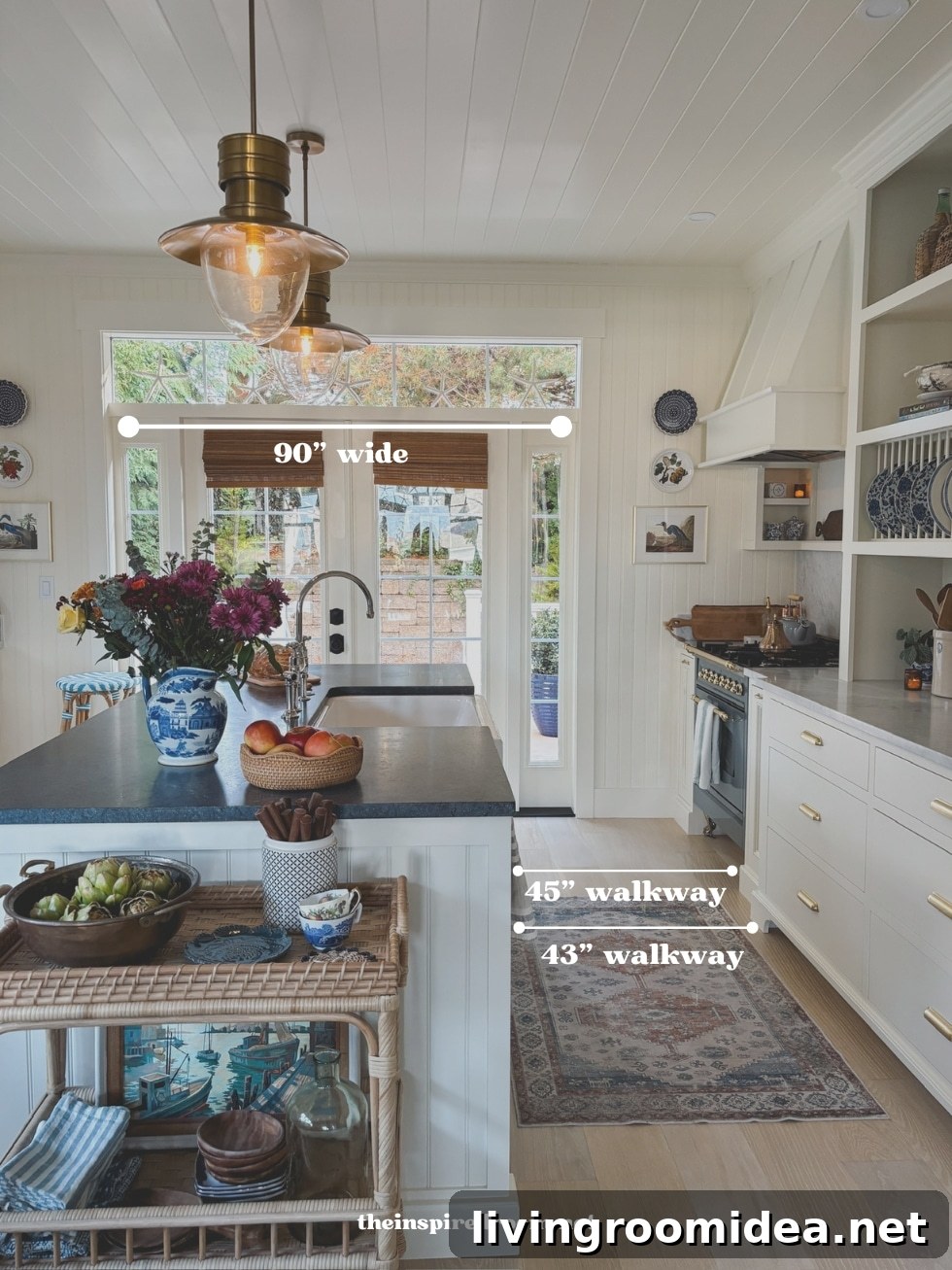
We avoided any layout that would create barriers or bottlenecks. The full kitchen wall-to-wall width began at 180 inches, but once cabinets, paneled walls, and appliance clearances were installed the usable floor width decreased. We accounted for drawers and appliance doors opening, and even the thickness of tongue-and-groove beadboard on the walls.
Accurate measurements are critical when you have limited wiggle room. Ask lots of questions before contractors start and monitor progress so you can address issues early.
I hope these notes help you imagine what could work in a smaller or uniquely shaped kitchen. Many examples of ideal layouts assume generous space, but compact kitchens require careful choices so everything functions well together.
Our cooking zone functions like a galley and would work even with half the width, but we kept the opposite side to add storage, prep, and serving areas. We designed the work triangle—stove, sink, fridge—to be close enough for efficiency yet separated enough to allow traffic and multiple people working without conflict.
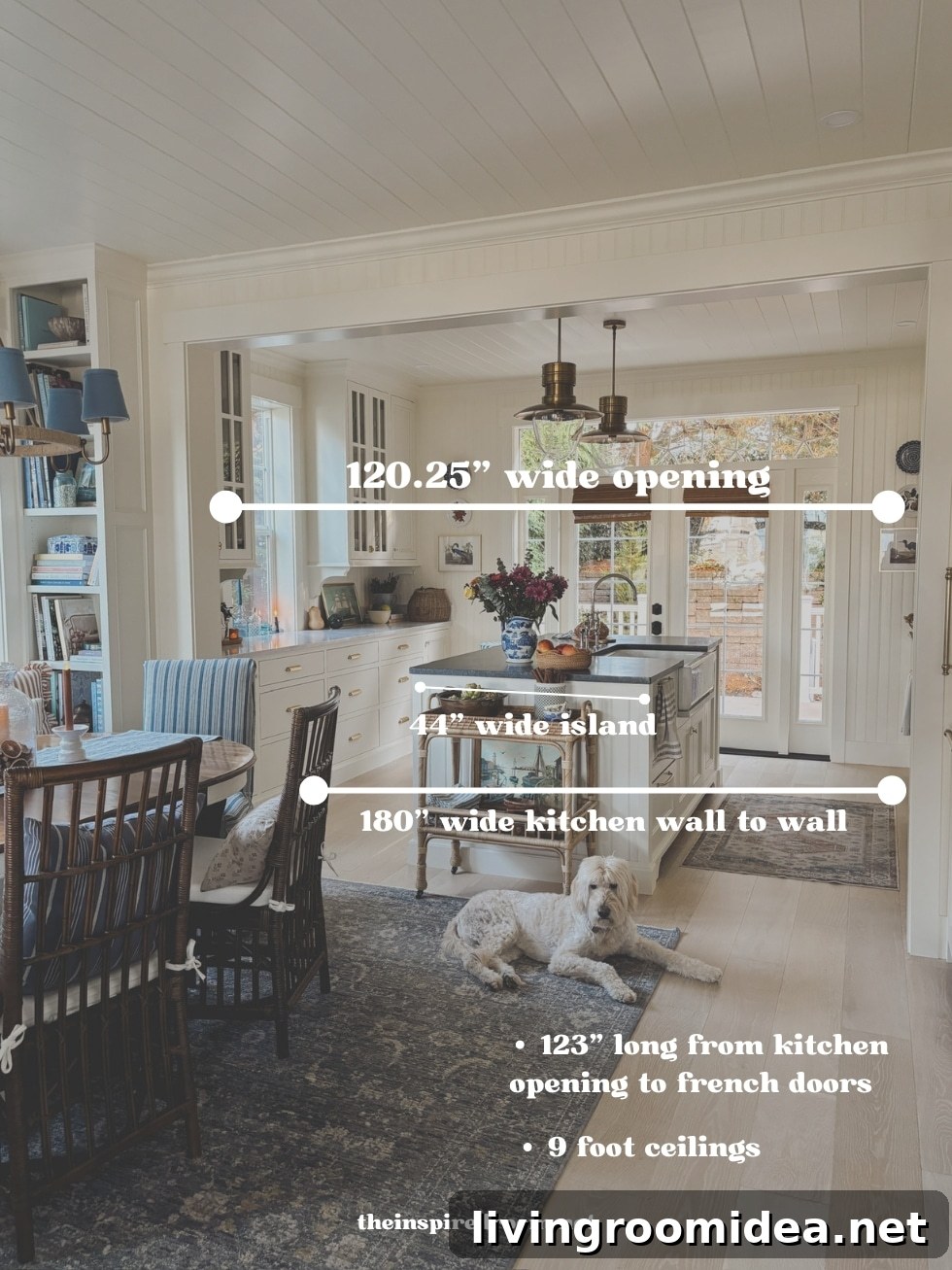
The fridge sits just outside the main kitchen area on the dining room wall so it’s accessible without crowding the cooking zones. The dishwasher is in the island near the fridge, which helps with unloading and serving. Cabinet and appliance doors can open fully and there’s room for someone at the sink or stove without creating a traffic jam.
Because overall storage was limited in the house, we prioritized as much cabinetry and counter space as possible so multiple people can prep or serve at once. The island is central to the plan: it provides storage, additional counter space, room for the dishwasher, sink and trash, and functions as a buffer zone so guests can be in the kitchen without interfering with the cook. We included a small stool cubby for casual seating, breakfast, or chatting while someone is cooking.
We also prioritized natural light and views. The kitchen has multiple windows and French doors so it feels bright and connected to the outdoors. While many designers suggest placing a sink at a window, we chose an island sink because it’s protected from the front door view, it faces the water and windows, and it sits in the most efficient location for our workflow.
Having the sink in the island helps the kitchen feel like its own cozy room while remaining open enough to avoid claustrophobia. It allows for comfortable prep space, conversation with guests, and a clear path around the room. If you worry about an open kitchen showing messes, cleaning as you go, stacking dishes in the dishwasher before cooking, and using deep sinks and dishwasher drawers make cleanup faster. We also have a small mudroom off the kitchen for temporarily stashing items if needed.
We chose inset drawers for a traditional, flush look. Inset cabinetry has slightly less internal depth than overlay styles, but we have more than enough room in our drawers and cabinets. We also selected a mix of decorative toe kicks and solid baseboards; these small decisions affect cabinet installation, space planning, and finishing details, so consider them early on.
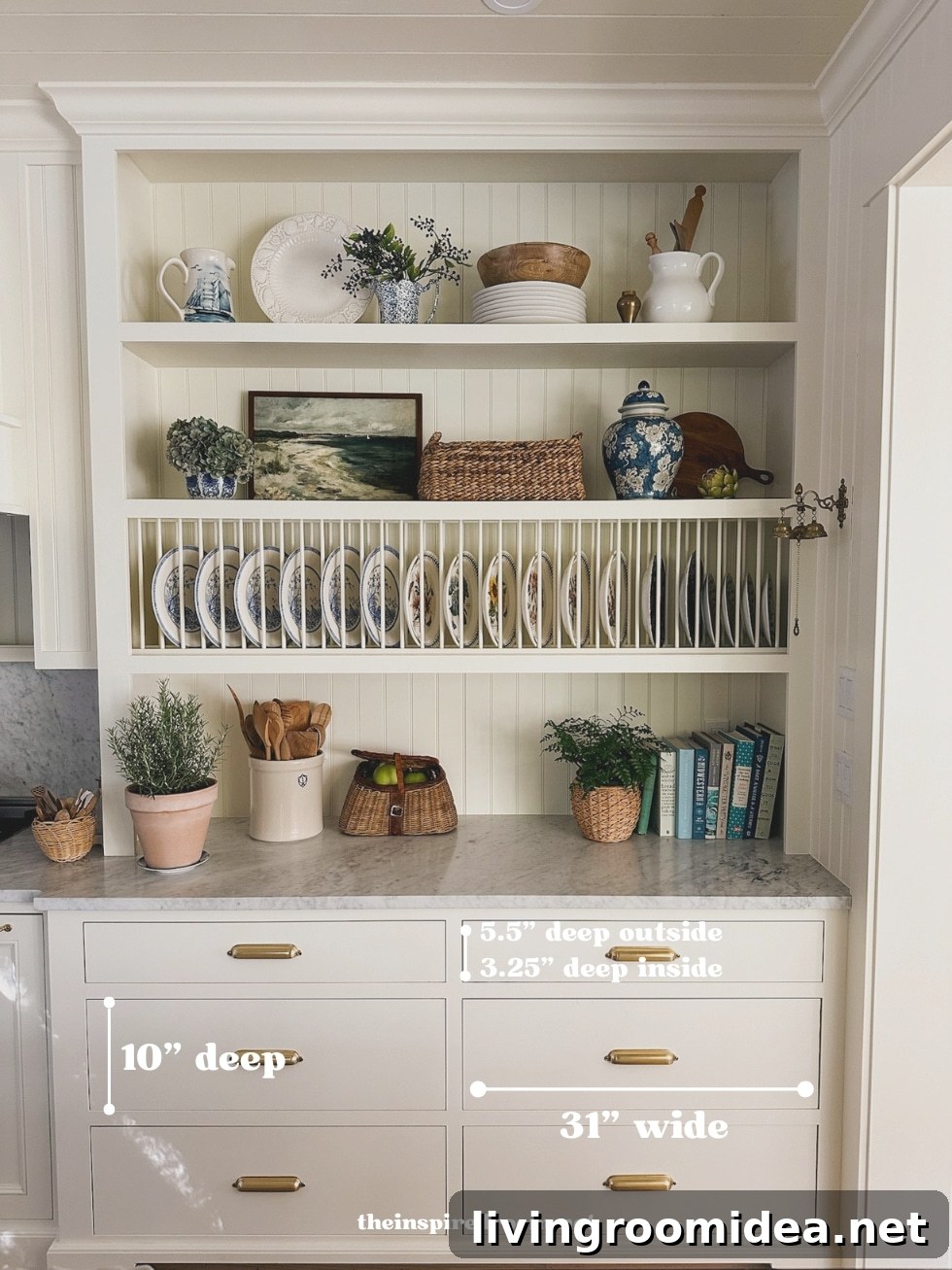
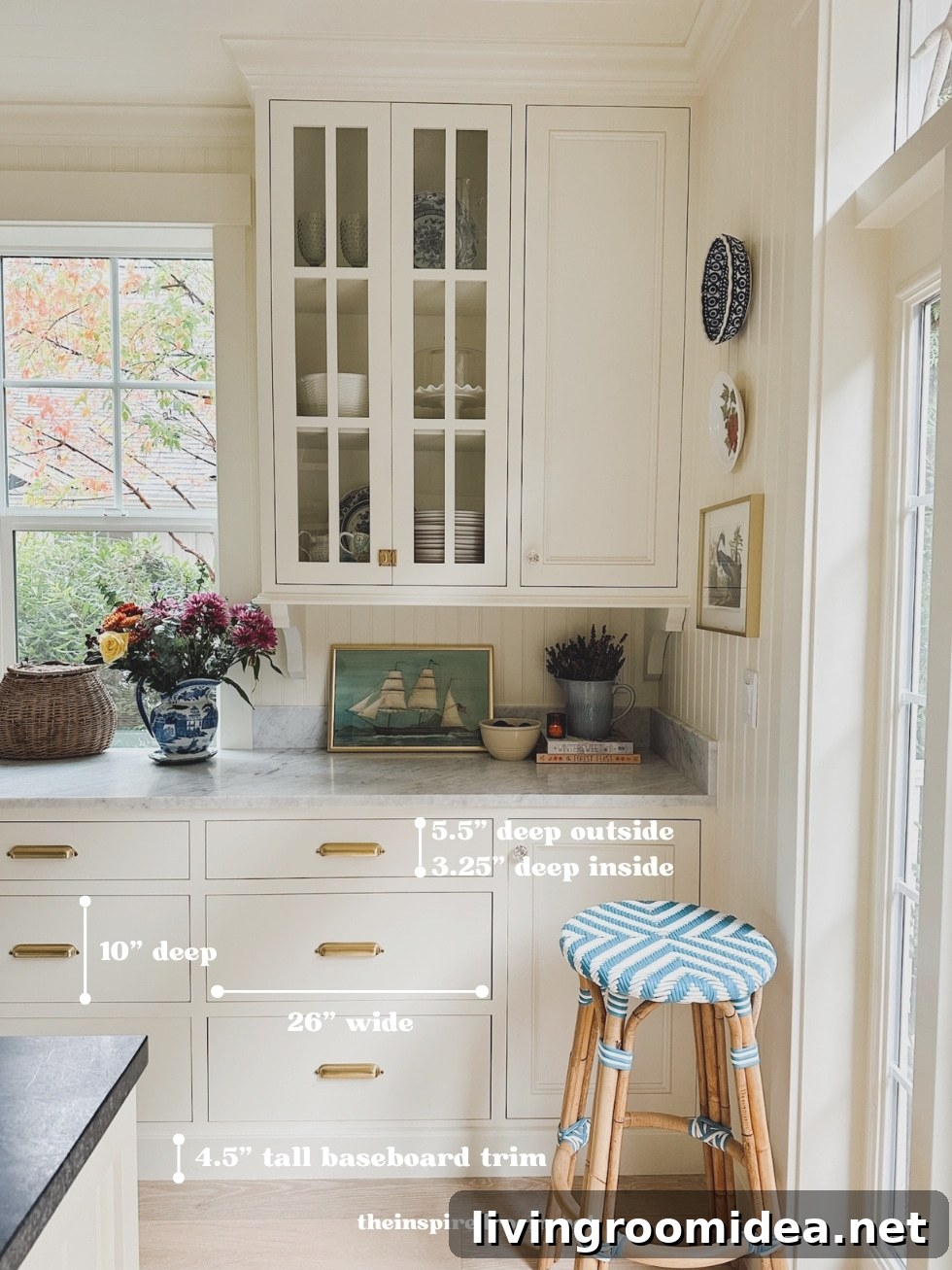
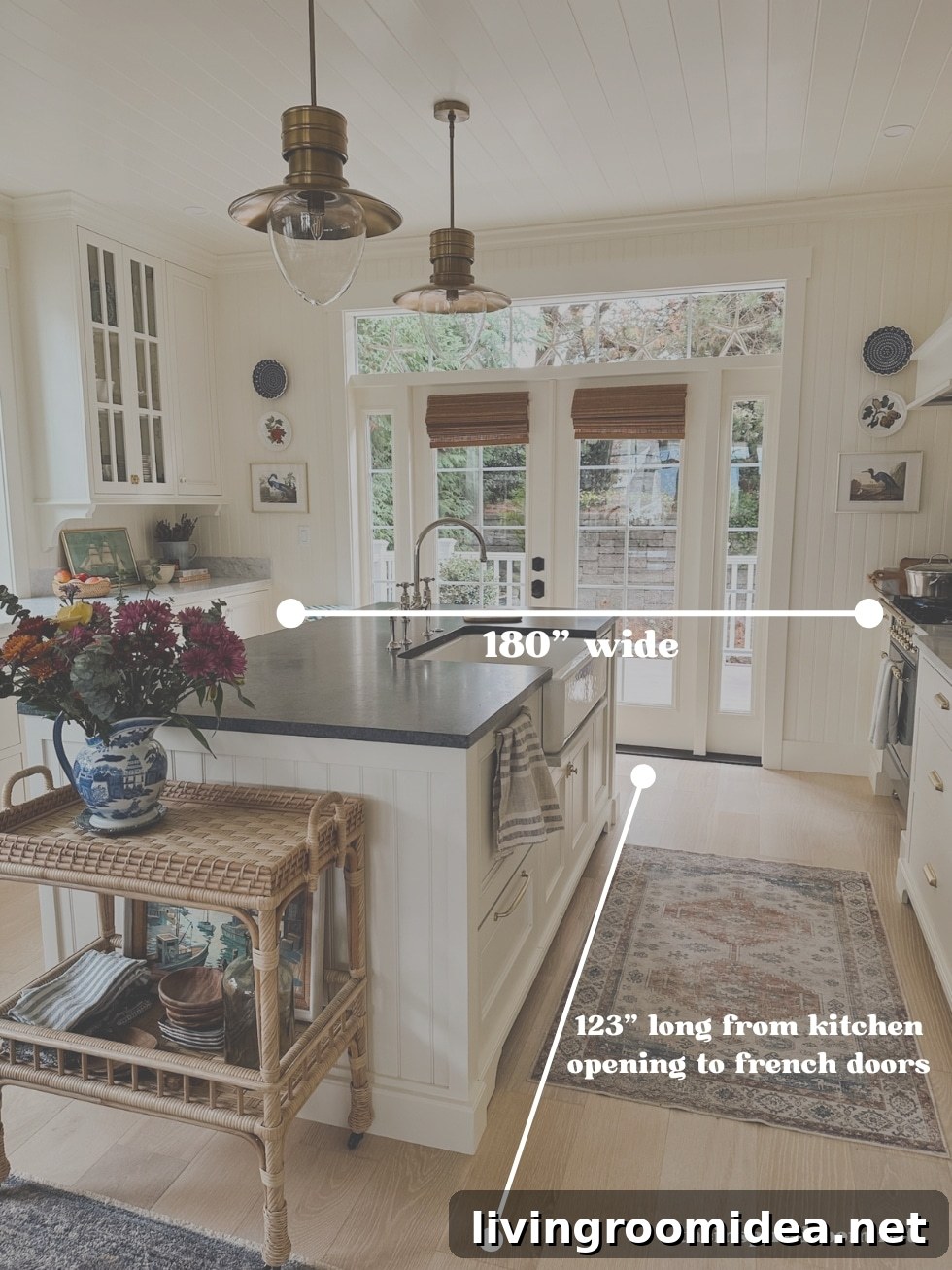
Remember: the original room measured 180 inches wall to wall, but once cabinets and wall treatments are in place the practical width is measured from backsplash to backsplash. The space feels cozy yet open, and you can walk around the room comfortably without feeling trapped.
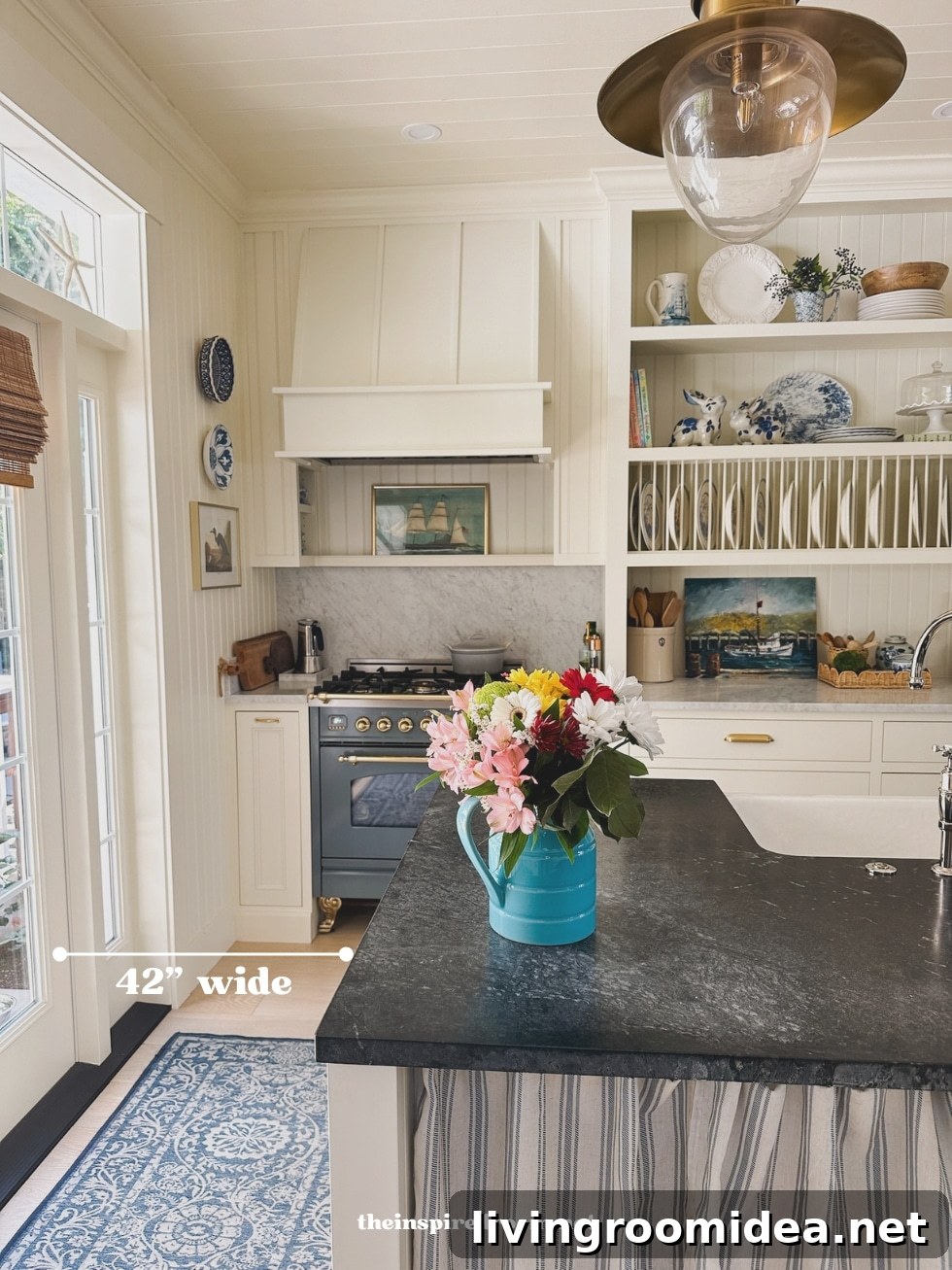
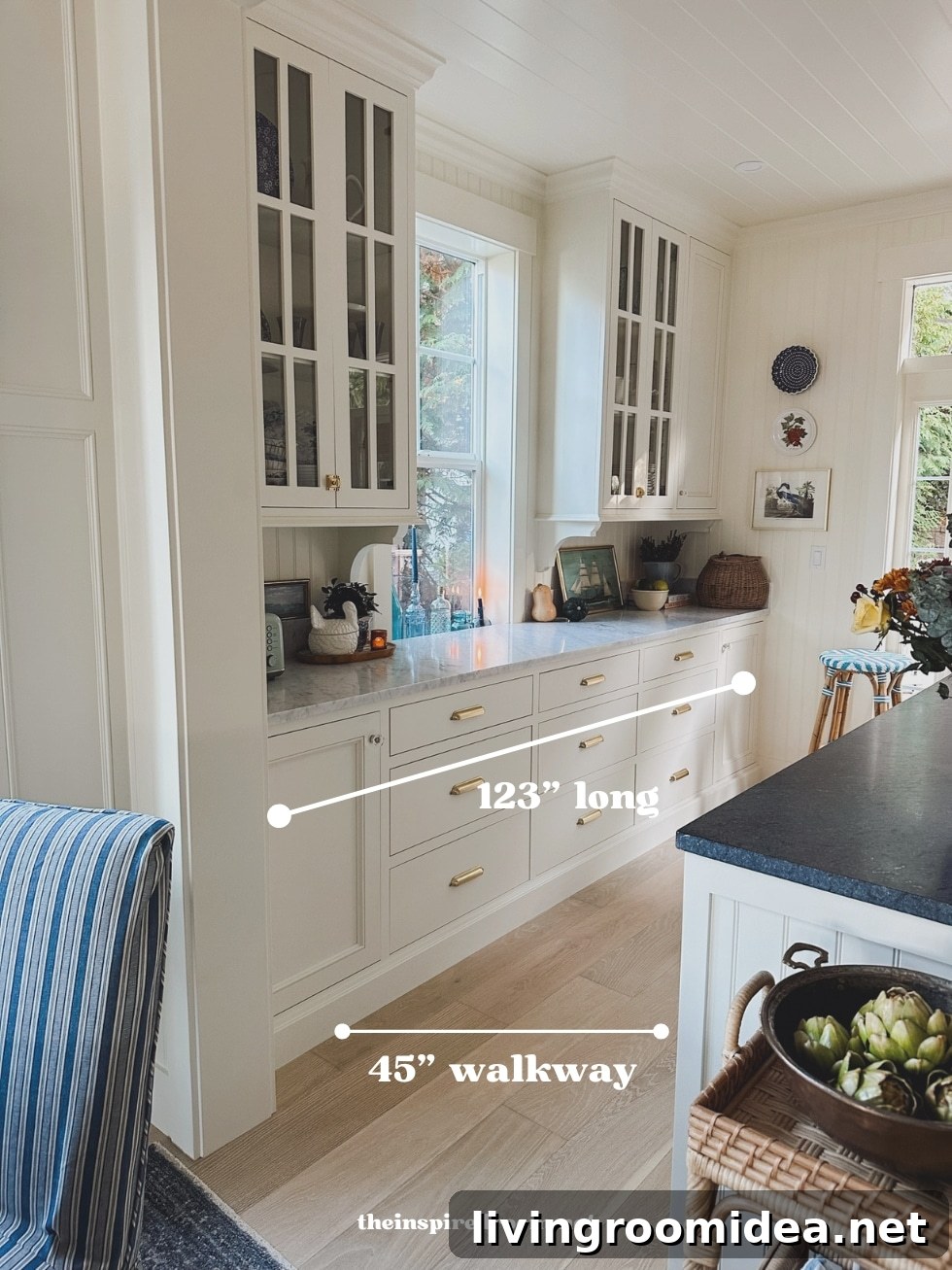
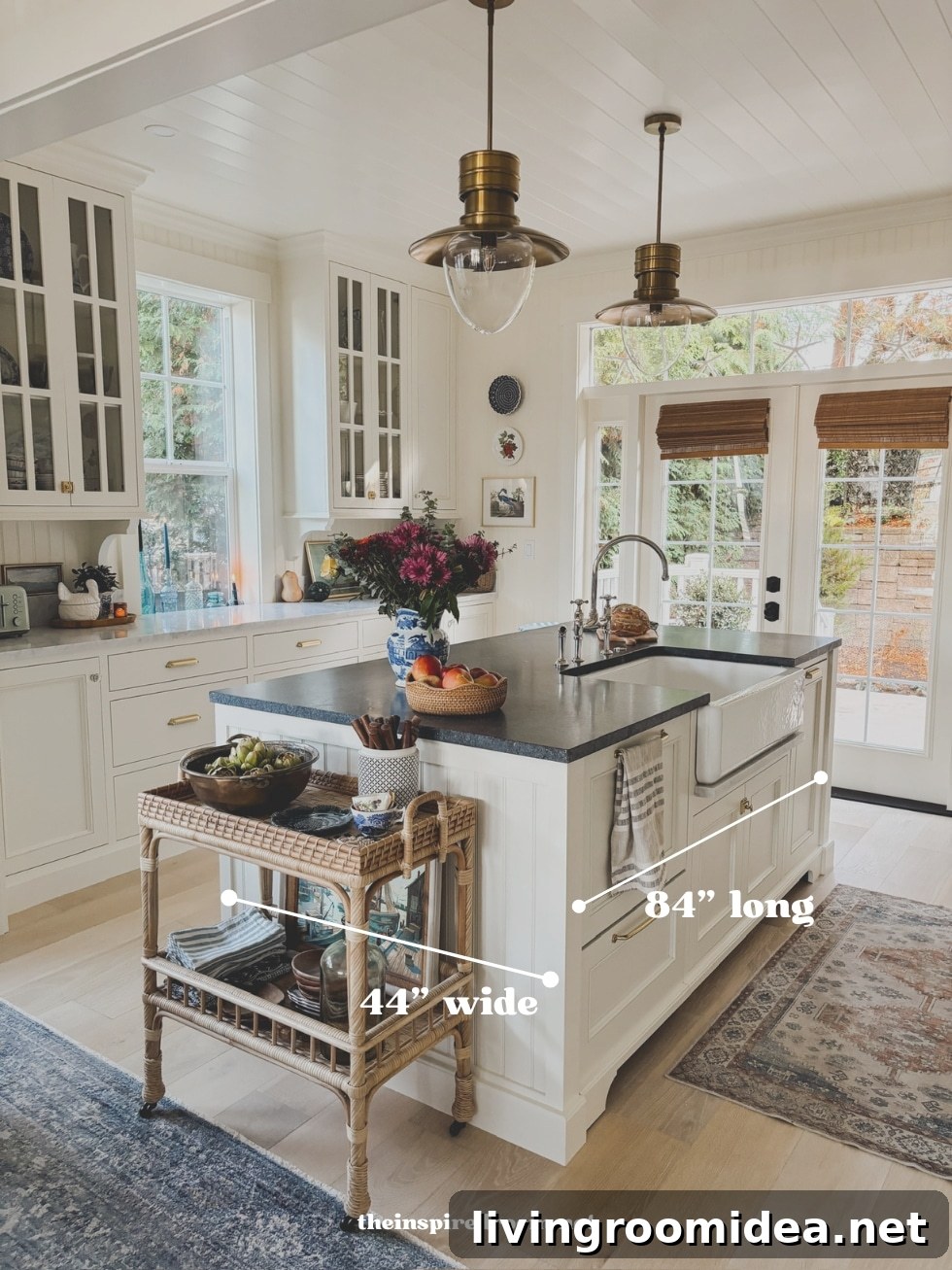
I hope these details were helpful. If you have questions about any of the points above, let me know what you’d like to hear more about.
I often receive requests for personalized design advice. While I no longer accept private consultations, I created a membership community where I can help people more directly with design questions and group teaching.
More Kitchen Posts:
Our Coastal Cottage Kitchen Tour, Reveal, and Sources
You can also view the befores and afters of this renovation and browse all kitchen posts in the site archives for additional photos and details.
How I Can Help You With Your Home
I get many renovation and design questions and love to help when I can. A year ago I launched an affordable membership community where I can devote time weekly to teach decorating concepts and homemaking principles, and provide a private place for members to post questions, photos, and design dilemmas.

The community has been a joy to lead. Members share projects, ideas, and feedback, and I also create design boards and resources as part of our teaching series to help members visualize changes for their homes.
Join Us!
We open seasonal sessions in the HomeBody Gathering Place community where you can ask questions, learn, and get inspired. If you enjoy learning about thoughtful, livable design and want hands-on ideas for your home, consider joining a session.