

As part of our home remodeling at the end of last year—which included a kitchen remodel and new hardwood floors—we added new trim and tongue-and-groove wainscoting. We wanted to give the house more character and protect a high-traffic entry and hall with durable, real wood wainscoting that ties into the kitchen.
Of course, new woodwork needs to be painted. Rather than leaving it unfinished, we decided to hire professional painters. While many homeowners tackle interior painting themselves, we chose professionals for several practical reasons.
Reasons we hired pros:
- We’re prone to painting mishaps and wanted to avoid costly mistakes.
- Wood trim is tricky to paint well. We wanted a refined finish that complements the home rather than making new work look cheap or amateurish.
- We lacked the time, patience and consistent skill needed for a flawless job. Hiring professionals saved time and reduced stress.
- We opted for spraying rather than brushing for a smooth, factory-like finish. Spray application requires far more preparation and expertise than brushing.
Choosing spray finish allowed us to keep the classic look of traditional woodwork while achieving the clean, smooth surface suited to a newer house.
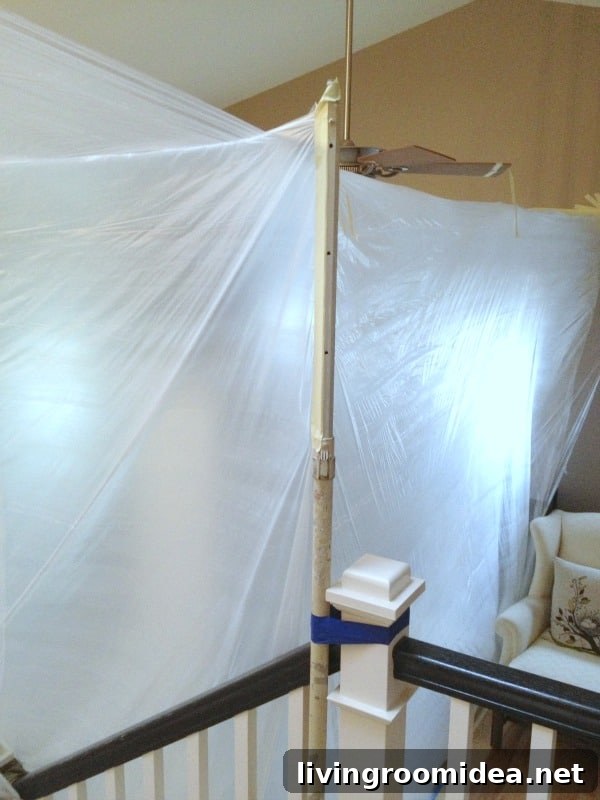
A project of this scale demands thorough preparation. We moved furniture out of the work areas (luckily into other rooms rather than out of the house) and accepted the temporary inconvenience to get a professional result.
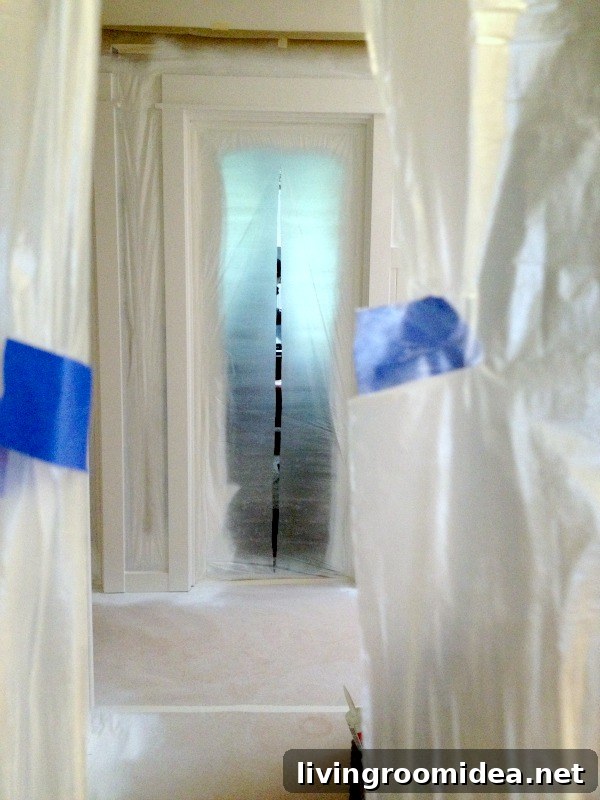
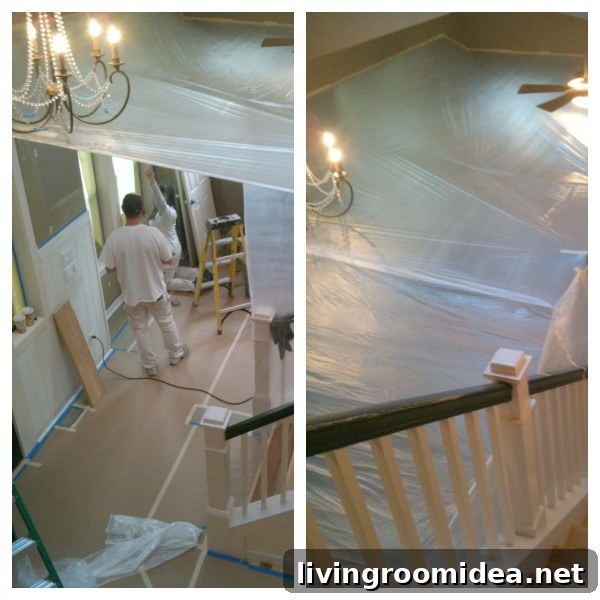
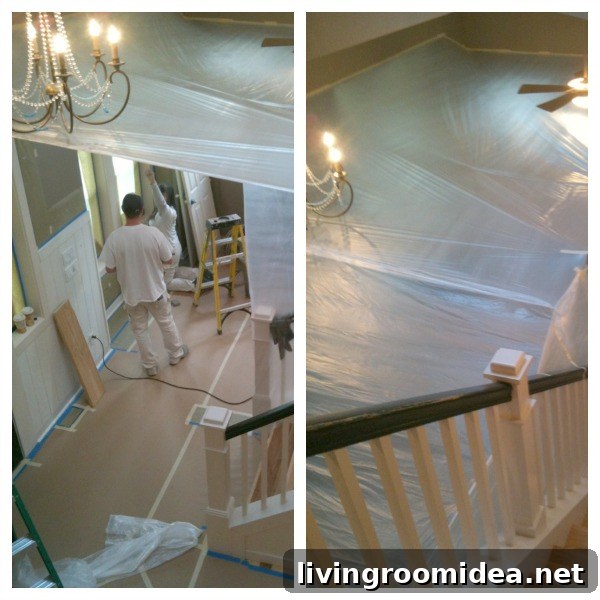
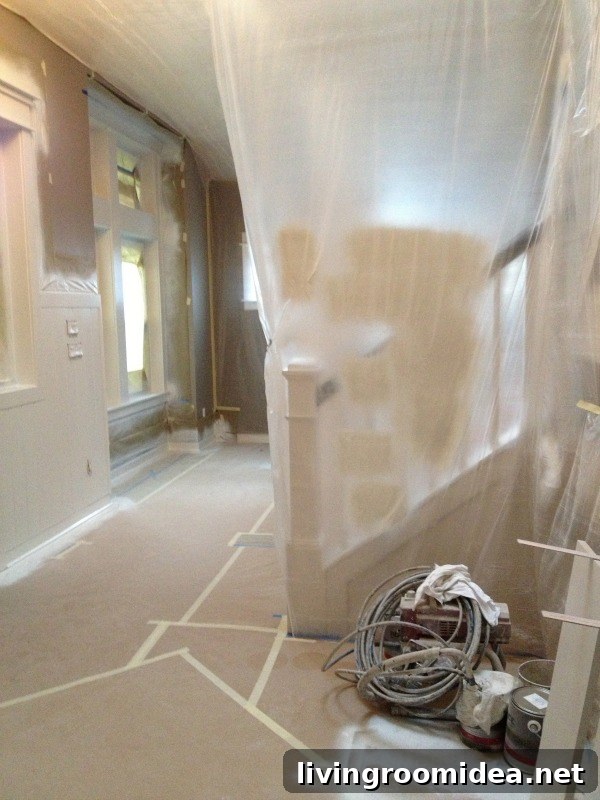
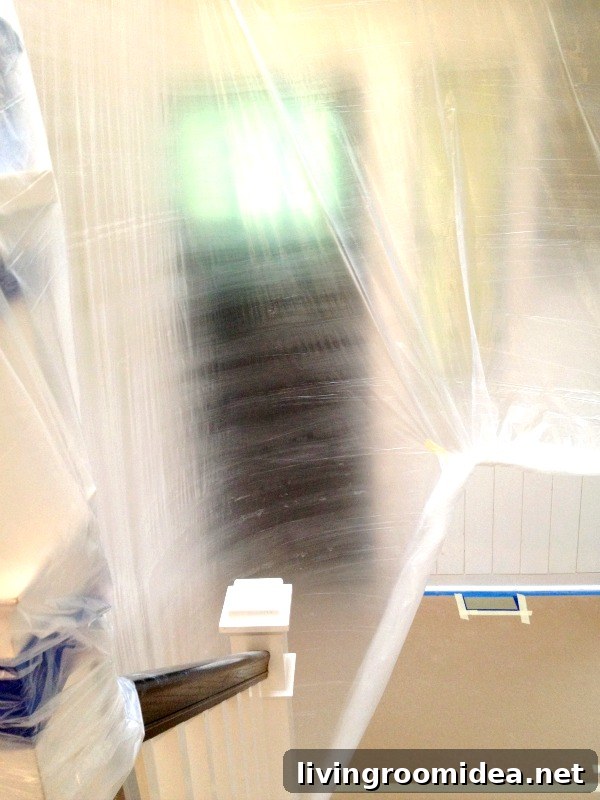
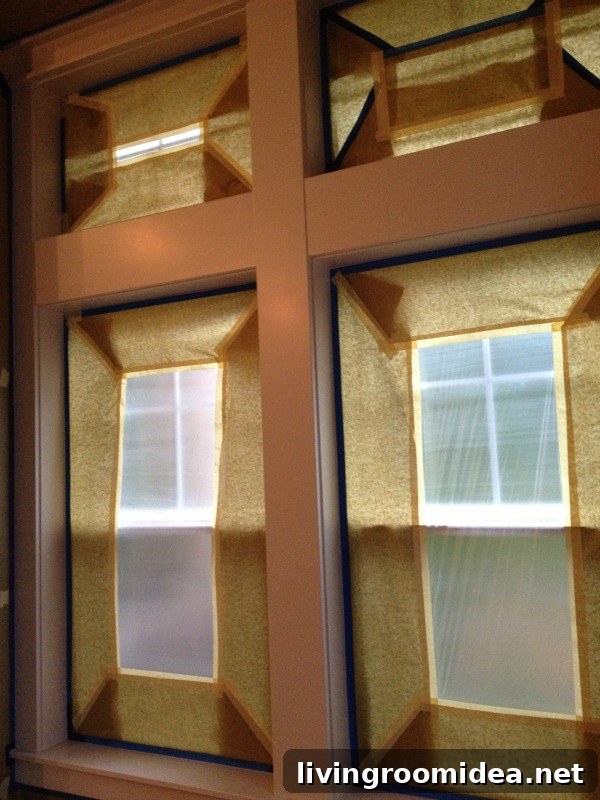
The painters built large tents from plastic sheeting, tape and poles to create a controlled “spray booth” in our living room and entry. They also masked windows with paper, covered doorways with plastic, and protected our new floors and surrounding walls with paper and tape to prevent overspray and accidental drips.
Before spraying, the crew thoroughly prepared the surfaces: caulking gaps, sanding rough spots, cleaning dust and debris, and sweeping the area. Proper prep is essential to achieve a smooth, durable finish and to avoid problems that can show up after paint dries.
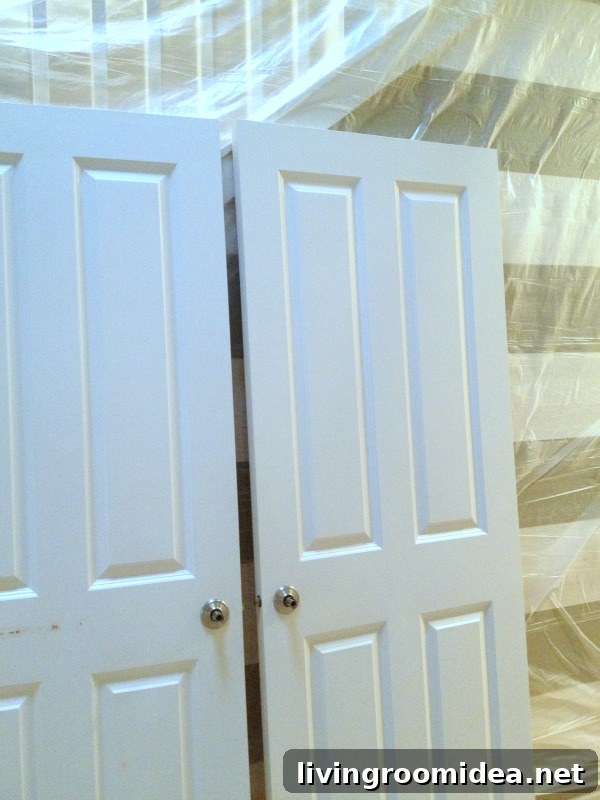
They removed three interior doors scheduled for painting so they could be sprayed along with the trim. While I’ve thought about replacing our builder-grade doors someday with more authentic wood doors, painting them fresh for now helps unify the look. I briefly considered painting the doors a color like gray or charcoal for personality, but decided to keep them white for simplicity—color changes add complexity to spray work. Our front door remains black on the inside.
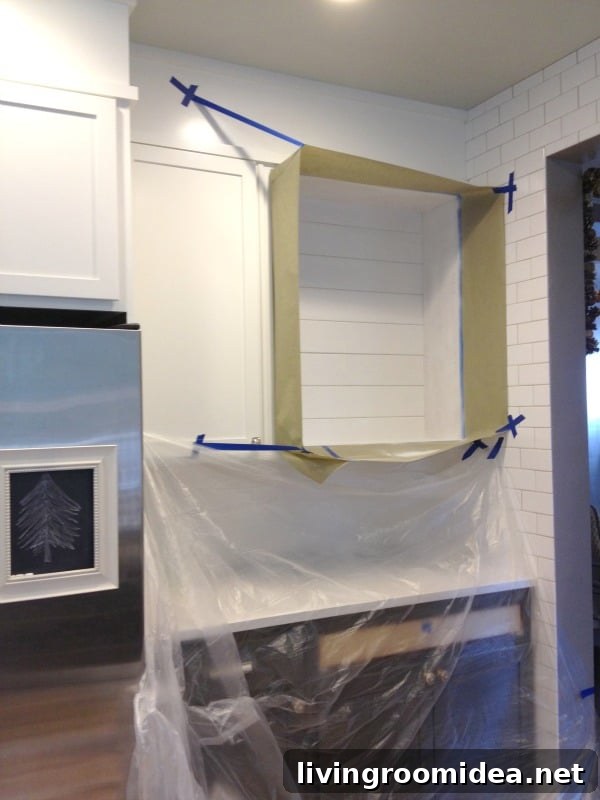
The painters also sprayed the open kitchen shelving. That means we’ll need to avoid placing items on those surfaces until the paint is fully cured. While the trim becomes dry to the touch quickly, full curing takes longer, so we’ll be careful for the next couple of weeks to prevent marks and scuffs.
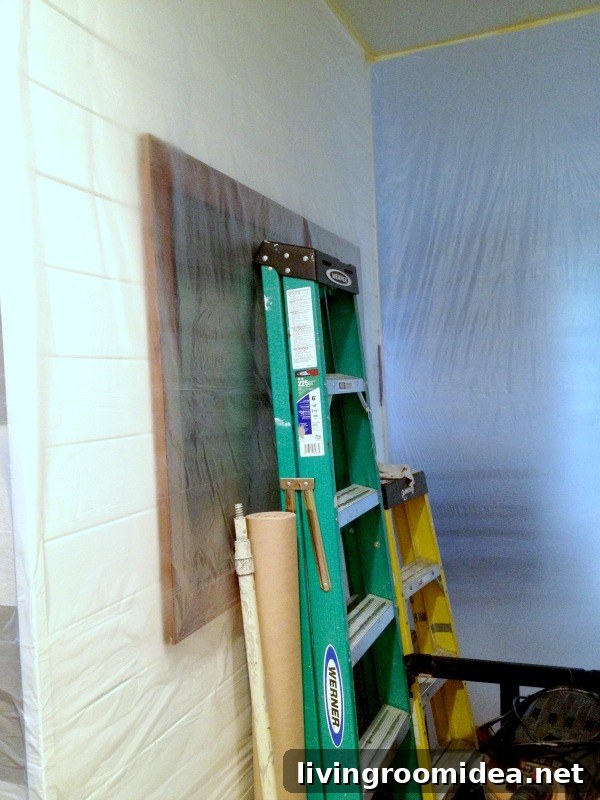
With the hard work of preparation and spraying complete, we’re looking forward to settling back into normal life without the disruption of messy projects. That said, this won’t be the last time we paint trim—there’s more trim to refresh down the road.
Have you tackled a big trim or woodwork painting project at your house? And more importantly, have you ever hired out a potential DIY job around the house as a marriage-saving decision?