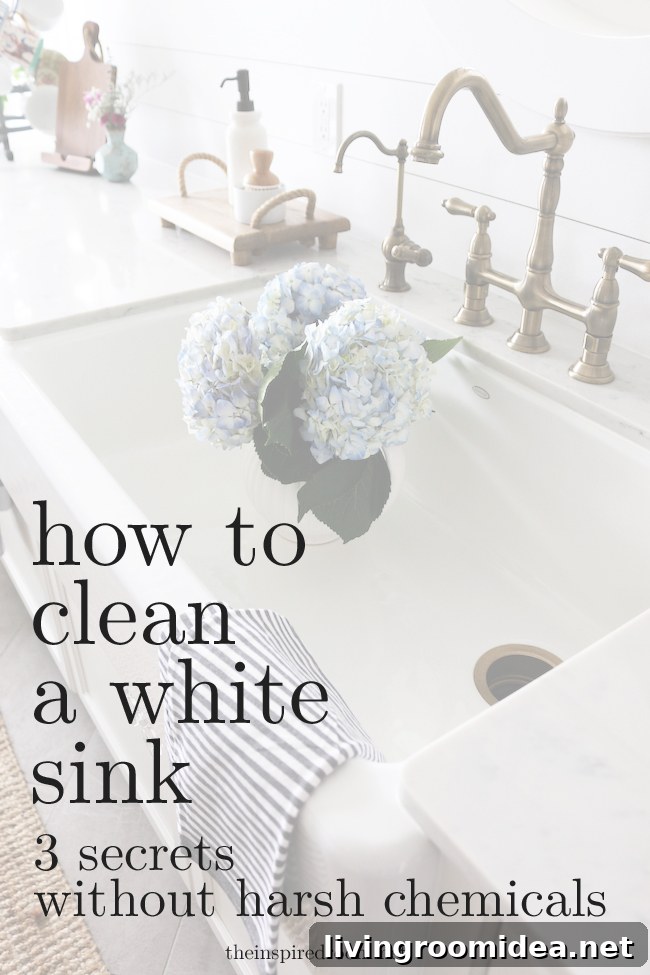

For years I’ve emphasized the small but powerful habit of emptying, cleaning, and polishing my sink every day.
That simple daily task transformed how I view my home, my cleaning routine, and even my mood. It truly feels like a little bit of magic—start your day with a clean sink and momentum follows.
A common question I get is “how do you keep a white sink so clean and bright?”
White sinks can pick up marks, mineral deposits, and grime that feel stubborn, but with a few straightforward habits and gentle products you can maintain a bright, fresh sink without harsh chemicals.
Here are the three habits I rely on to keep my sink clean and white

1. Clean the sink daily.
This is the cornerstone habit. A quick daily wipe or rinse prevents buildup and makes cleaning effortless. The more you let residue sit, the harder it is to remove, so a little daily attention keeps your sink shiny and manageable.
2. Use a metal rack in the sink.
A metal rack with rubber feet protects the sink surface from scratches and keeps pots and pans off the porcelain. Remove the rack when you want to give the sink a thorough clean or simply prefer the uncluttered look.
3. Choose a plant-based, non-toxic cleaner.
You don’t need harsh chemicals to get a white sink spotless. I avoid toxic cleaners for health and environmental reasons and rely on plant-based products and simple DIY mixtures that are safe and effective.
I keep my cleaning routine simple and affordable, minimizing the number of products and steps. Below are the plant-based product I use and three easy methods for cleaning a white sink.
How to Clean a White Sink
- Quick sink scrub: Sprinkle baking soda around the sink, then mist with a diluted plant-based multi-surface cleaner. Use a sink-safe brush or sponge to scrub, then rinse thoroughly. This quick method brightens the surface and removes everyday residue.
Scrub, rinse, and you’re done—an easy, effective refresh.
2. DIY soft cleaning paste (a gentle scrub)
I keep a soft paste on hand for more persistent marks. It’s simple to make and leaves the sink feeling fresh without harsh chemicals.
Recipe:
1/2 cup baking soda
3 capfuls plant-based cleaner concentrate
10 drops lemon essential oil (optional — helps cut sticky residue)
Mix into a paste and apply with a sponge or brush. Rinse well when finished. The mild abrasion of baking soda combined with a plant-based cleaner lifts stains without damaging the surface.
Clean and shiny, without harsh chemicals.
3. Deep clean for stains and scuffs
For deeper stains and scuffs, use a purpose-made kitchen and bath scrub designed for porcelain and ceramic surfaces. These scrubs typically remove stubborn marks while remaining gentle on the sink finish. Follow the product directions and rinse thoroughly.
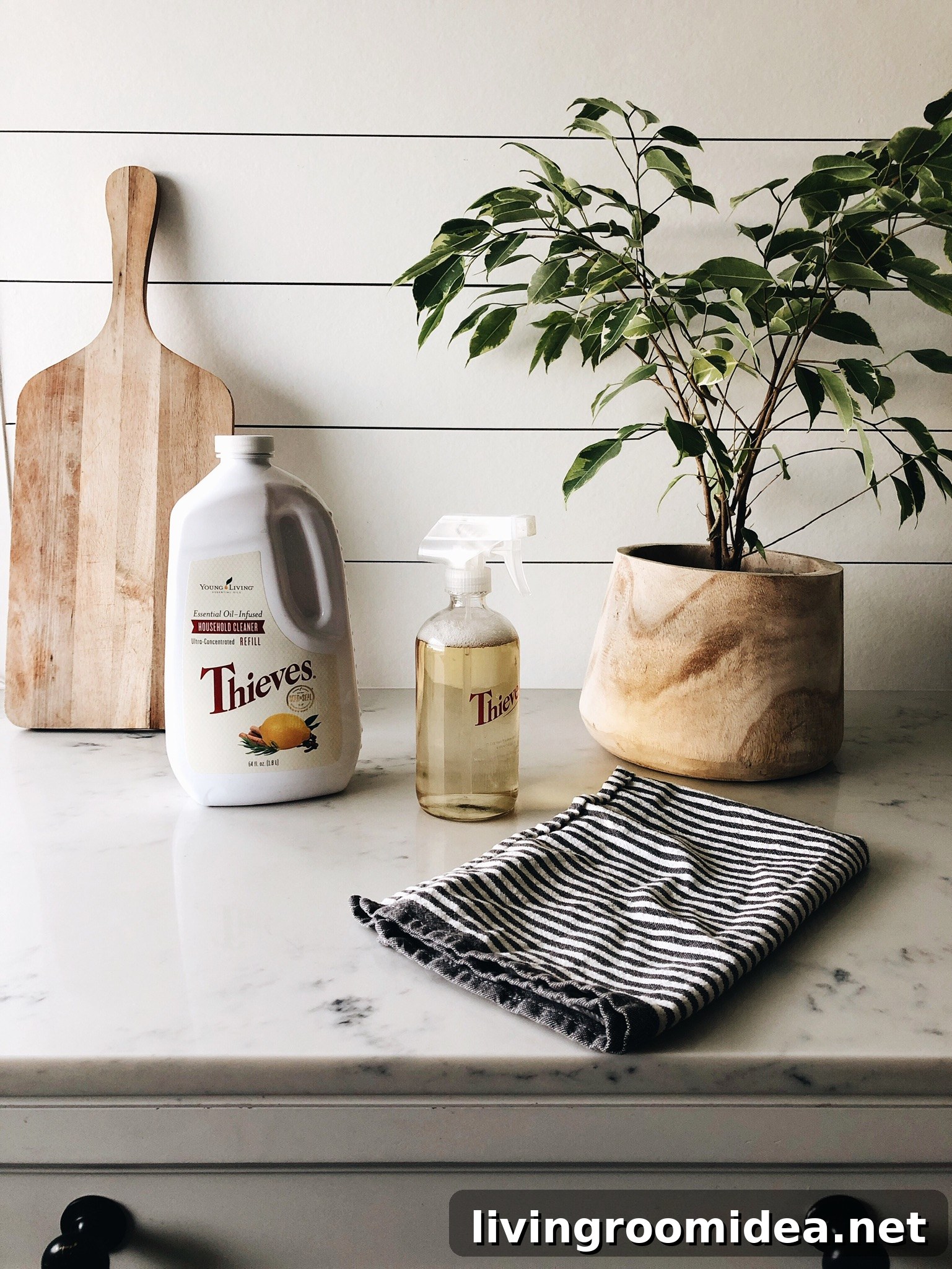
I’ve simplified my cleaning toolbox so one plant-based cleaner and a homemade paste cover most tasks—mirrors, countertops, glass, floors, laundry spots, and of course kitchen and bathroom surfaces. A consistent daily habit plus occasional deeper cleaning keeps a white sink looking its best without harsh toxins.
Keeping your sink clean is what I call a “domino habit.” Mastering this one simple practice leads to a calmer, more orderly home and a less stressed, happier you. Small, consistent actions create big, positive ripple effects.
Get your copy of my new book Dwelling: Simple Ways to Nourish Your Home, Body, and Soul.
Sink sources: Sink // Faucet // Brass Sink Strainer // Sink Rack // Water Spout
For a full kitchen source list, check the original source list provided by the author.

Consider joining a community for cleaning and home tips to stay inspired; many small habits add up to a home that feels nourishing and cared for.