
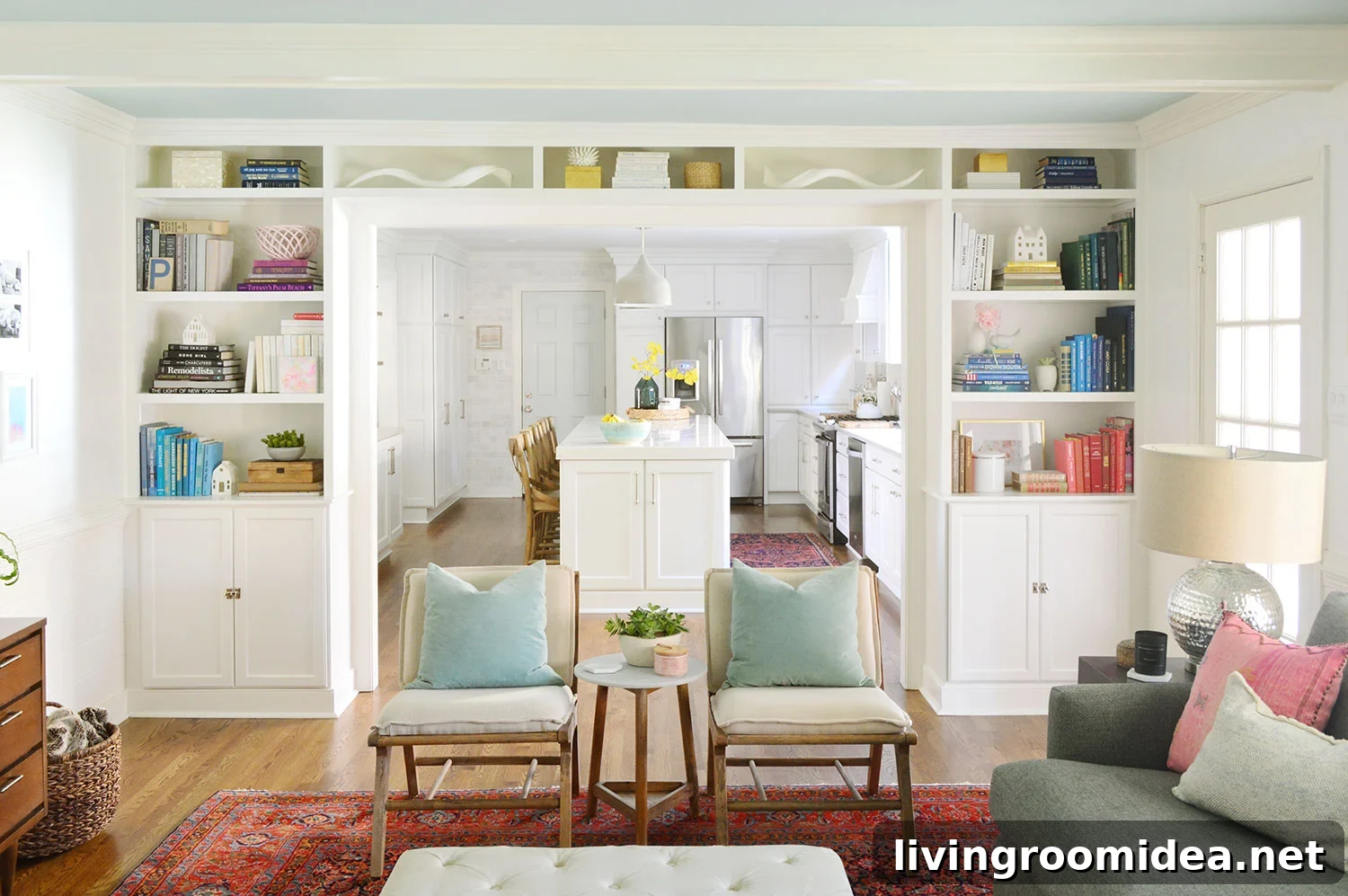
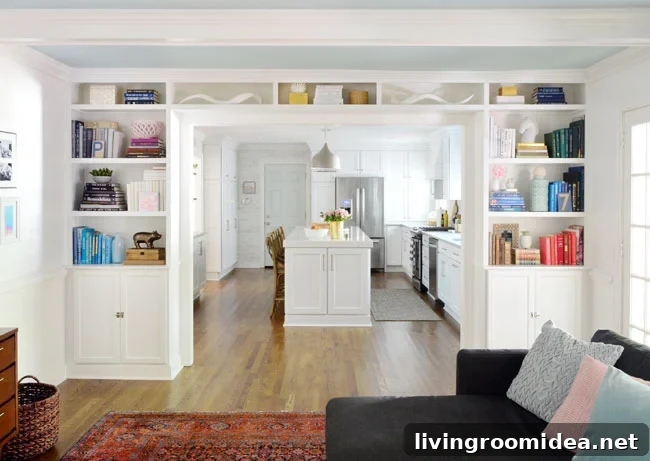
This DIY guide to adding built-in bookshelves is easier than it looks. Creating floor-to-ceiling shelving that frames a doorway is a project most homeowners can tackle. We added these bookcases as part of our kitchen remodel, and they quickly became one of my favorite features of the renovation.
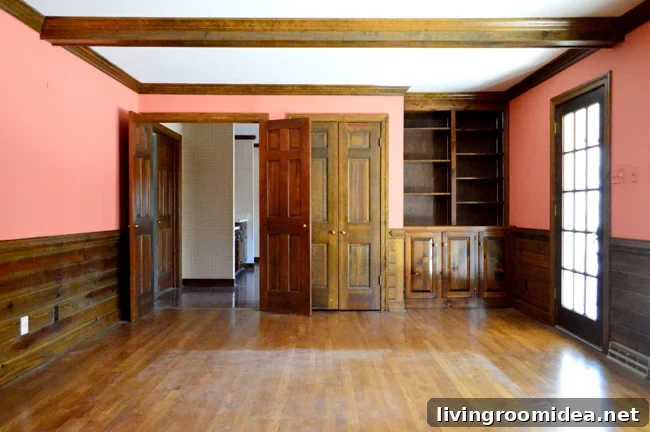
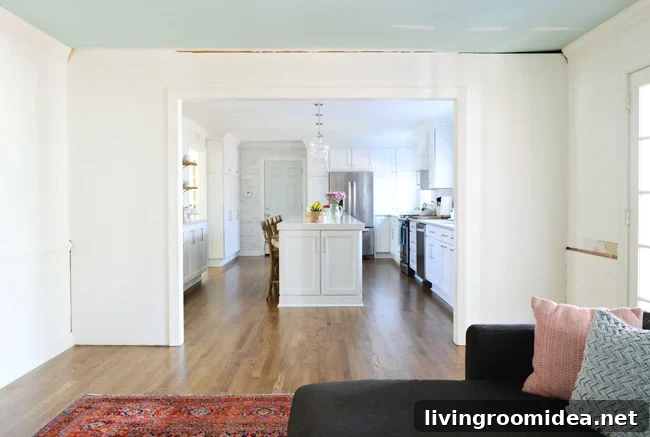
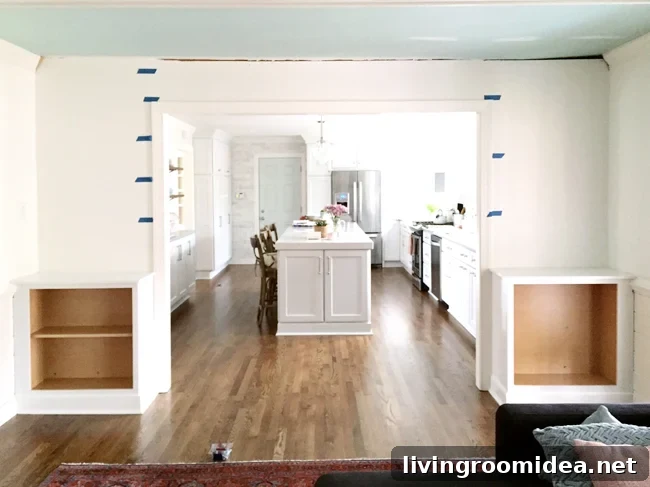
The wall originally had a bookcase, as shown in the before photo, but we demoed and reframed it to open the space toward the kitchen.
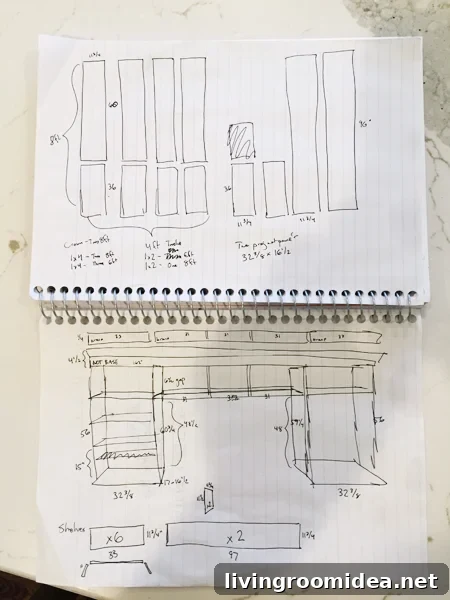
Below we share a straightforward building tutorial and all the measurements we used so you can plan shelf height and depth to suit books and decorative items.
Table of Contents
Tools & Materials for Built-In Bookshelves
This build will likely take a few days and requires patience and attention to detail, but the skills needed are basic. Gather these tools and materials before you start:
- Stock cabinets for bases
- 1/2″ MDF for shelves
- 1×2″ and 1×4″ pine for facing
- 2x4s and scrap wood for blocking
- Baseboard and crown molding
- Measuring tape
- Stud finder
- Long level
- Clamps
- Nail gun with finish nails
- Miter saw
- Table saw or circular saw
- Power drill/driver
- Wood glue
- Paintable caulk
- Primer, paint and painting supplies
Step 1: Plan Your Bookshelf Design
Planning is the most important part of this project. Measure the wall carefully and make a sketch with dimensions. For inspiration, collect photos that show shelf spacing, trim details, and scale. We referenced built-ins from our previous house while designing these.
A simple pen-and-paper sketch works fine. During the build we verified shelf spacing using blue painter’s tape to visualize options before committing to cuts.
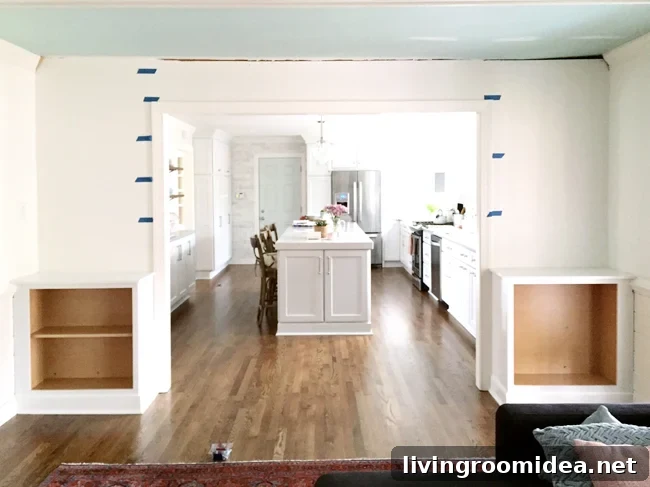
Take your time here—good planning reduces mistakes and extra trips to the store.
Step 2: Build-In Your Bases
We chose 30″ x 30″ stock upper cabinets as bases because they were affordable and fit the space well. Since these cabinets are 12″ deep but we wanted 13″ shelves, we added two layers of 2×4 blocking behind each cabinet and screwed them into studs with long wood screws to create the extra depth.
There’s also blocking beneath the cabinets to allow the baseboard to run continuously without interfering with cabinet doors. A single 2×4 usually works, but we used scrap plywood to match the height of existing wainscoting.
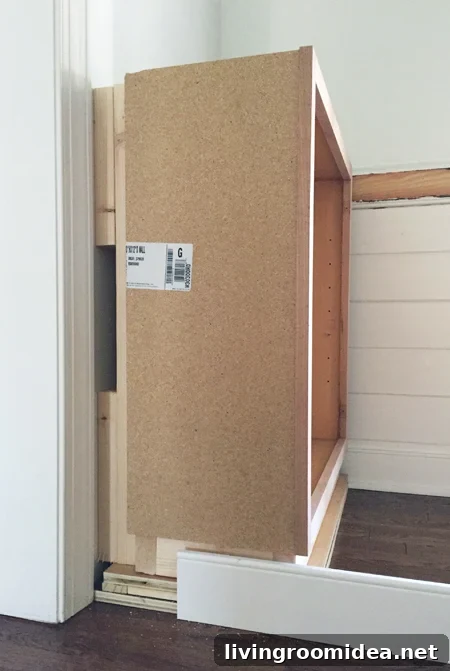
We covered that structure with unfinished end panels and added a 1×2 along the front edge so the baseboard would have something to rest against.
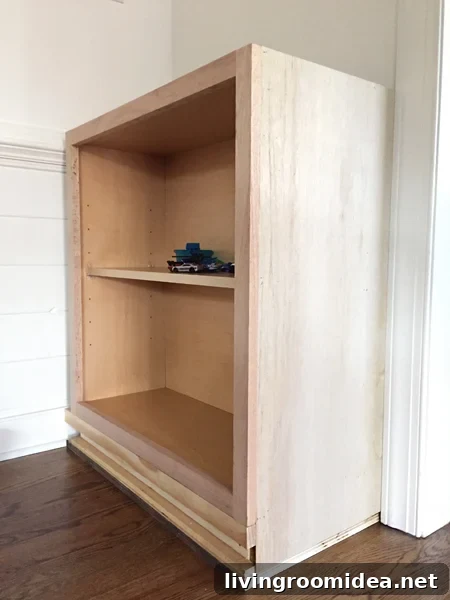
You may need filler pieces between the cabinet and the wall to close gaps; any scrap wood or stock fillers will work. Finish the bases by cutting and installing baseboard around the cabinet bottoms and attach with a nail gun.
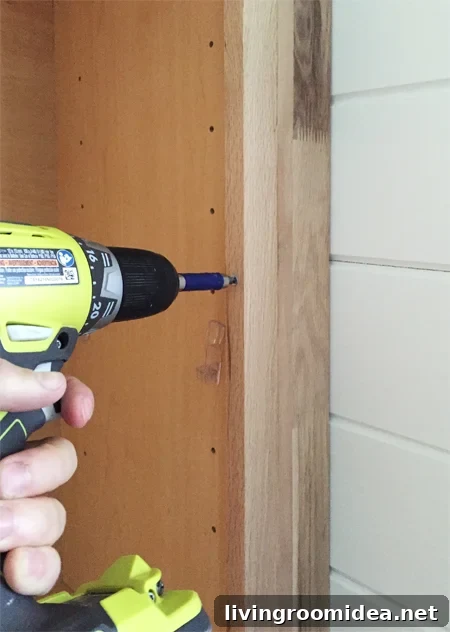
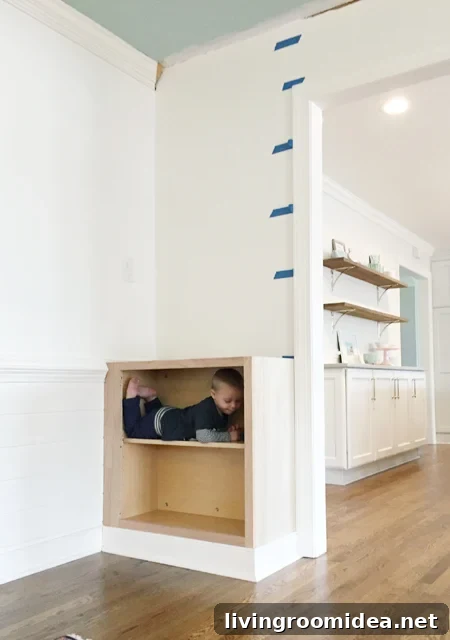
With both bases installed and doors removed for easier work, the next step was to prime and paint the pieces before assembly.
Step 3: Prime & Paint
Prime and paint your shelving pieces while they’re flat on the ground. This is easier for rolling large surfaces and avoids drips and hard-to-reach spots. We painted cabinet doors, shelves, and face pieces in a semi-gloss white to match existing trim.
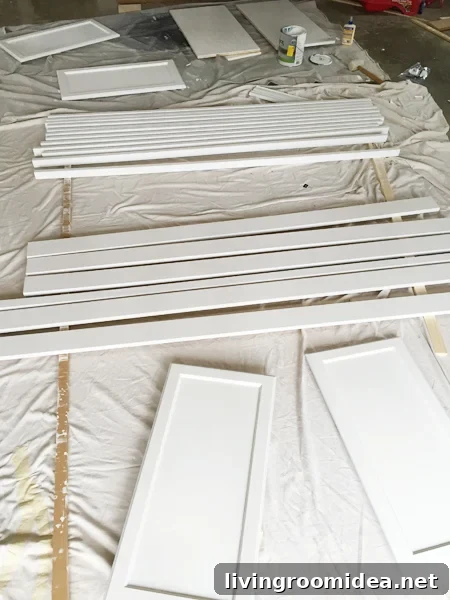
Do light touch-ups after assembly, but most of the heavy painting is easier when pieces are horizontal.
Step 4: Construct Your Side Shelves
We built the open shelving from 1/2″ MDF panels for smooth edges and easy cutting. The basic sequence:
- Screw one vertical MDF panel into the side wall
- Add a 1×4 brace across the back near the top
- Attach the opposite vertical panel into that brace
- Add a front brace across the shelf face
- Rip 1×1 strips for shelf supports
- Nail support strips on three sides where shelves will sit
- Set MDF shelves onto supports
- Nail and glue 1×2 face pieces to exposed edges
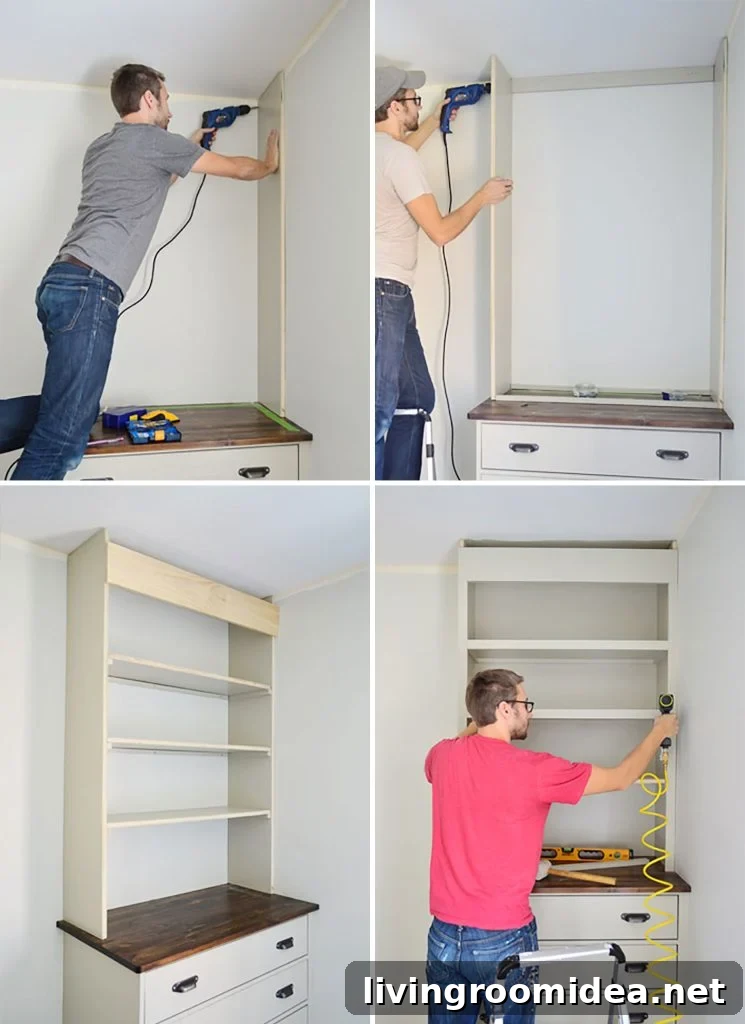
After assembling both side units (before adding face pieces) we had a clear plan for spanning the shelf over the doorway.
Step 5: Add the Shelf Across the Doorway
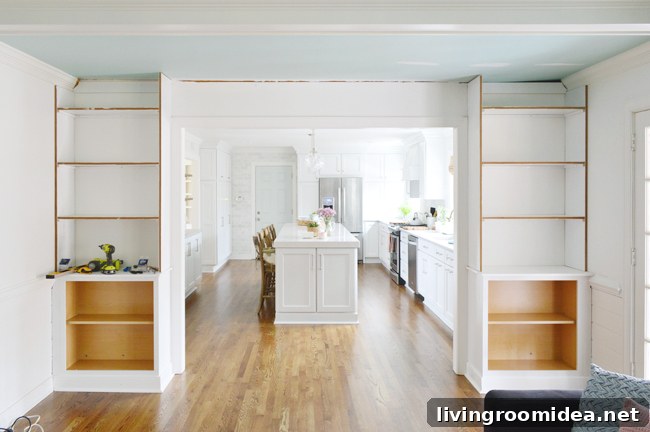
To span the shelf across the doorway, create solid attachment points. We installed 1×4 header boards across the back to give the vertical divider something to screw into, then fastened the divider and secured the bottom from below. Adding a scrap piece to the ceiling helped square the assembly and provided a nailing surface for the facing and crown molding.
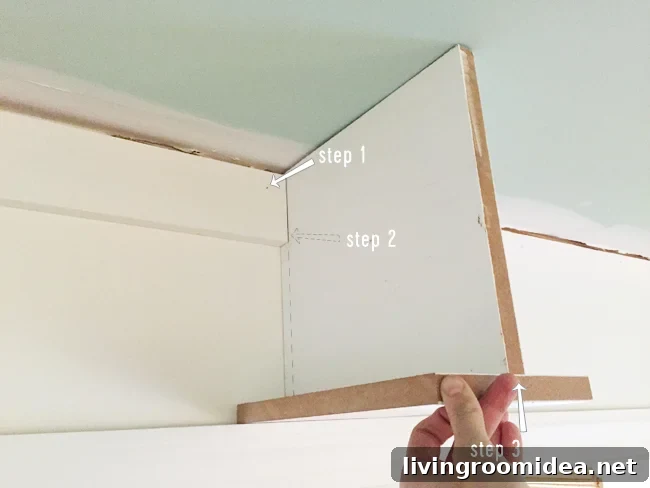
The shelves over the doorway are doubled so that after the 1×2 face piece is applied they appear flush on both top and bottom—important where people walk beneath the opening.
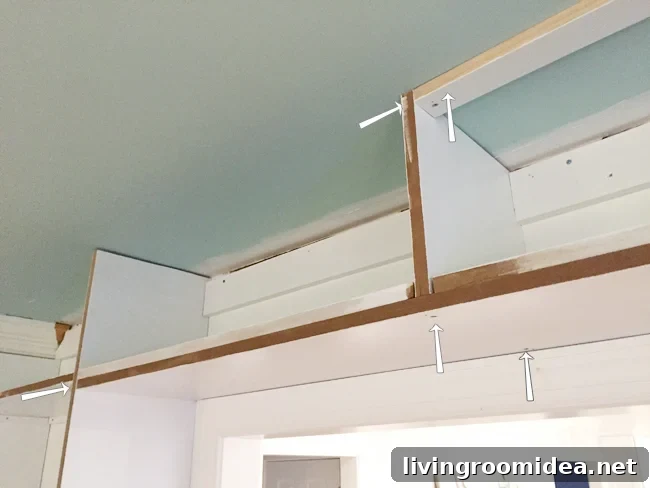
Step 6: Nail In Your Face Pieces
Attach 1×2 pine face pieces to cover raw edges. These should be primed and painted beforehand. Face pieces tidy the look and make shelves appear thicker.
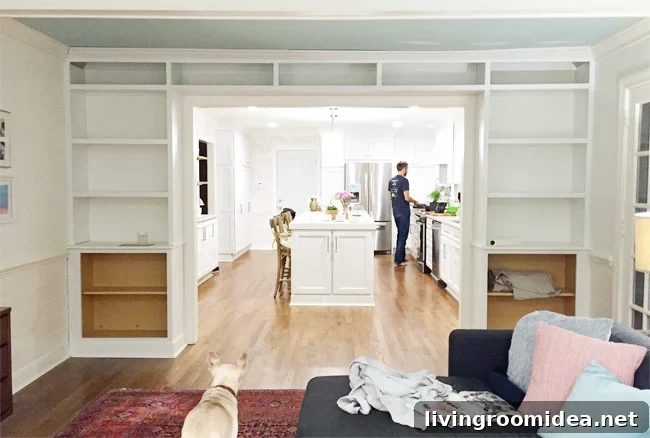
This final trim step dramatically cleans up the assembly and sets up the built-ins for caulking and paint touch-ups.
Step 7: Caulk & Touch-Up Paint
Fill seams and nail holes with paintable caulk and wood filler. Run a bead where two pieces meet, smooth it, let it dry, and paint over. This final paint pass covers seams and any scuffs from installation.
Step 8: Let Cure & Decorate!
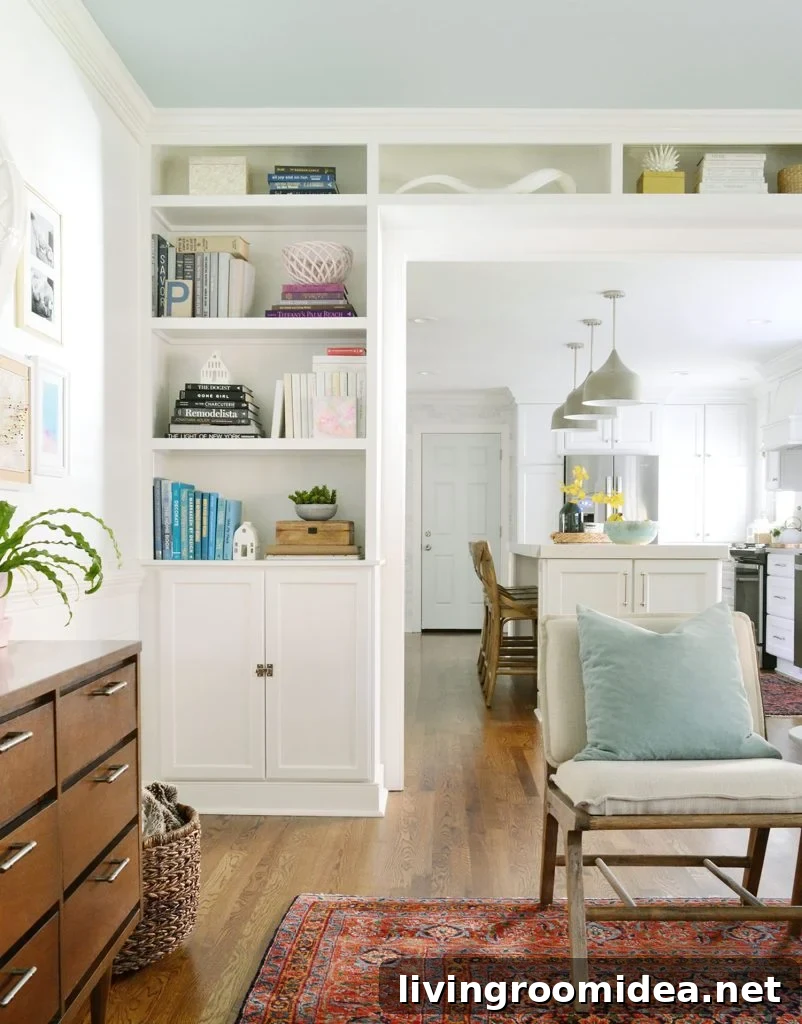
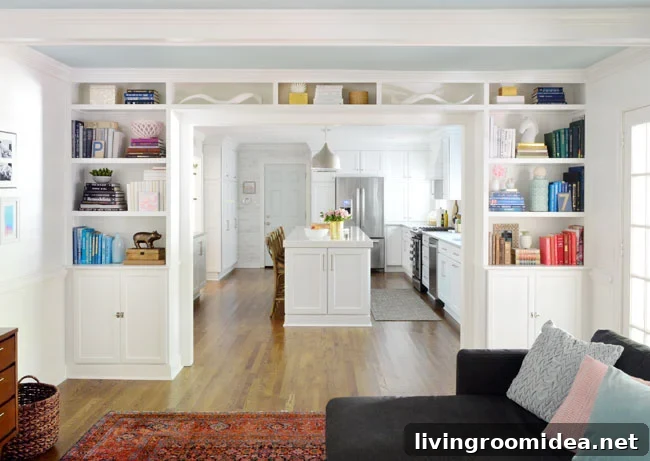
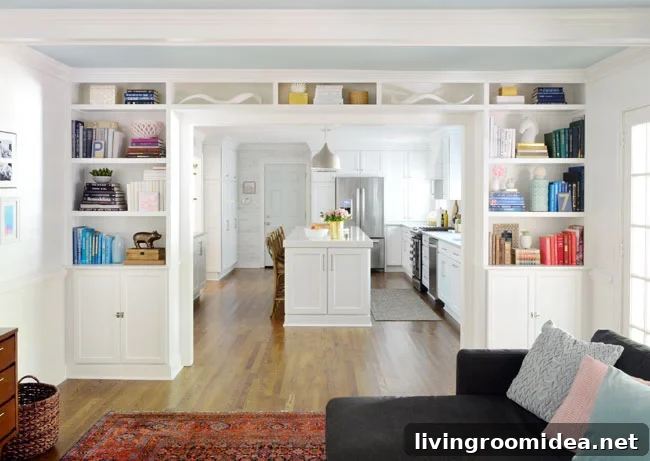
Allow paint to cure before loading shelves. Curing can take several days; we waited ten days to be safe so decor wouldn’t mark uncured paint. Our final shelf measurements were 15″ high and 13″ deep, roomy enough for books and decorative items without feeling cramped.
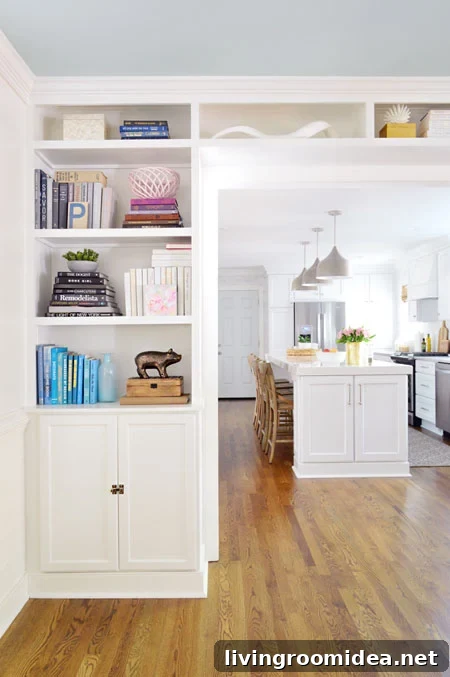
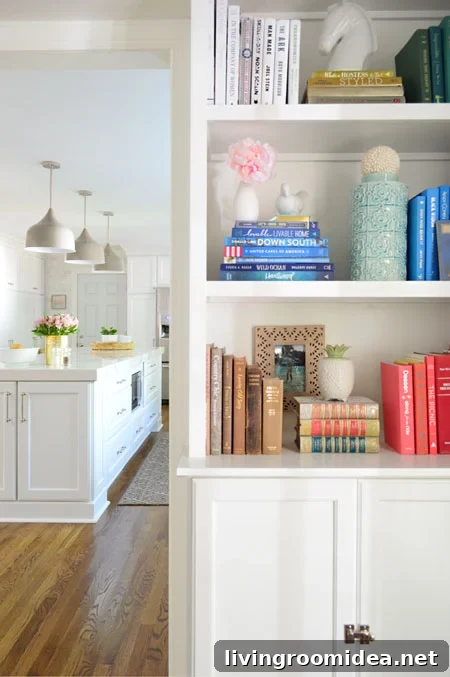
When styling, mix stacked and upright books with decorative objects. We arranged books loosely by color groups to keep a cohesive yet relaxed look.
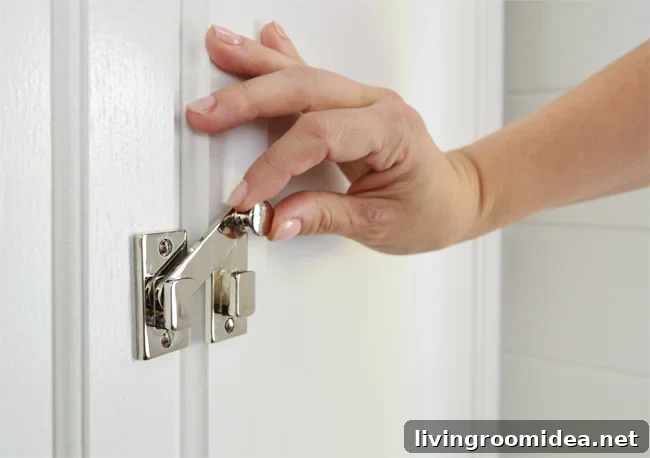
Don’t forget knobs or pulls for the cabinet doors to complete the look; a contrasting latch or pull can add character.
We love how the built-ins blend with the room and add architectural interest, warmth, and extra storage.
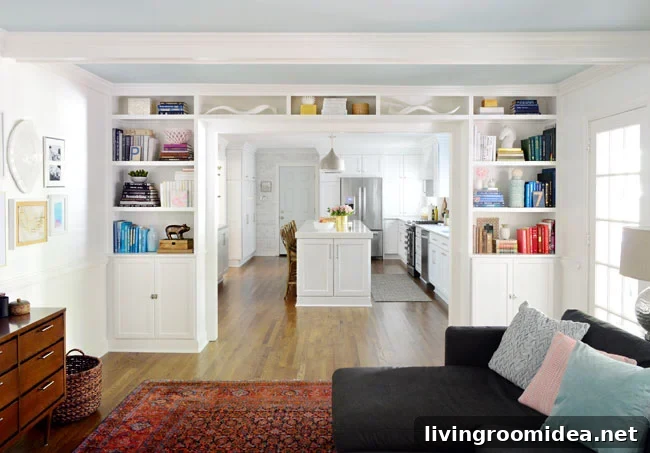
They look like they belong in the house and make the living room feel more finished and lived-in.
Decorating Your Built-In Bookshelf
Filling the shelves is the fun part. Aim for a balance of books and objects, using groupings and varied orientations to create visual interest. Our shelves ended up with a loose color grouping rather than a strict gradient, which kept the display lively but cohesive.
Note: There is also a related video showing the styling process.
More DIY Shelving Projects
If you want more shelving ideas, explore other DIY shelf projects and pantry shelving builds for additional inspiration.
*This post may contain affiliate links*