
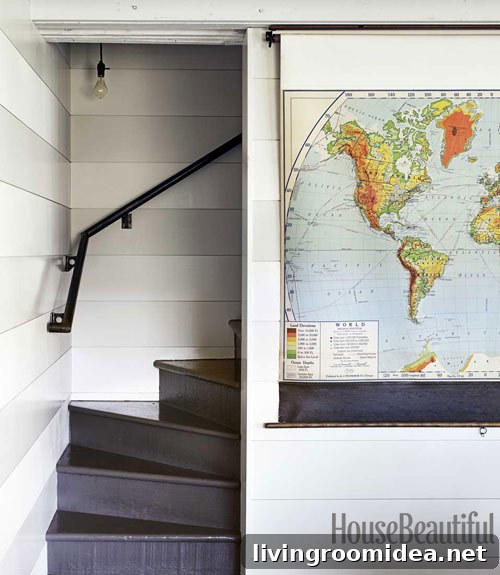
Hide TV with Vintage Map via House Beautiful
Some people don’t mind a television on display, while others prefer to conceal it when it’s not in use. If you fall into the latter group, there are many stylish, practical ways to hide a TV without resorting to a traditional armoire. Below are creative solutions for hiding TVs in niches, on walls, and on bookcases—ideas that blend function and decor.
Do you prefer your TV out in the open, or hidden behind doors or coverings?
A pull-down vintage map is a brilliant way to combine art and function: roll it down to reveal the screen, then pull it back up to restore the room’s decor. Similar options include pull-down bamboo shades or a Roman shade to create a faux window effect over a niche or bookshelf.
Hide TV behind barn doors via Crisp Architects
Sliding barn doors are another attractive option. They slide open and closed smoothly and keep your mantel or shelving undisturbed—no need to clear decorative items each time you want to watch television.
Disguise TV by Brooklyn Limestone
For wall-mounted TVs, consider disguising the screen inside a large vintage frame. A hinged or decorative frame can visually integrate the television into the room’s decor, turning the screen into an art-like focal point when it’s off.
A hinged frame over a bookshelf is a clever way to conceal a TV or any other electronics. When closed, it looks like typical cabinetry or decorative paneling; when opened, it reveals the screen without disrupting the room’s style.
Folding screens or hinged shutters placed on the floor in front of a TV niche offer flexible coverage and add texture and depth to a room. These are easy to move when you want to watch TV and can be folded away or styled as decorative elements when not in use.
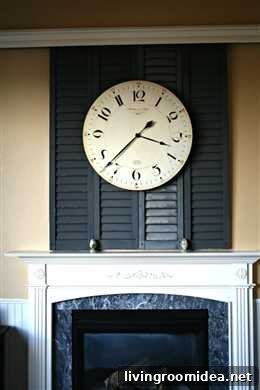
A sliding track system, repurposed from closet hardware, is a practical DIY way to create sliding shutters or doors for a TV niche. This solution is streamlined and lets you hide the TV quickly while maintaining a clean, built-in look.
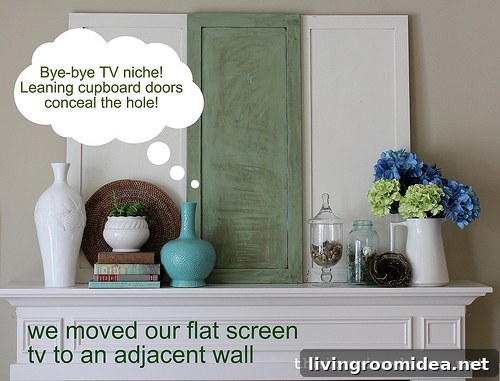
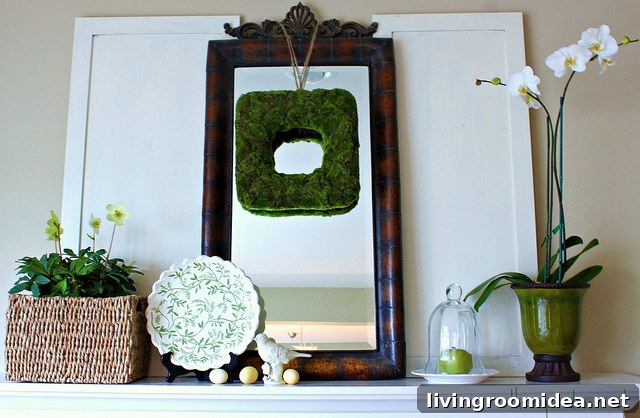
If you have a large recessed area above a fireplace or another wall “hole” intended for a TV, consider layering cupboard doors, mirrors, or decorative panels to camouflage the opening. This approach allows you to keep the space visually interesting without committing to a permanent television installation.
While temporary solutions like vintage cupboard doors can work well for years, some homeowners update the space with sliding barn doors or custom panels so the area can function either as a decorative focal point or as a TV niche when needed. These choices offer design flexibility: keep the mantel and surrounding decor intact, and reveal the TV only when desired.
If you’re planning an update, think about how the hiding solution will coordinate with your room’s style, how easily it will open and close, and whether you want a DIY or professional installation. Small details—trim, paint, and hardware—can make a concealed TV look like an intentional part of the room’s design.
Do you prefer your TV out in the open, or tucked away behind doors or screens? Share your TV storage or disguise ideas and photos in the comments.