
My good blogging friend Holly has been designing an absolutely charming room for a little boy, and she kindly allowed me to share it here. She has a knack for creating themed spaces that feel fresh rather than gimmicky, and this one hits the mark.
The core idea is a dog motif, but the design is flexible enough that it could easily evolve if his tastes change. Swap in another animal, a sport, or a favorite color palette and the room will still look intentional and cohesive. If he loves dogs for years to come, the room will age gracefully rather than feel dated.
I adore the carefully considered details. The accessories, scale, and placement of elements make the space feel playful yet grown-up. Small, well-placed accents give the room personality without overwhelming it. For the full design breakdown and background on the project, check the original post by Holly for more context and photos of the process.
The striped walls are a standout feature. I painted similar stripes in my daughters’ rooms in the 1990s and still appreciate how effectively stripes can expand a small space visually. Though the stripe job is labor-intensive, the result is worth it: narrow rooms feel wider and taller, and the pattern adds classic interest without being trendy.
Earlier this week when I was assembling a room collage on Polyvore, my nine-year-old son was nearby using his sister’s computer. I gave him a quick introduction and he dove right in—he caught on instantly. Naturally, his design ended up dog-themed as well, just a lot bolder. Picture dog motifs on the chandelier, bed linens, and chairs; it was maximalist and exuberant. Kids have no fear when it comes to pattern and subject matter, and their enthusiasm can be contagious. Just be prepared for pet hair if you actually add many dog-textured items—charming, but realistic.
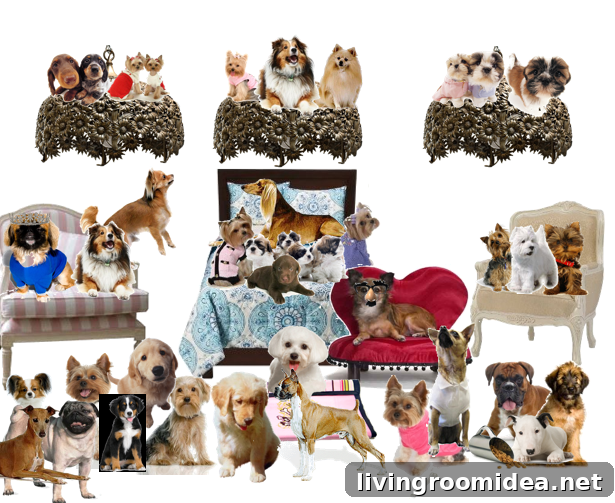
Polyvore
Designing a child’s room is an opportunity to balance whimsy with longevity. Think layers: a few bold, replaceable items (artwork, bedding, pillows) paired with enduring features (paint treatment, furniture in neutral tones, and well-chosen lighting). That way the space can grow with the child without needing a complete overhaul every few years.
When working with a theme, subtlety often wins. A restrained palette and selective use of motifs create a room that feels curated instead of costume-like. Little touches—custom knobs, a framed collection, a tasteful rug—can reinforce the theme while leaving room for change. This dog-themed room is a great example: it communicates personality while remaining flexible.
Whether you’re renovating a nursery, updating a toddler’s space, or refreshing a preteen’s room, consider mixing timeless design elements with a few playful, replaceable accents. You’ll get a room that feels alive and personal now, and that can adapt as tastes evolve.